Songgwangsa
The temple that embodies the sangha itself, not a relic or a scripture
Understand sacred places, explore living traditions, and learn how to engage respectfully with Pilgrim Map.
Access has not been verified. Check current local guidance before planning a visit.
Suncheon, Jeollanam-do, South Korea
Read the sources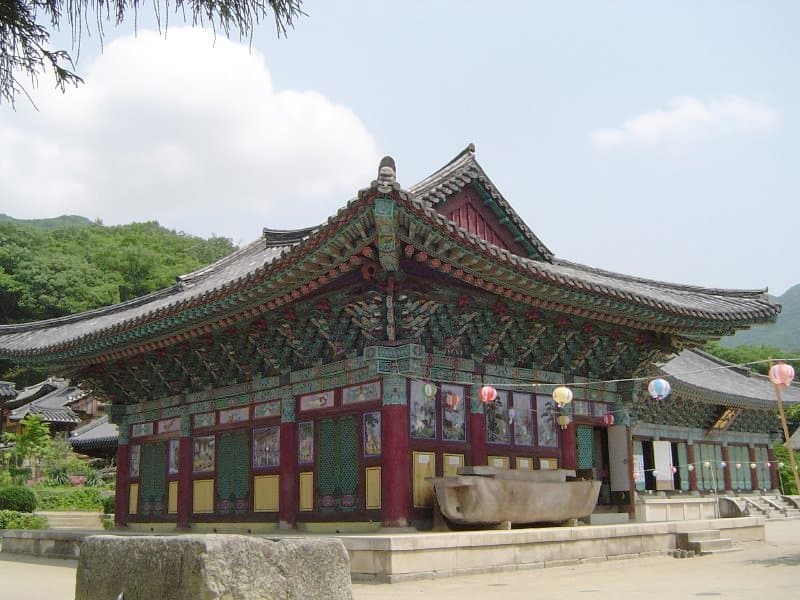
On this pilgrimage
Three Jewel Temples of KoreaVisit essentials
A quick read before you go
- Duration
- A day visit of two to four hours covers the main halls, the Bisari Gusi rice container, and the…
- Access
- Located on Mt.
Overview
Tongdosa holds relics and Haeinsa a printed canon; Songgwangsa sustains a living community trained here since the 12th century. As the “Sangha Jewel” among Korea's Three Jewel Temples, its claim is institutional and lineage-based, not an object behind glass.
A Silla-period Buddhist community called Gilsangsa preceded it but was derelict when Bojo Jinul arrived in 1190. His rebuilding established a “samadhi and prajna society” to correct Korean monastic corruption and reunite meditation with doctrinal study. Tradition treats this as the true founding rather than the earlier community. Sixteen national preceptors followed in its lineage.
Today roughly 120 monks reside during meditation season. Twice-yearly three-month kyolche retreats continue, and an International Seon Center trains foreign practitioners with Korean monastics. Seven Korean mountain monasteries, including Tongdosa, were inscribed together as UNESCO “Sansa” in 2018; Songgwangsa was not among them and does not dispute that distinction. During review, Korean heritage authorities noted that its major significance developed later, in the 12th century, than those seven sites.
Why this place is sacred
The temple's Silla-period predecessor, Gilsangsa, is thinly documented — sources disagree on whether it dates specifically to 867 CE or simply to a vaguer 'Silla period,' and it had fallen into disuse by the time Jinul reached it.
What is well attested is what Jinul did next: in 1190 he began a roughly nine-year rebuilding effort and established there a reform movement, the Jeonghye Gyeolsa (samadhi-and-prajna society), meant to correct what he saw as corruption in Korean Buddhist monastic life by re-integrating meditation practice with doctrinal study rather than treating them as competing approaches.
That reform is credited with shaping the Jogye Order itself, Korea's dominant Seon Buddhist order, and it produced sixteen national preceptors trained in the lineage Jinul established. Two ancient Chinese juniper trees on the grounds, designated a natural monument, are held up in local tradition as living witnesses to that continuity — a detail more impressionistic than doctrinal, but repeated often enough to carry weight.
Unlike Tongdosa, Songgwangsa was not included in the 2018 UNESCO inscription of 'Sansa, Buddhist Mountain Monasteries in Korea,' which covers seven other mountain monasteries — Tongdosa, Buseoksa, Bongjeongsa, Beopjusa, Magoksa, Seonamsa, and Daeheungsa. When ICOMOS queried the omission during review, the Korean state noted that Songgwangsa's primary significance developed later, in the 12th century, relative to the inscribed sites. Songgwangsa holds no UNESCO World Heritage status of its own.
Experience and orientation
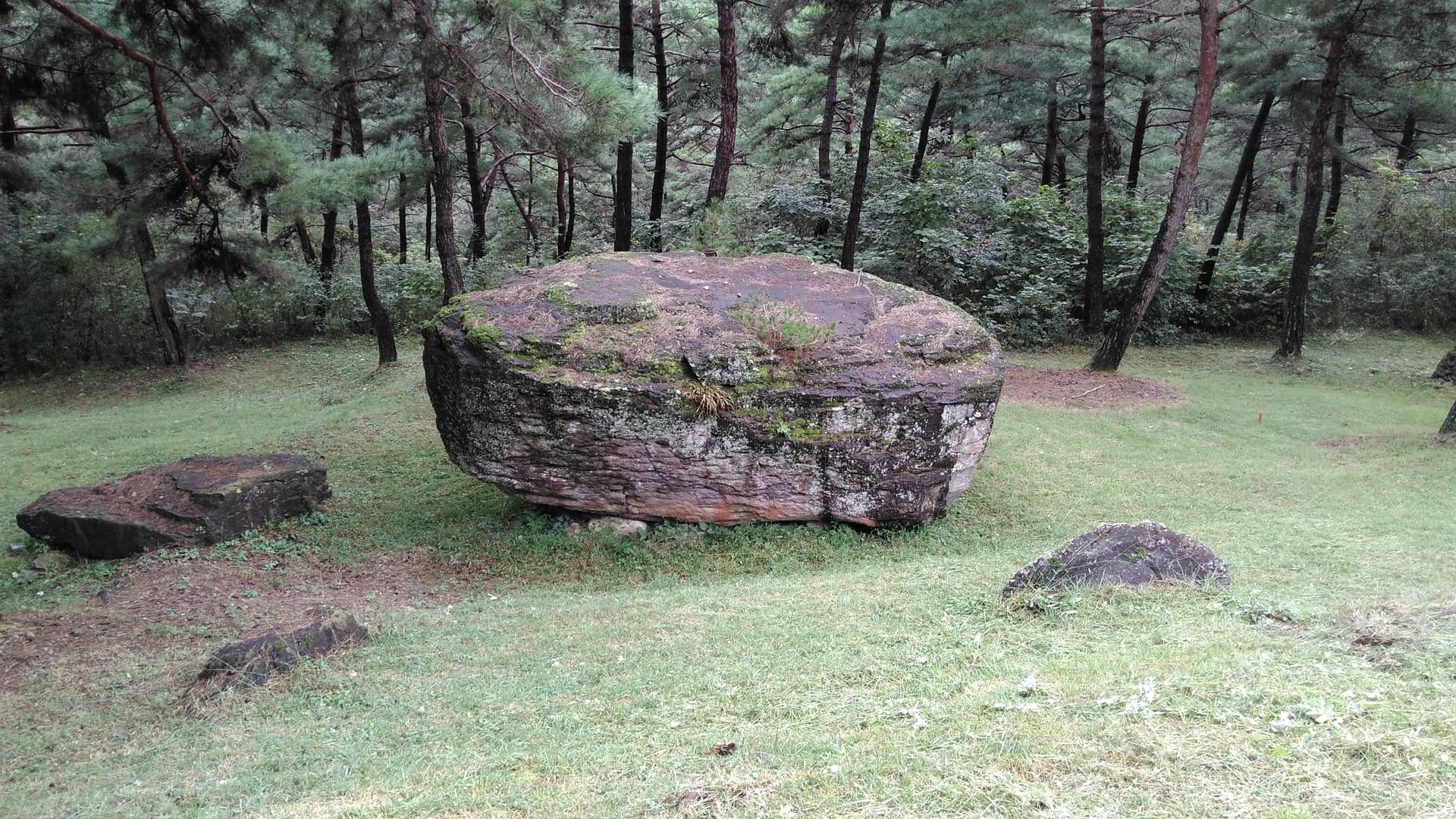
Reviewers and templestay participants consistently draw the same contrast: Songgwangsa feels grand in scale (over 80 buildings, four national treasures, 26 treasures, and a giant Bisari Gusi rice container once able to feed thousands of resident monks) but approachable in tone, less formal-museum than active workplace. The sound of chanting and the sight of monks moving through their daily schedule are cited repeatedly as what makes the site feel inhabited rather than preserved.
Templestay participants and short-term visitors often describe a calming, grounding effect from briefly joining or simply witnessing the centuries-old meditation rhythm; some attribute a sense of connection beyond the immediate self to the accumulated weight of continuous practice here since Jinul's reforms — an interpretation visitors offer themselves, not a claim the temple makes on their behalf.
A day visit of two to four hours covers the main halls, the rice container, and the ancient junipers; templestay programs run one to two nights for those wanting the fuller monastic-schedule experience, though core meditation halls and monastic quarters stay closed to non-participants, especially during the two annual kyolche retreat seasons.
Context and lineage
Sixteen national preceptors (guksa) trained in the lineage Jinul established, carrying Songgwangsa's monastic authority through the early Joseon period and into its present role as a Jogye Order head temple.
Bojo Jinul
founder
Seon master (1158-1210) who rebuilt the derelict Gilsangsa beginning in 1190, renamed it Songgwangsa, and founded the Jeonghye Gyeolsa reform society there, integrating meditation and doctrinal study; credited with founding the Jogye Order.
Traditions and practice
Morning and evening chanting services and the historic Jeonghye Gyeolsa (samadhi-and-prajna) practice model established by Jinul, integrating disciplined meditation with doctrinal study, form the core of the temple's traditional rhythm.
The kyolche retreat cycle continues twice yearly, drawing roughly 120 monks in season; the International Seon Center offers meditation training to foreign monastics and lay practitioners, with a branch temple, Koryo Sa, established in Los Angeles in 1980 by Kusan Sunim.
Templestay programs give lay and international visitors a structured way into the schedule: early-morning chanting, seated meditation instruction, tea ceremony, and mindful work tasks, alongside vegetarian temple meals and simple dormitory lodging.
Korean Seon (Jogye Order) Buddhism
ActiveSonggwangsa is the Sangha Jewel among Korea's Three Jewel Temples, embodying the monastic community itself alongside Tongdosa (Buddha Jewel, via relics) and Haeinsa (Dharma Jewel, via the Tripitaka Koreana). It was refounded in 1190 by National Preceptor Bojo Jinul, who established a samadhi-and-prajna reform society here and is credited with founding the Jogye Order; sixteen national preceptors trained in the lineage that followed.
Seon seated meditation, twice-yearly three-month kyolche intensive retreats, morning and evening chanting, templestay programs, and International Seon Center training for foreign practitioners.
Perspectives and open questions
Songgwangsa's sacred authority is treated by scholars, tradition, and the temple's own record as resting on lineage and institutional continuity rather than a singular sacred object — a status it holds even without the UNESCO inscription given to some of its sibling temples.
Scholarly perspective
Scholars of Korean Buddhism agree that Jinul's 1190 refounding of the derelict Gilsangsa site, and his establishment there of the samadhi-and-prajna reform society, was a pivotal moment in the formation of the Jogye Order and of institutionalized Korean Seon Buddhism, integrating meditation and doctrinal study rather than treating them as rival approaches. Songgwangsa's status as the Sangha Jewel among the Three Jewel Temples is treated as settled tradition.
It was, however, excluded from the 2018 UNESCO Sansa inscription that includes Tongdosa and six other mountain monasteries — the Korean state itself acknowledged in ICOMOS review that Songgwangsa's major significance is a 12th-century development, later than the inscribed sites, rather than tracing to an earlier Silla-era foundation.
Living and traditional perspectives
Within Korean Buddhist tradition, Songgwangsa is one of the three most sacred monasteries in the country by virtue of representing the sangha — the living community of practitioners — placing continuity of monastic lineage and rigorous training above relics or scripture as its central sacred claim. Its production of sixteen national preceptors is cited within the tradition as concrete proof of this unbroken transmission.
Alternative interpretations
Some travel and spiritual-interest writers frame the ancient Sanghyangsu juniper trees and the temple's remote mountain setting as imbuing the site with a distinct meditative or 'thin place' quality, though this framing is impressionistic rather than doctrinal and is not part of formal Jogye Order teaching.
Open questions
Precise details of the original Silla-era Gilsangsa community — its exact founding date, its practices before falling into disuse — remain thinly documented in available English-language sources, and a fuller founding-legend narrative beyond the historically attested facts of Jinul's 1190 reconstruction was not located in the sources consulted.
Plan your visit
Access and arrival
Located on Mt. Jogyesan near Suncheon, Jeollanam-do. From Seoul, take the KTX high-speed train to Suncheon Station, then a local bus or taxi to the temple entrance; total journey approximately 4-5 hours.
Respectful visit
Shoulders and knees should be covered; templestay participants wear a simple temple-provided uniform, typically a vest and pants set, during their stay.
General photography of grounds and buildings is generally permitted, but photographing monks during meditation, chanting, or private ritual moments should be avoided; flash and photography are typically restricted inside main halls housing Buddha images.
Visitors may make small incense or lotus-lantern offerings at designated areas, particularly around Buddha's Birthday (Seokga Tansinil), when the complex is strung with lotus-shaped lanterns tied to the Jataka-tale tradition of the Buddha's past lives.
Silence is expected within halls and near meditation areas; loud conversation and phone use should be avoided; access to monks' private quarters, meditation halls, and retreat areas is restricted to practicing monastics and registered templestay participants, especially during the winter and summer kyolche seasons.
Access to monks' private quarters, meditation halls, and retreat areas is restricted to practicing monastics and registered templestay participants, particularly during the winter and summer kyolche retreat seasons, when the temple's meditative atmosphere is most intense but access to interact with monks is most limited.
Location
Map loads as you approach this section.
Pilgrim reflections
A portrait of encounter, not a score
Pilgrims describe what they felt, how present they could become, and whether the place would shape a journey. There are no stars and no ranking of traditions.
No reviewed reflections yet
The first pilgrims can help describe the character of being here.
Share a reflection
Available after an account-backed “Been there.” Every reflection is reviewed before publication.
Nearby sacred places
Explore other sacred places in the region. Proximity does not establish access or travel time; check each place’s guidance.
References
Sources consulted for this page. Source categories describe the publication, not a guarantee that every claim is verified. Traditional accounts and outside interpretations may differ.
- 01Songgwangsa — Wikipedia — Wikipedia contributorsacademicPrimary source for founding history, Three Jewels status, architecture, monastic practice, festivals, and 2009 Historic Site designation.
- 02Jinul — Wikipedia — Wikipedia contributorsacademicConfirms Jinul's teachings (samadhi-and-prajna society, sudden enlightenment/gradual cultivation, essence-function), founding of the Jogye Order, and role at Songgwangsa.
- 03Three Jewels Temples — Wikipedia — Wikipedia contributorsacademicConfirms the 'Sambo sachal' concept, and that Tongdosa/Haeinsa/Songgwangsa represent Buddha/Dharma/Sangha respectively; Songgwangsa's role as root of the Jeonghye Gyeolsa reform society.
- 04Korean Heritage webzine — Cultural Heritage Administration of Korea — Cultural Heritage Administration (Republic of Korea)officialOfficial Korean government heritage source confirming Bojo Jinul's samadhi-and-prajna reform society at Songgwangsa and the temple's lineage of 16 national preceptors.
- 05Sansa, Buddhist Mountain Monasteries in Korea — UNESCO World Heritage Centre — UNESCO World Heritage CentreofficialConfirms Songgwangsa is NOT among the seven inscribed Sansa monasteries (Tongdosa, Buseoksa, Bongjeongsa, Beopjusa, Magoksa, Seonamsa, Daeheungsa); ICOMOS explicitly queried its exclusion, and the State Party noted Songgwangsa's primary significance developed later (12th century) relative to the inscribed sites.
- 06Temple stay: A trip for inner healing — Korea.net — Korea.net (Republic of Korea official government portal)officialOfficial government tourism source describing templestay structure (chanting, seated meditation, tea ceremony, communal work) applicable to Songgwangsa's program.
- 07Korean Temple Stays: Meditation & Monastic Life — KoreaPeekSource contextTravel-guide source describing Songgwangsa as headquarters of the Jogye Order's meditation tradition, kyolche intensive retreats, and templestay visitor experience; describes staff as more English-capable than at other temples.
- 08Songgwangsa: Korea's Third But Not Least Jewel Temple — SupertravelrSource contextTravel publication corroborating Songgwangsa's status among the Three Jewel Temples and general visitor context; used only for corroborating detail, not sole-sourced claims.
- 09"Majestic but friendly" — Review of Songgwangsa Temple — Tripadvisor user reviewSource contextCrowd-sourced visitor review; used only as an epistemically-marked illustration of visitor impressions (grandeur combined with approachability), not for any factual/historical claim.
Photo gallery
2 curated photos
Pilgrim glossary
- Sangha
- The community of Buddhist practitioners, traditionally monks and nuns.
Share a photo
Help visitors recognize Songgwangsa. Every submission is reviewed before publication.