Seonamsa Temple
A forest road, a stone arch, and Taego Buddhist continuity
Understand sacred places, explore living traditions, and learn how to engage respectfully with Pilgrim Map.
Access has not been verified. Check current local guidance before planning a visit.
Suncheon, Jeollanam-do, South Korea
Read the sources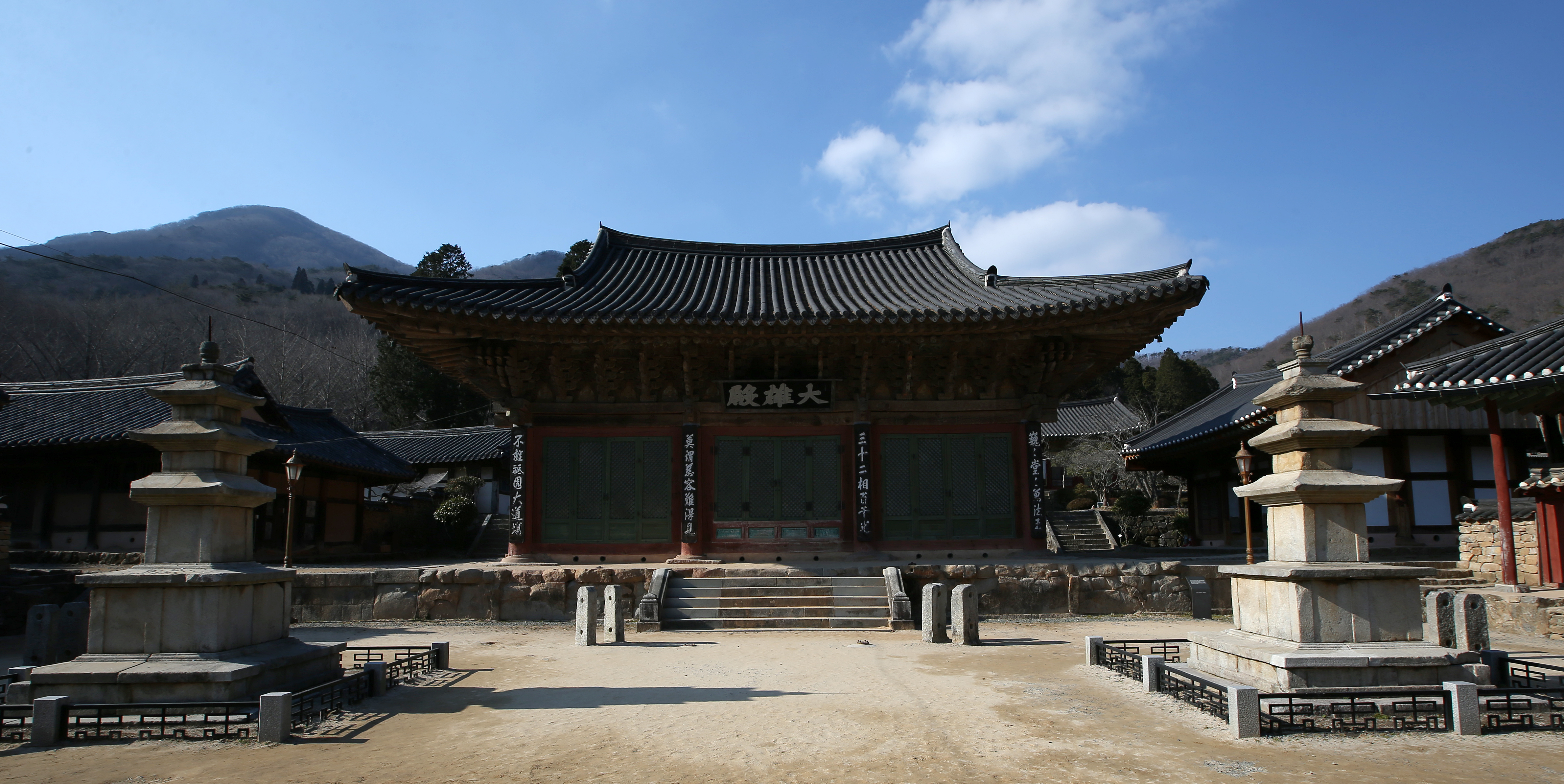
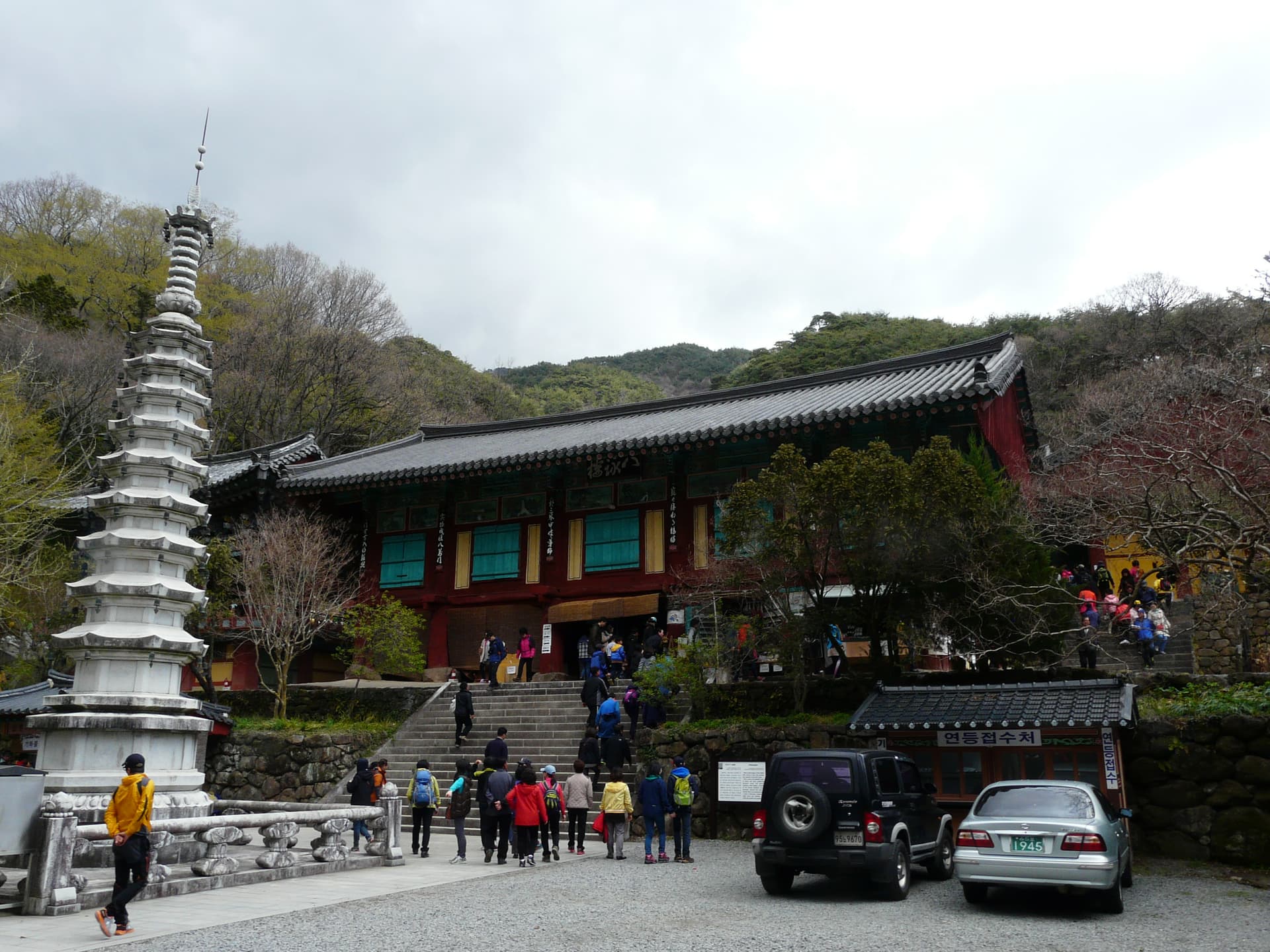
Seonamsa Temple in Suncheon, South Jeolla, South Korea. Image source · CC BY-SA 2.0
Visit essentials
A quick read before you go
- Duration
- Plan at least two hours to walk in, see the main precinct without haste, and return.
- Access
- KTO lists free admission, year-round opening, parking, and telephone +82-61-754-5247.
Overview
Many sacred sites use a gate to separate ordinary movement from religious space. Seonamsa extends that threshold across a valley. Forest, stream, bridge, pavilion, and court gradually concentrate attention, while the absence of a Four Guardian Kings gate gives the sequence a distinctive character. KTO notes that the temple continues to preserve traditional temple culture, and UNESCO includes it among the seven Sansa monasteries recognized as living centers of faith.
The experience should therefore remain grounded in present Taego Buddhist custodianship. Spring blossom and autumn leaf are real seasonal qualities, but they frame an active monastery rather than turning it into a scenic backdrop.
Why this place is sacred
Seungseongyo is more than a picturesque foreground. Its stone arch joins two banks without concealing the bedrock that supports it, and the bridge marks a moment when walking becomes deliberate. After crossing, successive structures reveal the monastery by degrees. This spatial rhythm makes a modest spiritual claim possible: attention can be trained by route, pace, and repeated thresholds. It does not justify claims that the valley transmits energy or guarantees calm.
The source-supported significance lies in the persistence of Buddhist practice within a landscape whose paths, water, old trees, and buildings have been shaped together over time.
Traditional accounts place Buddhist practice here in the early centuries of Korean Buddhism; this page does not force the differing foundation chronologies into a single date.
Seonamsa’s courts have been repaired and conserved while remaining associated with the Taego Order and living temple culture.
Experience and orientation
Walk the approach without racing other visitors to the bridge viewpoint. Hear the stream before looking for the famous arch, then notice how the bridge’s curve is answered by the roofline beyond. Near Daeungjeon, the paired stone pagodas establish a different symmetry from the valley. Seasonal trees can draw crowds, especially the old apricots celebrated in spring; leave room for worshippers and for people moving through narrow passages.
The monastery rewards comparison: rough bedrock and fitted stone, planted garden and surrounding woodland, ceremonial axis and irregular mountain terrain.
Remain on the public path, cross bridges without blocking them, and check whether a hall is open before stepping across its threshold.
Context and lineage
Official visitor material describes Seonamsa as built in the early sixth century, while other traditions attach later founders and restorers to the site. The appropriate account distinguishes these received chronologies from what can be observed directly. Seungseongyo, Daeungjeon, the paired pagodas, museum collections, and continued religious use provide firmer anchors for understanding the existing monastery. UNESCO’s 2018 inscription concerns Seonamsa as one component of the serial Sansa property, not as an independently inscribed World Heritage property.
Seonamsa is associated with Korea’s Taego Buddhist tradition and remains one of the active Sansa mountain monasteries.
Traditions and practice
Buddhist prayer and offerings belong inside a disciplined temple setting. Guests should wait for a clear invitation or follow posted instructions rather than copying gestures from a distance.
The temple receives ordinary visitors while preserving worship, cultural assets, and traditional spaces. Conservation and interpretation are part of that present responsibility.
Choose one transition—the forest edge, bridge, pavilion, or court—and observe what changes in sound, footing, enclosure, and bodily pace.
Korean Buddhism
ActiveTaego Buddhist life continues within a forest monastery whose route and buildings shape religious attention.
Prayer, offerings, temple observance, monastic discipline, and stewardship of cultural assets.
Perspectives and open questions
Seonamsa’s meaning is best read through movement, living Taego practice, and conservation of a cultivated mountain landscape.
Scholarly perspective
Architecture and landscape history can analyze bridge construction, court layout, collections, and changing fabric without resolving every foundation tradition.
Living and traditional perspectives
The route prepares the body for a Buddhist precinct in which practice, restraint, and hospitality remain governed by the resident community.
Open questions
This research found no adequately prevalent metaphysical report to include.
Plan your visit
Access and arrival
KTO lists free admission, year-round opening, parking, and telephone +82-61-754-5247. Confirm current conditions with the temple or Suncheon tourism authority.
No accommodation is asserted in this pass; use the current custodian’s channels for program information.
Respectful visit
Wear modest clothing and shoes appropriate for a kilometre of woodland walking.
Do not use drones, flash, or interior photography unless current signs explicitly allow it.
Place offerings only where temple staff have provided a recognized receptacle.
Stay behind barriers around pagodas, old trees, painted surfaces, and closed monastic areas.
Avoid staging devotional gestures for photographs or treating old trees and protected fabric as props.
Current practical details
Address
450 Seonamsa-gil, Seungju-eup, Suncheon, Jeollanam-do, South Korea
Phone
Hours
Hours, fees, and access can change — verify on the official source before you travel. Practical details last checked Jul 2026.
Location
Map loads as you approach this section.
Pilgrim reflections
A portrait of encounter, not a score
Pilgrims describe what they felt, how present they could become, and whether the place would shape a journey. There are no stars and no ranking of traditions.
No reviewed reflections yet
The first pilgrims can help describe the character of being here.
Share a reflection
Available after an account-backed “Been there.” Every reflection is reviewed before publication.
Nearby sacred places
Explore other sacred places in the region. Proximity does not establish access or travel time; check each place’s guidance.
References
Sources consulted for this page. Source categories describe the publication, not a guarantee that every claim is verified. Traditional accounts and outside interpretations may differ.
- 01Sansa, Buddhist Mountain Monasteries in Korea — UNESCO World Heritage CentreofficialAuthoritative World Heritage property record, dossier 1562; component scope preserved.
- 02Seonamsa Temple — World Heritage nomination dossier — State Party of the Republic of Korea / UNESCOofficialPrimary nomination documentation for UNESCO property 1562, including serial-component identity, mapping, and heritage context.
- 03Seonamsa Temple [UNESCO World Heritage] — Korea Tourism OrganizationofficialOfficial tourism record for the forest approach, Seungseongyo, temple culture, address, and visitor services.
- 04Seonamsa — Wikipedia — Wikipedia contributorsacademicCorroborates identity, location, and general historical context; key claims require higher-tier support.
- 05Seonamsa — Wikidata — Wikidata contributorsSource contextCommunity-maintained structured identity and coordinate cross-check; not treated as scholarship or an official custodian record.
- 06Seonamsa Temple — Google Maps place record — GoogleSource contextStrong identity match used only for current practical fields and coordinates.
Share a photo
Help visitors recognize Seonamsa Temple. Every submission is reviewed before publication.