Samseonggung Shrine
Three origin figures honored in a modern Jirisan sanctuary
Understand sacred places, explore living traditions, and learn how to engage respectfully with Pilgrim Map.
Access has not been verified. Check current local guidance before planning a visit.
Hadong-gun, Gyeongsangnam-do, South Korea
Read the sources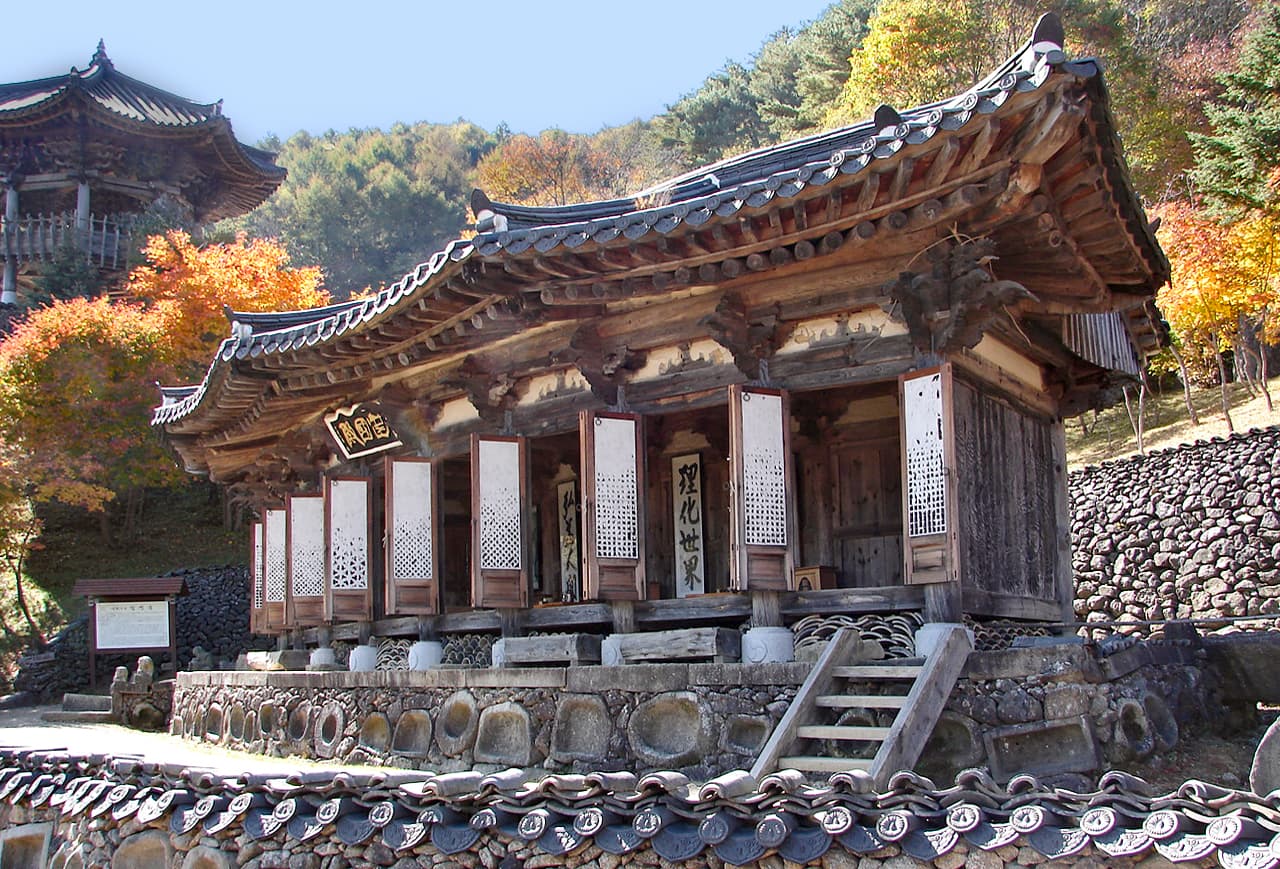
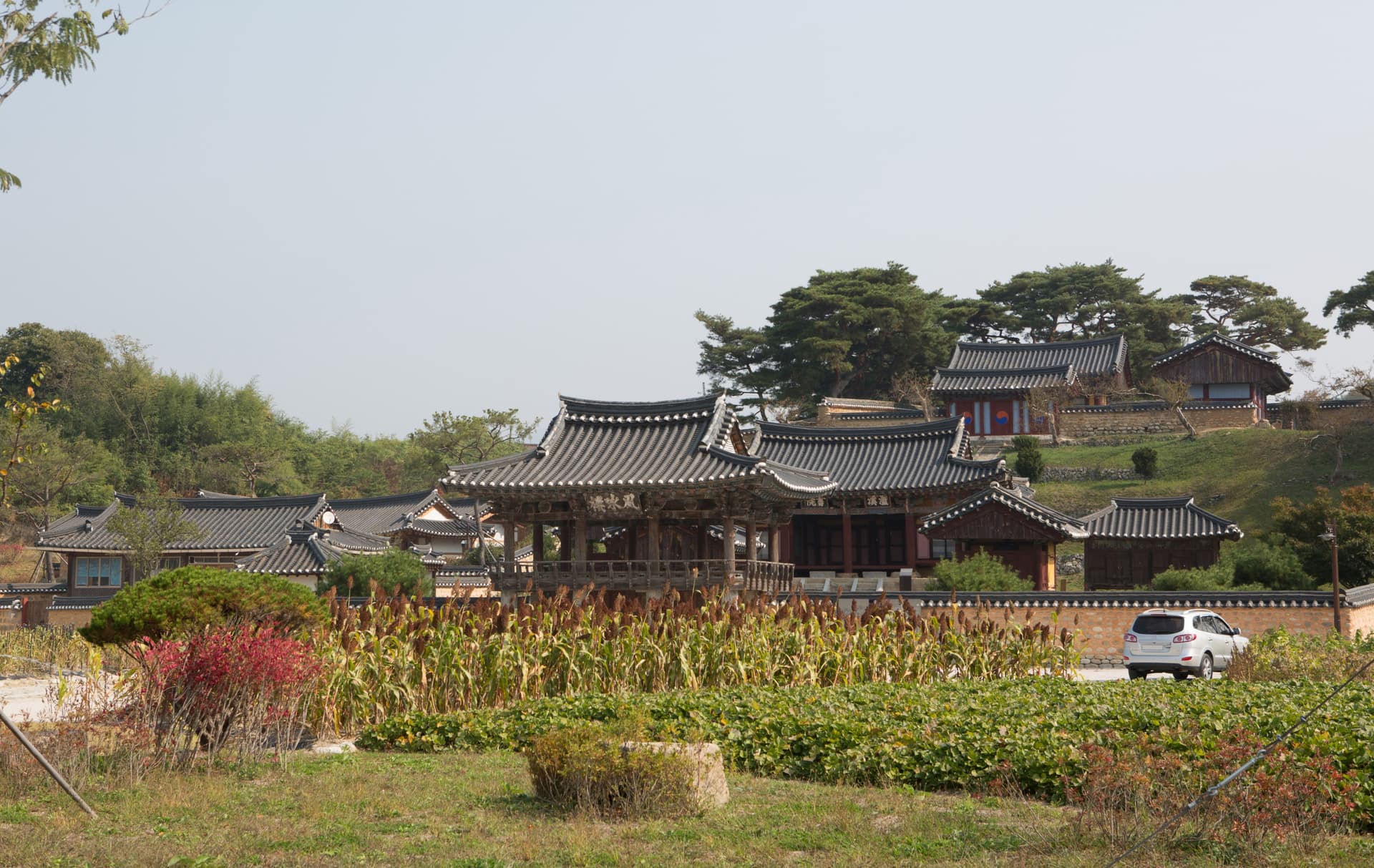
Samseonggung Shrine in Hadong, South Gyeongsang, South Korea. Image source · CC BY-SA 3.0
Visit essentials
A quick read before you go
- Duration
- Seasonal hours and the uphill setting warrant a deliberate visit.
- Access
- Verify admission and seasonal closing time through current tourism information.
Overview
The extensive stonework can look ancient in photographs, yet an honest account begins with the site’s modern date. Korea Tourism Organization identifies 1983 as the year Hanpul and his disciples established or restored the sanctuary. They understood the project as renewing a sodo, an altar-centered sacred precinct associated with Gojoseon memory. Samseonggung should therefore be described as contemporary religious construction shaped by old narratives, not as an unchanged Bronze Age complex.
Hwanin is presented as Lord of Heaven, Hwanung as a divine regent who descends into the human world, and Dangun as the legendary founder of Gojoseon. Together they organize a sacred genealogy connecting heaven, civilizing descent, and national beginnings. The high Jirisan setting, cairn-like towers, circular spaces, ceremonial gate, and main hall make that genealogy walkable. Its significance belongs to an active tradition even when visitors approach primarily through architecture or cultural history.
Why this place is sacred
Samseonggung creates antiquity through repeated stone forms while openly belonging to the late twentieth century. That tension is not a defect; it reveals how communities materialize inherited stories in new landscapes. Walking past towers assembled from many stones can suggest collective labor, discipline, and continuity without proving that the structures reproduce an ancient blueprint. The three honored figures also resist a simple deity label.
They are mythic and ancestral presences within Korean origin traditions, and their meanings vary among historical, religious, and national readings. Personal reports of strong energy at the mountain remain subjective and are not independently verified.
The sanctuary was intentionally founded in 1983 for a modern Sinseondo community.
Later change is identified without inventing continuity.
Experience and orientation
Arrive with enough time for the climb through the precinct rather than treating the main hall as a single photo stop. Observe how passage is controlled by walls, narrow openings, drums or signals, and changes in elevation. Compare irregular stone piles with deliberately shaped courts; both are designed features. At Cheongung, remember that the hall serves the three honored figures and may contain active prayer. Avoid calling every tower prehistoric or assigning an invented ritual to it.
Google lists daily hours from 09:00 to 18:00, while KTO publishes shorter winter access and an earlier morning start; because schedules differ, consult the Hadong page or telephone 055-884-1279 before travel.
Enter by the visitor route and leave stone towers untouched.
Context and lineage
Official tourism material credits Kang Min-ju, the priest Hanpul, and disciples with the 1983 creation of Samseonggung. Their stated purpose was to renew the sodo and practice Sinseondo while honoring Hwanin, Hwanung, and Dangun. This account uses the language of restoration because the community connects its work to Gojoseon-era sacred institutions. Archaeology does not establish that the present buildings occupy an excavated ancient sodo.
The responsible formulation keeps two truths together: the physical complex is modern, and the tradition it embodies consciously reaches toward far older stories.
Korean Sinseondo and national-origin devotion
Traditions and practice
Visitors may encounter prayer, bows, offerings, or scheduled ceremonies centered on the three origin figures. These forms belong to the resident community and should not be reconstructed from photographs. A respectful contemplative exercise is to trace how the sequence Hwanin, Hwanung, and Dangun moves from heaven toward human polity, then ask what obligations a founding story creates in the present. This invites interpretation without asserting that the myth is literal history.
Do not stack new stones, sound instruments, cross ritual barriers, or copy gestures unless staff invite it.
Current observance remains under custodian authority.
Pause once and attend before interpreting.
Korean Sinseondo and national-origin devotion
ActiveThree ancestral figures anchor the sanctuary’s Korean origin-centered devotion.
Visitors encounter a living community whose attendants set ceremonial boundaries.
Perspectives and open questions
Modern religious renewal, national-origin mythology, landscape design, and visitor spectacle must be read together.
Scholarly perspective
For practitioners, the sanctuary renews a sacred genealogy and Sinseondo path. Historians distinguish this living meaning from claims of direct architectural survival from Gojoseon. Landscape analysis can study how newly assembled stone and mountain elevation produce authority. These perspectives can coexist if dates and voices remain clear. Reports that the site radiates unusual power are personal testimony, not an independently verified property.
Living and traditional perspectives
Sinseondo teaching centers Hwanin, Hwanung, and Dangun as ancestral figures.
Open questions
The sources establish devotion and symbolism, not paranormal efficacy.
Plan your visit
Access and arrival
Verify admission and seasonal closing time through current tourism information.
Neither official tourism source reviewed here documents on-site lodging.
Respectful visit
Choose weather-ready, modest clothing for this high Jirisan setting.
Request permission around ceremonies, attendants, sacred images, and interior spaces.
Use only forms explicitly authorized by custodians.
Barriers and ceremony instructions always take priority.
Avoid imitation, intrusion, and unsupported promises.
Current practical details
Address
산303-1 Mukgye-ri, Cheongam-myeon, Hadong-gun, Gyeongsangnam-do, South Korea
Phone
Hours
Hours, fees, and access can change — verify on the official source before you travel. Practical details last checked Jul 2026.
Location
Map loads as you approach this section.
Pilgrim reflections
A portrait of encounter, not a score
Pilgrims describe what they felt, how present they could become, and whether the place would shape a journey. There are no stars and no ranking of traditions.
No reviewed reflections yet
The first pilgrims can help describe the character of being here.
Share a reflection
Available after an account-backed “Been there.” Every reflection is reviewed before publication.
Nearby sacred places
Explore other sacred places in the region. Proximity does not establish access or travel time; check each place’s guidance.
References
Sources consulted for this page. Source categories describe the publication, not a guarantee that every claim is verified. Traditional accounts and outside interpretations may differ.
- 01Samseonggung — Korea Tourism OrganizationofficialExact official record for the 1983 establishment, Sinseondo identity, three honored origin figures, elevation, address, seasonal hours, fee, and telephone.
- 02The One and Only — Tourist Guide Map to Hadong — Hadong CountyofficialCurrent county-hosted English tourism guide naming Samseonggung as a shrine for Hwanin, Hwanung, and Dangun and giving its address and telephone. No separately owned shrine website was independently verified.
- 03Hadong County — Cheonghak-dong Samseonggung — Hadong CountyofficialLive county homepage feature naming Samseonggung among Hadong's principal sights and identifying it as a sanctuary for Hwanin, Hwanung, and Dangun that preserves Sinseondo.
- 04Samseonggung Shrine — Google Maps place record — GoogleSource contextStrong exact identity used only for coordinates, address, telephone, hours, and operating status.
Share a photo
Help visitors recognize Samseonggung Shrine. Every submission is reviewed before publication.