Wat Tham Suea, Krabi
Forest caves and a strenuous summit frame Krabi Buddhist practice
Understand sacred places, explore living traditions, and learn how to engage respectfully with Pilgrim Map.
Access has not been verified. Check current local guidance before planning a visit.
Mueang Krabi, Krabi, Thailand
Read the sources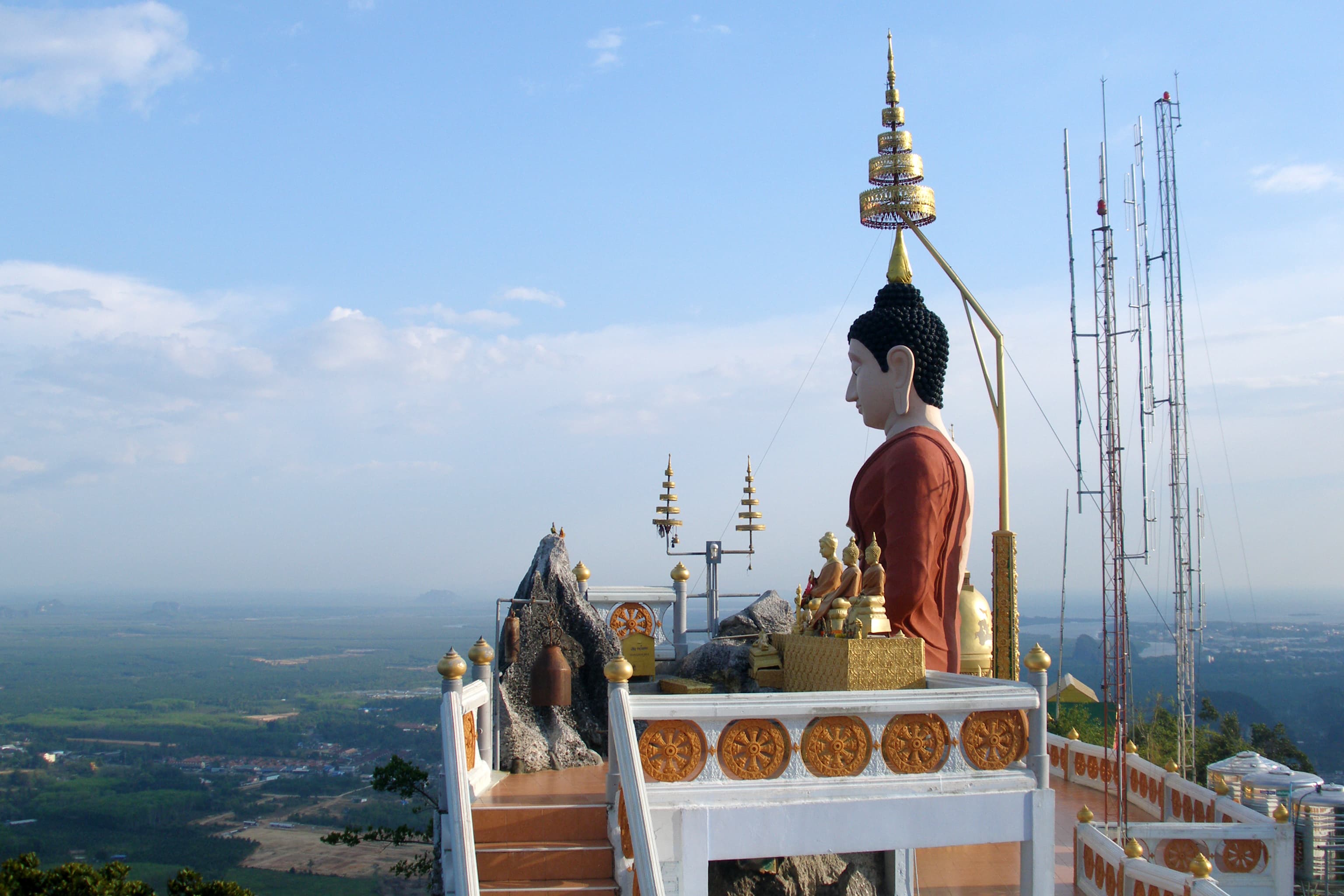
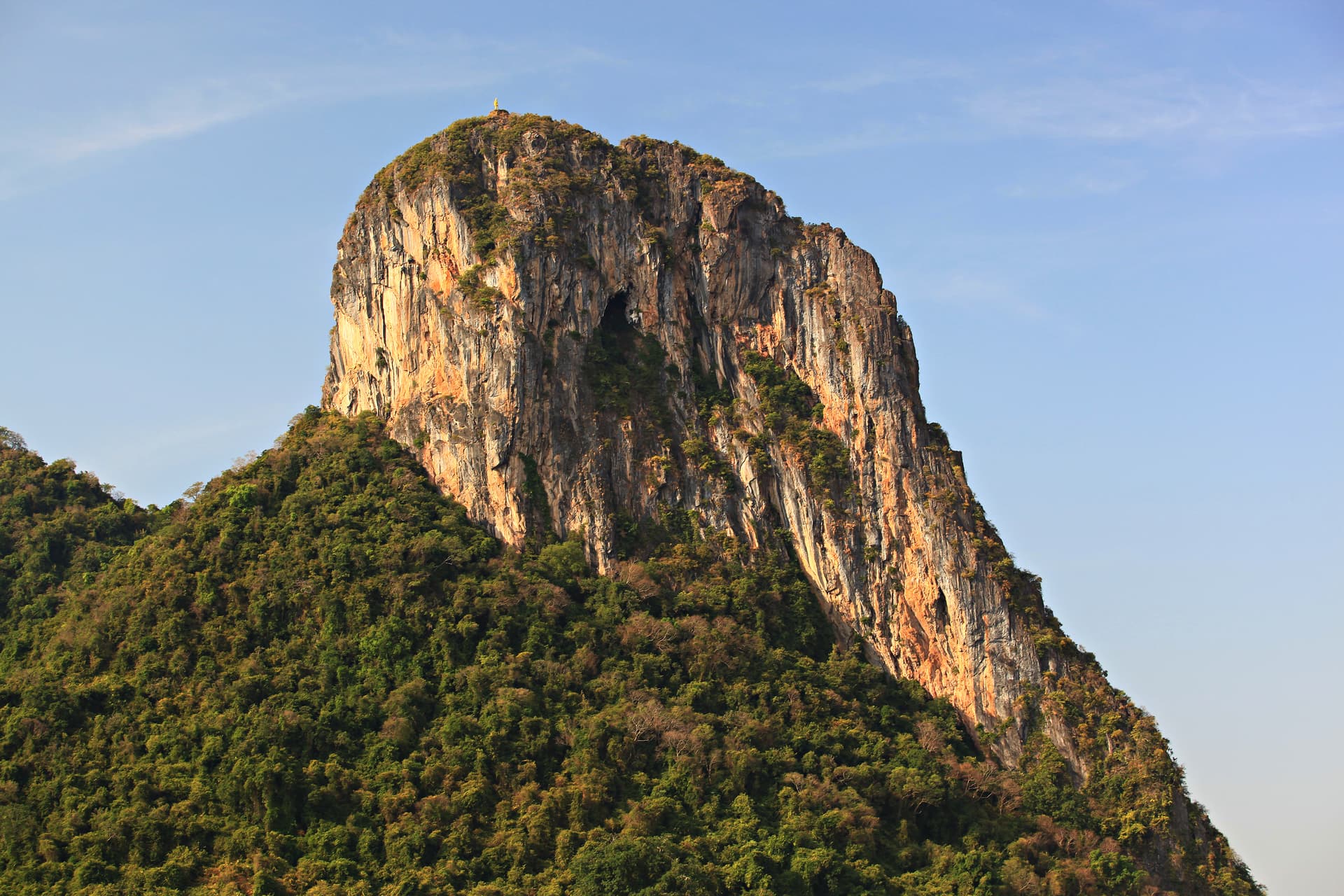
Wat Tham Suea, Krabi in Mueang Krabi, Krabi, Thailand. Image source · CC BY 4.0
Visit essentials
A quick read before you go
- Etiquette
- Protect worshippers, historic fabric, and closed thresholds.
Overview
At ground level, caves and forest support monastic seclusion and Buddha devotion; above, the summit image turns exertion and landscape into a different mode of attention. The temple's identity should not be reduced to completing a staircase. The tiger name is explained through a local account that tigers once used the cave area, not through proof of a miraculous paw print. Religious life remains active below the summit, and visitors unable to climb can still make a complete, respectful visit.
Why this place is sacred
Cave echo, tropical forest, macaques, heat, and extreme elevation changes create a strong sensory sequence. These natural and bodily effects do not demonstrate paranormal energy. The tiger story is reported as local naming tradition, while archaeological material indicates older human use of the cave landscape. Neither fact proves an unbroken ancient monastery. No exact, prevalent miracle claim was robust enough to include.
The page instead treats fatigue, fear, and panoramic reward as experiences that may encourage reflection without becoming spiritual tests.
Experience and orientation
Assess fitness, heat, storms, and remaining daylight before beginning the summit stairs. Carry water, keep hands free, yield on narrow sections, and turn back without shame. Macaques are wildlife: secure food and never tease or feed them. In cave and monastic areas, remove shoes where directed and protect formations and archaeological traces. Strong Google Places supplies exact routine hours and contact, but summit safety and ceremonies can override them. No unrelated Tiger Cave website is promoted.
Context and lineage
ONEP's cultural-environment record describes the cave, its tiger-name tradition, and archaeological significance. The modern Buddhist institution developed later within that landscape. Tourism Authority coverage confirms Wat Tham Suea as a Krabi natural and religious attraction but does not warrant a precise legendary foundation. The guide therefore separates geological cave formation, earlier human presence, and twentieth-century monastic development. Wat Tham Suea is not UNESCO-listed, and it is distinct from the Kanchanaburi temple of the same translated name.
Traditions and practice
Current practice includes Buddha homage, offerings at designated points, meditation, respect for monastic areas, and optional ascent to the summit image. Stair count is practical information, not a ritual score; no one earns superior merit by ignoring health or weather. Do not leave incense or coins in natural crevices, photograph monks without consent, or use cave walls for wishes. The sources do not establish a named recurrent pilgrimage, so active worship and strenuous visitation do not automatically become pilgrimage metadata.
Thai Theravada forest Buddhism
ActiveDocumented tradition layer 1.
Cave and wildlife stewardship
ActiveDocumented tradition layer 2.
Perspectives and open questions
Religious, historical, and environmental evidence remain distinct.
Scholarly perspective
Theravada Buddhism interprets the monastery through refuge, meditation, and sangha. Archaeology and cultural-environment management recognize earlier traces in the cave; geology and ecology explain limestone, forest, and wildlife. Accessibility ethics rejects the idea that summit completion measures devotion. These perspectives together distinguish Krabi's Wat Tham Suea from namesakes and prevent natural drama from overwhelming living religious authority. The result is both a natural sacred landscape and an active built temple complex.
The current monastery developed in the twentieth century within an older limestone and archaeological landscape. The summit route often dominates social media, but the lower monastery deserves equal editorial weight. Forest practice, cave spaces, resident monks, and ordinary Buddha homage remain meaningful when heat, disability, age, or storms rule out the stairs. This distinction prevents fitness culture from setting a spiritual hierarchy.
It also guides accessibility metadata: a partly accessible religious visit can be complete even when the most famous viewpoint remains physically unreachable. Ground-level devotion is not a lesser itinerary.
Plan your visit
Day-of authority overrides routine listing data.
Respectful visit
Protect worshippers, historic fabric, and closed thresholds.
Current practical details
Address
35 Tambon Krabi Noi, Amphoe Mueang Krabi, Chang Wat Krabi 81000, Thailand
Phone
Hours
Hours, fees, and access can change — verify on the official source before you travel. Practical details last checked Jul 2026.
Location
Map loads as you approach this section.
Pilgrim reflections
A portrait of encounter, not a score
Pilgrims describe what they felt, how present they could become, and whether the place would shape a journey. There are no stars and no ranking of traditions.
No reviewed reflections yet
The first pilgrims can help describe the character of being here.
Share a reflection
Available after an account-backed “Been there.” Every reflection is reviewed before publication.
Nearby sacred places
Explore other sacred places in the region. Proximity does not establish access or travel time; check each place’s guidance.
References
Sources consulted for this page. Source categories describe the publication, not a guarantee that every claim is verified. Traditional accounts and outside interpretations may differ.
- 01Wat Tham Suea — Google PlacesofficialExact practical metadata accepted after strong name, country, locality, and coordinate review.
- 02Tiger Cave archaeological environment — Office of Natural Resources and Environmental Policy and PlanningofficialExact cave coordinates, archaeological classification, and tiger-name tradition.
- 03Krabi: embrace the charm of nature — Tourism Authority of ThailandofficialExact current tourism identity and natural-setting context.
Pilgrim glossary
- Sangha
- The community of Buddhist practitioners, traditionally monks and nuns.
Share a photo
Help visitors recognize Wat Tham Suea, Krabi. Every submission is reviewed before publication.