Wat Phra Mahathat Woramahawihan
A great reliquary and endless cloth procession anchor southern Thai Buddhism
Understand sacred places, explore living traditions, and learn how to engage respectfully with Pilgrim Map.
Access has not been verified. Check current local guidance before planning a visit.
Nakhon Si Thammarat, Nakhon Si Thammarat, Thailand
Read the sources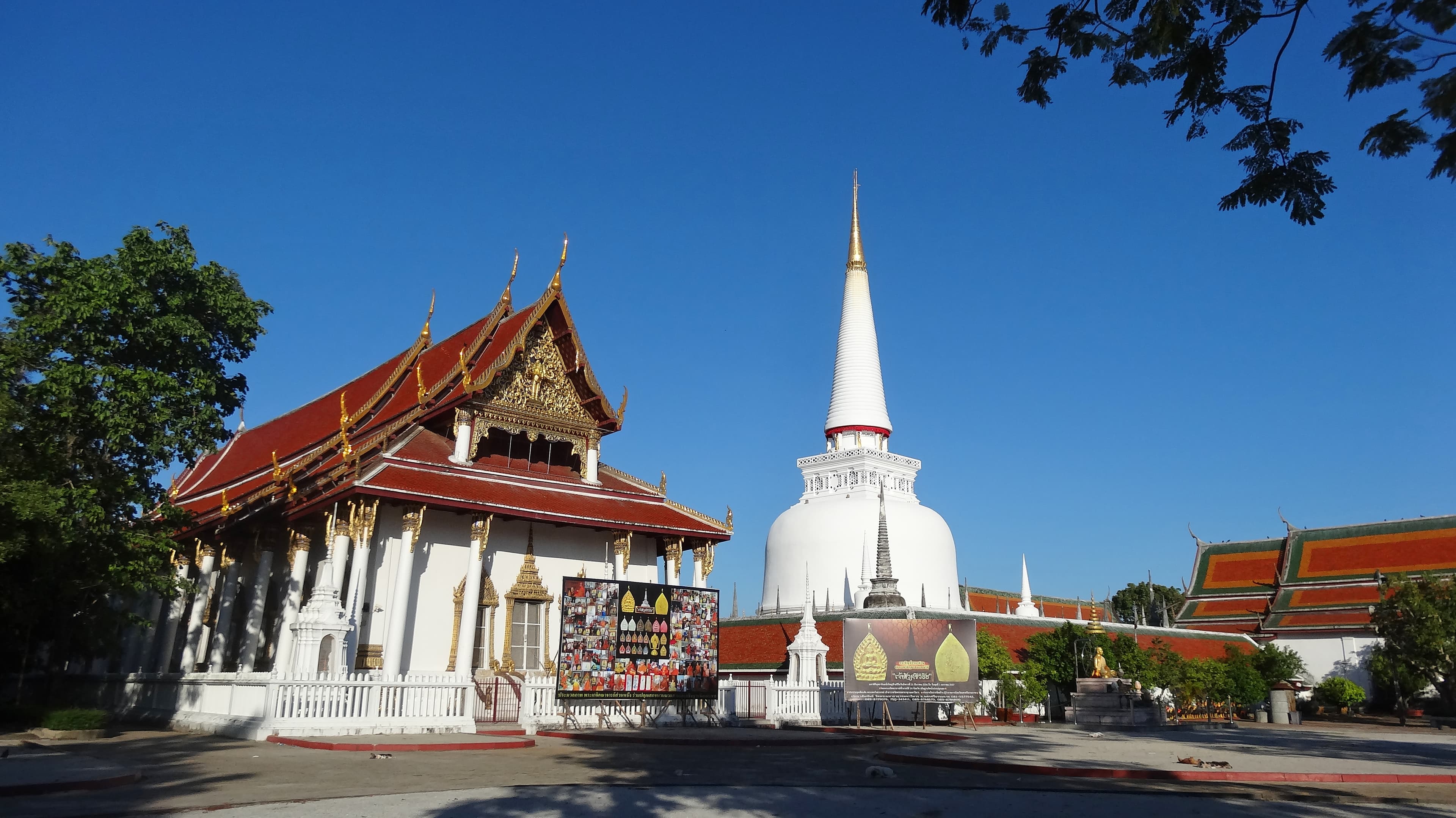
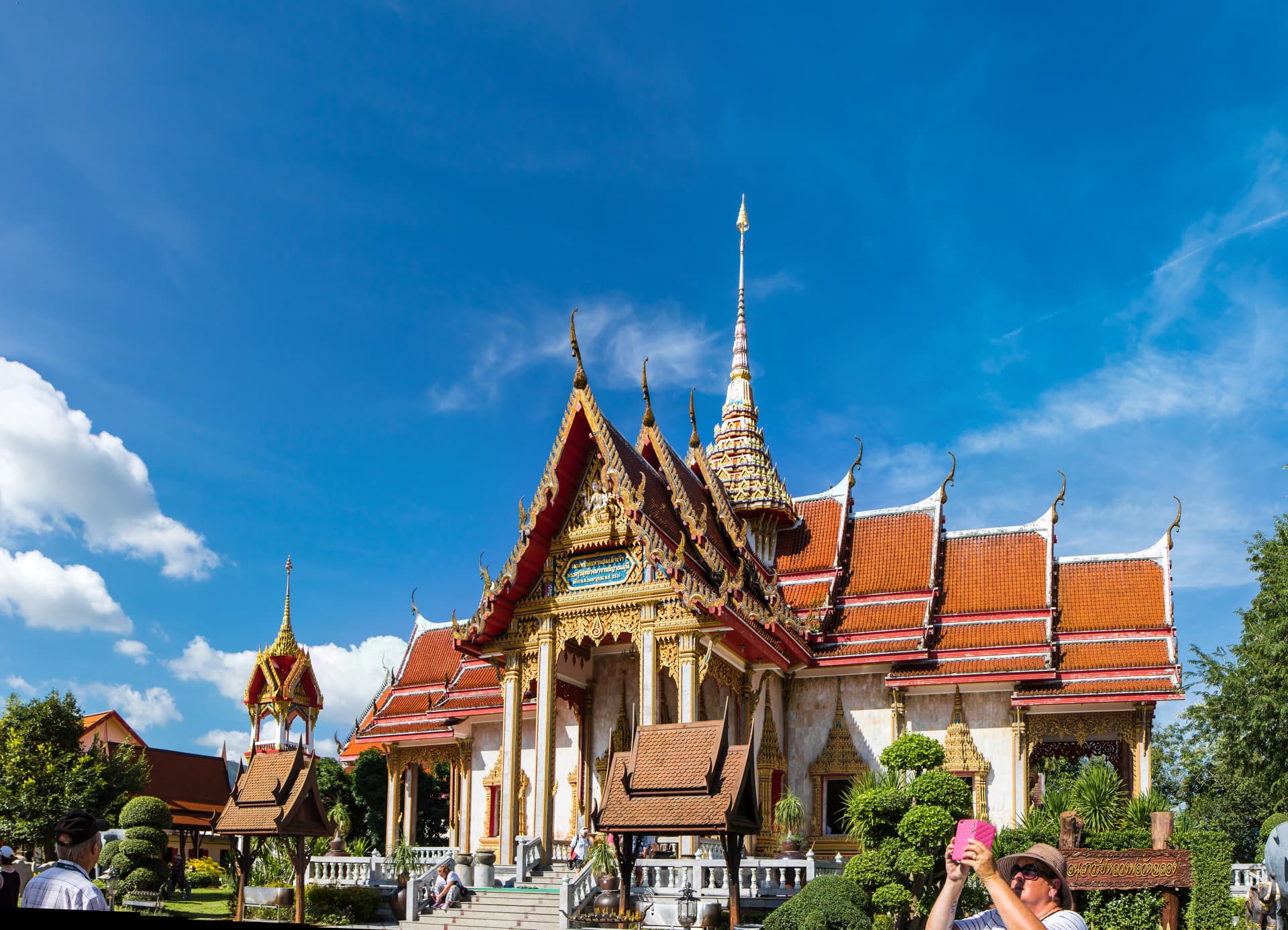
Wat Phra Mahathat Woramahawihan in Nakhon Si Thammarat, Nakhon Si Thammarat, Thailand. Image source · CC BY-SA 3.0
Visit essentials
A quick read before you go
- Etiquette
- Never cross, touch, or independently attach cloth; monastic and conservation zones retain…
Overview
Phra Borommathat Chedi gives the monastery its center. The bell-shaped reliquary is revered as housing Buddha relics, so architecture is approached through homage rather than viewed only as style. UNESCO's 2026 inscription recognizes a monastery founded in the eighth century at a peninsular crossroads shaped by links with India, Java, Sri Lanka, and the Mon region. Those influences were integrated into local buildings, ritual, chronicle, and performance.
Hae Pha Khuen That makes continuity visible: devotees carry a long joined cloth and wrap the great stupa during major Buddhist observances. The cloth is not decoration added for visitors. It is collective offering, movement, merit, and renewed relationship to the relic. Monks, local communities, pilgrims, and heritage stewards sustain different parts of the same living complex.
Why this place is sacred
Relic tradition condenses an extensive geography. A monastery between maritime worlds received forms and ideas from several regions, then transmitted distinctive expressions through southern Thailand and beyond. That history should not be narrated as passive borrowing; UNESCO emphasizes integration and enduring influence. The cloth procession likewise turns individual offerings into a shared body: many lengths and hands become one circuit around the reliquary. Sacredness is documented through practice and cultural continuity, not a measurable aura.
The enshrined relic is a matter of Buddhist tradition, while World Heritage inscription is a legal-cultural designation. Neither should be used to guarantee healing, luck, or spiritual superiority. Their intersection instead shows how material custody and repeated devotion can carry memory over long periods.
Experience and orientation
First identify Phra Borommathat Chedi and the permitted circumambulatory route. Stay behind anyone bowing or carrying cloth, and never cross a procession for a photograph. The monastery contains sacred, monastic, museum, and circulation zones; access to one does not imply access to all. During Hae Pha Khuen That, follow organizers closely because the long cloth, dense participation, and ritual direction require coordinated space. On ordinary days, study how vihanas, guardians, Buddha images, and the reliquary create successive thresholds.
UNESCO status can increase attention and crowds, but it does not change temple etiquette. Shoes, clothing, offerings, and photography remain governed by custodians and current signs. Fragile or restricted areas should be understood from outside their boundary.
Context and lineage
UNESCO's current property account places the monastery's foundation in the eighth century, on a site where earlier religious activity had occurred. Its peninsular location connected Indian and Pacific networks, bringing Brahmanical, Hindu, Mahayana, Theravada, Javanese, Sri Lankan, and Mon-region influences into a long local history. The great reliquary became a major Theravada center and artistic reference. Chronicles, Nora performance, and annual cloth wrapping continued alongside architectural renewal.
The property was on Thailand's Tentative List from 2012 before inscription as World Heritage property 1761 in 2026. This current status replaces outdated wording that calls it merely tentative. Inscription recognizes outstanding value but does not freeze a working monastery or remove religious authority from its community.
Traditions and practice
Hae Pha Khuen That is the best documented pilgrimage practice: on major Buddhist holidays, devotees process with joined painted cloth to wrap the great reliquary. Exact dates and participation rules should be checked each year. Daily and seasonal practice also includes bowing, chanting, offerings, meditation, merit-making, circumambulation, and monastic ceremonies. Guests should never attach their own cloth directly or insert themselves into a procession without instruction.
Relic homage is expressed through disciplined forms rather than physical access to what is enshrined. Nora and other cultural traditions belong to the property's living continuity but should not be staged casually inside sacred space. Observation from an assigned edge is fully respectful when participation is not offered.
Theravada Buddhism
ActiveTheravada continuity is expressed through relic homage, cloth procession, monastic practice, chronicle, and Nora.
Perspectives and open questions
Relic belief, UNESCO criteria, architecture, performance, and conservation each carry distinct authority.
Scholarly perspective
Buddhist interpretation centers relic veneration, merit, and the stupa as a focus for recollection. UNESCO interprets the property through cultural exchange, enduring influence, and living association under criteria ii and vi. Architectural history studies the great reliquary and the way imported forms became locally distinctive. Performance studies trace Nora, chronicle, and procession as heritage carried by bodies and memory. Conservation must accommodate both fragile fabric and large-scale worship.
The Buddha relic claim remains religious tradition, not scientific authentication; UNESCO inscription remains heritage recognition, not proof of holiness. Together they explain why this is both an internationally protected property and a place whose primary rhythms continue to be set by worship.
Plan your visit
Strong Places supports exact identity; festival dates, openings, and World Heritage management controls can change.
Respectful visit
Never cross, touch, or independently attach cloth; monastic and conservation zones retain separate rules.
Current practical details
Address
435 Ratchadamnoen Rd, Tambon Nai Mueang, Amphoe Mueang Nakhon Si Thammarat, Chang Wat Nakhon Si Thammarat 80000, Thailand
Phone
Hours
Hours, fees, and access can change — verify on the official source before you travel. Practical details last checked Jul 2026.
Location
Map loads as you approach this section.
Pilgrim reflections
A portrait of encounter, not a score
Pilgrims describe what they felt, how present they could become, and whether the place would shape a journey. There are no stars and no ranking of traditions.
No reviewed reflections yet
The first pilgrims can help describe the character of being here.
Share a reflection
Available after an account-backed “Been there.” Every reflection is reviewed before publication.
Nearby sacred places
Explore other sacred places in the region. Proximity does not establish access or travel time; check each place’s guidance.
References
Sources consulted for this page. Source categories describe the publication, not a guarantee that every claim is verified. Traditional accounts and outside interpretations may differ.
- 01Wat Phra Mahathat Woramahawihan, Nakhon Si Thammarat — UNESCO World Heritage CentreofficialOfficial 2026 inscription, history, religious exchange, living traditions, and property ID.
- 02Wat Phra Mahathat Woramahawihan Tentative List dossier — UNESCO World Heritage Centre / ThailandofficialDetailed relic, stupa, monastic zoning, and Hae Pha Khuen That evidence; retained as historical nomination evidence.
- 032026 nomination and inscription decision for property 1761 — UNESCO World Heritage CommitteeofficialCurrent inscription decision and criteria ii and vi.
- 04Wat Phra Mahathat — Wikipedia — Wikipedia contributorsacademicCorroborates identity, location, and basic historical context; key claims require higher-tier corroboration.
- 05Q2552354 — Wikidata — Wikidata contributorsacademicStructured identity and coordinate corroboration; not used alone for spiritual or historical claims.
- 06Wat Phra Mahathat Woramahawihan — Google Maps — Google PlacesSource contextStrong name, country, locality, and coordinate match; used only for practical visitor data and identity corroboration.
Pilgrim glossary
- Stupa
- A dome-shaped Buddhist monument that holds relics or marks a sacred place.
Share a photo
Help visitors recognize Wat Phra Mahathat Woramahawihan. Every submission is reviewed before publication.