Wat Tham Sua, Kanchanaburi
A blessing Buddha and relic chedi rise above Mae Klong fields
Understand sacred places, explore living traditions, and learn how to engage respectfully with Pilgrim Map.
Access has not been verified. Check current local guidance before planning a visit.
Tha Muang, Kanchanaburi, Thailand
Read the sources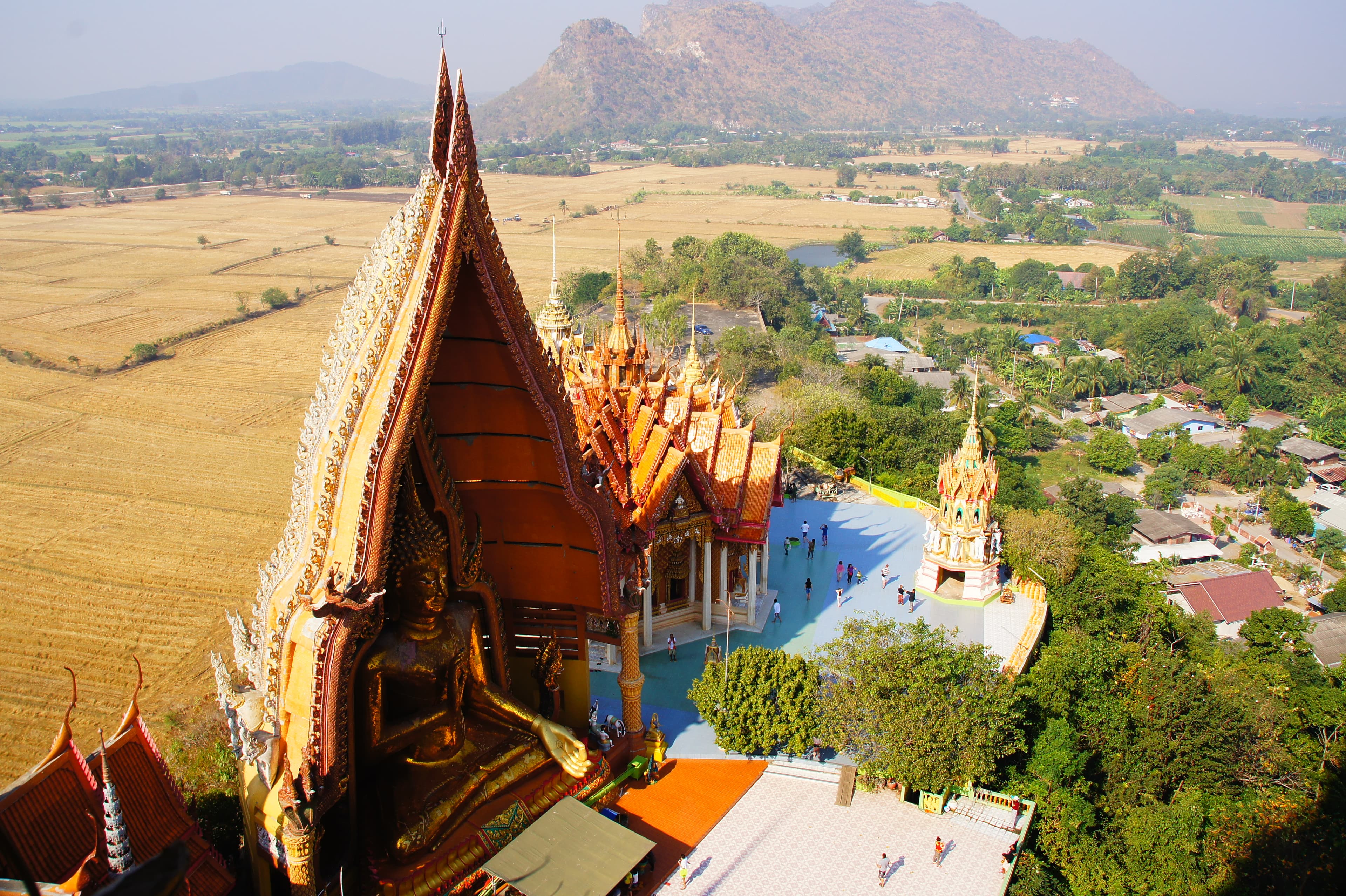
Wat Tham Sua, Kanchanaburi in Tha Muang, Kanchanaburi, Thailand. Image source · CC BY 3.0
Visit essentials
A quick read before you go
- Etiquette
- Protect worshippers, historic fabric, and closed thresholds.
Overview
The large seated Buddha faces outward across cultivated land, while the chedi draws movement vertically through multiple levels. Their scale is modern and intentional: image worship, relic recollection, and a commanding provincial landmark meet on one hill. A small cave at the base gives the temple its name and contains birth-day Buddha images, but it should not be made the sole spiritual centre.
The source-led account distinguishes the 1971 institution, the later monumental structures, and the pre-existing landform instead of blending them into timeless legend.
Why this place is sacred
Wide fields, height, bells, and the contrast between cave enclosure and open terraces can sharpen attention. None verifies that the hill emits a healing force. The relics are reported by official Thai tourism material, while their provenance remains a religious tradition. The blessing posture of Luang Pho Chin Prathanphon carries devotional meaning but does not guarantee a requested outcome. This page avoids the common confusion with Krabi's Tiger Cave Temple and with the adjacent Vietnamese-Mahayana Wat Tham Khao Noi.
Experience and orientation
Decide whether stairs, available transport, or a shorter lower-level visit fits your body and the weather. Heat, polished surfaces, and steep transitions deserve more attention than finishing every level. Give people praying at Luang Pho Chin Prathanphon room, and keep feet and portrait poses respectful around Buddha images. Provincial government information and the exact strong Places listing supply ordinary access signals; closures for ceremonies or maintenance remain possible. The official provincial page, not a similarly named temple, governs identity.
Context and lineage
Kanchanaburi Province records 1971 as the foundation year. Subsequent construction produced the large blessing Buddha, octagonal ordination hall, and sixty-nine-metre Ket Kaeo Maha Prasat. ONEP's natural-site record documents the hill and small cave, including earlier damaged images and later religious development. These are different evidence layers: natural landform, historical religious traces, and modern monument. The site is not UNESCO-listed, and claims about remote antiquity are not required to explain its importance.
Traditions and practice
Current worship includes bowing before the large Buddha, offerings, chanting, relic homage, and visits to authorized image spaces. Government material includes the temple in a nine-temple Kanchanaburi faith itinerary, but that tourism list does not establish a stable named religious order or temple-specific pilgrimage institution; the metadata therefore does not invent one. Use only designated incense and donation points. In the cave, protect rock and images from touch, wax, smoke, and informal graffiti.
Thai Theravada Buddhism
ActiveDocumented tradition layer 1.
Hill and cave stewardship
ActiveDocumented tradition layer 2.
Perspectives and open questions
Religious, historical, and environmental evidence remain distinct.
Scholarly perspective
Thai Theravada practice centers the Buddha image, relics, merit, and an active sangha. Landscape interpretation considers why a modern monument was placed above fields; environmental management treats the hill and cave as natural assets. Accessibility analysis asks visitors to separate devotion from athletic achievement. Together these approaches make Wat Tham Sua more precise: a modern living monastery rooted in a real landform, not an ancient ruin, an energy claim, or the Krabi temple that shares its translated name.
The provincial government records the temple's foundation in 1971. The adjacent skyline makes entity discipline essential. Wat Tham Sua supplies the great blessing Buddha and Ket Kaeo Maha Prasat; Wat Tham Khao Noi supplies the Vietnamese-Mahayana pagoda. Photographs often include both, but shared frames do not permit mixed names, images, opening data, or doctrine.
Keeping the records separate protects each sangha's history and prevents a viewer from attributing Maitreya devotion to the Thai monastery or Luang Pho Chin Prathanphon to its neighbor. Separate captions should survive every later export.
Plan your visit
Day-of authority overrides routine listing data.
Respectful visit
Protect worshippers, historic fabric, and closed thresholds.
Current practical details
Address
XJ34+H36, Muang Chum, Tha Muang District, Kanchanaburi 71110, Thailand
Phone
Hours
Hours, fees, and access can change — verify on the official source before you travel. Practical details last checked Jul 2026.
Location
Map loads as you approach this section.
Pilgrim reflections
A portrait of encounter, not a score
Pilgrims describe what they felt, how present they could become, and whether the place would shape a journey. There are no stars and no ranking of traditions.
No reviewed reflections yet
The first pilgrims can help describe the character of being here.
Share a reflection
Available after an account-backed “Been there.” Every reflection is reviewed before publication.
Nearby sacred places
Explore other sacred places in the region. Proximity does not establish access or travel time; check each place’s guidance.

References
Sources consulted for this page. Source categories describe the publication, not a guarantee that every claim is verified. Traditional accounts and outside interpretations may differ.
- 01Wat Tham Suea — Google PlacesofficialExact practical metadata accepted after strong name, country, locality, and coordinate review.
- 02Wat Tham Suea — Kanchanaburi Provincial GovernmentofficialExact foundation, large Buddha, chedi, worship, and visitor context.
- 03Khao Tham Suea / Wat Tham Suea hill — Office of Natural Resources and Environmental Policy and PlanningofficialExact natural hill, small cave, Buddha images, and built use.
- 04Nine temples in Kanchanaburi — Royal Thai GovernmentofficialExact relic chedi, large Buddha, and government faith-tourism context.
Pilgrim glossary
- Sangha
- The community of Buddhist practitioners, traditionally monks and nuns.
Share a photo
Help visitors recognize Wat Tham Sua, Kanchanaburi. Every submission is reviewed before publication.