Wat Rai Khing
Luang Pho watches the Tha Chin while an annual lunar festival renews devotion
Understand sacred places, explore living traditions, and learn how to engage respectfully with Pilgrim Map.
Access has not been verified. Check current local guidance before planning a visit.
Sam Phran, Nakhon Pathom, Thailand
Read the sources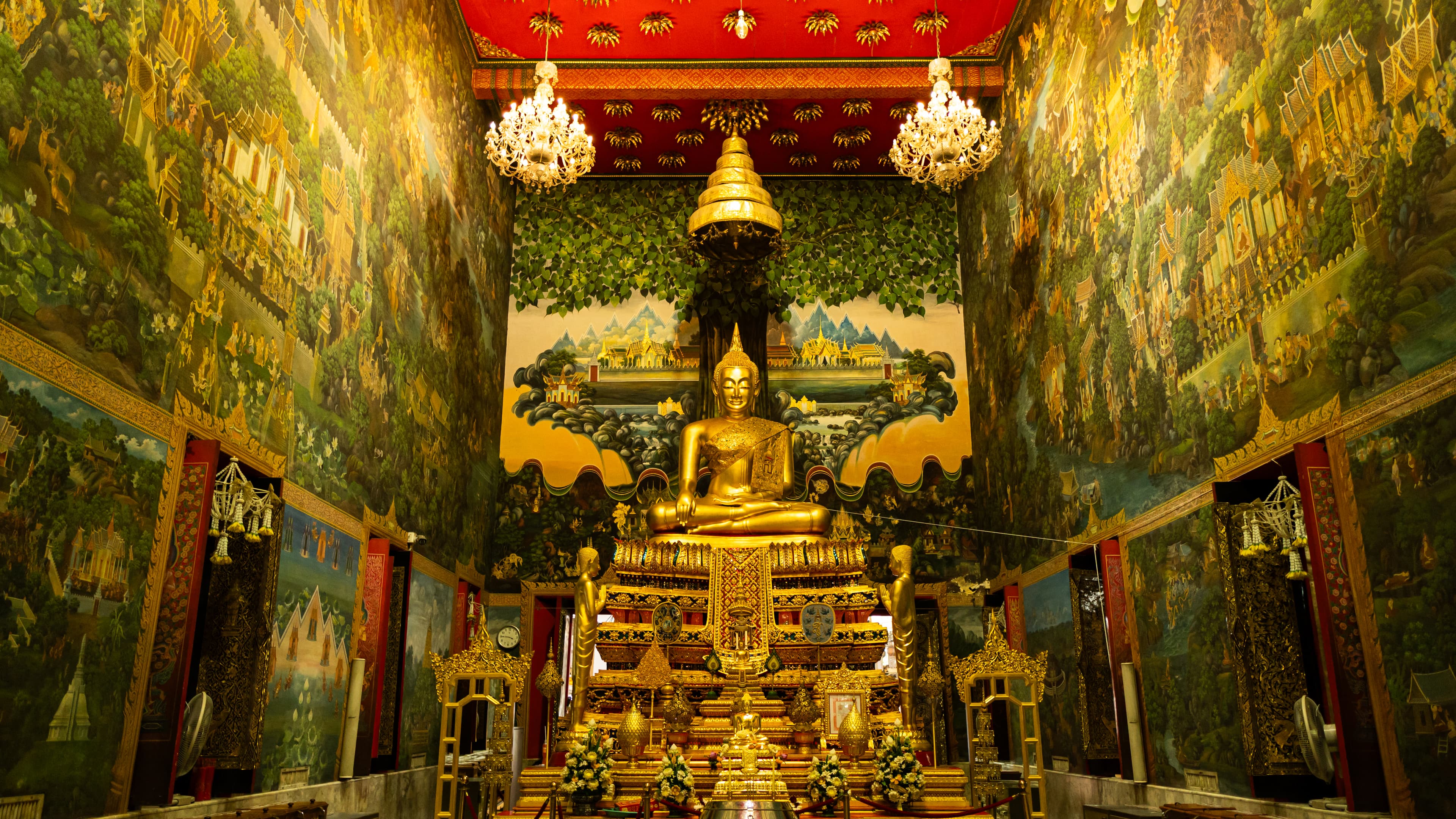
Wat Rai Khing in Sam Phran, Nakhon Pathom, Thailand. Image source · CC BY-SA 4.0
Visit essentials
A quick read before you go
- Etiquette
- Keep image and procession axes open and never let fish feeding or commerce override monastic…
Overview
The temple stands beside the Tha Chin River, but its devotional orientation is toward Luang Pho Wat Rai Khing. The seated image displays the earth-touching gesture associated with the Buddha's victory over Mara, recalling steadfastness at the threshold of awakening. Tourism Authority material names the image explicitly, while local government sources describe the annual worship festival that returns from the waxing thirteenth day through the waning third day of the fifth lunar month.
The compound also contains public institutions, including education and health functions, so sacred and civic service meet without becoming identical. Rivers, markets, fish feeding, and festival crowds may shape a visit, yet they remain secondary to an active monastery in which prayer, merit, offerings, and custodial work continue.
Why this place is sacred
Wat Rai Khing's spiritual significance is carried through recurrence. The same Buddha image receives ordinary daily homage and concentrated festival devotion; the lunar calendar turns that relationship into shared time. The Tha Chin adds movement and arrival, but the river should not be described as transferring supernatural power into the image. Popular tradition tells of the image floating to its location. This is presented as local devotional tradition, not verified transport history.
The more securely documented history places the temple's foundation around 1851 and records its later naming by the Supreme Patriarch. Sacred meaning therefore has several evidence layers: historical institution, traditional image story, current festival, and lived worship. Careful writing keeps them connected without treating each as the same kind of fact.
Experience and orientation
Enter through the current public route and identify the worship hall before moving toward markets or riverside activity. Keep the direct line to Luang Pho open for devotees, especially when offering queues form. The Mara-victory gesture can be read from the image's hand and seated stability without approaching the altar too closely. During the annual festival, temporary circulation, sound, vendors, and processions can change the entire precinct; follow temple and municipal stewards rather than relying on ordinary-day directions.
Feeding fish is a popular riverside activity but does not replace temple etiquette. Shoes, photography, and offerings remain building-specific. A quiet interval facing the image can hold more context than a rapid circuit through every public facility.
Context and lineage
Tourism Authority material dates the present temple to about 1851, during the reign of Rama IV, and records an earlier formal name associated with Prince Wachirayanawarorot, the Supreme Patriarch. Local tradition connects Luang Pho with a floating-image narrative, which the page preserves as tradition. The compound's division between sacred precinct and public areas illustrates later institutional growth rather than a single original plan. School, hospital, river access, and festival infrastructure show how a major monastery can serve a wider community.
No UNESCO inscription applies. Historical value is instead carried by monastic continuity, the image's regional veneration, official local records, and the annually renewed relationship between the temple and worshippers.
Traditions and practice
Devotees bow, pray, offer flowers or other accepted items, make merit, and attend ceremonies before Luang Pho. The annual Luang Pho Wat Rai Khing Worship Festival is documented from the waxing thirteenth day to the waning third day of the fifth lunar month; civil-calendar dates must be confirmed each year. Visitors should not copy offerings or gestures without observing local practice, and should stay behind those engaged in prayer.
Riverbank activity and public services create busy crossings, so monastic and emergency access must remain clear. Hoped-for blessing belongs to devotional testimony, not a guaranteed outcome. Respectful participation consists of following the announced form, accepting limits, and allowing local worshippers priority.
Theravada Buddhism
ActiveTheravada devotion centers Luang Pho, Mara-victory recollection, offerings, merit, and recurrent gathering.
Perspectives and open questions
History, floating-image tradition, festival organization, and Buddhist practice require different evidence labels.
Scholarly perspective
Buddhist interpretation reads Luang Pho through the Mara-victory episode and the merit of homage. Institutional history follows a nineteenth-century monastery as it acquired names, buildings, and public-service roles. Folklore preserves the floating-image account as a way a community explains sacred arrival. Festival studies attend to lunar time, travel, commerce, ceremony, and municipal coordination. These perspectives need different verbs: tradition says, records document, devotees hope, and officials schedule. The reviewed sources do not establish a measurable energy or guaranteed miracle.
They do establish that Luang Pho remains the reason worshippers repeatedly gather and that the temple's religious life extends into organized care for community.
Plan your visit
Strong Places supports exact identity and routing; yearly festival and access details require confirmation.
Respectful visit
Keep image and procession axes open and never let fish feeding or commerce override monastic conduct.
Current practical details
Address
Rai Khing temple, Tambon Rai Khing, Amphoe Sam Phran, Chang Wat Nakhon Pathom 73210, Thailand
Hours, fees, and access can change — verify on the official source before you travel. Practical details last checked Jul 2026.
Location
Map loads as you approach this section.
Pilgrim reflections
A portrait of encounter, not a score
Pilgrims describe what they felt, how present they could become, and whether the place would shape a journey. There are no stars and no ranking of traditions.
No reviewed reflections yet
The first pilgrims can help describe the character of being here.
Share a reflection
Available after an account-backed “Been there.” Every reflection is reviewed before publication.
Nearby sacred places
Explore other sacred places in the region. Proximity does not establish access or travel time; check each place’s guidance.

References
Sources consulted for this page. Source categories describe the publication, not a guarantee that every claim is verified. Traditional accounts and outside interpretations may differ.
- 01Wat Rai Khing — Tourism Authority of ThailandofficialExact official destination record.
- 02Nakhon Pathom–Suphan Buri: Wat Rai Khing — Tourism Authority of ThailandofficialOfficial history, river setting, 1851 foundation, and sacred/public precinct information.
- 03Nakhon Pathom: Wat Rai Khing — Tourism Authority of ThailandofficialOfficial corroboration that Luang Pho Wat Rai Khing is the temple's Mara-victory principal image.
- 04Wat Rai Khing — Tha Talat Subdistrict MunicipalityofficialLocal government evidence for Luang Pho worship and annual lunar festival.
- 05Wat Rai Khing — Wikipedia — Wikipedia contributorsacademicCorroborates identity, location, and basic historical context; key claims require higher-tier corroboration.
- 06Q13020942 — Wikidata — Wikidata contributorsacademicStructured identity and coordinate corroboration; not used alone for spiritual or historical claims.
- 07Rai Khing temple — Google Maps — Google PlacesSource contextStrong name, country, locality, and coordinate match; used only for practical visitor data and identity corroboration.
Share a photo
Help visitors recognize Wat Rai Khing. Every submission is reviewed before publication.