Wat Pa Lelai Worawihan
Luang Pho To, a rare teaching posture, and two annual worship festivals
Understand sacred places, explore living traditions, and learn how to engage respectfully with Pilgrim Map.
Access has not been verified. Check current local guidance before planning a visit.
Suphan Buri, Suphan Buri, Thailand
Read the sources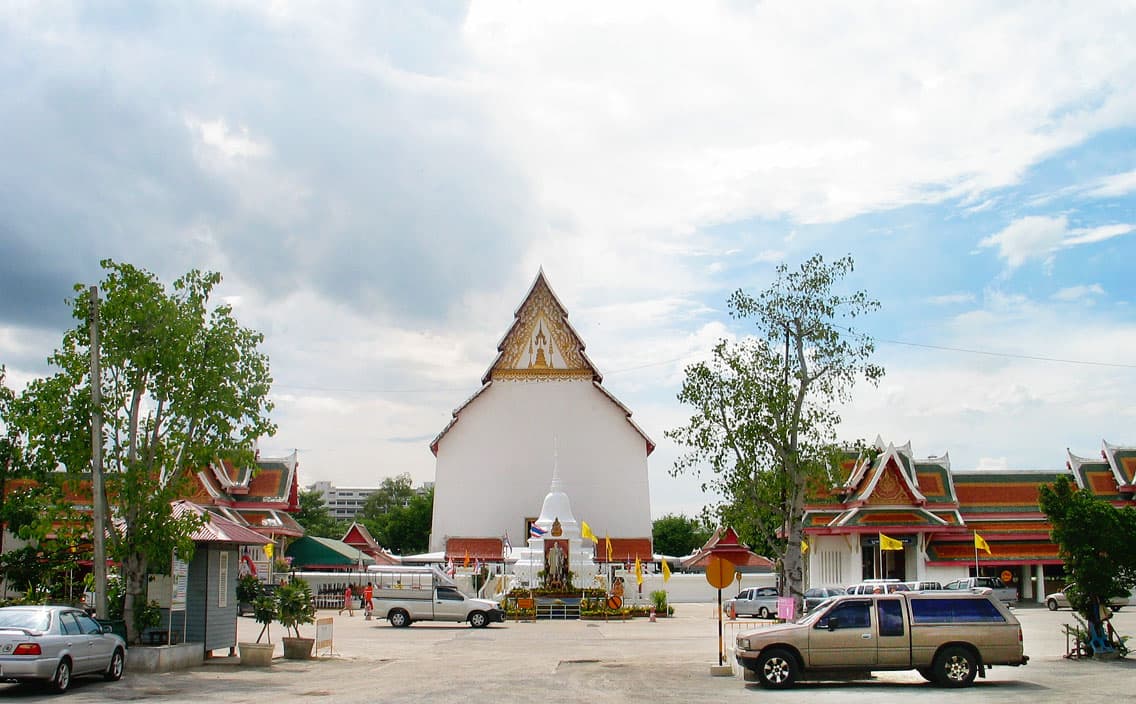
Wat Pa Lelai Worawihan in Suphan Buri, Suphan Buri, Thailand. Image source · CC BY 3.0
Visit essentials
A quick read before you go
- Etiquette
- Keep the altar axis open, protect the dignity of worshippers, and confirm festival-specific…
Overview
Luang Pho To centers the principal wihan. The Buddha sits with one hand lowered and the other turned upward in the Pa Lelai posture, linked in Buddhist narrative to the Buddha's forest retreat and service offered by an elephant and a monkey. Before questions of size or antiquity, the posture teaches withdrawal from conflict, generosity, and the possibility of reconciliation.
Provincial and Tourism Authority sources identify Luang Pho To as the devotional center and record festivals on the waxing seventh through ninth days of the fifth and twelfth lunar months. Then worship, offerings, community gathering, and the practical work of hosting many visitors meet in one compound. At quieter times, the image's scale and comparatively contained hall can make attention immediate.
The experience remains religious because people address the image through homage and merit-making, not because architecture is claimed to produce a measurable force.
Why this place is sacred
Wat Pa Lelai's sacred specificity lies in the relationship between image, story, and repeated assembly. The Pa Lelai posture is uncommon enough to invite explanation, but it should not be reduced to an art history label. For practitioners, the image recalls a moral episode and supports present acts of homage. The two annual festivals make that relationship public and rhythmic: lunar dates return, families and devotees travel, and the temple becomes a regional gathering place.
Sources also transmit a tradition that relics are contained within Luang Pho To. That is a religious tradition reported by official cultural sources, not a scientific authentication claim. Keeping those categories distinct protects both cultural meaning and factual accuracy. No sufficiently prevalent cross-source claim that the temple emits energy, guarantees luck, or causes healing met the review threshold, so none is asserted.
Experience and orientation
Approach the main wihan after checking whether a ceremony or offering queue is already in progress. Let worshippers retain the direct axis to Luang Pho To and do not stand between a person bowing and the image. The posture is best understood by observing the hands and seated body before reading secondary decorative details. During festival periods, temporary routes, stalls, sound, and crowds can change the compound substantially; the event is not a normal sightseeing day with added entertainment.
Follow stewards, keep ritual paths clear, and accept limits on photography. Outside the hall, murals and references to the Khun Chang Khun Phaen literary tradition add regional culture, but they should not displace the active Buddhist focus. A quiet visit can end by sitting where permitted and considering the Pa Lelai narrative as a teaching about conflict, solitude, and generosity.
Context and lineage
Wat Pa Lelai is treated in local and national tourism sources as an old temple of Suphan Buri, while its current fabric reflects later repair and royal patronage. King Mongkut ordered important restoration and gave the temple royal status. The monument therefore cannot be assigned to a single untouched construction phase. Luang Pho To, the large Pa Lelai-posture image, anchors both historical memory and continuing worship.
Official accounts also repeat the tradition that relics are enshrined within the image; the page preserves that wording as tradition rather than converting it into independently verified material evidence. The recurrent fifth- and twelfth-lunar-month festivals demonstrate that preservation here is not only architectural. Ritual calendars, custodial labor, local participation, and the ability of devotees to approach the image are also forms of continuity.
Traditions and practice
Regular Theravada practice may include bowing, prayer, offerings, chanting, merit-making, and participation in ceremonies organized by the monastery. The named Luang Pho To worship festivals occur twice a year on official accounts' stated lunar dates; exact civil-calendar dates and access arrangements should be checked for the year of travel. Visitors should use only established offering points and should not touch the image, altar, or protected surfaces.
Sit with feet directed away from Buddha images, remove shoes where instructed, and do not imitate a rite merely for a photograph. When monks or local groups lead a sequence, remain behind participants unless invited. Respectful observation is sufficient participation for a guest.
Theravada Buddhism
ActiveTheravada devotion is carried by the Pa Lelai narrative, Luang Pho To, merit-making, monastic life, and recurring worship.
Perspectives and open questions
Religious tradition, iconography, provincial identity, and festival life meet without turning relic belief into scientific fact.
Scholarly perspective
Buddhist interpretation centers the Pa Lelai episode, Luang Pho To, and the merit of homage. Art history studies the unusual iconography, scale, architectural enclosure, and restoration phases. Provincial history connects the monastery with Suphan Buri identity, royal patronage, and a festival economy that extends beyond the temple wall. These perspectives complement one another but should not be collapsed. A festival can be devotional, civic, and economically important at once.
A revered image can be studied materially without being treated as a museum object. The relic account belongs to documented religious tradition; it is neither dismissed nor presented as laboratory fact. The strongest supported conclusion is that Luang Pho To continues to organize worship and recurrent travel to the monastery.
Plan your visit
The strong Places record supports exact identity and routing; all dynamic practical details require direct confirmation.
Respectful visit
Keep the altar axis open, protect the dignity of worshippers, and confirm festival-specific access before entering.
Current practical details
Address
ทล 321 Malaiman Rd, Tambon Rua Yai, Amphoe Mueang Suphan Buri, Chang Wat Suphan Buri 72000, Thailand
Phone
Hours
Hours, fees, and access can change — verify on the official source before you travel. Practical details last checked Jul 2026.
Location
Map loads as you approach this section.
Pilgrim reflections
A portrait of encounter, not a score
Pilgrims describe what they felt, how present they could become, and whether the place would shape a journey. There are no stars and no ranking of traditions.
No reviewed reflections yet
The first pilgrims can help describe the character of being here.
Share a reflection
Available after an account-backed “Been there.” Every reflection is reviewed before publication.
Nearby sacred places
Explore other sacred places in the region. Proximity does not establish access or travel time; check each place’s guidance.
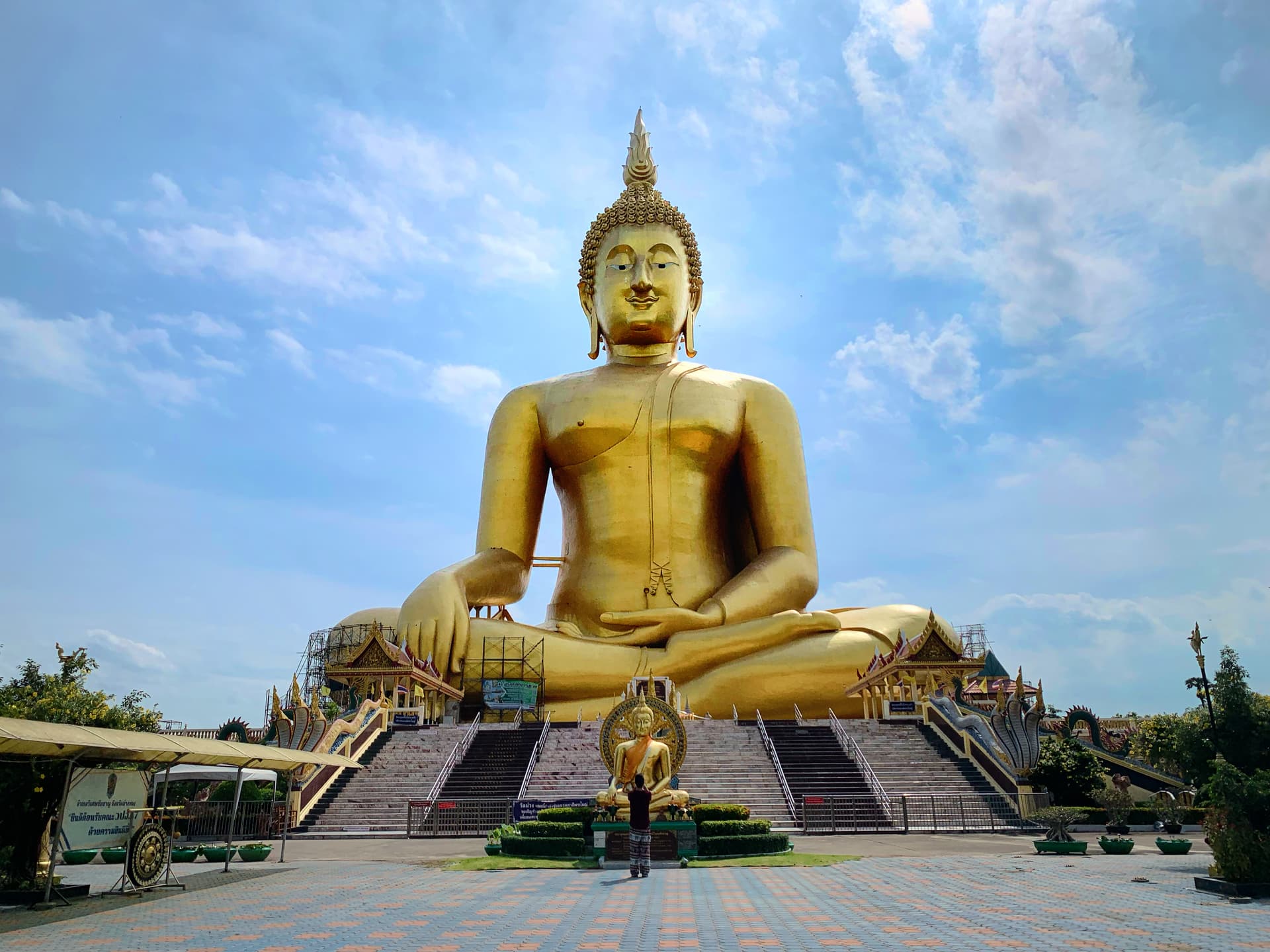
Wat Muang, Ang Thong
Wiset Chai Chan, Ang Thong, Thailand
33.3 km away

Wat Chaiwatthanaram
Phra Nakhon Si Ayutthaya, Phra Nakhon Si Ayutthaya, Thailand
50.3 km away

Wat Lokayasutharam
Phra Nakhon Si Ayutthaya, Phra Nakhon Si Ayutthaya, Thailand
51.1 km away
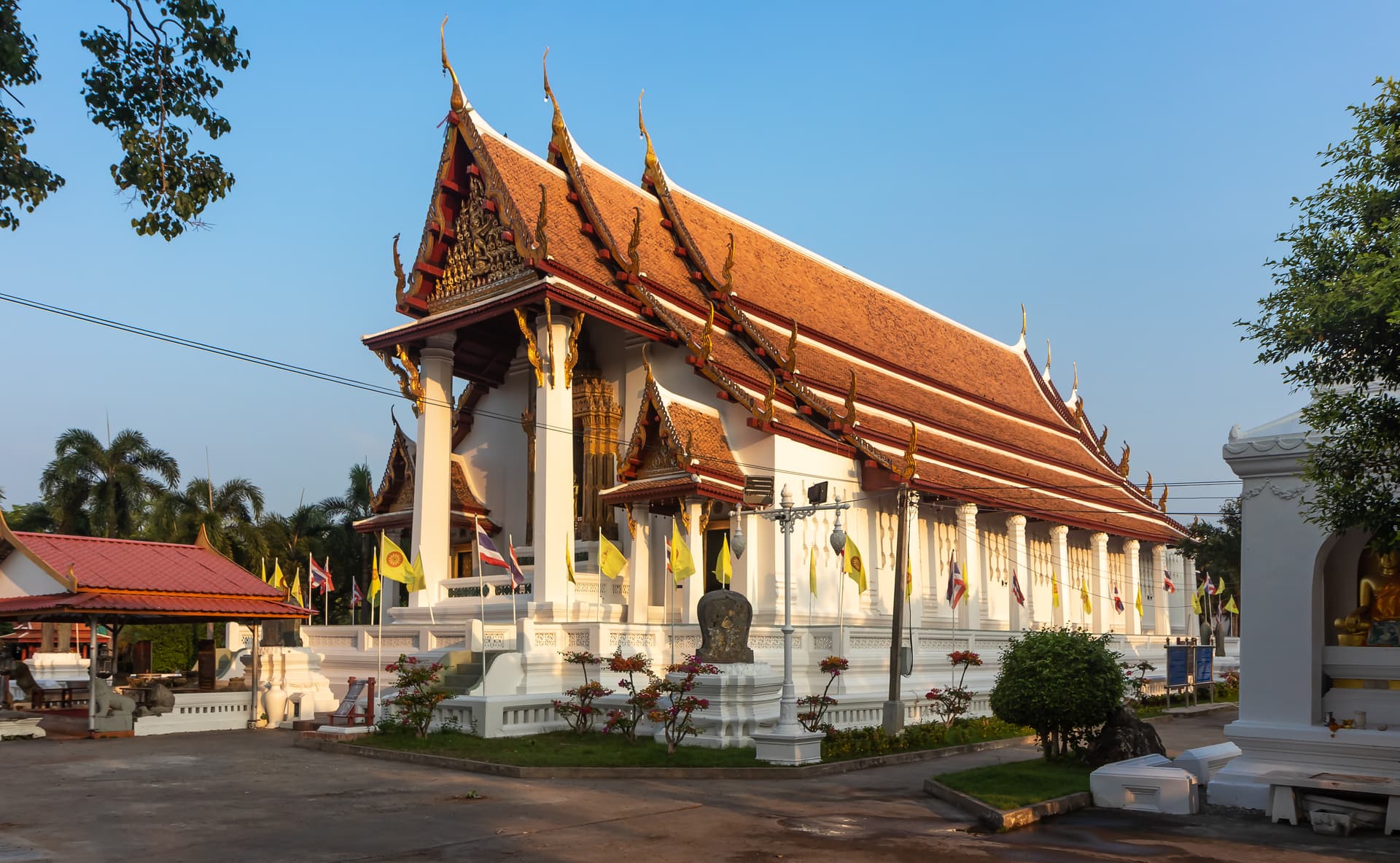
Wat Na Phra Men
Phra Nakhon Si Ayutthaya, Phra Nakhon Si Ayutthaya, Thailand
51.6 km away
References
Sources consulted for this page. Source categories describe the publication, not a guarantee that every claim is verified. Traditional accounts and outside interpretations may differ.
- 01Spiritual places to visit for blessing in 2025 — Tourism Authority of ThailandofficialExact-site account of Luang Pho To, the Pa Lelai posture, royal restoration, relic tradition, and twice-yearly worship festival.
- 02Wat Pa Lelai Worawihan — Suphan Buri Provincial AdministrationofficialProvincial exact-site corroboration for Luang Pho To, posture, relic tradition, and the two annual festival periods.
- 03Luang Pho To worship ceremony at Wat Pa Lelai — Suphan Buri Provincial AdministrationofficialCurrent provincial evidence that the named worship event remains a living Buddhist and community ceremony.
- 04Wat Pa Lelai Worawihan — Wikipedia — Wikipedia contributorsacademicCorroborates identity, location, and basic historical context; key claims require higher-tier corroboration.
- 05Q2552305 — Wikidata — Wikidata contributorsacademicStructured identity and coordinate corroboration; not used alone for spiritual or historical claims.
- 06Wat Pa Lelai Worawihan — Google Maps — Google PlacesSource contextStrong name, country, locality, and coordinate match; used only for practical visitor data and identity corroboration.
Share a photo
Help visitors recognize Wat Pa Lelai Worawihan. Every submission is reviewed before publication.