Wat Phra That Pu Chae
A white Buddha and golden chedi hold a local relic tradition
Understand sacred places, explore living traditions, and learn how to engage respectfully with Pilgrim Map.
Access has not been verified. Check current local guidance before planning a visit.
Rong Kwang, Phrae, Thailand
Read the sources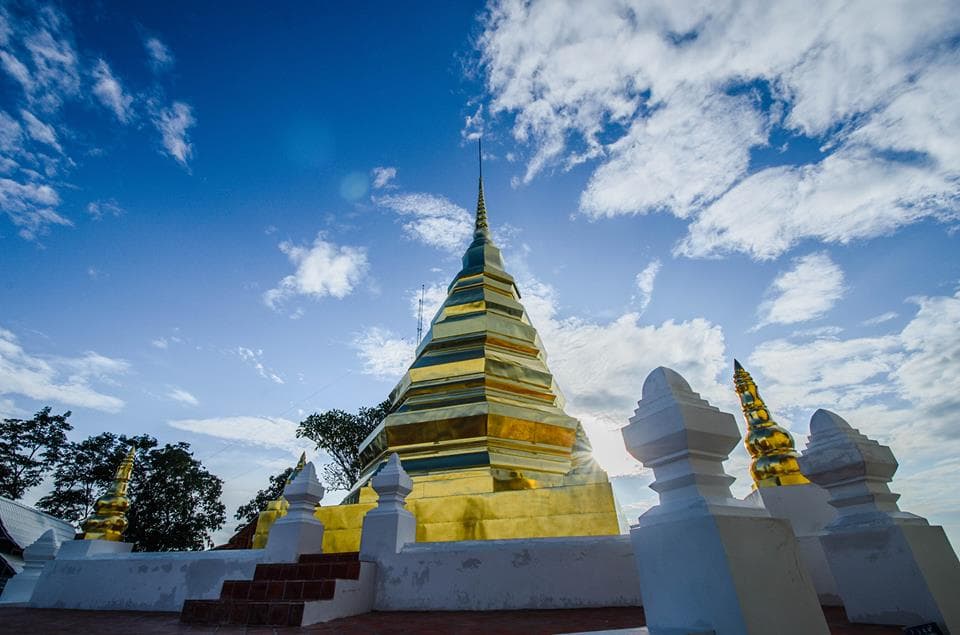
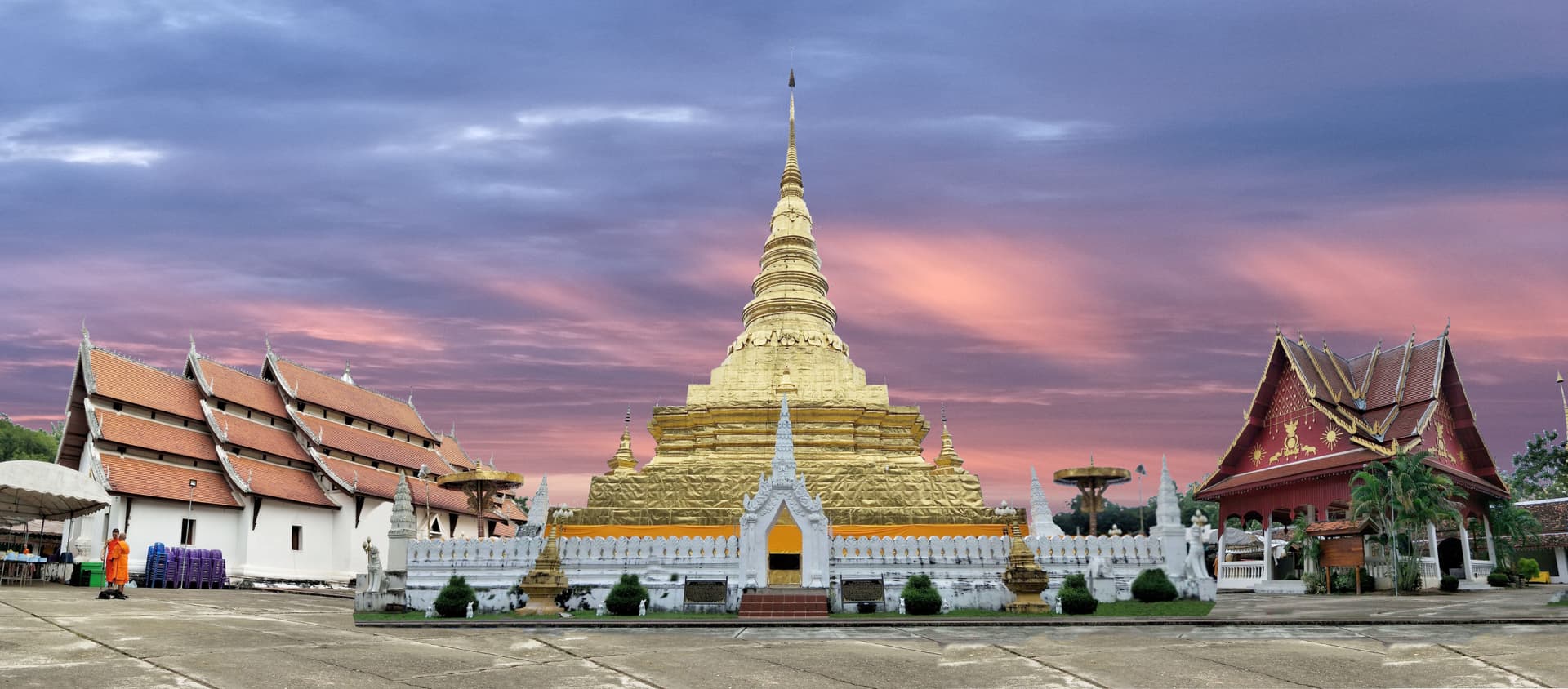
Wat Phra That Pu Chae in Rong Kwang, Phrae, Thailand. Image source · CC BY-SA 3.0
Visit essentials
A quick read before you go
- Etiquette
- Protect worshippers, historic fabric, and closed thresholds.
Overview
The white image stages the Buddha's awakening through the earth-touching gesture, while the golden chedi gathers a more localized relic memory. These are complementary rather than competing centres: one makes a canonical episode visible, and the other locates remembrance in a particular community. Official tourism describes Pu Chae as important, but offers little chronology. The content therefore avoids claims about exact kings, dates, or archaeological phases.
Its spiritual account is specific enough to distinguish the site without borrowing the grander histories of Cho Hae or other northern relic shrines.
Why this place is sacred
A foot-relic tradition naturally evokes travel, grounding, and the Buddha's presence, yet the reviewed evidence does not verify the material through scientific testing. It is reported as religious tradition. The bright contrast between a white Buddha and gilded chedi may produce a powerful visual encounter; color and scale are not proof of supernatural force. No recurring miracle claim appeared strongly enough in the exact official record to merit inclusion.
Reverence can remain centered on awakening, relic recollection, and the labor by which local devotees maintain the sanctuary.
Experience and orientation
Orient first to the image's Mara-victory gesture, then approach the chedi without treating either base as seating. Ask locally before circumambulating, applying gold leaf, or placing objects, because the concise official account does not establish visitor ritual rules. Strong Google Places data supplies ordinary hours, contact, and coordinates after exact identity review. Those practical fields should be rechecked on the day of travel. No Places website candidate is promoted without a second official confirmation.
Context and lineage
Tourism Authority material identifies Pu Chae as an important temple, describes the white Buddha and golden pagoda, and records belief in a right-foot relic. It does not establish when the first sanctuary was built or which surviving fabric belongs to which phase. This page keeps that boundary visible. The relic story is meaningful within Buddhist memory, but it should not be converted into a forensic claim. World Heritage designation does not apply, and the sanctuary needs no listing to matter.
Traditions and practice
Current participation may include bowing to the Buddha image, quiet prayer, offerings at designated points, merit-making, and respectful attention near the chedi. A visitor should not create a footprint ritual, promise healing through contact, or attach cloth to architecture unless temple staff direct it. Reaching a relic shrine can be devotional, yet the official record names no recurring route or pilgrimage institution. The page favors ordinary, observable Buddhist practice over promotional invention.
Northern Thai Theravada Buddhism
ActiveDocumented tradition layer 1.
Perspectives and open questions
Religious, historical, and environmental evidence remain distinct.
Scholarly perspective
Theravada reading connects the Mara-victory image with awakening and the relic tradition with recollection of the Buddha. Local heritage interpretation values the distinctive pairing of white image and golden chedi. Historical certainty is narrower: the exact official source does not provide an excavated chronology or independent relic analysis. This is disclosed as a limited-source record. The resulting guide is deliberately modest, but not generic; it explains what Pu Chae specifically asks a visitor to see, honor, and leave unclaimed.
The exact official route confirms the sanctuary but does not support a precise archaeological foundation date. Pu Chae's record also demonstrates why deity fields should not be filled mechanically. The large white figure is the historical Buddha in the earth-touching posture, not a local god, while the right-foot account concerns a relic tradition. Naming those correctly is more informative than a generic sacred-object label.
It preserves the difference between an awakened teacher represented in image, material remains attributed through faith, and the community that maintains both forms.
Plan your visit
Day-of authority overrides routine listing data.
Respectful visit
Protect worshippers, historic fabric, and closed thresholds.
Current practical details
Address
673V+37X, Ban Wiang, Rong Kwang District, Phrae 54140, Thailand
Hours
Hours, fees, and access can change — verify on the official source before you travel. Practical details last checked Jul 2026.
Location
Map loads as you approach this section.
Pilgrim reflections
A portrait of encounter, not a score
Pilgrims describe what they felt, how present they could become, and whether the place would shape a journey. There are no stars and no ranking of traditions.
No reviewed reflections yet
The first pilgrims can help describe the character of being here.
Share a reflection
Available after an account-backed “Been there.” Every reflection is reviewed before publication.
Nearby sacred places
Explore other sacred places in the region. Proximity does not establish access or travel time; check each place’s guidance.
References
Sources consulted for this page. Source categories describe the publication, not a guarantee that every claim is verified. Traditional accounts and outside interpretations may differ.
- 01Wat Phra That Pu Chae — Google PlacesofficialExact practical metadata accepted after strong name, country, locality, and coordinate review.
- 02Green Route: Phrae — Tourism Authority of ThailandofficialExact descriptions of Cho Hae, Doi Leng, and Pu Chae, including relic traditions and principal images.
- 03Wat Phra That Pu Chae — Tourism Authority of ThailandofficialExact official attraction identity and visitor context.
Share a photo
Help visitors recognize Wat Phra That Pu Chae. Every submission is reviewed before publication.