Wat Phra That Cho Hae
Phrae's golden relic sanctuary gathers Tiger-year devotion
Understand sacred places, explore living traditions, and learn how to engage respectfully with Pilgrim Map.
Access has not been verified. Check current local guidance before planning a visit.
Phrae, Phrae, Thailand
Read the sources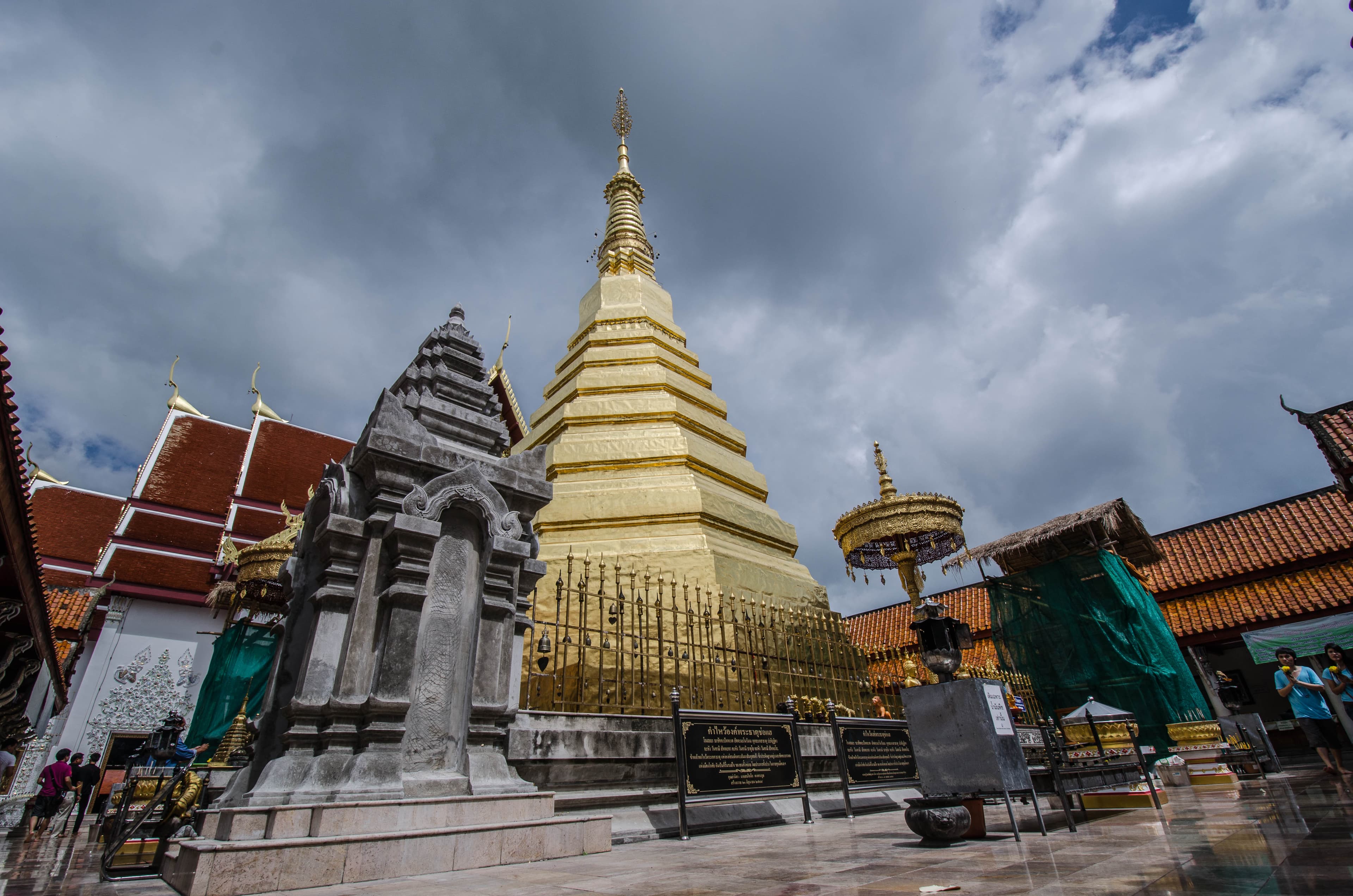
Wat Phra That Cho Hae in Phrae, Phrae, Thailand. Image source · CC BY-SA 3.0
Visit essentials
A quick read before you go
- Etiquette
- Protect worshippers, historic fabric, and closed thresholds.
Overview
The gilded chedi, rather than the surrounding spectacle, is the devotional centre. Worship addresses the Buddha through a relic tradition maintained by a royal monastery and by generations of Phrae residents. Tiger-year association gives some visitors a personal reason to return, while the annual festival makes the shrine a civic as well as monastic focus. Gold, textiles, and procession are not ornamental extras: they express offerings, accumulated merit, and care for the reliquary.
The safest historical language says the relic is held by tradition, not established through modern forensic proof.
Why this place is sacred
Festival publicity speaks of blessings and good fortune from paying homage to the Tiger-zodiac relic. That language is culturally prevalent and belongs to lived devotion, so it is neither erased nor restated as a guaranteed mechanism. The reported spiritual outcome is not independently verified. A visitor may feel intensity around the chedi because of chanting, crowd movement, incense, color, and family memory; those observable conditions do not demonstrate an energy field.
Sacred significance rests securely in Buddha recollection, relic veneration, and the continuing responsibilities of custodians.
Experience and orientation
Arrive outside the busiest festival period if quiet orientation matters, or attend the named Hae Tung Luang observance prepared for dense processions and restricted movement. Read the chedi from the courtyard before approaching an offering point. Circumambulate only in the direction indicated locally, keep cloth-bearing groups together, and never step across offerings. Google Places supplies ordinary hours and contact details after an exact match, but ceremonies may change access.
The Facebook candidate returned by Places is not promoted as the official website because independent custodian confirmation was not established.
Context and lineage
Official tourism accounts connect Cho Hae with a revered relic and describe the golden pagoda as Phrae's spiritual heart. Northern chronicles and later retellings vary in their precision, so this guide avoids converting legend into an exact construction date. What can be said directly is that the sanctuary has become the province's defining Buddhist monument, that the Tiger-year correspondence is publicly maintained, and that annual worship renews rather than merely commemorates the relationship.
The site is nationally important but is not inscribed as a UNESCO World Heritage property.
Traditions and practice
Ordinary practice includes bowing, flowers, incense where permitted, donations, chanting, and clockwise movement around the chedi. During Hae Tung Luang, worshippers carry ceremonial cloth, join offerings, and honor the relic in a recurrent named pilgrimage gathering. Participation should follow temple stewards rather than an online checklist. Tiger-year visitors need not purchase a particular object to make the visit valid.
A simple recollection of the Buddha and considerate conduct toward the sangha are more defensible than claims that a commercial ritual guarantees protection or wealth.
Lanna Theravada Buddhism
ActiveDocumented tradition layer 1.
Perspectives and open questions
Religious, historical, and environmental evidence remain distinct.
Scholarly perspective
Lanna Buddhism reads Cho Hae through relic presence, merit, birth-year sacred geography, and monastic continuity. Provincial identity emphasizes the shrine as Phrae's spiritual centre. Festival studies attends to procession, cloth, music, and community labor; architectural interpretation focuses on the chedi's form and repeated care. These views support one another without collapsing religious tradition into archaeology. The shoulder-relic account remains a faith tradition, while the continuing festival is directly observable public history.
The page therefore distinguishes custody and practice from unverifiable material or metaphysical certainty. The present sanctuary preserves a long northern Thai relic tradition; exact foundation chronology is treated cautiously. A useful final distinction concerns scale of authority. The monastery governs ritual conduct, Tourism Authority reporting documents public festival form, and Google contributes only changing logistics. None of those providers authenticates the relic scientifically.
Reading each within its proper remit lets Tiger-year devotion remain culturally legible while preventing a schedule, social-page candidate, or blessing slogan from becoming evidence for a broader supernatural promise.
Plan your visit
Day-of authority overrides routine listing data.
Respectful visit
Protect worshippers, historic fabric, and closed thresholds.
Current practical details
Address
1 หมู่ 11 Tambon Cho Hae, Amphoe Mueang Phrae, Chang Wat Phrae 54000, Thailand
Phone
Hours
Hours, fees, and access can change — verify on the official source before you travel. Practical details last checked Jul 2026.
Location
Map loads as you approach this section.
Pilgrim reflections
A portrait of encounter, not a score
Pilgrims describe what they felt, how present they could become, and whether the place would shape a journey. There are no stars and no ranking of traditions.
No reviewed reflections yet
The first pilgrims can help describe the character of being here.
Share a reflection
Available after an account-backed “Been there.” Every reflection is reviewed before publication.
Nearby sacred places
Explore other sacred places in the region. Proximity does not establish access or travel time; check each place’s guidance.

References
Sources consulted for this page. Source categories describe the publication, not a guarantee that every claim is verified. Traditional accounts and outside interpretations may differ.
- 01Wat Phra That Cho Hae Phra Aram Luang — Google PlacesofficialExact practical metadata accepted after strong name, country, locality, and coordinate review.
- 02Green Route: Phrae — Tourism Authority of ThailandofficialExact descriptions of Cho Hae, Doi Leng, and Pu Chae, including relic traditions and principal images.
- 03March 2025 festivals and events in Thailand — Tourism Authority of Thailand NewsroomofficialNames the annual Cho Hae relic-worship festival, Tiger-zodiac association, procession, and offerings.
Pilgrim glossary
- Sangha
- The community of Buddhist practitioners, traditionally monks and nuns.
Share a photo
Help visitors recognize Wat Phra That Cho Hae. Every submission is reviewed before publication.