Wat Phra That Chom Chaeng
Dawn legend, relic worship, and painted ethics meet in Phrae
Understand sacred places, explore living traditions, and learn how to engage respectfully with Pilgrim Map.
Access has not been verified. Check current local guidance before planning a visit.
Phrae, Phrae, Thailand
Read the sources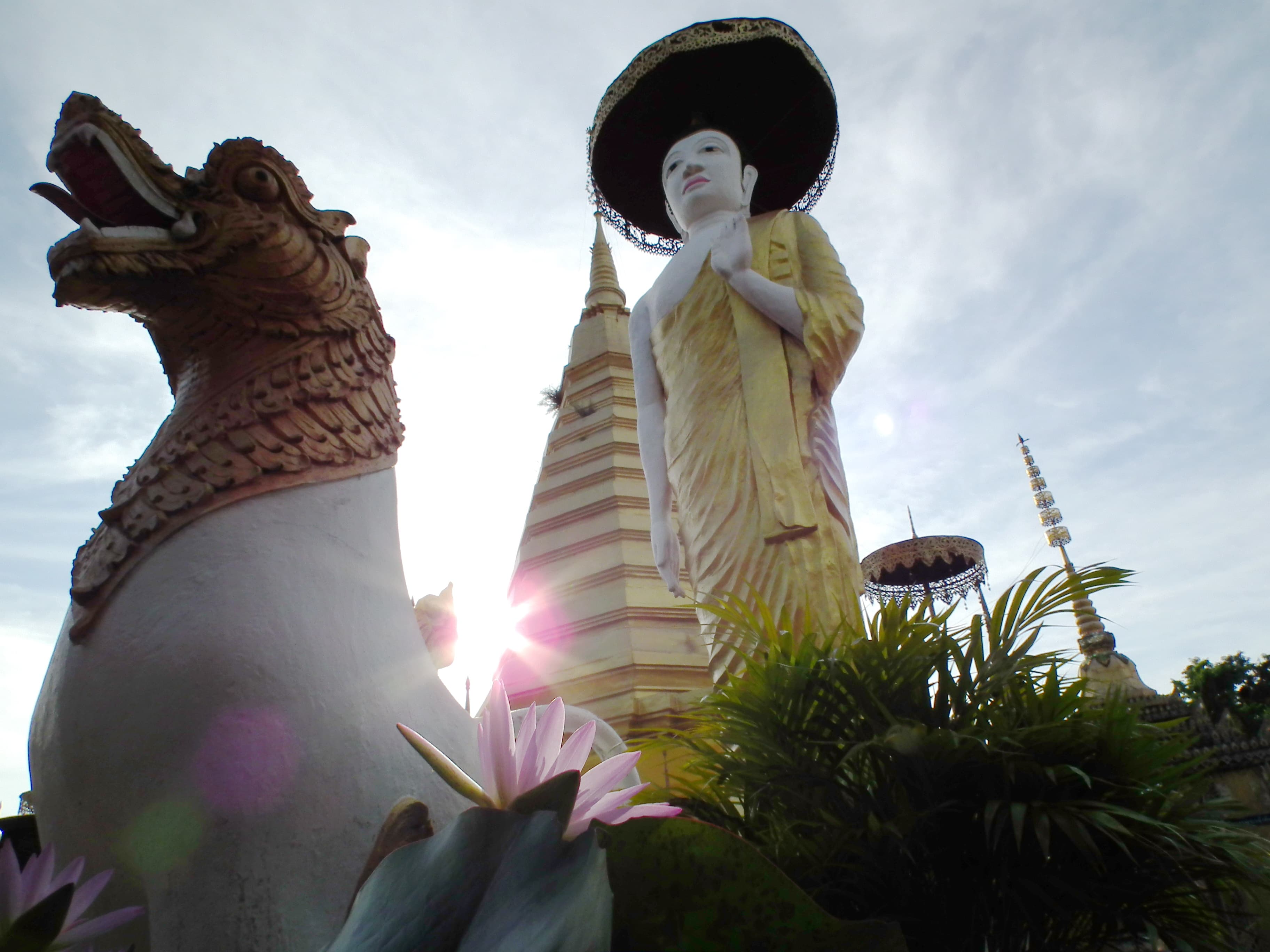
Wat Phra That Chom Chaeng in Phrae, Phrae, Thailand. Image source · CC BY-SA 3.0
Visit essentials
A quick read before you go
- Etiquette
- Protect worshippers, historic fabric, and closed thresholds.
Overview
The name is explained through a story that the Buddha reached the place near daybreak, once expressed as chuan chaeng before becoming Chom Chaeng. That narrative gives time of day a sacred memory, but it is not treated as eyewitness history. Devotion is distributed among the golden chedi, the principal image, reclining and standing Buddhas, and a meditation area. ONEP also describes heaven-and-hell figures used to teach ethical consequence.
Together these elements make the compound a local Buddhist teaching landscape rather than a single photogenic monument.
Why this place is sacred
Relic stories often gather exact anatomical detail as they travel through generations. Here, hair and a left-hand relic are reported because the government cultural inventory documents the belief, while their physical identity remains unverified. Silence in the meditation grounds, the old brick surface, and the dawn story may invite a sense of temporal depth; none demonstrates paranormal energy. The spiritual argument does not need that inflation.
Recollection of the Buddha, ethical imagery, annual homage, and the community's decision to keep both restored and unrestored forms visible are substantial.
Experience and orientation
Approach the golden chedi and the older brick monument as different records of custody. Do not climb bases, press objects into cracks, or use the reclining Buddha as a backdrop for playful poses. The museum is reported closed for repair by Thailand's museum database, so a temple visit should not promise museum entry. Exact Google Places data provides ordinary hours, address, and phone, but temple ceremonies and repair work take precedence.
The attraction page confirms identity; it does not justify expanding sparse visitor details into invented rules.
Context and lineage
ONEP records the traditional date 788 CE and notes that the builder is unknown. Because that precision rests within received temple history, it is labeled tradition rather than uncontested archaeology. The chedi combines Sukhothai and Wiang Kosai features and stands on a low rise, with four gateways and a surrounding wall. An older un-restored brick chedi remains behind the principal hall.
This layering matters: Chom Chaeng is neither untouched antiquity nor modern reconstruction, but a religious place repeatedly repaired while retaining material evidence of earlier forms.
Traditions and practice
Visitors may bow before Luang Pho Chom Chaeng, honor the chedi, sit quietly in the meditation grounds, and attend the annual homage period recorded for the waxing eleventh through fifteenth days of the fifth lunar month. That recurring observance establishes calendar significance, but the sources do not name a separate pilgrimage route, so none is invented. The ethical tableaux should be read as Buddhist instruction on conduct, not as evidence about a measurable afterlife.
Leave offerings only where current temple practice permits.
Lanna Theravada Buddhism
ActiveDocumented tradition layer 1.
Local heritage stewardship
ActiveDocumented tradition layer 2.
Perspectives and open questions
Religious, historical, and environmental evidence remain distinct.
Scholarly perspective
Temple tradition interprets dawn, relics, and sacred presence; art history reads the chedi through regional styles; local heritage practice keeps a museum and older brick fabric within an active monastery. Ethical education appears in the heaven-and-hell sculptures, while contemporary worship gathers at several Buddha images. The available official evidence is unusually specific about material features yet still leaves chronological questions.
This page makes that asymmetry visible instead of smoothing it away, and it withholds supernatural efficacy claims not supported by the reviewed official record. ONEP records an early traditional foundation while the surviving forms reflect later repair and mixed Sukhothai–Wiang Kosai art. The annual fifth-lunar-month observance also explains why calendar metadata is justified without inventing a formal route. People assemble to honor this particular chedi, yet the reviewed pages do not name an ordered circuit joining other shrines.
Chom Chaeng therefore carries recurrent communal time, not an assumed province-wide pilgrimage system. Its temporarily closed museum further shows why practical sub-sites must be checked separately from the open monastery grounds.
Plan your visit
Day-of authority overrides routine listing data.
Respectful visit
Protect worshippers, historic fabric, and closed thresholds.
Current practical details
Address
35GR+CXP, Cho Hae, Mueang Phrae District, Phrae 54000, Thailand
Phone
Hours, fees, and access can change — verify on the official source before you travel. Practical details last checked Jul 2026.
Location
Map loads as you approach this section.
Pilgrim reflections
A portrait of encounter, not a score
Pilgrims describe what they felt, how present they could become, and whether the place would shape a journey. There are no stars and no ranking of traditions.
No reviewed reflections yet
The first pilgrims can help describe the character of being here.
Share a reflection
Available after an account-backed “Been there.” Every reflection is reviewed before publication.
Nearby sacred places
Explore other sacred places in the region. Proximity does not establish access or travel time; check each place’s guidance.

References
Sources consulted for this page. Source categories describe the publication, not a guarantee that every claim is verified. Traditional accounts and outside interpretations may differ.
- 01Wat Phra That Chom Chaeng — Google PlacesofficialExact practical metadata accepted after strong name, country, locality, and coordinate review.
- 02Phra That Chom Chaeng — Tourism Authority of ThailandofficialExact official attraction identity.
- 03Wat Phra That Chom Chaeng — Office of Natural Resources and Environmental Policy and PlanningofficialExact-site stupa, relic traditions, art, Buddha images, museum, and annual homage festival.
Share a photo
Help visitors recognize Wat Phra That Chom Chaeng. Every submission is reviewed before publication.