Wat Phra That Doi Leng
A hilltop Buddha sanctuary looks back toward Phrae
Understand sacred places, explore living traditions, and learn how to engage respectfully with Pilgrim Map.
Access has not been verified. Check current local guidance before planning a visit.
Phrae, Phrae, Thailand
Read the sources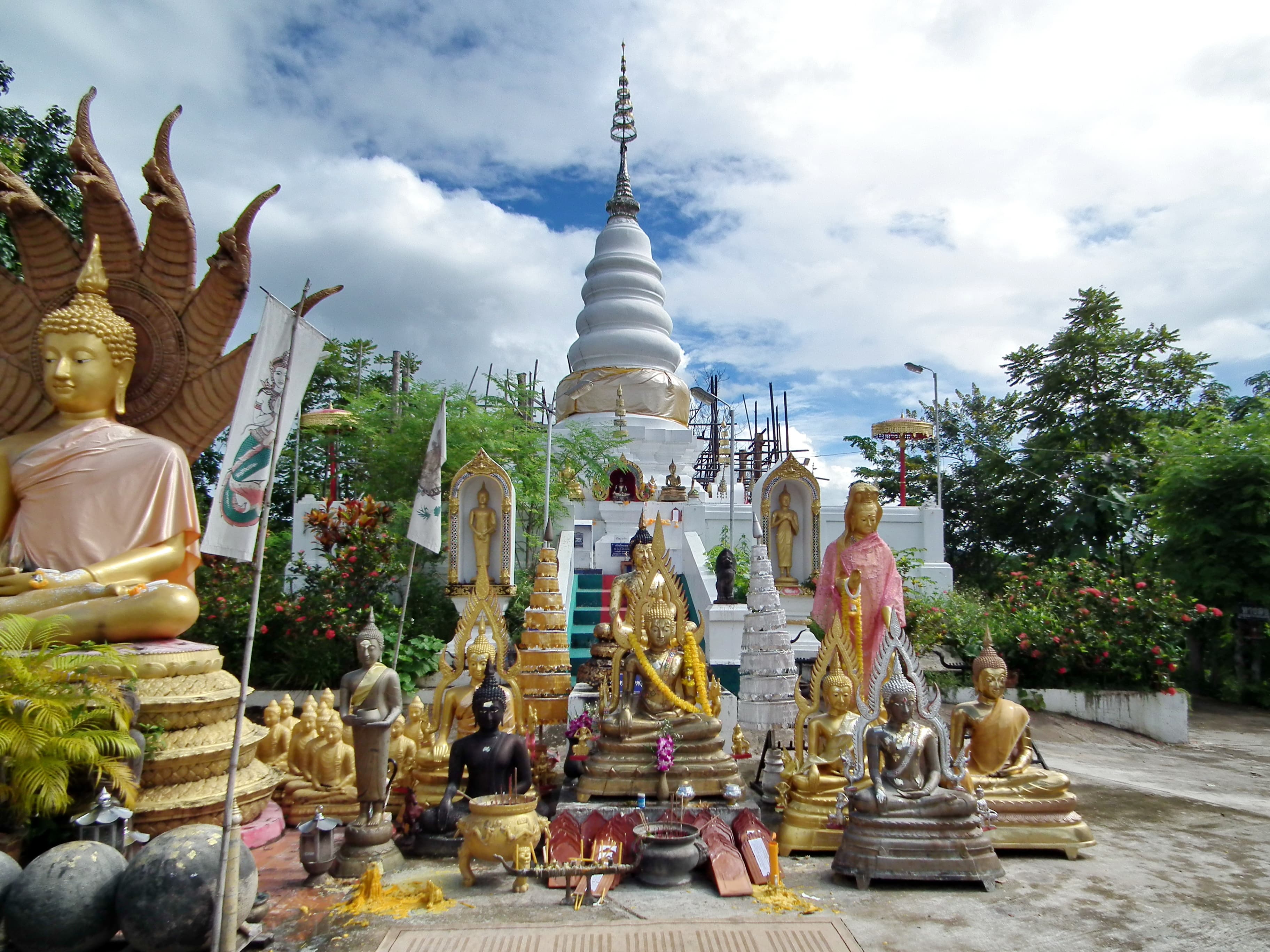
Wat Phra That Doi Leng in Phrae, Phrae, Thailand. Image source · CC BY-SA 3.0
Visit essentials
A quick read before you go
- Etiquette
- Protect worshippers, historic fabric, and closed thresholds.
Overview
Doi Leng's sacred force is best understood as an ordered approach rather than a claim about altitude itself. The road or climb separates the sanctuary from the plain, then the Buddha images reorient attention from panorama to refuge and teaching. Looking back toward Phrae can connect worship with the homes and fields below, but the view should not eclipse the religious interior.
The exact official source is concise, so no relic body part, royal patron, miraculous foundation, or elaborate pilgrimage history is supplied without evidence.
Why this place is sacred
Height, wind, changing light, and the effort of arrival often sharpen perception. Those physical effects can support contemplation without proving that Doi Leng radiates an unusual energy. The name includes Phra That, yet the reviewed official page did not provide enough exact relic detail to specify what is enshrined. The content therefore venerates the Buddha through the documented images and shrine rather than inventing a relic claim.
This restraint is itself useful: spiritual significance can arise from practice, setting, and community custody even when archival detail is sparse.
Experience and orientation
Plan around exposed hill weather and confirm road conditions locally, especially after rain. At the sanctuary, pause before moving to the viewpoint so worshippers at the images retain priority. Keep railings and cliff edges clear, supervise children, and avoid drones unless explicit permission exists. Strong Google Places metadata supplies the exact address, ordinary schedule, and contact fields; it is practical evidence, not a historical source. The research found no independently confirmed web address under temple control.
Context and lineage
The Tourism Authority's Phrae route places Doi Leng among the province's meaningful Buddhist stops and identifies the hilltop images and view. Beyond that, the current research remains limited. A precise construction century, named founder, and relic provenance are left open rather than borrowed from similarly named northern shrines. The visible relationship between elevated sanctuary and province is defensible, while claims about ancient events require future custodian or epigraphic evidence. Doi Leng is not presented as a UNESCO property.
Traditions and practice
A respectful visit may include a bow, silent Buddha recollection, a small authorized offering, and time spent watching how local visitors use the image hall. Do not invent a required number of steps, circuits, bells, or wishes. The official source does not establish a named recurring pilgrimage, so the metadata remains non-pilgrimage despite the effort of ascent. If a ceremony is underway, follow the resident community's sequence and let landscape viewing wait.
Religious seriousness does not depend on physical exertion; vehicle access does not diminish devotion.
Northern Thai Theravada Buddhism
ActiveDocumented tradition layer 1.
Perspectives and open questions
Religious, historical, and environmental evidence remain distinct.
Scholarly perspective
Buddhist interpretation places refuge and image veneration first. Landscape reading considers how an elevated sanctuary frames Phrae, and visitor studies recognizes the contemplative effect of distance from town. Historical analysis remains provisional because only one exact non-Google official source was located. That limited-source condition is disclosed in the page's quality notes, and unsupported specificity is intentionally withheld. Future temple publications could deepen chronology, but current content does not fill the gap with folklore from unrelated Doi or Phra That sites.
The reviewed official source confirms the hilltop sanctuary and images but does not establish a precise foundation date. For future enrichment, the most valuable evidence would come from a temple publication explaining the shrine's chronology, any reliquary tradition, and present ceremonial calendar. Until that appears, the large Buddha images and the outlook toward Phrae carry the page.
Their relationship is already distinctive: worship takes place where the province is visually gathered below, while historical particulars stay openly incomplete instead of being borrowed from a better documented neighboring chedi.
Plan your visit
Day-of authority overrides routine listing data.
Respectful visit
Protect worshippers, historic fabric, and closed thresholds.
Current practical details
Address
36C8+W7M, Cho Hae, Mueang Phrae District, Phrae 54000, Thailand
Hours
Hours, fees, and access can change — verify on the official source before you travel. Practical details last checked Jul 2026.
Location
Map loads as you approach this section.
Pilgrim reflections
A portrait of encounter, not a score
Pilgrims describe what they felt, how present they could become, and whether the place would shape a journey. There are no stars and no ranking of traditions.
No reviewed reflections yet
The first pilgrims can help describe the character of being here.
Share a reflection
Available after an account-backed “Been there.” Every reflection is reviewed before publication.
Nearby sacred places
Explore other sacred places in the region. Proximity does not establish access or travel time; check each place’s guidance.

References
Sources consulted for this page. Source categories describe the publication, not a guarantee that every claim is verified. Traditional accounts and outside interpretations may differ.
- 01Phra That Doi Leng — Google PlacesofficialExact practical metadata accepted after strong name, country, locality, and coordinate review.
- 02Green Route: Phrae — Tourism Authority of ThailandofficialExact descriptions of Cho Hae, Doi Leng, and Pu Chae, including relic traditions and principal images.
- 03Wat Phra That Doi Leng — Tourism Authority of ThailandofficialExact official attraction identity and hilltop visitor context.
Share a photo
Help visitors recognize Wat Phra That Doi Leng. Every submission is reviewed before publication.