Wat Phra That Chae Haeng
Nan's golden relic chedi anchors Rabbit-year pilgrimage and Hok Peng
Understand sacred places, explore living traditions, and learn how to engage respectfully with Pilgrim Map.
Access has not been verified. Check current local guidance before planning a visit.
Phu Phiang, Nan, Thailand
Read the sources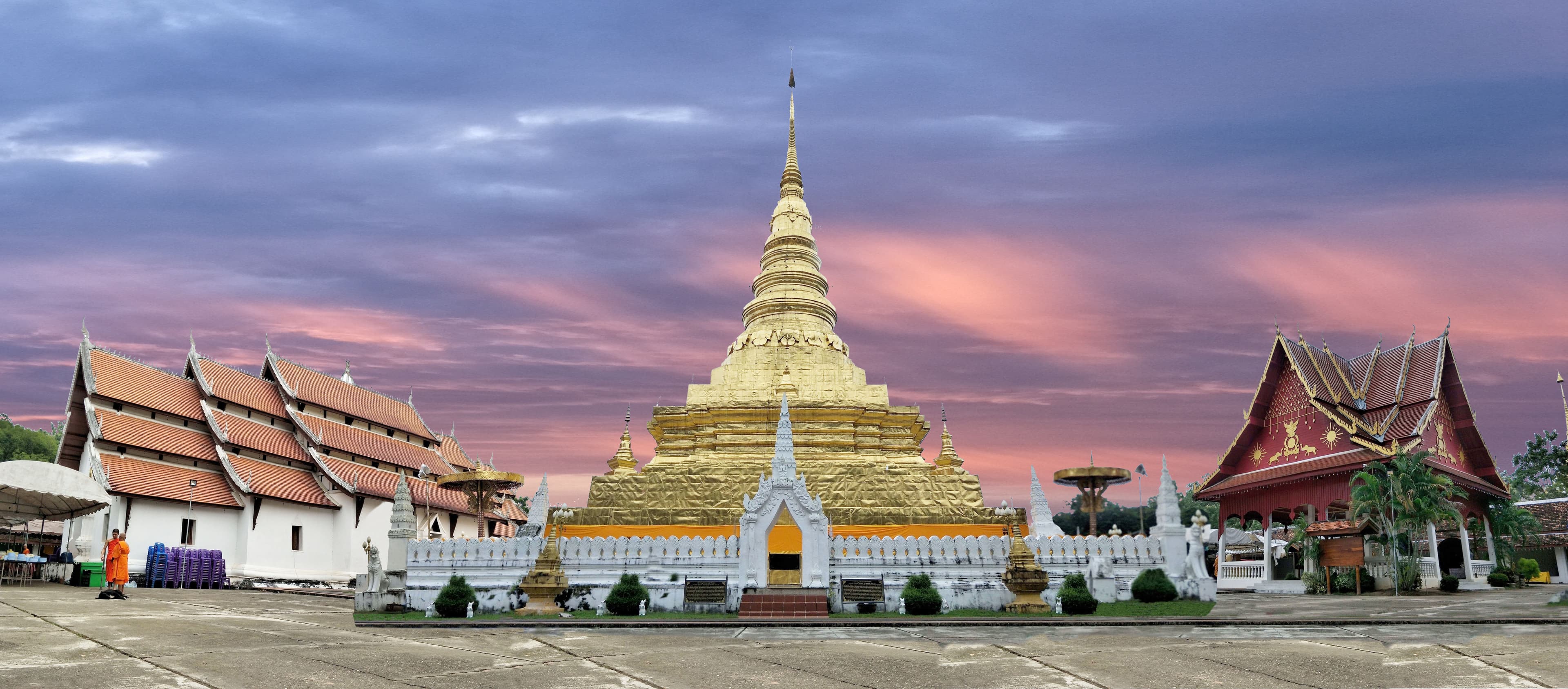
Wat Phra That Chae Haeng in Phu Phiang, Nan, Thailand. Image source · CC BY-SA 4.0
Visit essentials
A quick read before you go
- Etiquette
- Protect the chedi, circumambulation, prayer privacy, festival routes, and authorized ritual…
Overview
The golden chedi rises on the east side of the Nan River as a religious landmark of the old polity. Official cultural and tourism sources connect its relics with Sukhothai, preserving a memory of exchange between kingdoms through Buddhist patronage. Lanna Chu That practice gives the shrine a personal cycle: people born in the Year of the Rabbit travel to honor their corresponding relic monument. Hok Peng expands worship into a communal calendar of merit, procession, and homage.
The target remains the Buddha through relics, while monastic custody, Naga stairs, gilded architecture, and local identity shape the approach.
Why this place is sacred
Birth-year pilgrimage is sometimes marketed as a formula for luck. Its richer meaning lies in returning a person's life cycle to Buddhist merit, memory, and regional sacred geography. Official sources report beliefs that Chu That can bring protection, happiness, health, or prosperity. Those outcomes are included because the belief is prevalent and culturally documented, not because causation is proven.
Gold, elevation, and repeated worship may intensify a visitor's attention, but the guide does not label the temple an energy vortex or guarantee that one circuit changes external events.
Experience and orientation
Approach the stair and chedi with active worship in mind. Remove shoes where directed, give circumambulating groups room, and do not interrupt a birth-year petition for photographs. During Hok Peng, processions and merit-making can alter circulation and opening arrangements. Strong Places data lists daily 07:00–18:00 and a temple phone, but day-of confirmation remains prudent. Use the TAT-linked official social page; a stale independent domain associated with the temple now carries unrelated spam and should not be trusted.
Context and lineage
Official accounts say rulers of Nan enshrined Buddha relics received through Sukhothai ties, making the chedi both a sacred reliquary and a record of interregional Buddhist exchange. Later renewal produced the recognizable gilded Lanna form and royal-monastery status. Inscriptions and archaeological scholarship refine the chronology while leaving traditional relic narratives within the vocabulary of faith. Continuing Chu That practice and the annual Hok Peng festival show that the monument remains religiously active rather than surviving only as historical architecture.
Traditions and practice
Current worship includes offerings, prayer, clockwise movement where directed, merit-making, monk homage, birth-year relic visitation, and festival procession. The Lanna Chu That pilgrimage identifies Chae Haeng with the Year of the Rabbit. Hok Peng provides a second named recurrent gathering centered on the relic monument. Visitors may participate through temple guidance, but should not market fixed offerings as guaranteed protection or health. Do not apply gold leaf or pour water except at authorized points.
A pilgrimage can be meaningful without completing every advertised blessing practice.
Lanna Theravada Buddhism
ActiveLanna Theravada life centers relics, merit, birth-year pilgrimage, monastic worship, and festival.
Perspectives and open questions
Lanna Buddhism, regional history, epigraphy, archaeology, testimony, and conservation meet.
Scholarly perspective
Lanna Buddhism interprets relics, birth-year associations, merit, and regional sacred geography as a coherent tradition. Political history emphasizes Nan's relationship with Sukhothai. Epigraphy and archaeology refine dates and patronage, while living communities renew meaning through Chu That and Hok Peng. Tourism sources translate these practices for visitors and sometimes foreground promised benefits. The page preserves the devotional claim with a disclaimer and does not allow popularity to become proof. Conservation and monastic authority remain the practical custodians of the shrine.
Plan your visit
Strong Places supplies ordinary hours and phone; use the TAT-linked temple page, not the compromised domain.
Respectful visit
Protect the chedi, circumambulation, prayer privacy, festival routes, and authorized ritual points.
Current practical details
Address
89 หมู่ที่ 3 Tambon Muang Tuet, Amphoe Phu Phiang, Chang Wat Nan 55000, Thailand
Phone
Hours
Hours, fees, and access can change — verify on the official source before you travel. Practical details last checked Jul 2026.
Location
Map loads as you approach this section.
Pilgrim reflections
A portrait of encounter, not a score
Pilgrims describe what they felt, how present they could become, and whether the place would shape a journey. There are no stars and no ranking of traditions.
No reviewed reflections yet
The first pilgrims can help describe the character of being here.
Share a reflection
Available after an account-backed “Been there.” Every reflection is reviewed before publication.
Nearby sacred places
Explore other sacred places in the region. Proximity does not establish access or travel time; check each place’s guidance.

References
Sources consulted for this page. Source categories describe the publication, not a guarantee that every claim is verified. Traditional accounts and outside interpretations may differ.
- 01Wat Phra That Chae Haeng Phra Aram Luang — Google PlacesofficialExact-entity practical metadata accepted only after strong name, country, locality, and coordinate review.
- 02Where to go in Nan Province on your next holiday — Tourism Authority of ThailandofficialExact-site Buddha relics, sacred role, and Nan context.
- 03Travel like a local in Nan — Tourism Authority of ThailandofficialExact-site worship and Rabbit-year association.
- 04Hok Peng Festival to Worship Phra That Chao Phu Phiang Chae Haeng — Tourism Authority of Thailand NewsroomofficialDirect named annual festival evidence.
- 05Chu That birth-year relic pilgrimage — DASTA Community-Based TourismofficialDirect Lanna Chu That practice and Rabbit-year identification.
- 06Northern Life cultural publication — Ministry of Culture, ThailandofficialRelic tradition, chedi, and Nan-Sukhothai historical relationship.
- 07Wat Phra That Chae Haeng official social page — Wat Phra That Chae HaengofficialExact temple page linked by official Tourism Authority material; use for changing announcements.
Share a photo
Help visitors recognize Wat Phra That Chae Haeng. Every submission is reviewed before publication.