Wat Phra That, Kamphaeng Phet
A laterite relic temple at Kamphaeng Phet's ancient ceremonial center
Understand sacred places, explore living traditions, and learn how to engage respectfully with Pilgrim Map.
Access has not been verified. Check current local guidance before planning a visit.
Kamphaeng Phet, Kamphaeng Phet, Thailand
Read the sources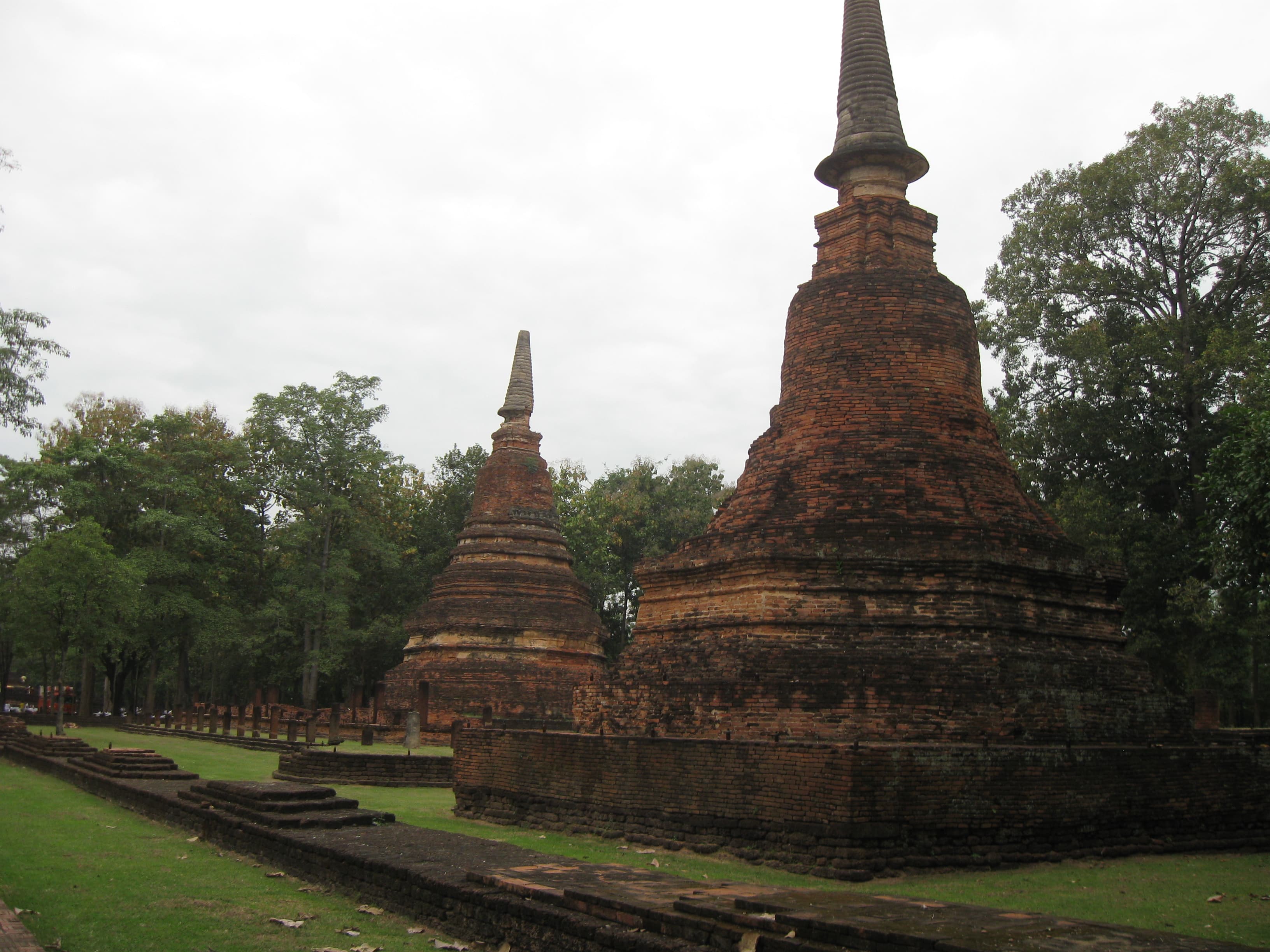
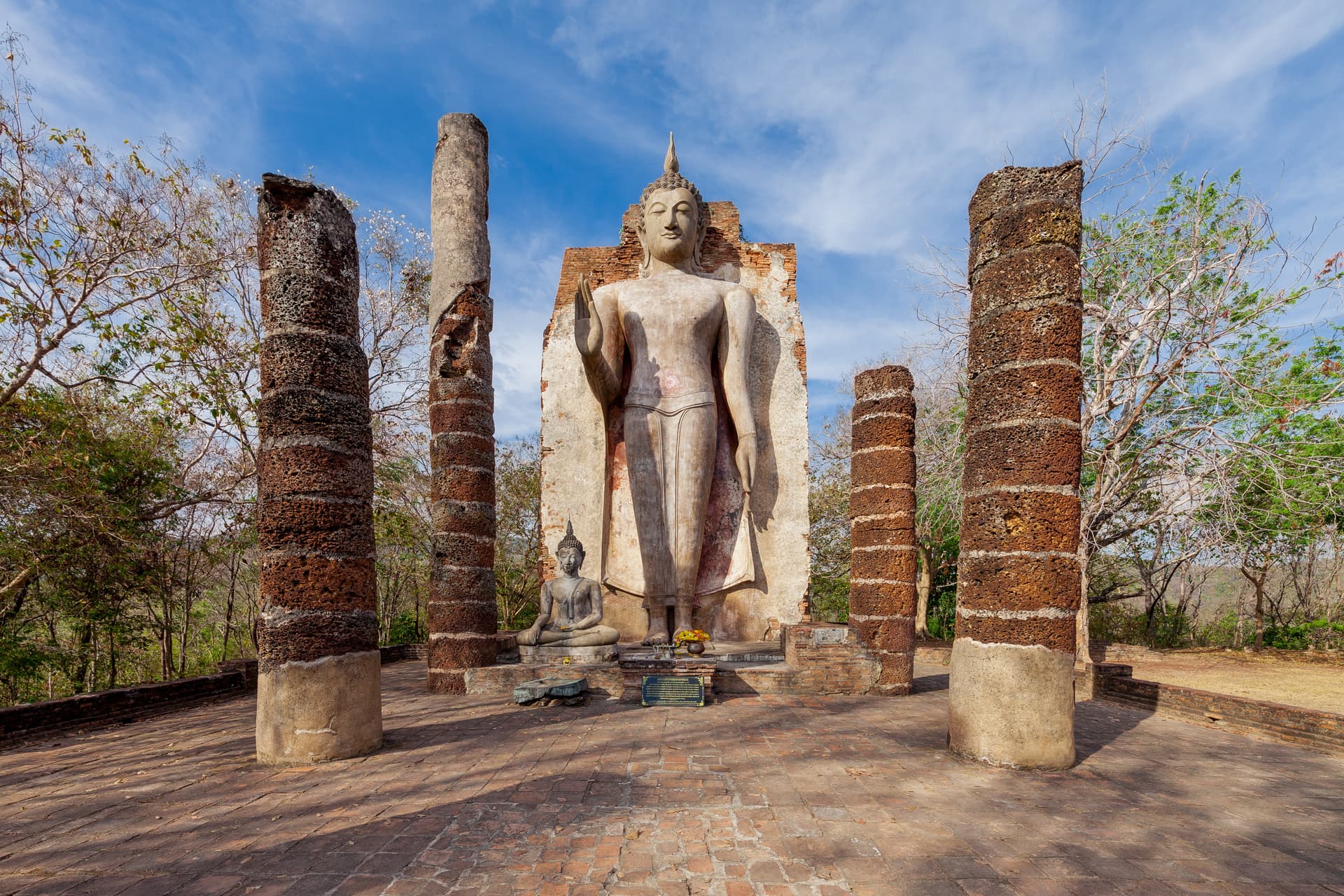
Wat Phra That, Kamphaeng Phet in Kamphaeng Phet, Kamphaeng Phet, Thailand. Image source · CC BY-SA 4.0
Visit essentials
A quick read before you go
- Duration
- Plan roughly 30–45 minutes at Wat Phra That within a longer visit to the inner-city monuments.
- Access
- No exact whole-site Google Places result passed review.
Overview
Wat Phra That does not need an invented legend to hold attention. A substantial bell-shaped chedi rises from the old walled city's ceremonial zone, accompanied by the remains of a vihara and secondary structures. The Fine Arts Department treats it as one of Kamphaeng Phet's principal inner-city monuments. According to the department's mapped identities, neighboring Wat Phra Kaew is larger but not interchangeable with Wat Phra That; the Google result for Wat Phra Kaew was therefore rejected during identity review.
Here the visual center is the stupa mass itself—laterite and brick gathered into a form associated with Buddhist relic memory. The exact relic, patron, and foundation date were not established, so this page keeps those questions open.
Why this place is sacred
The enclosure sets a boundary around absence as much as survival. Walls, bases, and the principal chedi still organize movement, while timber roofs, images, voices, and ceremonies have largely disappeared. This contrast can sharpen reflection on impermanence, but it is not evidence of a measurable energy. The site's force comes from material continuity, disciplined conservation, and the knowledge that Buddhist worship once ordered this part of the city.
UNESCO recognition protects the serial historical landscape; it does not certify a miracle or reveal the contents of the chedi.
An important Buddhist temple centered on a principal chedi and vihara in the ancient city's inner ceremonial zone.
A working temple became an archaeological monument managed within Kamphaeng Phet Historical Park and the wider Sukhothai serial World Heritage property.
Experience and orientation
Begin by locating Wat Phra That east of Wat Phra Kaew rather than following the neighboring temple's map record. From the marked route, compare the dense vertical mass of the principal chedi with the lower planes of the vihara remains. Laterite changes color with moisture and light, so an early visit can make construction joints easier to see. Resist the temptation to complete missing architecture in imagination.
The ruin is most intelligible when each surviving element is allowed to show what is known and what is gone. Keep marked paths unobstructed and give any local acts of reverence space.
According to the historical park map, the monument is identified by its own Thai name, วัดพระธาตุ, while Wat Phra Kaew is a separate site to the west.
Context and lineage
Fine Arts Department interpretation places Wat Phra That among the important monuments inside the ancient city walls. The surviving chedi reflects a form distinctive to Kamphaeng Phet, but the reviewed evidence does not establish a precise construction year or named royal founder. UNESCO inscribed the serial property in 1991. That status belongs to the historic-town ensemble, with this temple as a component within the Kamphaeng Phet part.
Historical Theravada Buddhist architecture is interpreted today through archaeological conservation rather than a resident monastic lineage.
Fine Arts Department conservators
custodians and interpreters of the archaeological park
Unknown historical Buddhist patrons and builders
creators whose identities remain unresolved
Traditions and practice
The chedi and vihara indicate relic-centred and image-hall worship, yet no reviewed source supports reconstructing a lost chant, procession, offering sequence, or circumambulation rule.
Visitors study the monument, move quietly, and sometimes pause in personal reflection within a managed archaeological park.
Trace the ceremonial layout visually from outside protected masonry, then spend a few minutes attending to the relationship between surviving mass and missing structure.
Historical Theravada Buddhism
HistoricalThe chedi-and-vihara plan records an important temple in Kamphaeng Phet's former ceremonial center.
Historical stupa and image-hall worship is acknowledged without reenacting undocumented rites.
Heritage stewardship
ActiveConservation keeps fragile laterite and brick fabric available as evidence within a living public landscape.
Marked-route visitation, documentation, conservation, and non-contact contemplation.
Perspectives and open questions
The temple can be read through Buddhist architecture, ancient urbanism, and modern conservation without turning uncertainty into folklore.
Scholarly perspective
Official interpretation emphasizes the chedi, vihara, laterite construction, and inner-city setting. Precise chronology and patronage remain less secure than the visible plan.
Living and traditional perspectives
The name Phra That and the stupa form sustain a relic-oriented Buddhist reading, while the original sacred contents remain unidentified.
Open questions
No reviewed evidence supports claims of hidden treasure, paranormal energy, healing effects, or a verified relic identity.
Plan your visit
Access and arrival
No exact whole-site Google Places result passed review. Consult current Fine Arts Department or historical-park information for entrance, hours, and fees.
Respectful visit
Wear clothing suitable for a Buddhist heritage site and protection from sun and rain.
Photograph from public paths without standing on foundations or blocking narrow approaches.
Leave nothing on the chedi, vihara bases, walls, or surrounding ground unless the park has a designated practice point.
No touching, climbing, scraping, chalking, drone use without permission, or removal of brick, soil, plants, and fragments.
Do not climb, sit on walls, rub stone, light incense on masonry, or treat cracks as places for coins and offerings.
Location
Map loads as you approach this section.
Pilgrim reflections
A portrait of encounter, not a score
Pilgrims describe what they felt, how present they could become, and whether the place would shape a journey. There are no stars and no ranking of traditions.
No reviewed reflections yet
The first pilgrims can help describe the character of being here.
Share a reflection
Available after an account-backed “Been there.” Every reflection is reviewed before publication.
Nearby sacred places
Explore other sacred places in the region. Proximity does not establish access or travel time; check each place’s guidance.
References
Sources consulted for this page. Source categories describe the publication, not a guarantee that every claim is verified. Traditional accounts and outside interpretations may differ.
- 01Kamphaeng Phet Historical Park history — Fine Arts Department, Ministry of Culture, ThailandofficialExact official park overview naming Wat Phra That among the monuments inside the ancient city and confirming the park's UNESCO status.
- 02Guide to Kamphaeng Phet Historical Park — Fine Arts Department, Ministry of Culture, ThailandofficialOfficial visitor guide describing Wat Phra That's principal bell-shaped chedi, laterite-and-brick construction, vihara, enclosure, and place in the inner-city ceremonial zone.
- 03Historic Town of Sukhothai and Associated Historic Towns — UNESCO World Heritage CentreofficialAuthoritative inscription record for the serial property that includes Kamphaeng Phet Historical Park; inscription date 1991.
- 04Wat Phra That archaeological-site map record — OpenStreetMap contributorsSource contextExact Thai-name geospatial record at 16.4875131, 99.5203223, corroborated against the official park map and monument sequence.
- 05Wat Phra That (Kamphaeng Phet) 05 — Wikimedia Commons contributor Ruslik0academicExact-subject photograph and category for Wat Phra That in Kamphaeng Phet Historical Park; CC BY-SA 4.0.
Pilgrim glossary
- Stupa
- A dome-shaped Buddhist monument that holds relics or marks a sacred place.
Share a photo
Help visitors recognize Wat Phra That, Kamphaeng Phet. Every submission is reviewed before publication.