Wat Phra Kaeo, Kamphaeng Phet
A royal-city temple preserves reclining and earth-touching Buddhas
Understand sacred places, explore living traditions, and learn how to engage respectfully with Pilgrim Map.
Access has not been verified. Check current local guidance before planning a visit.
Kamphaeng Phet, Kamphaeng Phet, Thailand
Read the sources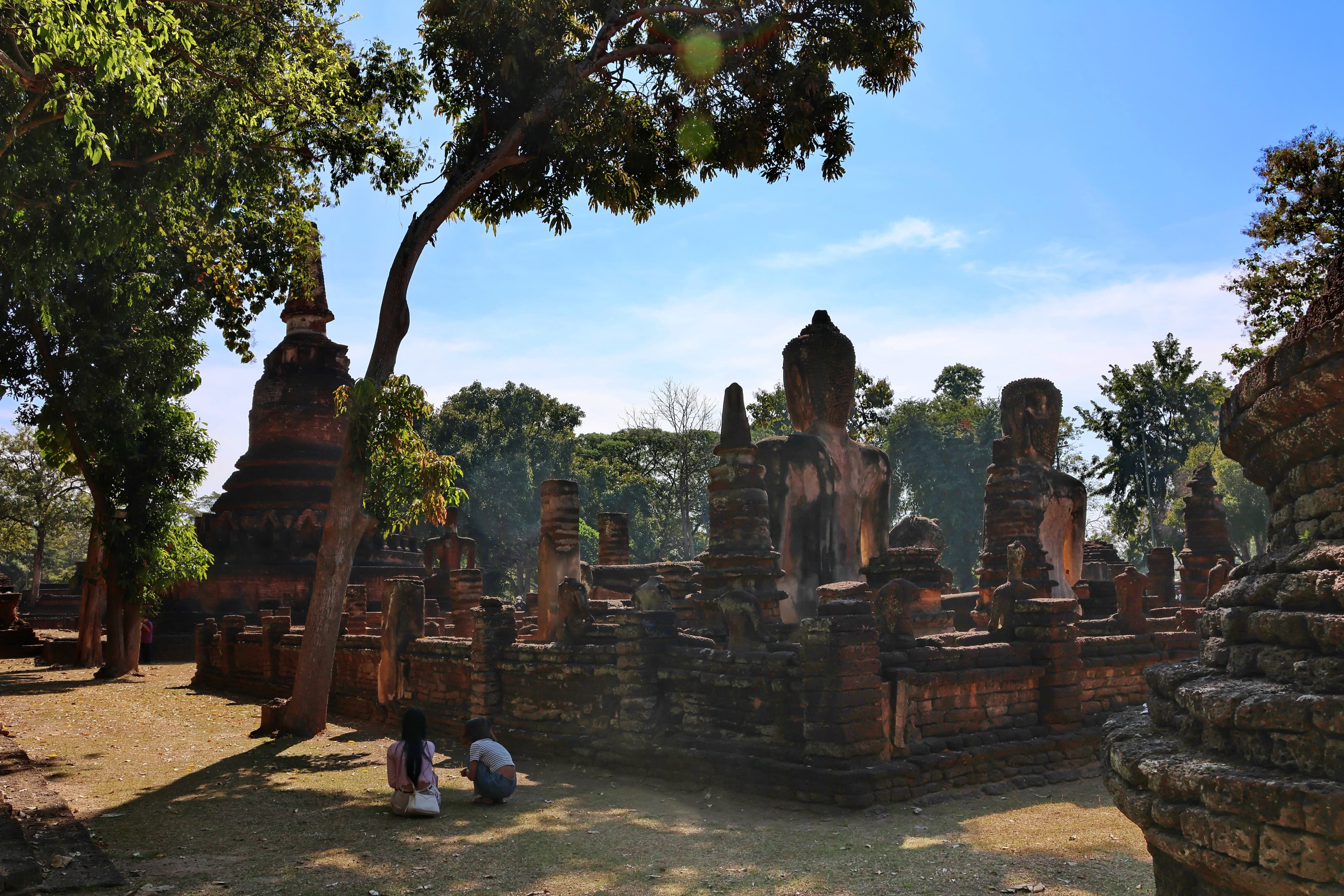
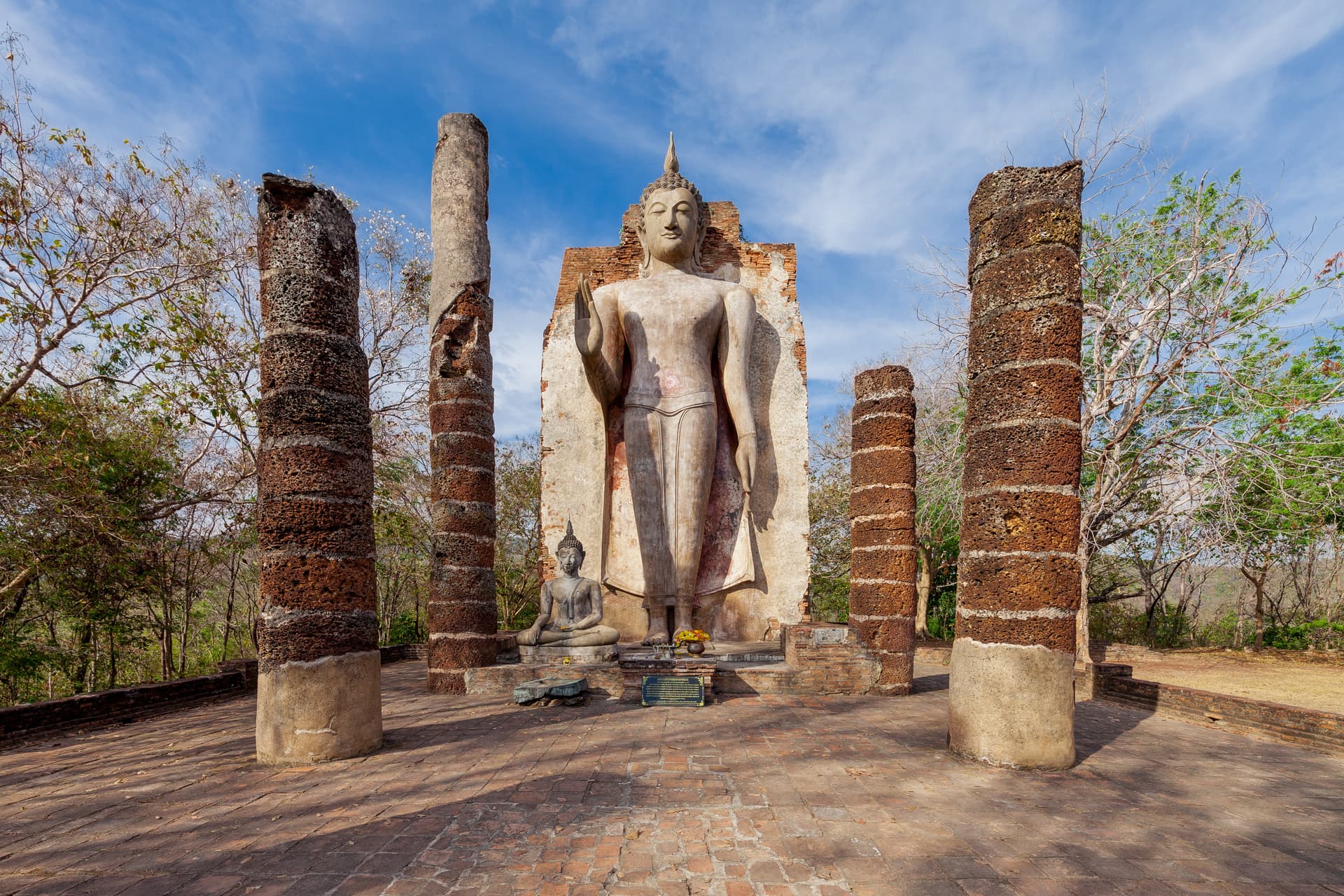
Wat Phra Kaeo, Kamphaeng Phet in Kamphaeng Phet, Kamphaeng Phet, Thailand. Image source · CC BY-SA 4.0
Visit essentials
A quick read before you go
- Etiquette
- Stay off image platforms and laterite, and label tradition separately from established evidence.
Overview
Unlike a temple dominated by one tower, Wat Phra Kaeo unfolds as a long chain of sacred stations. A raised hall and probable mondop lead toward the remains of a prang, then a bell chedi with image niches, a hall containing three great Buddhas, and a rear elephant-supported stupa. The two seated images touch the earth in witness to awakening; the reclining Buddha shifts attention toward the final passing and release.
Repeated building over several periods created density without a single preserved original plan. As the royal city's principal monastery, the precinct joined Buddha veneration, ceremonial visibility, and urban authority inside the walls.
Why this place is sacred
The name Phra Kaeo invites immediate comparison with the Emerald Buddha now in Bangkok. Fine Arts notes a belief that a ruined pedestal or pavilion at this site once held that palladium, while other historical routes for the image are documented elsewhere. The careful position is neither denial nor certainty: the Kamphaeng Phet association is a local-historical tradition, not independently conclusive provenance. The surviving reclining and earth-touching Buddhas require no speculative identity to be sacred evidence.
Their gestures hold distinct Buddhist narratives, and their damaged faces show the cost of time without erasing the purposes for which the images were made.
Experience and orientation
Follow the east-west axis so the compound's sequence emerges instead of entering from whichever ruin looks closest. At the hall of three Buddhas, give each posture its own reading: two images recall awakening, while the reclining form evokes the Buddha's final nirvana. Stay behind barriers and never climb the image platform for eye-level photographs. The rear elephant chedi belongs to another spatial episode and should not be confused with nearby Wat Chang Rop.
If interpretation mentions the Emerald Buddha, note the wording used—belief, tradition, or archaeological conclusion. Heat and exposed laterite reward pauses, but foundations are not seats unless marked.
Context and lineage
Fine Arts identifies Wat Phra Kaeo as a large, important monastery in central Kamphaeng Phet, expanded through several periods. The site combines Sukhothai and early Ayutthaya artistic influence and includes dozens of stupa bases, multiple halls, an ordination hall, Buddha sculptures, lions, and an elephant-supported rear monument. Official interpretation records the belief that a pavilion once housed the Emerald Buddha, while stopping short of presenting the claim as uncontested fact. Excavation and conservation revealed the layered plan.
Kamphaeng Phet forms one component of UNESCO property 574, inscribed in 1991 with Sukhothai and Si Satchanalai.
Traditions and practice
Historical rites would have addressed Buddha images in different halls, used the ordination boundary, and organized merit and monastic life along the compound. Today the protected ruin calls for observation rather than reactivation. Do not apply gold leaf, burn incense on laterite, touch the images, or climb the chedis. A quiet bow from the designated route can acknowledge Buddhist identity. Avoid telling visitors that the Emerald Buddha definitely stood here; accuracy is part of respect.
The site has no verified resident sangha or current named pilgrimage, so heritage stewardship is the only active tradition asserted by the guide.
Theravada Buddhism
HistoricalHistoric Theravada practice addressed Buddha images, ordination, monastic life, merit, and royal ceremony.
Heritage stewardship
ActiveLaterite foundations and three monumental Buddhas require different conservation responses along the elongated royal-temple axis.
Perspectives and open questions
Iconography, royal-city history, archaeology, palladium study, and UNESCO scope stay differentiated.
Scholarly perspective
Buddhist iconography distinguishes reclining and earth-touching images rather than treating all Buddha sculpture as interchangeable. Urban history explains the temple's status within the royal-city enclosure. Archaeology reads a succession of halls, stupas, and repair campaigns, while art history identifies Sukhothai and Ayutthaya features. Palladium history investigates the Emerald Buddha tradition and its evidentiary limits. UNESCO management links Wat Phra Kaeo to the associated historic towns without validating every local belief.
The resulting page is deliberately layered: strong evidence supports the monument and surviving images; the former Emerald Buddha presence remains an attributed tradition, not a promised source of power.
Plan your visit
Strong Places locates the walled-city monument; current access and conservation work need confirmation.
Respectful visit
Stay off image platforms and laterite, and label tradition separately from established evidence.
Current practical details
Address
FGQ9+86F, Nai Mueang, Mueang Kamphaeng Phet District, Kamphaeng Phet 62000, Thailand
Phone
Hours
Hours, fees, and access can change — verify on the official source before you travel. Practical details last checked Jul 2026.
Location
Map loads as you approach this section.
Pilgrim reflections
A portrait of encounter, not a score
Pilgrims describe what they felt, how present they could become, and whether the place would shape a journey. There are no stars and no ranking of traditions.
No reviewed reflections yet
The first pilgrims can help describe the character of being here.
Share a reflection
Available after an account-backed “Been there.” Every reflection is reviewed before publication.
Nearby sacred places
Explore other sacred places in the region. Proximity does not establish access or travel time; check each place’s guidance.
References
Sources consulted for this page. Source categories describe the publication, not a guarantee that every claim is verified. Traditional accounts and outside interpretations may differ.
- 01Wat Phra Kaeo — Fine Arts Department, Kamphaeng Phet Historical ParkofficialExact-site plan, Buddha images, chronology, and attributed Emerald Buddha association.
- 02Phra Attharot at Wat Phra Kaeo — Fine Arts Department, Kamphaeng Phet Historical ParkofficialExact-site Fine Arts study of monumental Buddha imagery.
- 03Historic Town of Sukhothai and Associated Historic Towns — UNESCO World Heritage CentreofficialAuthoritative inscription, property scope, criteria, and management context.
- 04Wat Phra Kaew (Kamphaeng Phet) — Google Maps — Google PlacesSource contextStrong name, country, locality, and coordinate match; used only for practical visitor data and identity corroboration.
Pilgrim glossary
- Stupa
- A dome-shaped Buddhist monument that holds relics or marks a sacred place.
- Sangha
- The community of Buddhist practitioners, traditionally monks and nuns.
Share a photo
Help visitors recognize Wat Phra Kaeo, Kamphaeng Phet. Every submission is reviewed before publication.