Wat Phra Kaeo Don Tao Suchadaram
Lampang remembers thirty-two years of the Emerald Buddha amid Lanna and Burmese forms
Understand sacred places, explore living traditions, and learn how to engage respectfully with Pilgrim Map.
Access has not been verified. Check current local guidance before planning a visit.
Lampang, Lampang, Thailand
Read the sources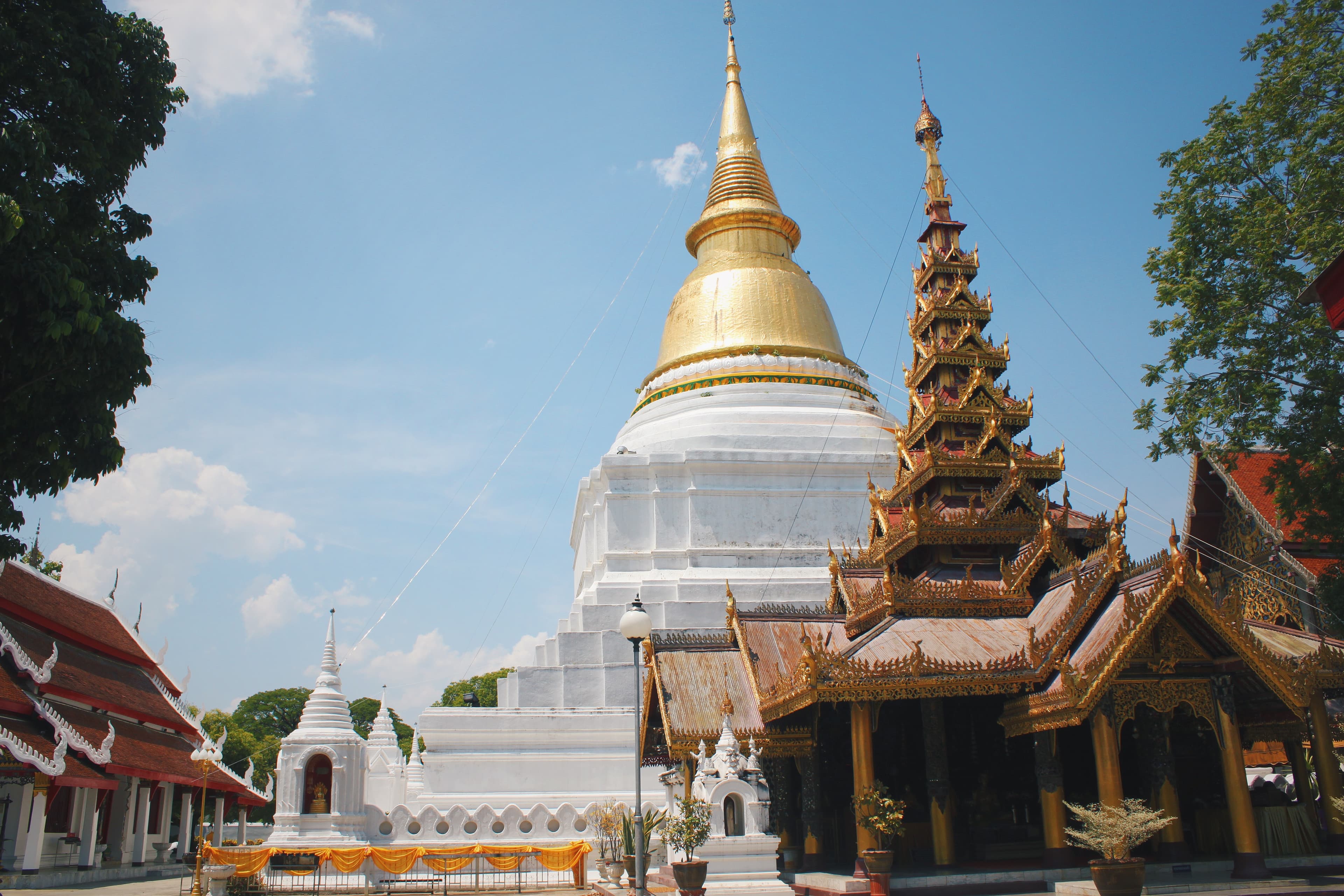
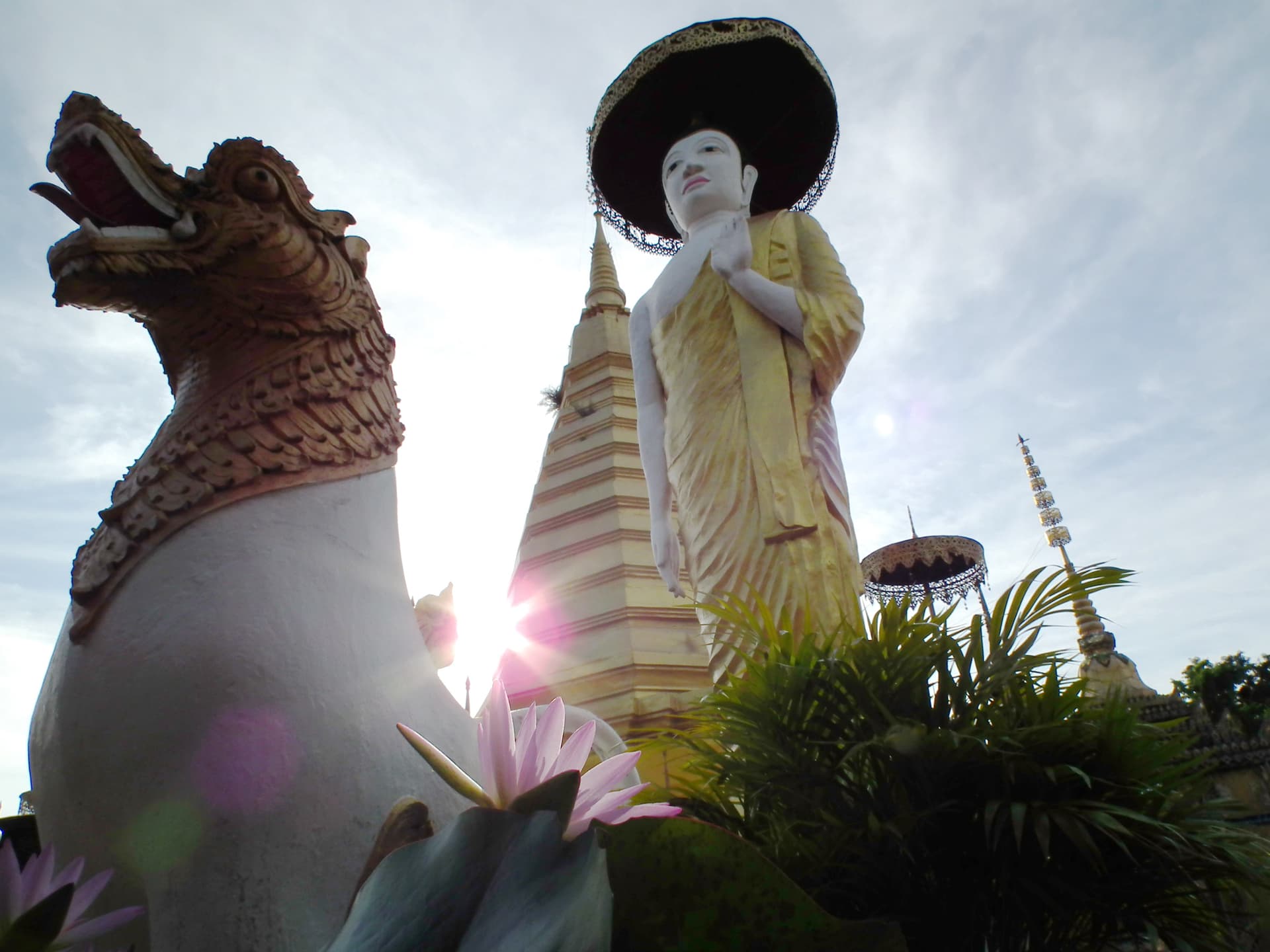
Wat Phra Kaeo Don Tao Suchadaram in Lampang, Lampang, Thailand. Image source · CC BY-SA 4.0
Visit essentials
A quick read before you go
- Etiquette
- Do not invent a substitute-image ritual or touch the compound's mosaic, timber, and chedi…
Overview
The Emerald Buddha is no longer at Wat Phra Kaeo Don Tao, yet its former residence remains central to the monastery's name and historical identity. This is not an empty absence. The site preserves the memory of Lampang as custodian during a decisive phase in the image's regional journey, while current Buddha images and the sangha sustain worship in the present tense. Architecturally, the compound combines Lanna, Hariphunchai-related, and Burmese features rather than presenting a single pure style.
Movement—of images, artisans, forms, and authority—is therefore the key to reading the place.
Why this place is sacred
A sacred object's departure can continue to organize meaning. At Don Tao, the Emerald Buddha's thirty-two-year stay links Lampang to Chiang Rai, Chiang Mai, and the image's later royal history without implying that the present monastery possesses it. Buildings with Burmese-style roofs and mosaic ornament record other networks of exchange. This layered history guards against a common visitor error: treating northern temples as local variants of a Bangkok norm.
The temple's sacredness comes from living Theravada practice and remembered responsibility, not from a claim that residual power was physically left behind.
Experience and orientation
Begin by separating the site's present objects of worship from the historical narrative of the Emerald Buddha. Read the compound's signs to identify chedis and halls before assigning every green or jeweled image to that history. Burmese-influenced roof forms and mosaic work deserve close visual study without touching or flash. Because this remains an important Lampang monastery, allow current prayer and monastic circulation to determine where you pause.
The official tourism listing provides dated hours, but those should be reconfirmed; ceremonies can alter access to specific interiors even when the grounds remain open.
Context and lineage
The monastery's longer development includes structures and traditions from several northern periods, but its best-known chapter is the residence of the Emerald Buddha from 1434 to 1468. The image had emerged in Chiang Rai and, according to the received journey, remained in Lampang before King Tilokaraj moved it to Chiang Mai. Wat Phra Kaeo Don Tao later combined with the neighboring Suchadaram monastery, contributing to its present name and fabric.
Repairs and patronage introduced the visible mixture of Lanna and Burmese forms. Historical memory here is consequently regional and cumulative, not a single foundation episode.
Traditions and practice
Present-day Theravada worship centers the Buddha images now enshrined in the monastery, together with chanting, offerings, merit-making, teaching, and monastic observance. Respect for the Emerald Buddha's former stay belongs to historical and devotional memory; visitors should not search for a substitute object or invent a ritual reenactment. Bowing or offering is appropriate only at designated active shrines. Keep entrances, image sightlines, and monastic paths clear.
Architectural curiosity does not authorize entry into closed halls, and offerings must never be placed against old mosaic, timber, or chedi surfaces.
Theravada Buddhism
ActiveNorthern Theravada practice sustains current images, monastic life, merit-making, and respectful memory of the Emerald Buddha.
Perspectives and open questions
Former custodianship created durable religious importance without proving that an absent image left measurable residual energy.
Scholarly perspective
Political and religious history follows the Emerald Buddha as a palladium moving among northern courts. Architectural history sees Don Tao as evidence of Lanna, Hariphunchai-related, and Burmese exchange. Devotional interpretation recognizes the merit and responsibility of having housed a revered image while continuing to honor the monastery's present images. These perspectives should not produce the metaphysical claim that an image leaves a measurable energy at former residences.
Devotees may describe enduring blessing, but that remains attributed belief rather than independently verified fact.
Plan your visit
The official tourism listing gives dated daytime access; active-hall schedules still need confirmation before travel.
Respectful visit
Do not invent a substitute-image ritual or touch the compound's mosaic, timber, and chedi surfaces.
Current practical details
Address
8G25+98J, Prakaew Rd, Tambon Wiang Nuea, Amphoe Mueang Lampang, Chang Wat Lampang 52000, Thailand
Phone
Hours
Hours, fees, and access can change — verify on the official source before you travel. Practical details last checked Jul 2026.
Location
Map loads as you approach this section.
Pilgrim reflections
A portrait of encounter, not a score
Pilgrims describe what they felt, how present they could become, and whether the place would shape a journey. There are no stars and no ranking of traditions.
No reviewed reflections yet
The first pilgrims can help describe the character of being here.
Share a reflection
Available after an account-backed “Been there.” Every reflection is reviewed before publication.
Nearby sacred places
Explore other sacred places in the region. Proximity does not establish access or travel time; check each place’s guidance.
References
Sources consulted for this page. Source categories describe the publication, not a guarantee that every claim is verified. Traditional accounts and outside interpretations may differ.
- 01Wat Phra Kaew Don Tao Suchadaram — Tourism Authority of Thailand, Japan OfficeofficialOfficial tourism source reviewed for the Emerald Buddha residence, mixed architectural forms, address, and dated visitor information.
- 02Wat Phra Kaew Don Tao Suchadaram — Google Maps — Google PlacesSource contextStrong name, country, locality, and coordinate match; used only for practical visitor data and identity corroboration.
- 03Wat Phra Kaeo Don Tao — Wikipedia — Wikipedia contributorsacademicExact-entity page reviewed for the Emerald Buddha's residence from 1434 to 1468 and the temple's Lampang identity; the official TAT source remains in the bundle.
Pilgrim glossary
- Sangha
- The community of Buddhist practitioners, traditionally monks and nuns.
Share a photo
Help visitors recognize Wat Phra Kaeo Don Tao Suchadaram. Every submission is reviewed before publication.