Wat Phra Borommathat Chaiya
A Srivijaya-form reliquary anchors southern Thai Buddhist memory
Understand sacred places, explore living traditions, and learn how to engage respectfully with Pilgrim Map.
Access has not been verified. Check current local guidance before planning a visit.
Chaiya, Surat Thani, Thailand
Read the sources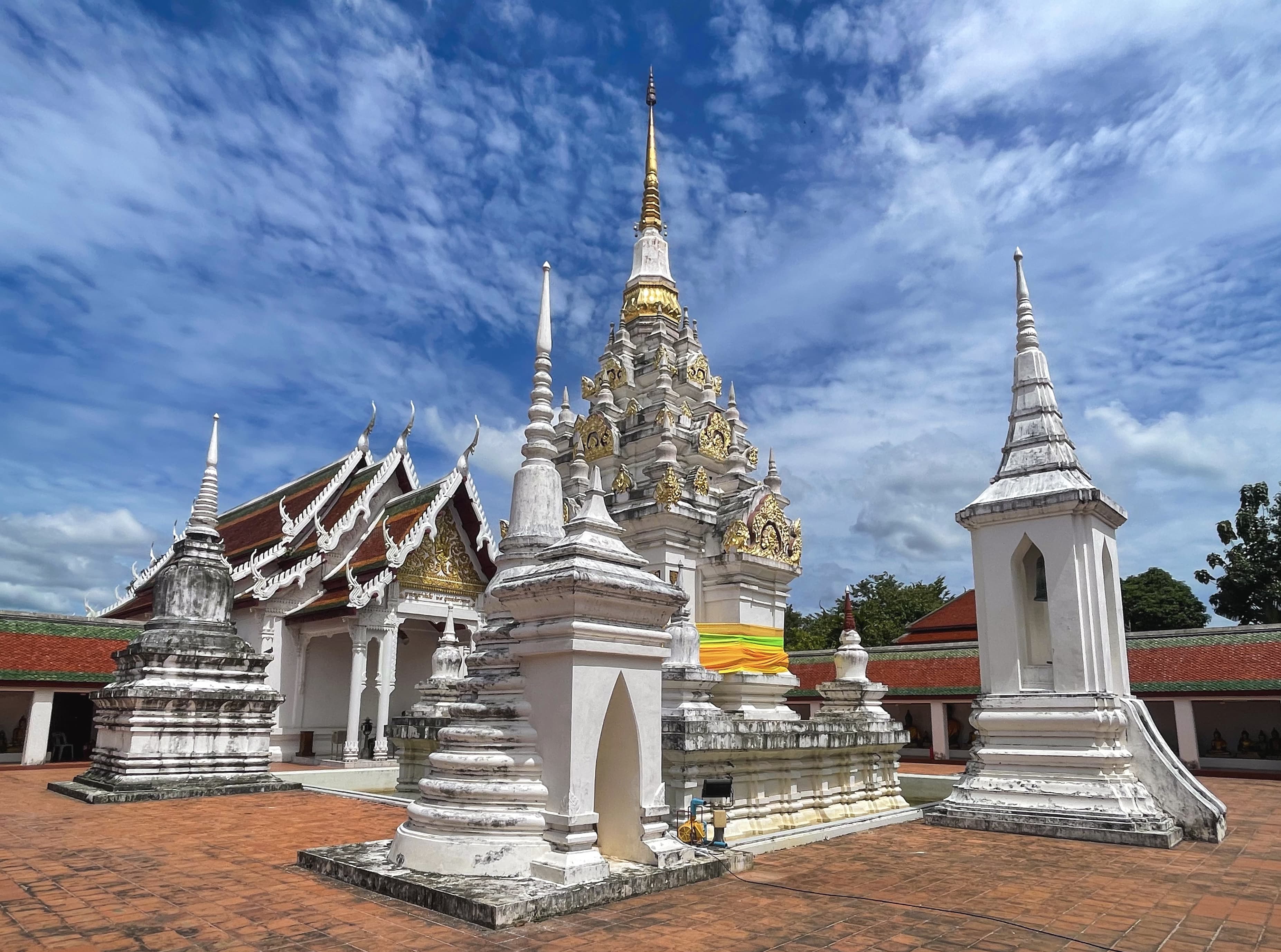
Wat Phra Borommathat Chaiya in Chaiya, Surat Thani, Thailand. Image source · CC BY-SA 4.0
Visit essentials
A quick read before you go
- Etiquette
- Protect brick, stucco, base water, restricted relic space, and worshipper priority.
Overview
The central tower is compact rather than gigantic, yet its cruciform plan, projecting porches, niches, and upper form make it one of southern Thailand's most distinctive Buddhist monuments. Fine Arts associates the original sanctuary with Mahayana Buddhism and Srivijaya art; the active temple now functions within Theravada life. Relic veneration bridges those periods without making them identical. Nearby finds, including Avalokitesvara imagery and later Buddha images, show that Chaiya participated in maritime religious networks while developing local forms.
Why this place is sacred
Calling the monument Srivijaya can invite sweeping claims about a vanished empire. The label is most useful when tied to architecture, sculpture, maritime exchange, and a bounded period. Sacred meaning today also depends on subsequent restoration, relic belief, monastic continuity, and local care. The water around the base reveals earlier levels and conservation history; it is not documented as a healing pool. No reviewed source proves that relic proximity guarantees protection or that every ornament survives from the earliest phase.
Experience and orientation
First view the cruciform plan from outside the surrounding water, then compare porches, niches, and later decorative additions. Do not lean across the water or touch stucco and brick. In active halls, remove shoes and give worshippers priority. The adjacent Chaiya National Museum can clarify sculpture removed from archaeological contexts; check its separate hours. Places and the temple's social page report access, but current ceremonies and conservation may alter it.
Distinguish the original core from later restoration instead of seeking a perfectly preserved ancient state.
Context and lineage
Fine Arts describes Phra Borommathat Chaiya as a major southern monument built in Mahayana Buddhist context around the eighth or ninth century. Its plan relates to central Javanese and South Indian forms, while later Thai periods repaired, enlarged, and reinterpreted the structure. Major restoration in the reign of Rama V contributed visible newer decoration. The site remains a royal Theravada monastery and stands beside the national museum. It is not currently inscribed on UNESCO's World Heritage List.
Traditions and practice
Living worship includes relic homage, bowing, chanting, merit-making, and offerings at authorized points. Visitors should not enter restricted relic spaces, add gold leaf to protected fabric, or use the base water ritually without temple instruction. Mahayana historical interpretation does not authorize improvised bodhisattva rites, and current Theravada practice should not erase earlier evidence. A quiet circuit can honor the monument if custodians permit it. Festival dates need current temple confirmation.
Theravada Buddhism
ActiveLiving Theravada practice centers Buddha relics, merit, chanting, and monastic continuity.
Historic Mahayana Buddhism
ActiveEarly Mahayana architecture and bodhisattva evidence connect Chaiya with maritime Buddhist networks.
Perspectives and open questions
Mahayana history, Theravada devotion, maritime networks, art comparison, and conservation qualify the site.
Scholarly perspective
Mahayana history interprets early architecture and Avalokitesvara evidence; Theravada practice explains the active monastery and current relic devotion. Maritime history situates Chaiya within networks across the Malay Peninsula and island Southeast Asia. Art history compares Java and India while archaeology separates building phases. Conservation documents extensive repair. The page uses 'Srivijaya' as an evidence-bound art-historical frame, not a mystical or nationalist certainty. The nearby museum helps separate movable evidence from the active reliquary.
Sculptures removed for protection can illuminate Mahayana belief, maritime contact, and local workshops, while the chedi continues to organize worship in place. Neither setting is complete by itself. Reading temple and museum together prevents a single Avalokitesvara image, architectural label, or restoration phase from standing in for Chaiya's entire Buddhist history.
Plan your visit
Strong Places and the custodian page provide ordinary access subject to ceremony and conservation.
Respectful visit
Protect brick, stucco, base water, restricted relic space, and worshipper priority.
Current practical details
Address
95MM+RVQ, Wiang, Chaiya District, Surat Thani 84110, Thailand
Hours
Hours, fees, and access can change — verify on the official source before you travel. Practical details last checked Jul 2026.
Location
Map loads as you approach this section.
Pilgrim reflections
A portrait of encounter, not a score
Pilgrims describe what they felt, how present they could become, and whether the place would shape a journey. There are no stars and no ranking of traditions.
No reviewed reflections yet
The first pilgrims can help describe the character of being here.
Share a reflection
Available after an account-backed “Been there.” Every reflection is reviewed before publication.
Nearby sacred places
Explore other sacred places in the region. Proximity does not establish access or travel time; check each place’s guidance.
References
Sources consulted for this page. Source categories describe the publication, not a guarantee that every claim is verified. Traditional accounts and outside interpretations may differ.
- 01Phra Borommathat Chaiya chedi — Fine Arts DepartmentofficialExact architecture, dimensions, phases, and restoration.
- 02Four important southern relic monuments — Fine Arts DepartmentofficialExact Mahayana origin, Srivijaya dating, later repairs, and associated sculpture.
- 03Wat Phra Borommathat Chaiya official social page — Wat Phra Borommathat ChaiyaofficialCustodian page supplied by strong Places for current announcements.
- 04Wat Phra Borommathat Chaiya — Google Maps — Google PlacesSource contextStrong name, country, locality, and coordinate match; used only for practical visitor data and identity corroboration.
Pilgrim glossary
- Bodhisattva
- An enlightened being who postpones full nirvana to help others toward awakening.
Share a photo
Help visitors recognize Wat Phra Borommathat Chaiya. Every submission is reviewed before publication.