Wat Phra That Hariphunchai
Lamphun's relic stupa carries Hariphunchai memory into living Lanna worship
Understand sacred places, explore living traditions, and learn how to engage respectfully with Pilgrim Map.
Access has not been verified. Check current local guidance before planning a visit.
Lamphun, Lamphun, Thailand
Read the sources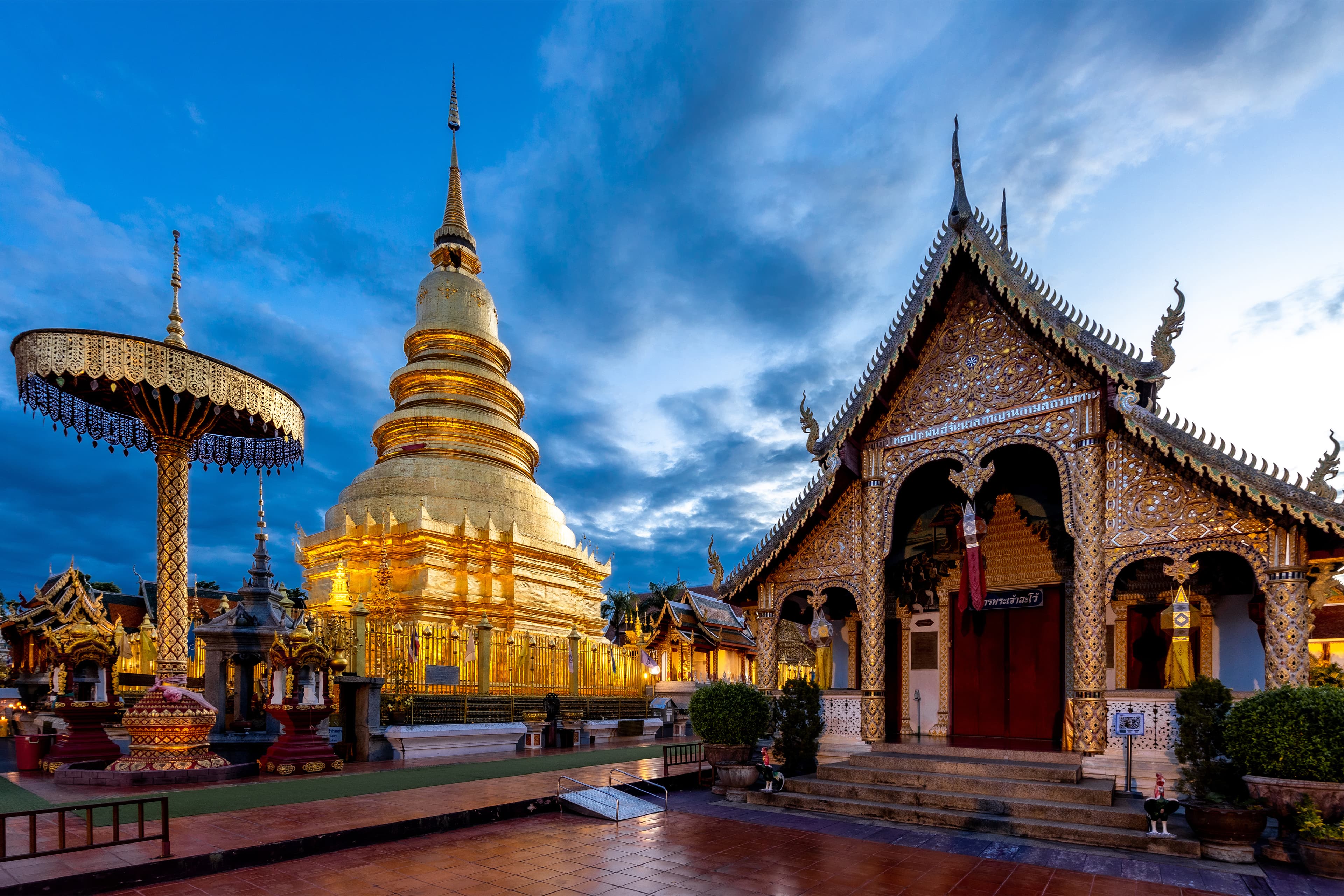
Wat Phra That Hariphunchai in Lamphun, Lamphun, Thailand. Image source · CC BY 4.0
Visit essentials
A quick read before you go
- Etiquette
- Keep the stupa route clear and never touch repousse Buddha panels or place offerings against…
Overview
The main stupa dominates Wat Phra That Hariphunchai through gold, height, and relic meaning, but the neighboring Chedi Suwanna preserves another architectural lineage. One structure was enlarged under Lanna patronage and carries repousse Buddha images; the other retains a stepped form associated with Hariphunchai and nearby Wat Chama Thewi. Together they prevent the compound from being assigned to a single frozen era.
Devotees approach the principal stupa because of the Buddha hair-relic tradition, while historians read layers of Dvaravati, Hariphunchai, and Lanna form. Lamphun's sacred center is made from both continuity and visible difference.
Why this place is sacred
Relic worship gives Wat Phra That Hariphunchai a spiritual focus that can be stated without claiming that the stupa radiates a measurable force. The sacred relationship is one of presence, recollection, merit, and pilgrimage. Nirat Hariphunchai, a northern Thai poem, describes a journey from Chiang Mai for worship and shows that the route itself entered literary memory.
The site's long chronology also warns against easy origin claims: a ninth-century relic tradition, an eleventh-century compound, fifteenth-century rebuilding, and twentieth-century renovation are separate evidence layers that together sustain present devotion.
Experience and orientation
Enter with the principal stupa in view, but take time to distinguish Chedi Suwanna's stepped mass from the gilded relic monument. Follow any established clockwise route without cutting between worshippers and the stupa. Bronze Buddha panels and other surfaces should be viewed from the permitted path rather than touched. Active halls and offering points may be busier than the quieter architectural edges. If a local festival or pilgrimage group is present, allow their sequence to organize circulation.
The compound is in central Lamphun, yet its pace should be set by worship rather than by a quick urban stop.
Context and lineage
Traditional accounts place a stupa for a Buddha hair relic in 897. The present temple compound is attributed to Hariphunchai King Athitayarat in 1044. Lanna King Tilokaraja directed a major rebuilding in 1443, enlarging and embellishing the principal stupa. Chedi Suwanna, dated to 1418, retains a pyramid form associated with Hariphunchai religious architecture. Khruba Siwichai led further renovations in the twentieth century.
These campaigns do not cancel the founding traditions; they show how successive communities interpreted responsibility for an inherited sacred center.
Traditions and practice
Theravada practice includes relic homage, circumambulation, offerings, chanting, merit-making, almsgiving, and ceremonies maintained by the monastery. The Lamphun Provincial Government documents Song Nam Phra That Hariphunchai, an annual relic-bathing observance held on the full moon of the northern eighth lunar month, when Lamphun and Lanna communities return to venerate the stupa. Visitors should not invent a route or claim formal pilgrim status outside a recognized observance.
Around the main stupa, keep the devotional path clear and use only authorized places for flowers, incense, or cloth. Chedi Suwanna is also sacred architecture, not a secondary prop. Lunar-calendar festivals and local Lamphun participation take precedence over ordinary touring, and ritual details should be confirmed with current custodians.
Theravada Buddhism
ActiveLanna Theravada devotion connects the hair-relic stupa, Buddha images, sangha, circumambulation, and Lamphun merit-making.
Perspectives and open questions
The relic belongs to Buddhist tradition, while architecture and the Nirat poem independently document long religious attention.
Scholarly perspective
Archaeology and architectural history separate Hariphunchai, Dvaravati-related, and Lanna phases. Buddhist interpretation begins with the relic tradition and the merit of approaching a stupa associated with the Buddha. Literary history adds Nirat Hariphunchai as evidence of a remembered worship journey. These lenses reinforce the temple's importance while leaving room for uncertainty about the earliest structure. The Buddha hair is a matter of religious tradition rather than scientific authentication, and personal reports of blessing remain testimony.
Neither qualification diminishes the verifiable history of sustained pilgrimage and rebuilding.
Plan your visit
Central Lamphun access is straightforward, but lunar festivals and organized worship can change circulation through the compound.
Respectful visit
Keep the stupa route clear and never touch repousse Buddha panels or place offerings against historic masonry.
Current practical details
Address
H2G5+RCR, Thanon Rop Mueang Nai, Tambon Nai Mueang, Amphoe Mueang Lamphun, Chang Wat Lamphun 51000, Thailand
Phone
Hours
Hours, fees, and access can change — verify on the official source before you travel. Practical details last checked Jul 2026.
Location
Map loads as you approach this section.
Pilgrim reflections
A portrait of encounter, not a score
Pilgrims describe what they felt, how present they could become, and whether the place would shape a journey. There are no stars and no ranking of traditions.
No reviewed reflections yet
The first pilgrims can help describe the character of being here.
Share a reflection
Available after an account-backed “Been there.” Every reflection is reviewed before publication.
Nearby sacred places
Explore other sacred places in the region. Proximity does not establish access or travel time; check each place’s guidance.

References
Sources consulted for this page. Source categories describe the publication, not a guarantee that every claim is verified. Traditional accounts and outside interpretations may differ.
- 01Song Nam Phra That Hariphunchai Tradition — Lamphun Provincial GovernmentofficialOfficial provincial account of the annual relic-bathing observance on the full moon of the northern eighth lunar month, when Lamphun and Lanna communities return to venerate the stupa.
- 02Wat Phra That Hariphunchai — Wikipedia — Wikipedia contributorsacademicCorroborates identity, location, and basic historical context; key claims require higher-tier corroboration.
- 03Q2552374 — Wikidata — Wikidata contributorsacademicStructured identity and coordinate corroboration; not used alone for spiritual or historical claims.
- 04Wat Phra That Haripunchai Woramahawihan — Google Maps — Google PlacesSource contextStrong name, country, locality, and coordinate match; used only for practical visitor data and identity corroboration.
Pilgrim glossary
- Stupa
- A dome-shaped Buddhist monument that holds relics or marks a sacred place.
Share a photo
Help visitors recognize Wat Phra That Hariphunchai. Every submission is reviewed before publication.