Wat Chamthewi
Hariphunchai's stepped chedi keeps Queen Chamadevi within living memory
Understand sacred places, explore living traditions, and learn how to engage respectfully with Pilgrim Map.
Access has not been verified. Check current local guidance before planning a visit.
Lamphun, Lamphun, Thailand
Read the sources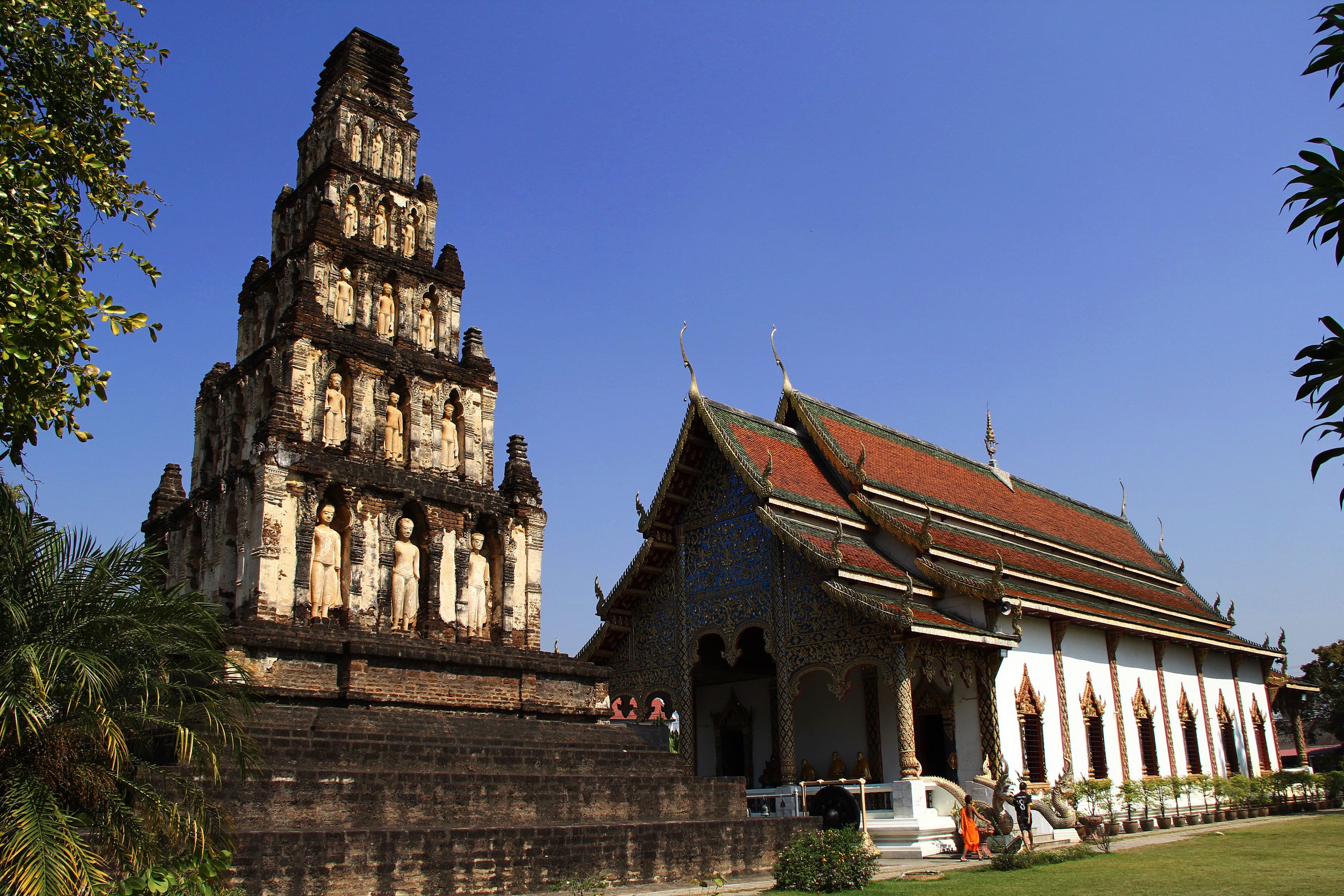
Wat Chamthewi in Lamphun, Lamphun, Thailand. Image source · CC BY-SA 4.0
Visit essentials
A quick read before you go
- Etiquette
- Protect stucco, brick, monks, worshippers, and every marked boundary around the ancient chedis.
Overview
The square chedi rises in receding levels, each face articulated by niches containing standing Buddha images. Repetition turns the monument into a vertical field of awakened presence rather than a single focal statue. Nearby, a smaller chedi and modern worship spaces connect Hariphunchai art with a functioning monastery. Queen Chamadevi is remembered not as a deity replacing the Buddha, but as a foundational ruler and patron whose story anchors Lamphun identity.
Sacred significance therefore joins Buddhist image veneration, funerary or memorial tradition, and gratitude toward a queen credited with establishing the early city.
Why this place is sacred
Visitors sometimes approach old brick and stucco as evidence of a mysterious lost civilization. The more grounded reading is richer: Mon-speaking Hariphunchai communities developed a distinctive Buddhist architecture, later generations repaired it, and local people continued to associate the precinct with Chamadevi. The concentration of standing Buddhas can create a powerful visual rhythm, but no reviewed source establishes an energy field or miraculous transfer from the chedi.
Feelings of presence are personal responses; the historically supportable sacred claim rests on images, memory, monastic continuity, and reverence.
Experience and orientation
Walk around the chedi only on permitted surfaces and let each elevation come into view slowly. Do not touch surviving stucco, lean against niches, or treat the old monument as a climbing backdrop. The monastery remains active, so distinguish archaeological fabric from current halls and give monks and worshippers room. At memorial areas connected with Queen Chamadevi, observe how local visitors bow or offer flowers before deciding whether to participate.
Heat and rain can affect exposed brick, and any conservation barrier overrides the desire for a complete circuit or close photograph.
Context and lineage
Lamphun provincial tourism describes Wat Chamthewi as an ancient temple more than a millennium old and identifies the Mahapol Chedi as its defining monument. Historical tradition links the temple and its funerary memory to Queen Chamadevi, the founding ruler of Hariphunchai. Dating and reconstruction have multiple scholarly layers, so this page avoids assigning every visible course of masonry to one reign. The chedi later influenced northern architecture, but the present compound also reflects repair and active use.
It is not listed as a UNESCO World Heritage property.
Traditions and practice
Theravada worship may include bowing, chanting, merit-making, and offerings in active temple areas. Memorial respect for Queen Chamadevi should not be described as proof that she grants requests. Use only designated incense and candle stations, remove shoes where signs or local behavior require it, and never attach gold leaf to protected antiquities. A quiet circuit can be contemplative if custodians permit it, but do not claim to reproduce a Hariphunchai-era rite.
Current festivals, services, and opening arrangements need confirmation from the monastery or local authority.
Theravada Buddhism
ActiveTheravada practice centers Buddha images, merit, teaching, and monastic continuity.
Hariphunchai memorial tradition
ActiveChamadevi memorial tradition honors Lamphun's founding queen without identifying her as a deity.
Perspectives and open questions
Theravada iconography, Mon-Hariphunchai history, Chamadevi tradition, archaeology, and conservation share the account.
Scholarly perspective
Buddhist iconography attends to the many standing Buddhas and their ordered repetition. Hariphunchai history considers Mon culture, royal patronage, and Lamphun's early urban formation. Local tradition foregrounds Queen Chamadevi as founder and revered ancestor, while archaeology separates tradition from building phases and restoration. Living monastic practice keeps the compound from becoming only a museum. These perspectives overlap without becoming identical.
No responsible interpretation needs to claim that the queen is literally present or that the chedi emits a power available on demand.
Plan your visit
The refreshed strong Places identity has no current hours or official website, so custodial confirmation remains necessary.
Respectful visit
Protect stucco, brick, monks, worshippers, and every marked boundary around the ancient chedis.
Current practical details
Address
HXJW+JGH, Chamadevi Rd, Tambon Nai Mueang, Amphoe Mueang Lamphun, Chang Wat Lamphun 51000, Thailand
Hours, fees, and access can change — verify on the official source before you travel. Practical details last checked Jul 2026.
Location
Map loads as you approach this section.
Pilgrim reflections
A portrait of encounter, not a score
Pilgrims describe what they felt, how present they could become, and whether the place would shape a journey. There are no stars and no ranking of traditions.
No reviewed reflections yet
The first pilgrims can help describe the character of being here.
Share a reflection
Available after an account-backed “Been there.” Every reflection is reviewed before publication.
Nearby sacred places
Explore other sacred places in the region. Proximity does not establish access or travel time; check each place’s guidance.

References
Sources consulted for this page. Source categories describe the publication, not a guarantee that every claim is verified. Traditional accounts and outside interpretations may differ.
- 01Wat Chamthewi — Lamphun Provincial Administrative Organization Tourism OfficeofficialExact-site identity, active sacred character, Hariphunchai history, and principal monuments.
- 02Wat Cham Devi — Lamphun Provincial GovernmentofficialExact-site standing Buddhas, chedis, Queen Chamadevi tradition, and living veneration.
- 03Ku Kut Chedi at Wat Chamthewi — Fine Arts Department, Chiang Mai National ArchivesofficialExact-site chronology limits, oral tradition, 60 standing Buddhas, and chedi form.
- 04Wat Chamthewi — Google Maps — Google PlacesSource contextStrong name, country, locality, and type match; used only for identity and practical visitor fields.
Share a photo
Help visitors recognize Wat Chamthewi. Every submission is reviewed before publication.