Wat Phra That Lampang Luang
A fortified Lanna enclosure protects a relic chedi, timber halls, and Lampang memory
Understand sacred places, explore living traditions, and learn how to engage respectfully with Pilgrim Map.
Access has not been verified. Check current local guidance before planning a visit.
Ko Kha, Lampang, Thailand
Read the sources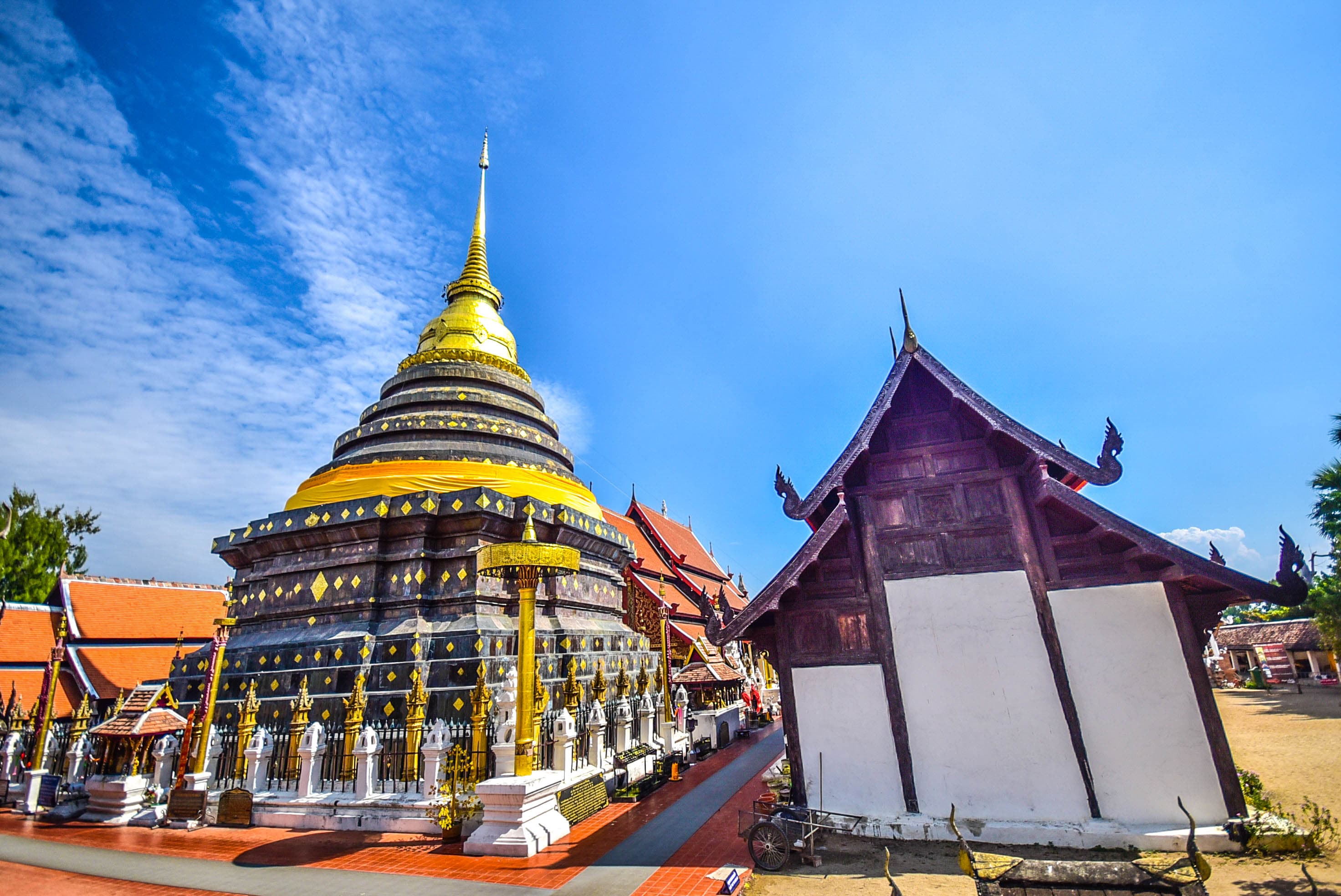
Wat Phra That Lampang Luang in Ko Kha, Lampang, Thailand. Image source · CC BY-SA 4.0
Visit essentials
A quick read before you go
- Etiquette
- Old wood, mural pigment, raised platforms, and restricted optical chambers demand exact…
Overview
The ascent through the fortified gate makes Wat Phra That Lampang Luang feel gathered before the main chedi is fully seen. Inside, open-sided timber halls direct sight toward Buddha images and the gilded relic monument, while dark wood and filtered daylight keep the compound materially distinct from Bangkok's marble and mosaic temples. Religious tradition locates a Buddha relic in the chedi. Lampang history also remembers the enclosure as a place of armed resistance in the eighteenth century.
Devotion, defensive topography, and architecture therefore occupy the same walls without turning the monastery into a battlefield memorial.
Why this place is sacred
Preservation is central to the temple's atmosphere. Timber, murals, roof structure, masonry, and enclosed ground retain relationships that have disappeared at many rebuilt sites. That material survival supports historical understanding, but sacred meaning comes from continued Theravada practice and relic recollection. A famous pinhole image phenomenon in a dark chamber is sometimes described in mystical terms; it is an optical projection produced by light entering a small aperture.
Religious wonder and physical explanation need not compete, provided the effect is not promoted as proof of supernatural energy.
Experience and orientation
Use the naga stair and gate as a deliberate threshold, then allow the timber wihans and main chedi to define the circuit. Interior light can be low; do not use flash against murals or step onto raised sacred platforms for a clearer photograph. Any chamber showing an inverted exterior image may have access restrictions, including gender rules reported for particular spaces; confirm locally and do not challenge custodians at the doorway.
Outside, inspect bullet damage or conflict markers only from permitted positions. The surrounding wall is part of the sacred enclosure, not an invitation to climb.
Context and lineage
The extant temple is generally associated with fifteenth-century Lanna construction, though tradition carries its sacred beginning further back into Hariphunchai history. The central chedi is said to enshrine a relic of the Buddha. In 1732, during Burmese military pressure in the region, the enclosure became a camp and local tradition commemorates Thipchang's resistance there. Later preservation retained an unusually complete ensemble of gateways, halls, chedi, murals, and walls.
Distinguishing traditional antiquity, datable architecture, and remembered conflict produces a more honest chronology than assigning every surviving element one age.
Traditions and practice
Relic homage, offerings, chanting, circumambulation, merit-making, and monastic ceremonies give the enclosure its primary purpose. Visitors may contemplate the main chedi from the established route and sit quietly in open halls where permitted. Do not copy cloth, incense, or bell practices without observing how the temple directs them. Old murals and timber require exceptional restraint: no leaning, rubbing, or flash.
Reported access restrictions to specific chambers belong to current custodial practice and must be followed even when a guidebook promises entry. Local worshippers should retain the clearest line to images and offering places.
Theravada Buddhism
ActiveLanna Theravada worship gives the central relic chedi, image halls, sangha, and merit practices their sacred coherence.
Perspectives and open questions
The inverted projected image is an optical effect, not evidence that the historic enclosure generates paranormal power.
Scholarly perspective
Lanna architectural study values the compound's coherence and surviving timber construction. Buddhist tradition centers the relic chedi and the merit associated with worship there. Lampang civic history remembers eighteenth-century resistance, while optics explains the inverted image produced in a dark interior. None of these accounts needs to absorb the others. The relic remains a devotional tradition rather than a scientifically authenticated object, and the light projection is not evidence of paranormal power.
What is firmly documented is sustained religious use within an exceptional historic enclosure.
Plan your visit
Low interior light, steep approaches, gendered access reported for one chamber, and ceremonies require current confirmation.
Respectful visit
Old wood, mural pigment, raised platforms, and restricted optical chambers demand exact obedience to posted boundaries.
Current practical details
Address
271 Tambon Lampang Luang, Amphoe Ko Kha, Chang Wat Lampang 52130, Thailand
Hours
Hours, fees, and access can change — verify on the official source before you travel. Practical details last checked Jul 2026.
Location
Map loads as you approach this section.
Pilgrim reflections
A portrait of encounter, not a score
Pilgrims describe what they felt, how present they could become, and whether the place would shape a journey. There are no stars and no ranking of traditions.
No reviewed reflections yet
The first pilgrims can help describe the character of being here.
Share a reflection
Available after an account-backed “Been there.” Every reflection is reviewed before publication.
Nearby sacred places
Explore other sacred places in the region. Proximity does not establish access or travel time; check each place’s guidance.

References
Sources consulted for this page. Source categories describe the publication, not a guarantee that every claim is verified. Traditional accounts and outside interpretations may differ.
- 01Power-up Your Life and Sightseeing — Tourism Authority of ThailandofficialOfficial source reviewed for the temple's standing as Lampang's sacred sanctuary and its Hariphunchai-linked antiquity.
- 02Wat Phra That Lampang Luang — Wikipedia — Wikipedia contributorsacademicCorroborates identity, location, and basic historical context; key claims require higher-tier corroboration.
- 03Q571319 — Wikidata — Wikidata contributorsacademicStructured identity and coordinate corroboration; not used alone for spiritual or historical claims.
- 04WAT PHRA THAT LAMPANGLUANG — Google Maps — Google PlacesSource contextStrong name, country, locality, and coordinate match; used only for practical visitor data and identity corroboration.
Share a photo
Help visitors recognize Wat Phra That Lampang Luang. Every submission is reviewed before publication.