Wat Pha Nam Thip Thep Prasit Wanaram
A vast Roi Et chedi gathers Buddha homage on a forested ridge
Understand sacred places, explore living traditions, and learn how to engage respectfully with Pilgrim Map.
Access has not been verified. Check current local guidance before planning a visit.
Nong Phok, Roi Et, Thailand
Read the sources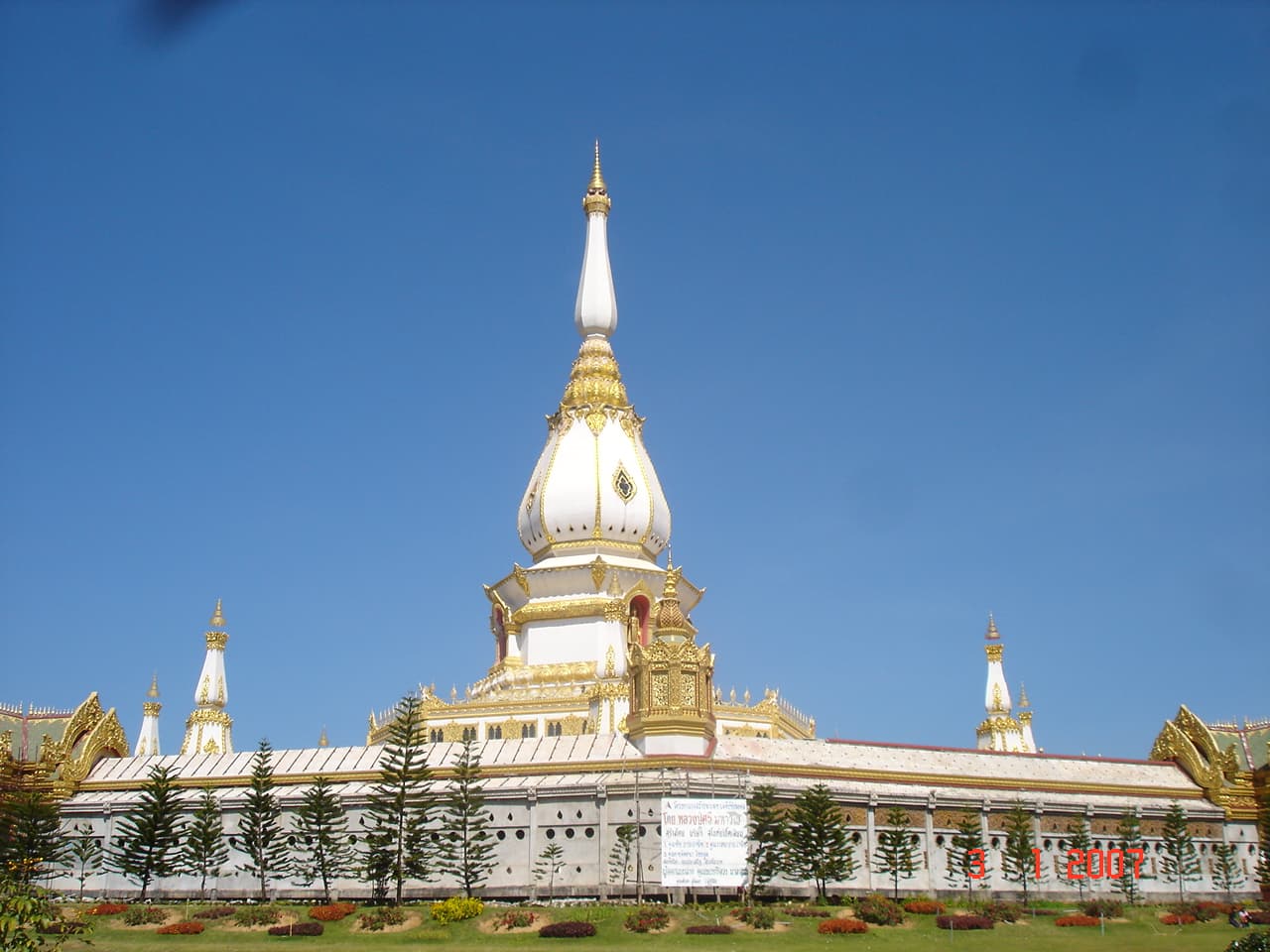
Wat Pha Nam Thip Thep Prasit Wanaram in Nong Phok, Roi Et, Thailand. Image source · CC BY 3.0
Visit essentials
A quick read before you go
- Etiquette
- Protect worshippers, historic fabric, and closed thresholds.
Overview
The great chedi is designed to gather attention across distance, then redirect it inward through Buddha images and devotional spaces. Its monumental scale speaks to collective patronage and regional confidence rather than archaeological antiquity. The forest and ridge shape arrival, but the page does not infer a spring cult from Nam Thip in the name or assign deities absent from the sources.
Spiritual significance rests in a contemporary Buddhist community building a conspicuous vessel for homage, merit, and teaching within Roi Et's broader religious landscape.
Why this place is sacred
A long approach, changing elevation, and the chedi's immense symmetry can make ordinary time feel suspended. Such effects arise from architecture, effort, weather, and expectation; they do not verify an energy vortex. The official evidence located for this exact site is concise, and no rampant miracle or healing claim was strong enough to include. That absence is respected rather than filled with generic temple mysticism. The content also avoids repeating unsourced superlatives about measurements or world rankings.
Experience and orientation
Allow time for the approach and for movement through a building whose levels may not all be open. Heat, rain, polished floors, and stairs are practical considerations; an elevator or vehicle does not reduce religious seriousness. Remove shoes where posted, avoid leaning on balustrades for photographs, and give chanting groups priority. Exact strong Places data supplies ordinary schedule, phone, and address, but current ceremonies or repairs can supersede those fields. No independently confirmed temple website is promoted.
Context and lineage
Tourism Authority material identifies Wat Pha Nam Thip and Phra Maha Chedi Chai Mongkhon as a Roi Et highlight, but the currently reviewed official pages offer little secure chronology. The guide therefore describes a modern monumental Buddhist project without attaching an ancient king, relic provenance, or exact completion sequence. Future temple or provincial publications may deepen that account. For now, the visible chedi, living monastery, and official identity are enough to distinguish the site. It is not UNESCO-listed.
Traditions and practice
Visitors may bow before Buddha images, make authorized offerings, sit quietly, and move through the chedi according to local signs. Do not invent a fixed number of levels as a ritual obligation, rub architectural details, or promise that completing the ascent changes fortune. The official source does not name a recurrent pilgrimage route, so pilgrimage metadata remains false.
If monks or lay groups are teaching, chanting, or making merit, observation from a respectful distance takes precedence over completing a sightseeing circuit.
Thai Theravada Buddhism
ActiveDocumented tradition layer 1.
Perspectives and open questions
Religious, historical, and environmental evidence remain distinct.
Scholarly perspective
Thai Theravada interpretation emphasizes Buddha refuge, merit, and the religious purpose of a great chedi. Architectural analysis asks how scale, symmetry, and elevation communicate sacred centrality in a modern provincial project. Landscape reading attends to the ridge and forest without reclassifying the built record as a natural sacred site. Historical confidence remains bounded by concise official documentation, so unsupported chronology, relic claims, and measurements are withheld.
The reviewed official attraction source establishes the modern monastery and great chedi but not an ancient foundation. The concise source base makes visual humility particularly important. Aerial photographs can suggest exact dimensions, relic contents, or symbolic numerology that the reviewed pages do not actually explain. This account refuses to reverse-engineer doctrine from shape alone.
It identifies a monumental chedi within a living Roi Et monastery, records dependable access separately, and leaves finer iconographic interpretation to future material from the temple or an official cultural authority. Search summaries should preserve that boundary.
Plan your visit
Day-of authority overrides routine listing data.
Respectful visit
Protect worshippers, historic fabric, and closed thresholds.
Current practical details
Address
88J9+PP6, Pha Nam Yoi, Nong Phok District, Roi Et 45210, Thailand
Phone
Hours
Hours, fees, and access can change — verify on the official source before you travel. Practical details last checked Jul 2026.
Location
Map loads as you approach this section.
Pilgrim reflections
A portrait of encounter, not a score
Pilgrims describe what they felt, how present they could become, and whether the place would shape a journey. There are no stars and no ranking of traditions.
No reviewed reflections yet
The first pilgrims can help describe the character of being here.
Share a reflection
Available after an account-backed “Been there.” Every reflection is reviewed before publication.
Nearby sacred places
Explore other sacred places in the region. Proximity does not establish access or travel time; check each place’s guidance.


References
Sources consulted for this page. Source categories describe the publication, not a guarantee that every claim is verified. Traditional accounts and outside interpretations may differ.
- 01Wat Pha Namthip Thep Prasit Wanaram — Google PlacesofficialExact practical metadata accepted after strong name, country, locality, and coordinate review.
- 02Wat Pha Nam Thip Thep Prasit Wanaram — Tourism Authority of ThailandofficialExact official attraction identity and visitor context.
- 03Roi Et — Tourism Authority of ThailandofficialOfficial province page names the exact monastery among Roi Et highlights.
Share a photo
Help visitors recognize Wat Pha Nam Thip Thep Prasit Wanaram. Every submission is reviewed before publication.