That Sikhottabong
A golden riverside stupa holding relics of the Buddha on the middle Mekong
Understand sacred places, explore living traditions, and learn how to engage respectfully with Pilgrim Map.
Access has not been verified. Check current local guidance before planning a visit.
Thakhek, Khammouane, Laos
Read the sources
Visit essentials
A quick read before you go
- Duration
- One to two hours outside festival time.
- Access
- About six kilometers south of central Thakhek, Khammouane Province, on the Mekong riverbank;…
Overview
That Sikhottabong stands on the Mekong's Lao bank about six kilometers south of Thakhek in Khammouane Province. Its slender gold-and-whitewashed bell rises nearly thirty meters from a square base and ranks among central Laos's most venerated relic monuments. Lao tradition holds that it enshrines Buddha relics, joining That Ing Hang downriver in Savannakhet and That Phanom across the water in Thailand as Mekong relic-stupas anchoring a shared Buddhist identity beyond the modern river border.
The site and ancient Sikhottabong kingdom take their name and mythic charge from legendary Phaya Khottabong. Outside festival season the compound welcomes quiet circumambulation and incense; for a few February days it becomes one of the region's busiest pilgrimage gatherings. Its power lies in continuity: a relic faithfully kept and re-enshrined over centuries on the same riverbank.
Why this place is sacred
What draws devotion here is the conviction that the stupa contains relics of the Buddha. In Theravada practice a relic-stupa is not a symbol pointing elsewhere; it is treated as a continuing presence, a place where the Buddha can be honored directly through circumambulation and offering. That Sikhottabong's sacredness is deepened by its place in a network.
Lao and northeastern Thai pilgrims understand it as one of three sibling relic-shrines strung along the river, so that to venerate it is to take part in a devotional geography larger than any single temple. Its riverside setting reinforces this.
The Mekong has carried trade, kingdoms, and pilgrims for as long as the relic tradition has held, and the stupa's continuity through cycles of decay and restoration is itself part of what makes the place feel weighted with the prayers of generations.
Founded to enshrine and safeguard relics of the Buddha, anchoring the religious life of the Sikhottabong kingdom along the Mekong.
From a legendary early foundation the stupa was substantially refurbished in the 16th century under King Setthathirath of Lan Xang and has been maintained and re-enshrined across the centuries, becoming a provincial icon of Khammouane and the focus of a major annual festival.
Experience and orientation
Most of the year the visit is unhurried. The stupa stands bright against the sky in an open compound near the water, and the act of walking slowly around its base, incense in hand, is the heart of what people come to do. The setting is rural and calm, the river close by, and the scale is human rather than overwhelming. Visitors often describe an hour or two of quiet attention as enough.
The site changes character entirely during the Boun That Sikhottabong festival at the February full moon, when the grounds fill with pilgrims, alms-givers, traders, and performers, and the devotional intensity becomes communal and loud. To arrive on an ordinary morning is to meet the stupa as a steady local presence; to arrive at the festival is to feel the pull that draws people across the river.
The stupa sits about six kilometers south of central Thakhek on the Mekong's left bank, in an open riverside compound reached by tuk-tuk or car.
Context and lineage
Tradition places the stupa's founding around the 6th century, when a ruler of the Sikhottabong kingdom is said to have raised a riverside shrine to safekeep relics of the Buddha. Both the kingdom and the monument take their name from the legendary Phaya Khottabong. The accounts vary in their royal names and spellings, so the founding is best understood as a legendary act of devotion rather than a firmly documented event.
What history can affirm more securely is the 16th-century refurbishment under King Setthathirath of Lan Xang, who tied the stupa into the wider Lao Buddhist landscape of his reign.
Theravada Buddhism in the Lao lineage of Lan Xang, sharing the Mekong relic-stupa tradition with That Ing Hang and That Phanom.
Phaya Khottabong
Legendary king who gives his name to both the Sikhottabong kingdom and the stupa.
King Setthathirath
Lan Xang monarch credited with the 16th-century refurbishment of the stupa.
Traditions and practice
The enduring observances are relic veneration and circumambulation of the stupa, alongside the cycle of refurbishment and re-enshrinement that has kept the relic honored across the centuries.
Today the stupa receives daily merit-making and alms to its resident monks. Its great occasion is the annual Boun That Sikhottabong festival at the full moon of the third lunar month, usually February, which combines religious rites and alms-giving with wax-castle (prasat pheung) processions, a trade fair, and traditional performances, and draws pilgrims from northeastern Thailand as well as across Laos.
Walk slowly around the stupa, offering incense and flowers as you go, and keep a measured pace that lets the relic tradition register. If visiting at festival time, arrive early and let the procession set the rhythm rather than working against the crowds.
Theravada Buddhism
ActiveOne of the most venerated relic-stupas of central Laos, said to enshrine relics of the Buddha and grouped with That Ing Hang and That Phanom as shrines of the ancient Sikhottabong kingdom that anchor Lao Buddhist identity along the middle Mekong.
Relic veneration, merit-making, alms-giving, wax-castle processions during the festival, and circumambulation.
Perspectives and open questions
The stupa is read both as a revered relic-shrine of central Laos and as a monument whose earliest history dissolves into legend.
Scholarly perspective
Scholars treat it as a revered Lao relic-stupa with a legendary early foundation and a documented 16th-century restoration, noting that its early history blends devotion and legend rather than firm archaeology.
Living and traditional perspectives
Lao Buddhists regard the stupa as enshrining relics of the Buddha and as a cornerstone of regional spiritual identity, drawing pilgrims from both banks of the Mekong.
Open questions
The precise founding date and the identity of the royal builder remain legendary, and reliable archaeological dating of the original structure is not established in available sources.
Plan your visit
Access and arrival
About six kilometers south of central Thakhek, Khammouane Province, on the Mekong riverbank; reachable by tuk-tuk or car.
Respectful visit
Dress modestly, covering shoulders and knees, and remove shoes where required.
Generally permitted; be discreet around worshippers and during ceremonies.
Incense, flowers, candles, and alms to the monks are customary.
Keep quiet and respectful, and do not climb on the stupa.
During ceremonies keep to the edges and follow the lead of local worshippers rather than moving through the center of devotions.
Location
Map loads as you approach this section.
Pilgrim reflections
A portrait of encounter, not a score
Pilgrims describe what they felt, how present they could become, and whether the place would shape a journey. There are no stars and no ranking of traditions.
No reviewed reflections yet
The first pilgrims can help describe the character of being here.
Share a reflection
Available after an account-backed “Been there.” Every reflection is reviewed before publication.
Nearby sacred places
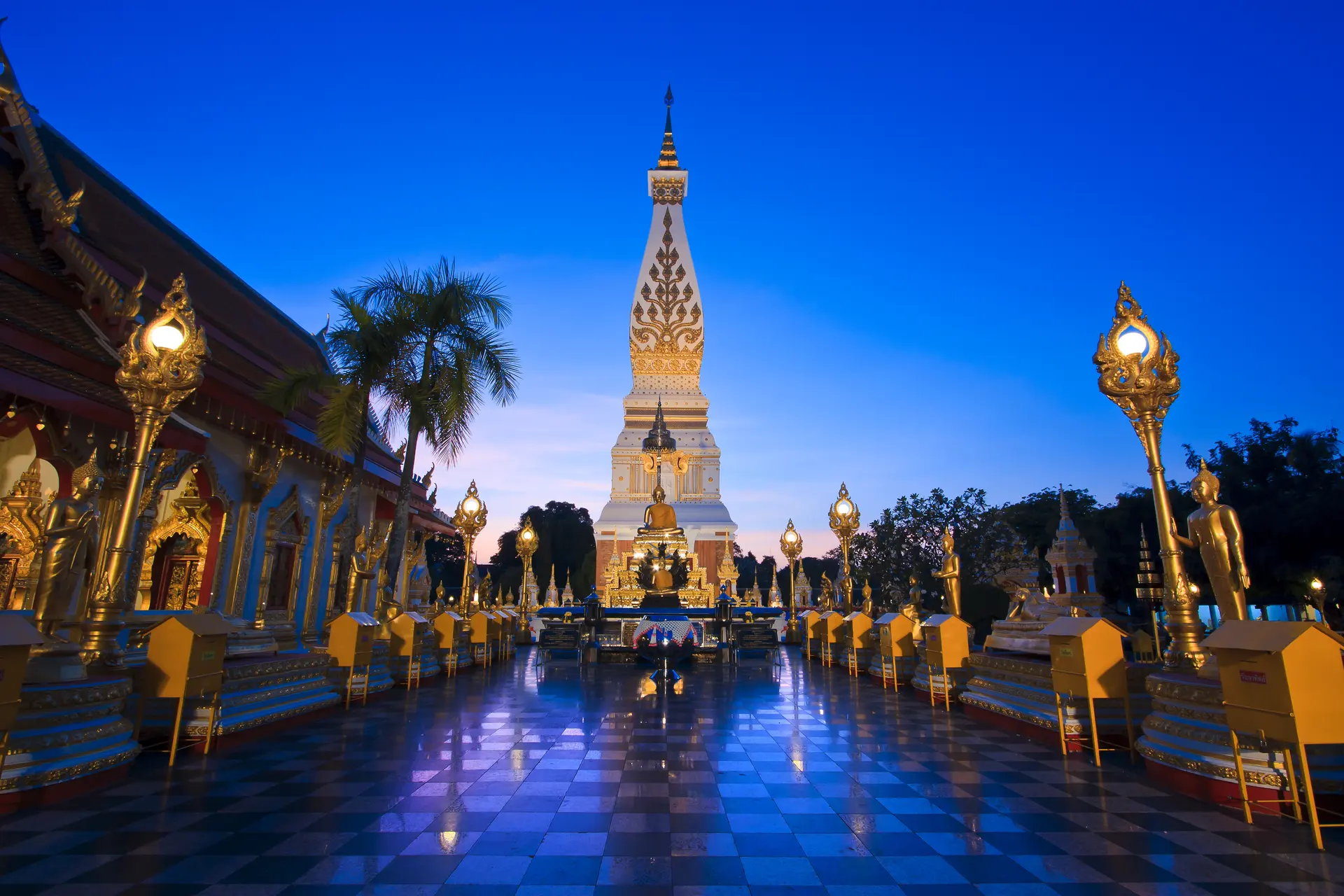
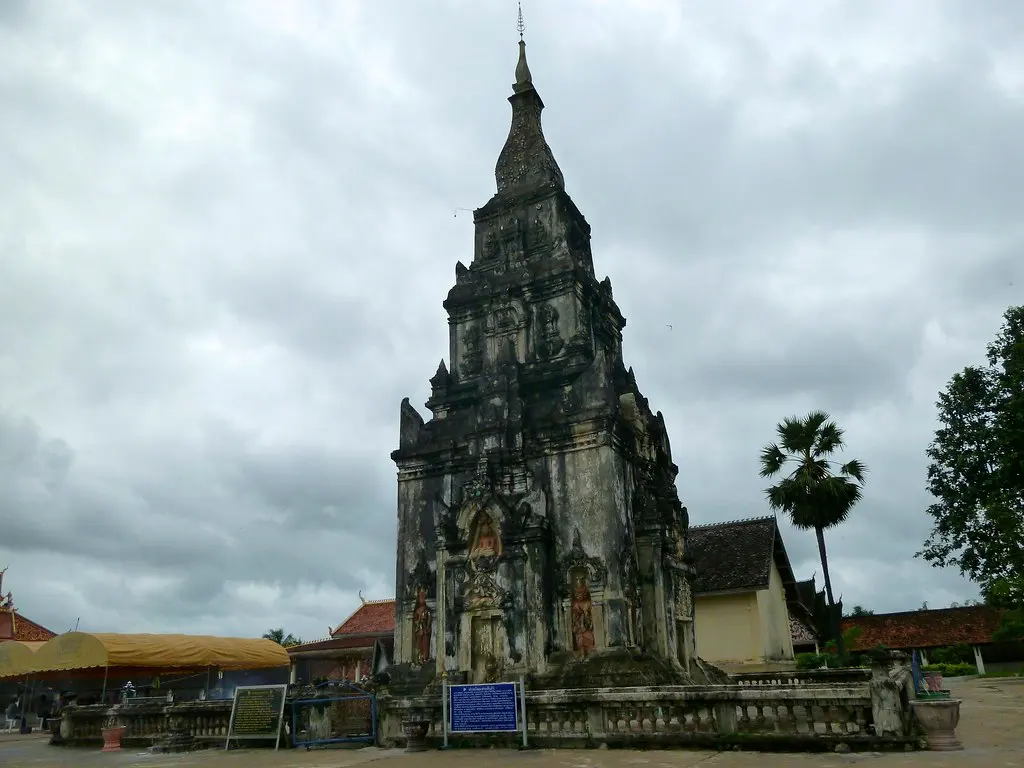
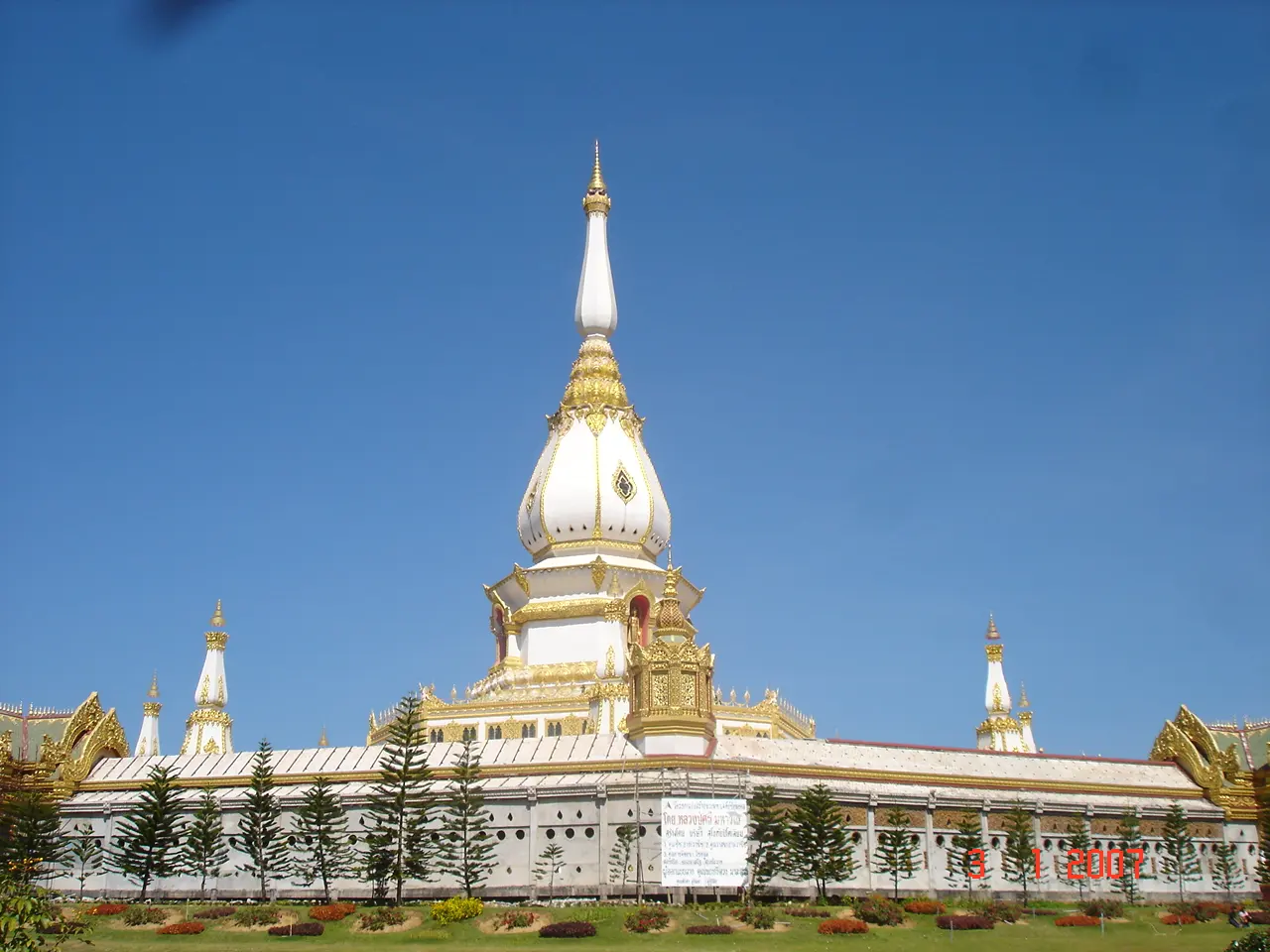
Explore other sacred places in the region. Proximity does not establish access or travel time; check each place’s guidance.
References
Sources consulted for this page. Source categories describe the publication, not a guarantee that every claim is verified. Traditional accounts and outside interpretations may differ.
- 01That Sikhottabong — Wikipedia contributorsencyclopediaLocation Thakhek; ~6th-century origin under Sikhottabong kingdom; dimensions (base 14.33 sq m, height 29 m); 16th-c. refurbishment under King Setthathirath; contemporary to That Inhang and That Phanom.
- 02Khammouane to Host Annual Sikhottabong Stupa Festival 2026 — Laotian TimesnewsConfirms annual festival, full moon of 3rd lunar month, role as cultural icon; ~6 km south of Thakhek center.
- 03Sikhottabong Festival — Lao News Agency (KPL)newsState news agency; festival held full moon of 3rd lunar month, draws pilgrims from NE Thailand (Nakhon Phanom).
- 04Khammouane Province — Tourism Laos (national tourism authority)officialProvincial tourism context for the stupa as a key Khammouane landmark.
- 05Phaya Khottabong — Wikipedia contributorsencyclopediaLegendary king after whom the stupa/kingdom is named.
- 06Sikhottabong Festival — Discover Laos TodayguideFestival overview and timing.
Photo gallery
3 curated photos
Pilgrim glossary
- Stupa
- A dome-shaped Buddhist monument that holds relics or marks a sacred place.
Share a photo
Help visitors recognize That Sikhottabong. Every submission is reviewed before publication.