Wat Na Phra Men
Two rare Buddha images keep worship active beyond Ayutthaya's island
Understand sacred places, explore living traditions, and learn how to engage respectfully with Pilgrim Map.
Access has not been verified. Check current local guidance before planning a visit.
Phra Nakhon Si Ayutthaya, Phra Nakhon Si Ayutthaya, Thailand
Read the sources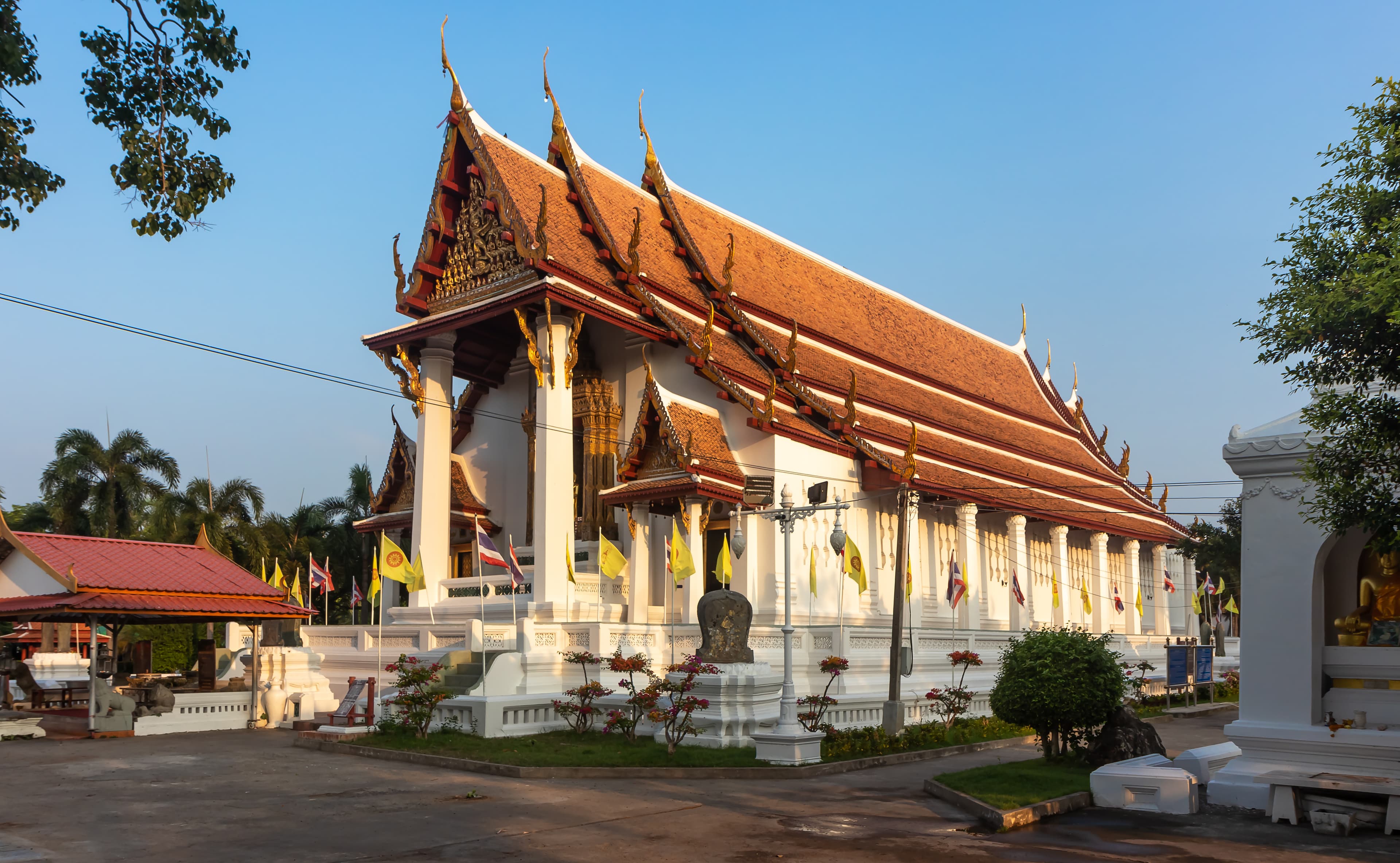
Wat Na Phra Men in Phra Nakhon Si Ayutthaya, Phra Nakhon Si Ayutthaya, Thailand. Image source · CC BY-SA 3.0
Visit essentials
A quick read before you go
- Etiquette
- Protect shoe boundaries, prayer axes, image surfaces, and worshipper privacy.
Overview
The ordination hall centers a monumental crowned Buddha whose royal attire and Mara-victory posture express awakened authority through the visual language of kingship. A separate viharn houses a much earlier green-stone Buddha seated with feet pendant, a form associated with Dvaravati art. Their coexistence prevents the temple from being reduced to one era.
Worshippers encounter different historical expressions of Buddhahood within a functioning monastery, while the name 'before the cremation ground' recalls the site's position opposite the former palace and its ceremonial geography.
Why this place is sacred
Wat Na Phra Men often appears in travel accounts as the Ayutthaya temple that escaped Burmese destruction. Survival is important, but it should not become a supernatural claim. Buildings were repaired, altered, and maintained; their present condition does not prove miraculous immunity. Sacred force is better grounded in active prayer, the dignity of the crowned Buddha, the antiquity of the green-stone image, and repeated community care.
No reviewed source verifies that touching an image or making a particular petition guarantees protection, longevity, or victory.
Experience and orientation
Enter as a guest of an active temple rather than an archaeological park visitor. Remove shoes where directed and give the main Buddha's axis to worshippers. In the smaller viharn, allow your eyes to adjust before studying the green-stone figure's pendant legs and teaching gesture. Do not touch either image, use flash against posted rules, or photograph people at prayer without consent. Compare architectural layers cautiously: restoration preserved worship but also changed fabric.
Current Places hours and the temple's social page should be checked before travel.
Context and lineage
The temple stands on the north bank opposite Ayutthaya's former palace precinct. Chronicles connect it with royal and military events, while later restoration under Rama III substantially shaped the surviving ordination hall and its setting. The Dvaravati green-stone Buddha was moved to its present shelter, so its age should not be used to date every building.
Wat Na Phra Men is associated with the wider Ayutthaya cultural landscape but lies outside the inscribed core of UNESCO property 576; the page does not claim component status.
Traditions and practice
Current Theravada activity includes bowing, chanting, offerings, merit-making, and attention to the principal images. Use only designated incense and candle stations. Visitors may sit quietly with feet directed away from the Buddha, but should not reenact royal rites or apply gold leaf without explicit permission. The official tourism route frames the temple as devotional visitation, yet no guaranteed blessing is asserted. Historical images remain sacred objects, not props for recreating coronation, battle, or cremation stories.
Theravada Buddhism
ActiveTheravada practice centers Buddha refuge, merit, chanting, and monastic community.
Perspectives and open questions
Iconography, political geography, restoration, living worship, and UNESCO boundaries qualify one another.
Scholarly perspective
Theravada iconography distinguishes the crowned Mara-victory image from the pendant-legged Dvaravati Buddha. Political history studies the temple's position near the palace and its role in Ayutthaya narratives. Restoration history explains why survival is not the same as untouched authenticity. Living worship gives both images meanings that exceed museum classification. UNESCO geography requires precision because the temple is not itself an inscribed component. Together these lenses support spiritual importance without miracle language. A further ethical issue concerns the language of survival.
The monastery's comparatively complete halls are valuable evidence, yet war memory should not be used to rank Buddhist places by visual wholeness. Damaged ruins and repaired active temples preserve different histories. Visitors can honor Wat Na Phra Men's continuity while remembering that maintenance, relocation, and reconstruction are part of the record. This approach keeps reverence aligned with accuracy.
Plan your visit
Unverified day-of details include ceremonies; Places reports ordinary hours and custodian contact.
Respectful visit
Protect shoe boundaries, prayer axes, image surfaces, and worshipper privacy.
Current practical details
Address
76 Tambon Lum Phli, Amphoe Phra Nakhon Si Ayutthaya, Chang Wat Phra Nakhon Si Ayutthaya 13000, Thailand
Phone
Hours
Hours, fees, and access can change — verify on the official source before you travel. Practical details last checked Jul 2026.
Location
Map loads as you approach this section.
Pilgrim reflections
A portrait of encounter, not a score
Pilgrims describe what they felt, how present they could become, and whether the place would shape a journey. There are no stars and no ranking of traditions.
No reviewed reflections yet
The first pilgrims can help describe the character of being here.
Share a reflection
Available after an account-backed “Been there.” Every reflection is reviewed before publication.
Nearby sacred places
Explore other sacred places in the region. Proximity does not establish access or travel time; check each place’s guidance.

Wat Phra Si Sanphet
Phra Nakhon Si Ayutthaya, Phra Nakhon Si Ayutthaya, Thailand
0.7 km away

Wihan Phra Mongkhon Bophit
Phra Nakhon Si Ayutthaya, Phra Nakhon Si Ayutthaya, Thailand
0.8 km away
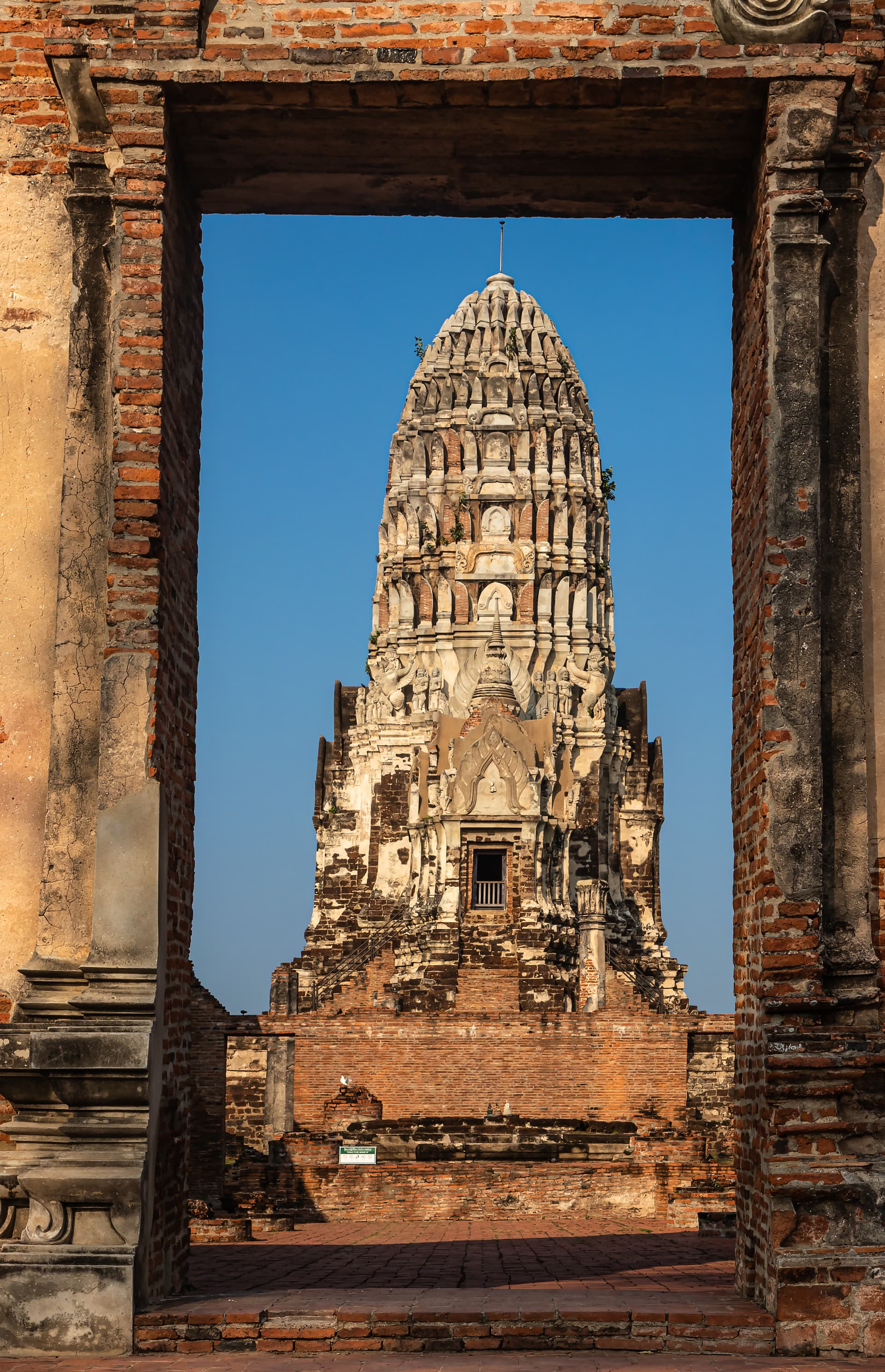
Wat Ratchaburana, Ayutthaya
Phra Nakhon Si Ayutthaya, Phra Nakhon Si Ayutthaya, Thailand
1.0 km away

Wat Lokayasutharam
Phra Nakhon Si Ayutthaya, Phra Nakhon Si Ayutthaya, Thailand
1.0 km away
References
Sources consulted for this page. Source categories describe the publication, not a guarantee that every claim is verified. Traditional accounts and outside interpretations may differ.
- 01Nine Temples in Ayutthaya — Tourism Authority of ThailandofficialExact temple identity, active devotional route, and principal Buddha imagery.
- 02Wat Na Phra Men official social page — Wat Na Phra MenofficialCustodian page supplied by the exact strong Places record; use for changing announcements.
- 03Wat Na Phra Meru Rachikaram — Google Maps — Google PlacesSource contextStrong name, country, locality, and coordinate match; used only for practical visitor data and identity corroboration.
- 04Wat Na Phra Men — Ayutthaya Historical ResearchacademicExact-site plan, chronicle references, restoration, and Dvaravati image discussion with cited Fine Arts research.
Share a photo
Help visitors recognize Wat Na Phra Men. Every submission is reviewed before publication.