Wat Muang, Ang Thong
Luang Pho Yai towers above moral tableaux and renewed monastic life
Understand sacred places, explore living traditions, and learn how to engage respectfully with Pilgrim Map.
Access has not been verified. Check current local guidance before planning a visit.
Wiset Chai Chan, Ang Thong, Thailand
Read the sources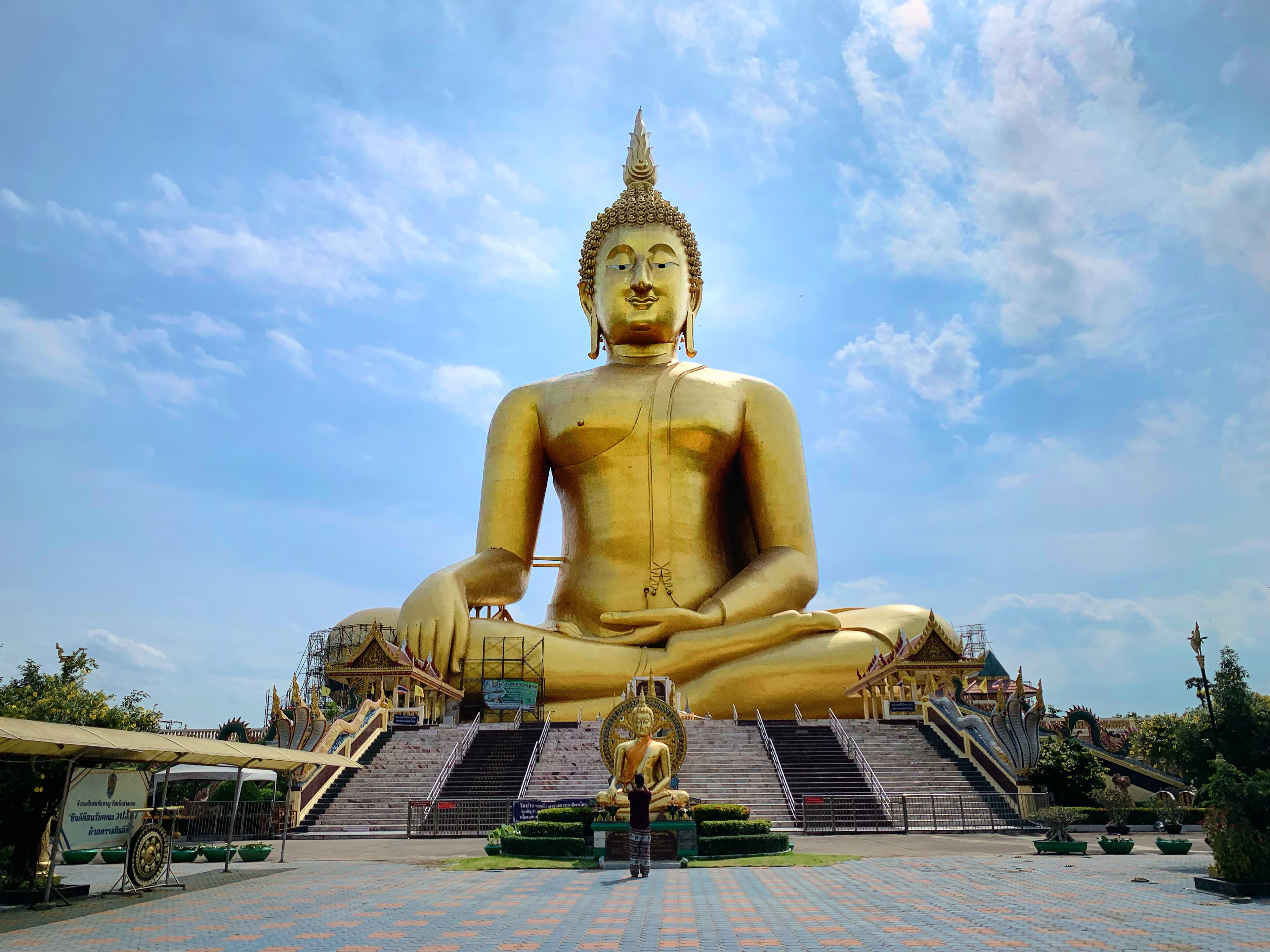
Wat Muang, Ang Thong in Wiset Chai Chan, Ang Thong, Thailand. Image source · CC BY 4.0
Visit essentials
A quick read before you go
- Etiquette
- Protect worshippers, historic fabric, and closed thresholds.
Overview
The outstretched hand brings visitors physically close to a Buddha image whose full body is otherwise difficult to apprehend. That encounter can direct attention to refuge, generosity, and collective labor: provincial records say devotees helped fund sixteen years of construction dedicated to King Rama IX. Elsewhere, moral sculptures dramatize karmic consequences, and murals narrate the Buddha's life. These features form a contemporary teaching environment around a restored older monastery.
The great image should not be reduced to a size record or a prop for finger-touch photographs.
Why this place is sacred
Thailand's Film Office records the widespread belief that touching the Buddha's finger brings advancement in life. Because the claim is publicly prevalent and exact-site, it is included with a firm boundary: the promised prosperity is not independently verified. The founder's reported vision of monks directing restoration is similarly presented as a monastic origin tradition, not objective proof. Awe generated by ninety-five metres of gold-colored concrete is understandable; scale, crowd emotion, and tactile custom do not establish automatic spiritual causation.
Experience and orientation
Stand back first to understand the image's posture and relation to the compound, then approach the hand without climbing, marking, or blocking worshippers. The hell garden includes graphic suffering and may be unsuitable for some children. Treat its figures as moral pedagogy, not entertainment. Strong Google Places metadata supplies exact hours, address, and phone, but festival traffic and repair work may alter access.
The official sources do not verify a temple-controlled website, so no commercial page is elevated to that status.
Context and lineage
Ang Thong PRD describes a temple left in ruins after Ayutthaya's fall and revived when Luang Pho Kasem arrived to practice. It reports his visionary account involving Luang Pu Khao and Luang Pu Daeng, then records later legal boundary recognition and the community-backed great Buddha project. The provincial administrative organization gives completion on 16 February 2007 after sixteen years. Traditional vision, documentary dates, and surviving art are kept separate. Wat Muang is not a UNESCO property.
Traditions and practice
Current worship includes bows, offerings, meditation, study of Buddha-life imagery, and contact with the great image's fingertip where temple rules allow. The popular touching custom should be approached without jostling or treating another person's petition as content. No exact source establishes a named recurrent pilgrimage institution, so pilgrimage remains false. Visitors can respond to the moral tableaux by reflecting on conduct rather than photographing simulated suffering. Donations should use official boxes and never be tied to guaranteed advancement.
Thai Theravada Buddhism
ActiveDocumented tradition layer 1.
Perspectives and open questions
Religious, historical, and environmental evidence remain distinct.
Scholarly perspective
Theravada interpretation centers the Buddha, merit, karma, and ethical restraint. Modern religious history examines how a ruined monastery was rebuilt through an abbot's leadership and public donations. Visual culture reads the giant image and hell garden as accessible mass pedagogy. Lived religion includes the finger-touch prosperity belief, while evidence review classifies its outcome as unverified. These perspectives explain why Wat Muang is spiritually significant without requiring every foundation vision or promised benefit to be taken literally.
The late-Ayutthaya temple was revived in the twentieth century; the great Buddha took sixteen years and was completed in 2007. The finger-touch custom is handled as living testimony rather than a reason to redesign the visit around obtaining a result. Official documentation establishes that people associate the contact with advancement; it does not measure how many participate or whether outcomes follow. That evidentiary gap belongs beside the claim every time it appears.
The great image can still support aspiration, but aspiration remains ethically connected to conduct, generosity, and effort rather than guaranteed by one brief touch.
Plan your visit
Day-of authority overrides routine listing data.
Respectful visit
Protect worshippers, historic fabric, and closed thresholds.
Current practical details
Address
H9VH+64V, Phai Cham Sin, Wiset Chai Chan District, Ang Thong 14110, Thailand
Hours
Hours, fees, and access can change — verify on the official source before you travel. Practical details last checked Jul 2026.
Location
Map loads as you approach this section.
Pilgrim reflections
A portrait of encounter, not a score
Pilgrims describe what they felt, how present they could become, and whether the place would shape a journey. There are no stars and no ranking of traditions.
No reviewed reflections yet
The first pilgrims can help describe the character of being here.
Share a reflection
Available after an account-backed “Been there.” Every reflection is reviewed before publication.
Nearby sacred places
Explore other sacred places in the region. Proximity does not establish access or travel time; check each place’s guidance.
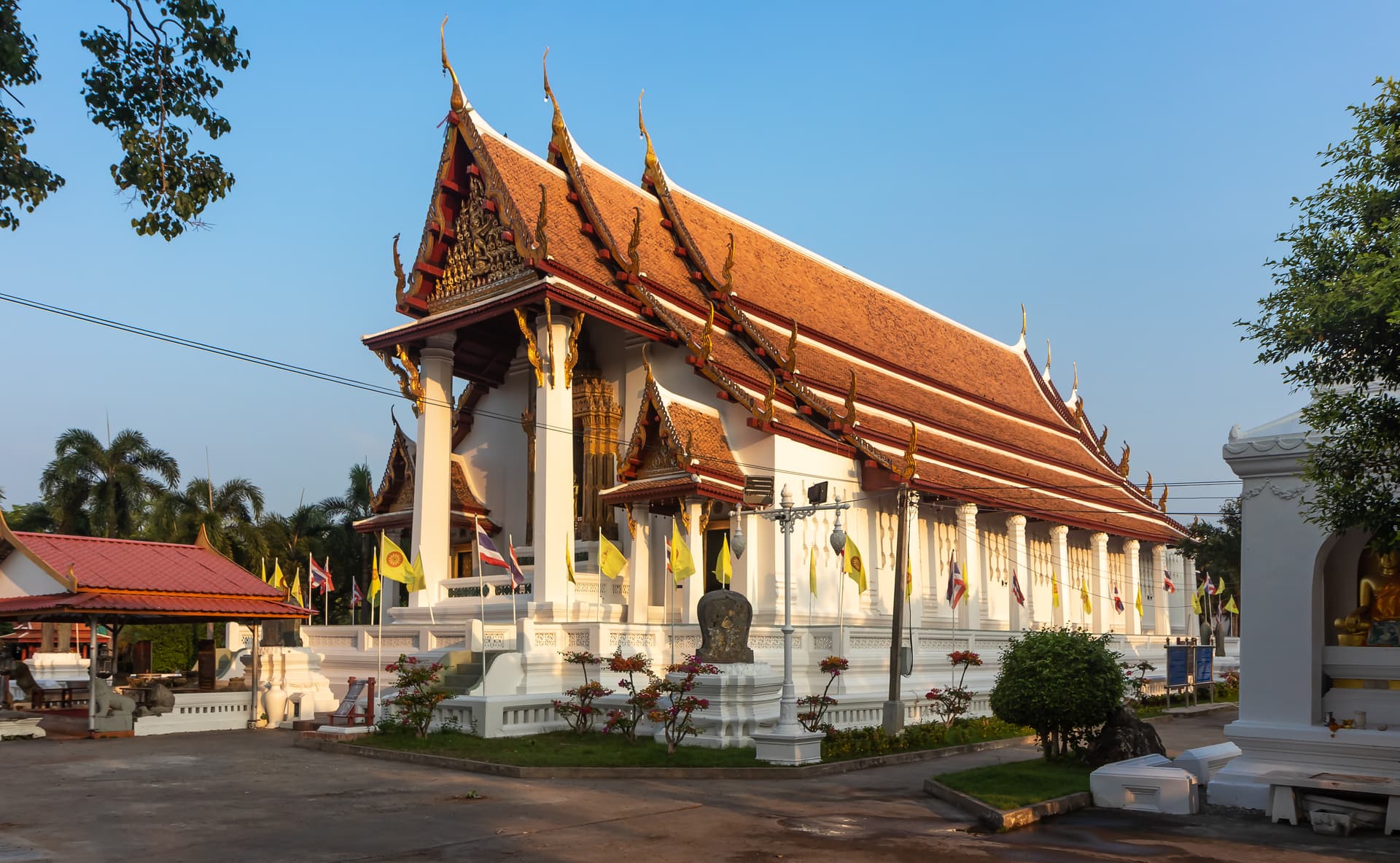
Wat Na Phra Men
Phra Nakhon Si Ayutthaya, Phra Nakhon Si Ayutthaya, Thailand
32.2 km away

Wat Lokayasutharam
Phra Nakhon Si Ayutthaya, Phra Nakhon Si Ayutthaya, Thailand
32.4 km away

Wat Phra Si Sanphet
Phra Nakhon Si Ayutthaya, Phra Nakhon Si Ayutthaya, Thailand
32.8 km away

Wihan Phra Mongkhon Bophit
Phra Nakhon Si Ayutthaya, Phra Nakhon Si Ayutthaya, Thailand
32.9 km away
References
Sources consulted for this page. Source categories describe the publication, not a guarantee that every claim is verified. Traditional accounts and outside interpretations may differ.
- 01Big Buddha (Phra Phutta Maha Nawamin Sakyamuni Sri Wichian Chai Chan) at Wat Muang — Google PlacesofficialExact practical metadata accepted after strong name, country, locality, and coordinate review.
- 02Wat Muang, Ang Thong — Ang Thong Public Relations OfficeofficialExact restoration history, giant Buddha, murals, moral tableaux, and vision tradition.
- 03Wat Muang — Ang Thong Provincial Administrative OrganizationofficialExact dedication, construction duration, completion, and measurements.
- 04The power of devotion: big Buddhas in Thailand — Tourism Authority of ThailandofficialExact monumental Buddha and devotion context.
- 05Wat Muang — Thailand Film Office, Department of TourismofficialExact prevalent finger-touch prosperity belief.
Share a photo
Help visitors recognize Wat Muang, Ang Thong. Every submission is reviewed before publication.