Wat Bowonniwet
Royal ordination, reform lineage, and monastic study meet in Banglamphu
Understand sacred places, explore living traditions, and learn how to engage respectfully with Pilgrim Map.
Access has not been verified. Check current local guidance before planning a visit.
Bangkok, Bangkok, Thailand
Read the sources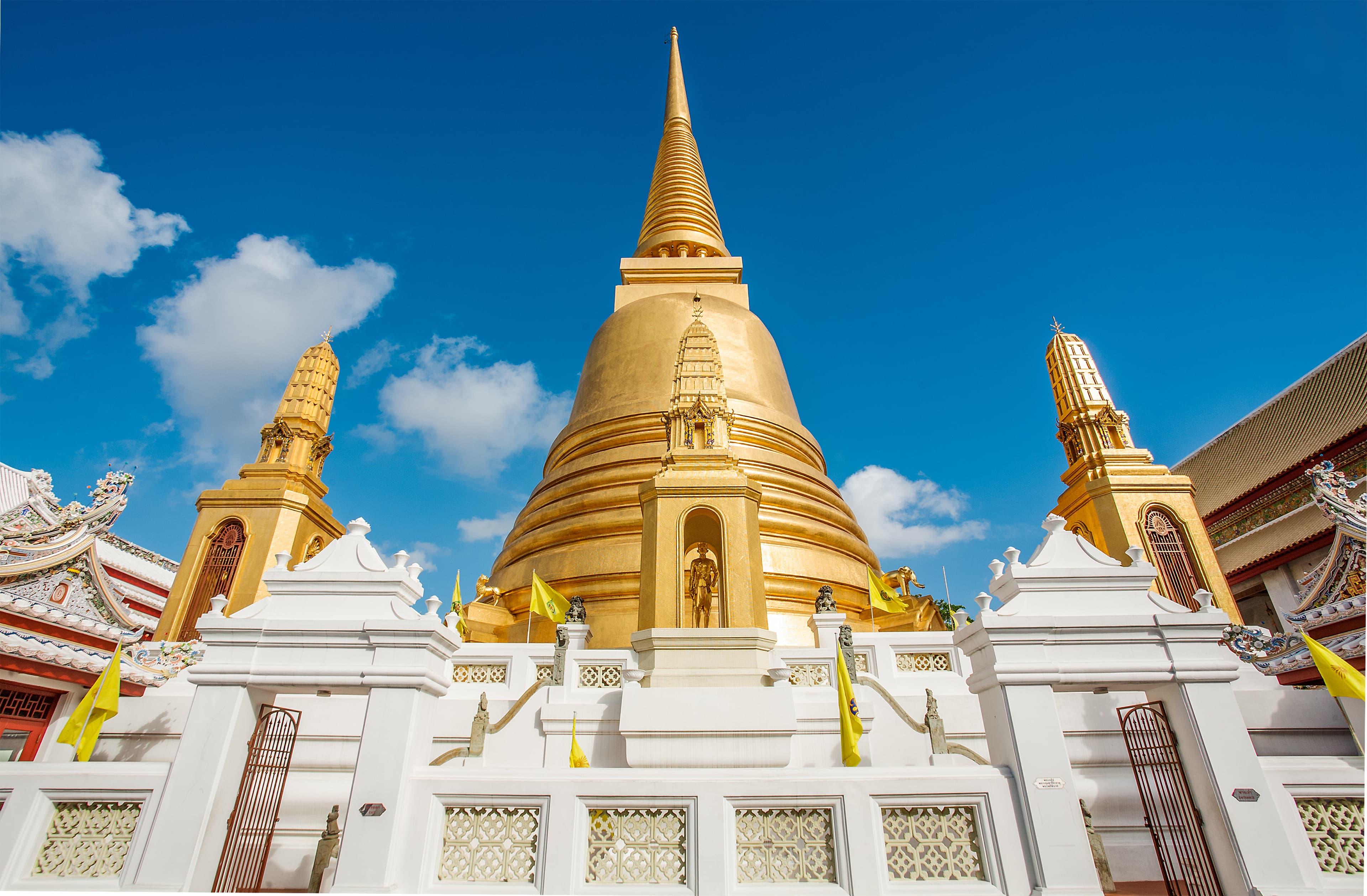
Wat Bowonniwet in Bangkok, Bangkok, Thailand. Image source · CC BY-SA 3.0
Visit essentials
A quick read before you go
- Etiquette
- Areas associated with royal and monastic memory deserve quiet even when the public route remains…
Overview
Wat Bowonniwet does not announce its authority through one oversized monument. Its weight lies in lineage. Prince Mongkut lived here as a monk before becoming Rama IV and shaped the Dhammayut reform, which emphasized monastic discipline and close attention to canonical practice. Later kings were ordained or resided within this community, strengthening the temple's relationship to the Chakri dynasty without turning it into a palace.
In the ubosot, principal Buddha images occupy an unusual shared arrangement that rewards precise orientation rather than a hurried glance. Around them, cloisters, chedi, murals, libraries, and residential areas support functions that tourists may not see. The monastery's spiritual character comes from sustained study and rule-governed life as much as from visual splendor.
Why this place is sacred
Discipline is the central thread at Wat Bowonniwet. Within the Dhammayut lineage, reform did not mean inventing a new Buddhism; it meant renewed attention to monastic conduct, scripture, and practice. Royal connections can obscure this if the site is described only as a place where kings once ordained. The more revealing relationship is reciprocal: royal figures entered monastic discipline, while the monastery gained national influence and responsibility. Sacred meaning therefore gathers around restraint, learning, and transmission.
Visitors do not need access to private quarters to understand this. Closed doors and limited routes make the boundary of monastic life visible, and accepting that boundary is part of a respectful encounter.
Experience and orientation
Enter the public precinct quietly and distinguish the ubosot from residential and administrative areas before moving deeper. Inside, first identify the principal images and their relationship to the painted interior. Do not assume that every monk is available for conversation or photography. Banglamphu's busy streets can make the transition feel abrupt; use the threshold to lower speech and put away food. If chanting or instruction is underway, stay behind participants and avoid circulating for better angles.
The temple's contemplative quality is clearest when one stops treating restricted access as missing content and recognizes a living monastery's need for privacy.
Context and lineage
The monastery took shape in the early Bangkok period and became closely associated with Prince Mongkut during his long monastic life. From Wat Bowonniwet, the Dhammayut movement developed as an influential reform current within Thai Theravada Buddhism. Mongkut later became King Rama IV, but the years of monastic formation remained central to the temple's identity. Successive royal ordinations and senior abbots extended this lineage.
Buildings and decorations record different periods of patronage; continuity belongs to the community and its disciplines rather than to untouched fabric. The temple also became a center for Buddhist education and administration, roles that continue to shape how public worship, ceremony, scholarship, and residential privacy fit together.
Traditions and practice
Prayer, chanting, meditation, offerings, ordination, study, and monastic administration all belong to Wat Bowonniwet's living life. A guest may bow before the Buddha images or sit quietly where permitted, but should not imitate monastic gestures without understanding their context. Offerings go only at established points. Do not enter a residence, library, or teaching area simply because a door is open. During royal or senior monastic ceremonies, security and access may change quickly. Follow attendants without argument.
One suitable contemplative exercise is to notice how the public hall and private community depend on each other while remaining distinct.
Theravada Buddhism
ActiveDhammayut Theravada identity is expressed through disciplined monastic lineage, education, ordination, and reverence for the hall's images.
Perspectives and open questions
Institutional reform, kingship, and image devotion overlap here but should be described as distinct lines of authority.
Scholarly perspective
Religious history reads Wat Bowonniwet as a center of Dhammayut formation and monastic education. Political history examines its connection to kingship and state Buddhism. Art history attends to images, murals, and architectural phases, while practitioners understand the monastery through discipline and lineage. None of these perspectives should erase the others. Royal association does not make worship ceremonial theater; reform history does not reduce devotion to institutional policy.
The sources reviewed do not establish prevalent claims of miraculous energy or guaranteed merit for visitors. The site's quieter claim is fully documented: disciplined religious communities can shape national life over generations, and the conditions supporting that discipline include privacy, study, repeated observance, and restraint from outsiders.
Plan your visit
Access may tighten for ordinations or royal observances, so the monastery's current notices supersede ordinary visitor expectations.
Respectful visit
Areas associated with royal and monastic memory deserve quiet even when the public route remains open.
Current practical details
Address
248 Thanon Phra Sumen, Khwaeng Wat Bowon Niwet, Khet Phra Nakhon, Krung Thep Maha Nakhon 10200, Thailand
Phone
Hours
Hours, fees, and access can change — verify on the official source before you travel. Practical details last checked Jul 2026.
Location
Map loads as you approach this section.
Pilgrim reflections
A portrait of encounter, not a score
Pilgrims describe what they felt, how present they could become, and whether the place would shape a journey. There are no stars and no ranking of traditions.
No reviewed reflections yet
The first pilgrims can help describe the character of being here.
Share a reflection
Available after an account-backed “Been there.” Every reflection is reviewed before publication.
Nearby sacred places
Explore other sacred places in the region. Proximity does not establish access or travel time; check each place’s guidance.


References
Sources consulted for this page. Source categories describe the publication, not a guarantee that every claim is verified. Traditional accounts and outside interpretations may differ.
- 01Bangkok — official destination overview — Tourism Authority of ThailandofficialOfficial overview identifying Bangkok's principal religious and historical sites.
- 02Walking Tour at Banglamphu — Tourism Authority of ThailandofficialCurrent official identity, location, and access corroboration for Wat Bowonniwet.
- 03Wat Bowonniwet Vihara — Wikipedia — Wikipedia contributorsacademicCorroborates identity, location, and basic historical context; key claims require higher-tier corroboration.
- 04Q1477699 — Wikidata — Wikidata contributorsacademicStructured identity and coordinate corroboration; not used alone for spiritual or historical claims.
- 05Wat Bowonniwetwiharn Ratchaworawiharn — Google Maps — Google PlacesSource contextStrong name, country, locality, and coordinate match; used only for practical visitor data and identity corroboration.
Share a photo
Help visitors recognize Wat Bowonniwet. Every submission is reviewed before publication.