Bangkok City Pillar Shrine
Bangkok's founding pillar receives civic devotion beside the royal precinct
Understand sacred places, explore living traditions, and learn how to engage respectfully with Pilgrim Map.
Access has not been verified. Check current local guidance before planning a visit.
Bangkok, Bangkok, Thailand
Read the sources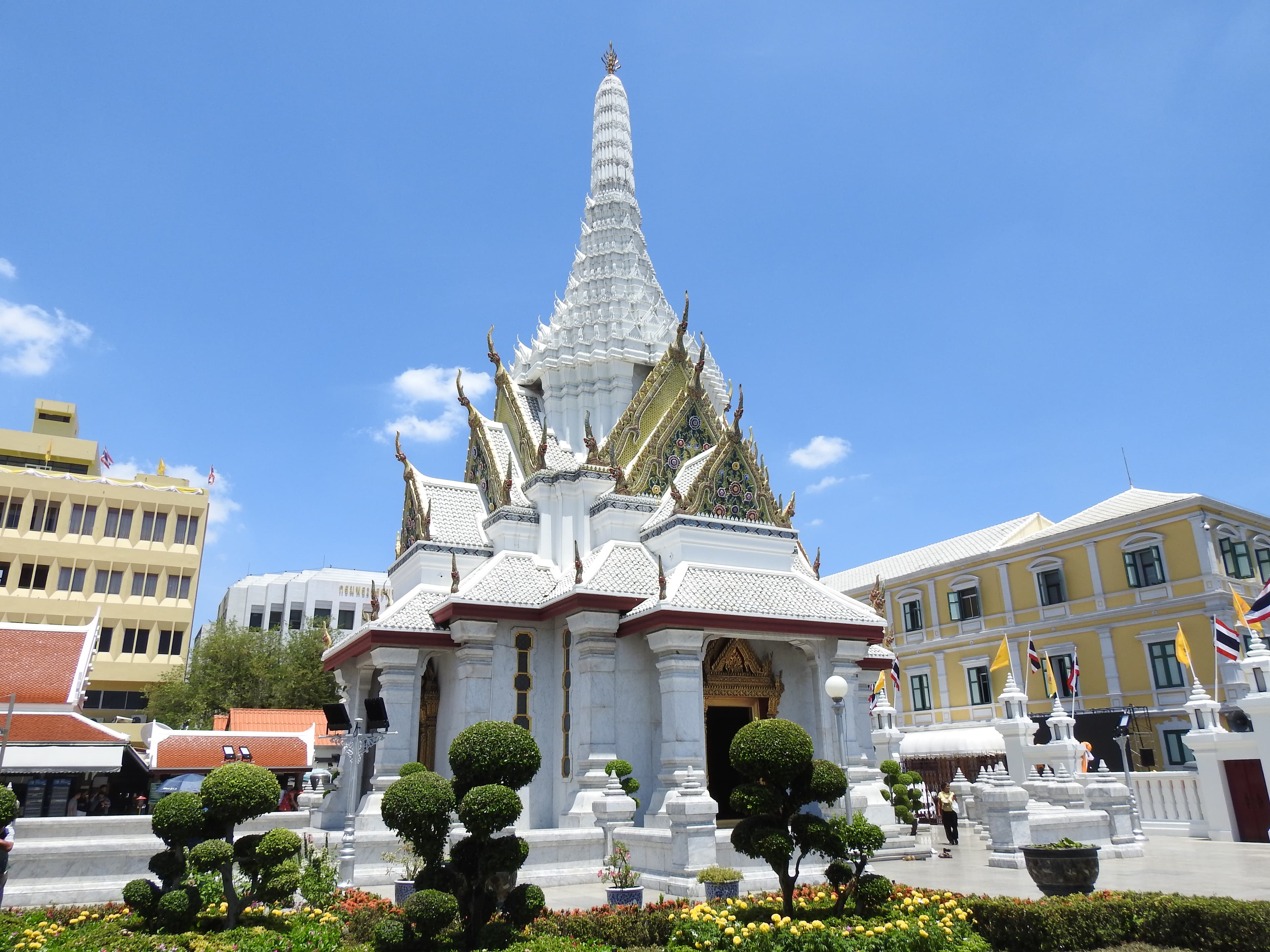
Bangkok City Pillar Shrine in Bangkok, Bangkok, Thailand. Image source · CC BY-SA 4.0
Visit essentials
A quick read before you go
- Etiquette
- Keep the compact inner approach clear and do not assume Buddhist temple gestures automatically…
Overview
Bangkok's lak mueang made the new capital tangible at its founding, establishing a ritual centre alongside its walls, palace, institutions, and streets. The shrine's pillars and guardian figures receive ongoing reverence from people seeking secure work, household stability, successful undertakings, protection, or expressing gratitude toward the city that holds their lives. Though small beside the Grand Palace, the shrine concentrates a Brahmanical-Thai state ritual tradition within a largely Buddhist national landscape.
The pillar is not a Buddha image, and temple customs do not explain every action here.
Why this place is sacred
The shrine's sacredness rests in consecrated foundation. Traditional city-making treated auspicious timing, ritual specialists, direction, and the placement of a central pillar as responsibilities affecting the whole polity. Present devotion extends that foundation into ordinary hopes. People touch or apply gold leaf only where permitted, present garlands, light incense, and address guardian figures. Blessing guides often list expected benefits, but those are statements of devotional purpose rather than evidence that the shrine mechanically grants success. The stronger significance is collective.
A capital is not only roads and government buildings; ritual practice gives residents a way to imagine obligations between person, ruler, guardian, and place.
Experience and orientation
Approach from Sanam Chai Road and distinguish the shrine entrance from the Grand Palace visitor routes. The interior can become crowded quickly, so prepare offerings before entering and follow attendants' direction. Observe which pillar or image accepts gold leaf; protected surfaces must not be touched. Keep incense upright and use designated burners. People may be praying over employment, legal, family, or business matters that deserve privacy. Do not lean across them for photographs.
A short circuit undertaken attentively can reveal the shrine's ordered sequence more clearly than a long stay that obstructs others.
Context and lineage
Rama I founded Bangkok as the new capital in 1782 and ordered the city pillar raised through a consecration ritual. The pillar marked more than a survey point: it gave ritual form to the city's beginning and relationship with protective powers. Later reigns renewed the shrine and pillar arrangement, so the present fabric should not be mistaken for an untouched eighteenth-century structure.
Brahmins continue to hold roles in royal and state ceremonies, while lay devotion has made the shrine a place for personal petitions. Its location beside the royal precinct keeps civic, royal, and sacred geography visibly close without making the shrine part of Wat Phra Kaew.
Traditions and practice
Visitors offer garlands, incense, candles, oil, or gold leaf through the forms provided on site. Prayer may be directed toward the city guardian and associated figures. Follow the marked order rather than applying a generic clockwise temple circuit. Brahmanical ceremony and popular devotion coexist here; neither should be rewritten as a Buddhist rite. If officiants or organized worship are present, remain outside their working area. A visitor can reflect on one grounded question: what responsibilities accompany the stability being requested?
The shrine's tradition is relational, and petition without reciprocity misses part of its civic meaning.
Theravada Buddhism
ActiveThai Brahmanical practice maintains the relationship among the pillars, guardian deities, royal foundation, offerings, and city welfare.
Perspectives and open questions
Foundation ritual and guardian belief explain the pillars' role without demonstrating that petitions produce measurable outcomes.
Scholarly perspective
Ritual history interprets the pillar through Southeast Asian traditions of city foundation and guardianship. Political history connects it with the Chakri capital and royal ceremonial order. Devotees understand the shrine as an active source of blessing and protection, while urban visitors may see a rare place where the city's symbolic center remains publicly accessible. These perspectives should remain distinct from supernatural proof.
Numerous people report hopes and answered petitions, and official tourism presents the shrine as a blessing destination; such claims are prevalent devotional testimony but are not independently verified. The visible fact is enduring civic ritual: Bangkok repeatedly renews its beginning through acts performed at this small enclosure.
Plan your visit
Security and ceremonial access near the Grand Palace precinct can alter entry with little relevance to ordinary tourism schedules.
Respectful visit
Keep the compact inner approach clear and do not assume Buddhist temple gestures automatically govern this civic shrine.
Current practical details
Address
Lak Muang Rd, Khwaeng Phra Borom Maha Ratchawang, Khet Phra Nakhon, Krung Thep Maha Nakhon 10200, Thailand
Phone
Hours
Hours, fees, and access can change — verify on the official source before you travel. Practical details last checked Jul 2026.
Location
Map loads as you approach this section.
Pilgrim reflections
A portrait of encounter, not a score
Pilgrims describe what they felt, how present they could become, and whether the place would shape a journey. There are no stars and no ranking of traditions.
No reviewed reflections yet
The first pilgrims can help describe the character of being here.
Share a reflection
Available after an account-backed “Been there.” Every reflection is reviewed before publication.
Nearby sacred places
Explore other sacred places in the region. Proximity does not establish access or travel time; check each place’s guidance.

References
Sources consulted for this page. Source categories describe the publication, not a guarantee that every claim is verified. Traditional accounts and outside interpretations may differ.
- 01Bangkok — official destination overview — Tourism Authority of ThailandofficialOfficial overview identifying Bangkok's principal religious and historical sites.
- 02Spiritual places to visit for blessing in 2025 — Tourism Authority of ThailandofficialOfficial confirmation of the Bangkok City Pillar Shrine identity, living worship, strong map target, and dated hours.
- 03Bangkok City Pillar Shrine — Google Maps — Google PlacesSource contextStrong name, country, locality, and coordinate match; used only for practical visitor data and identity corroboration.
Share a photo
Help visitors recognize Bangkok City Pillar Shrine. Every submission is reviewed before publication.