Vĩnh Tràng Pagoda
Vĩnh Tràng: many architectural languages serving one Buddhist community
Understand sacred places, explore living traditions, and learn how to engage respectfully with Pilgrim Map.
Access has not been verified. Check current local guidance before planning a visit.
Mỹ Phong, Đồng Tháp, Vietnam
Read the sources
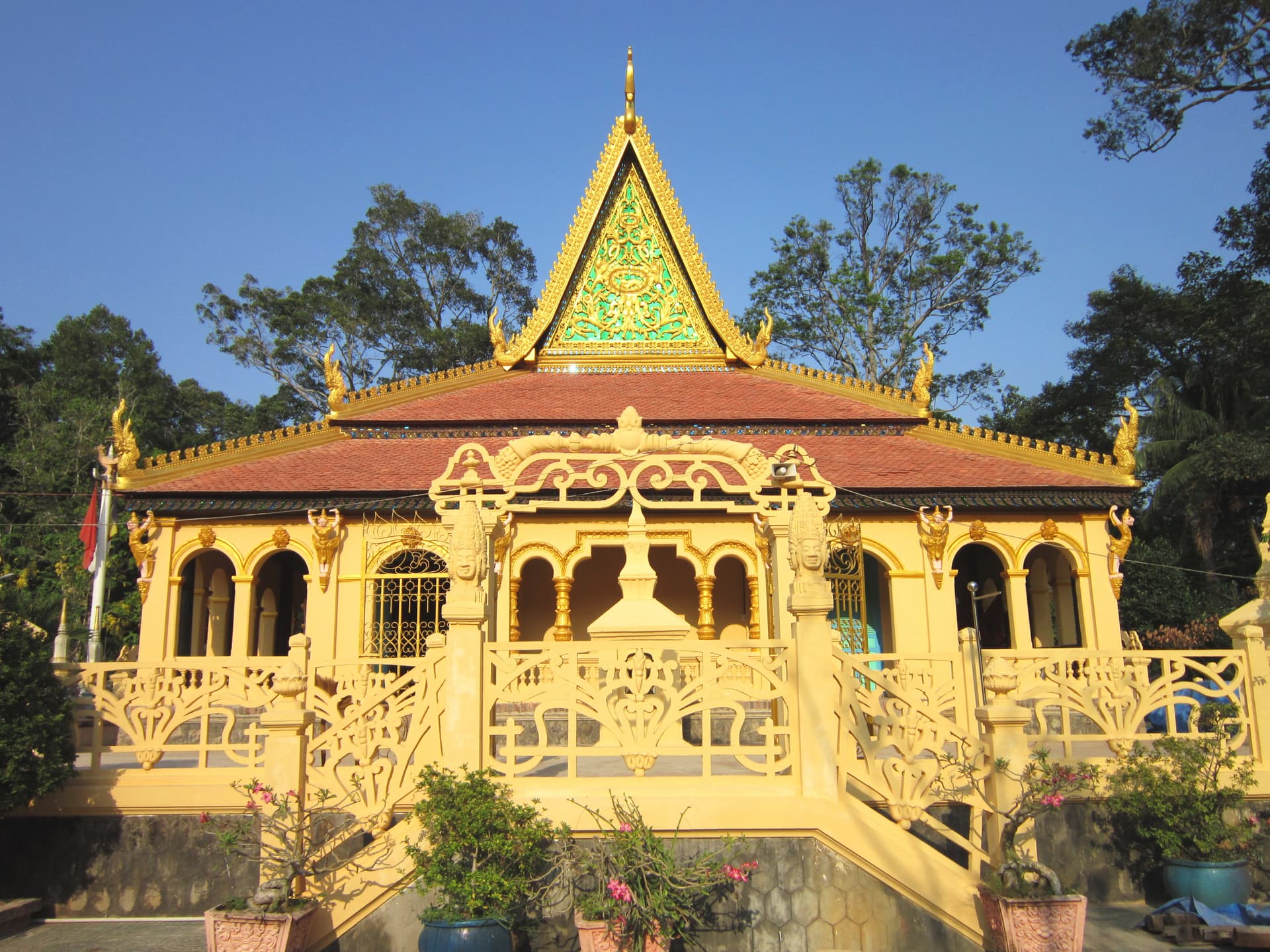
Vĩnh Tràng Pagoda in Mỹ Tho, Tiền Giang, Vietnam. Image source · CC0
Visit essentials
A quick read before you go
- Duration
- Allow a measured circuit rather than rushing among prominent images and façades.
- Access
- The strong Places match lists the pagoda in the Mỹ Tho area and includes a phone number.
Overview
Vĩnh Tràng asks the visitor to hold visual complexity and devotional clarity together. Architectural elements from different vocabularies meet across the pagoda, yet the compound is not a catalogue assembled for comparison. Buddha images, bodhisattvas, halls, and circulation support a community that prays, learns, gives, and maintains the institution. The appropriate sequence begins with identifying an active altar before studying façades and ornament. That shift prevents aesthetic curiosity from displacing worship.
Merit-making is also more than a donation transaction: within Buddhist life it joins intention, ethical conduct, and support for the religious community. The sources do not settle every construction stage or popular historical anecdote, so the page avoids a decorative chronology. It presents the securely supported center—a working Mỹ Tho pagoda where varied material forms have been gathered around Mahayana practice.
Why this place is sacred
The compound can create surprise through juxtaposition. Arches, surfaces, and Buddha images may seem to speak in different visual accents, but practitioners encounter them inside one religious institution. Repeated prayer and care keep difference from becoming fragmentation. A guest may find the blend moving or unusual; that response is personal, not proof that styles combine to produce an occult effect.
The pagoda serves Vietnamese Mahayana worship, teaching, merit-making, and veneration of Śākyamuni and bodhisattvas.
Religious continuity now shares the mixed architectural compound with broad public and heritage interest.
Experience and orientation
Visual abundance can encourage rapid movement. Instead, select the main hall or a clearly active Buddha image as an anchor. Notice which doorways serve prayer, which spaces invite circulation, and where people pause to make offerings. Exterior details can then be read as part of a whole rather than collected as disconnected curiosities. When a service begins, architectural study should yield immediately to the congregation's need for space.
Find the active worship hall first, then separate public courtyards, image precincts, teaching areas, and monastic rooms.
Context and lineage
Official and identity sources support the exact pagoda, its location, its varied architectural character, and its continued use for worship, teaching, and merit-making. Conflicting popular chronologies and broad stylistic attributions remain outside what this evidence can confirm. No stand-alone UNESCO World Heritage status is asserted.
Vietnamese Mahayana Buddhism provides the doctrinal and devotional unity behind the architectural variety.
Śākyamuni Buddha
central teacher and devotional focus
Mahayana bodhisattvas
compassionate and salvific figures honored in the pagoda
Traditions and practice
Devotees may bow, light incense, present flowers or food, listen to teaching, or support the monastery. Visitors should use only designated offering places and avoid interpreting a visible donation as payment for guaranteed merit. The pagoda's own instructions determine when an unfamiliar person may join a public form.
Lay worship and religious education continue while many guests arrive primarily to see the architecture.
Choose one visual detail and trace how it leads attention toward a Buddha or bodhisattva rather than stopping at decoration.
Vietnamese Mahayana Buddhism
ActiveVĩnh Tràng sustains worship, teaching, and merit-making within a visually diverse but religiously coherent pagoda.
Prayer, bows, incense, offerings, learning, and community support follow the institution's guidance.
Perspectives and open questions
At Vĩnh Tràng, aesthetic analysis becomes complete only when placed beside lived Buddhism and the pressures of tourism.
Scholarly perspective
Mixed architecture can reveal exchange and adaptation without implying that religious identity is diluted. The stronger question is how a community makes varied forms serve a stable devotional program. Documentation should distinguish observed design from unsupported claims about particular builders or dates.
Living and traditional perspectives
Śākyamuni and the bodhisattvas orient the pagoda toward awakening, compassion, and the cultivation of merit.
Open questions
No style, statue, donation, or ritual act is documented as guaranteeing luck or transformation for a visitor.
Plan your visit
Access and arrival
The strong Places match lists the pagoda in the Mỹ Tho area and includes a phone number. Recheck its linked official social page, hours, and ceremony access before departure.
Choose current licensed lodging around Mỹ Tho; general visitor lodging is not claimed at the pagoda.
Respectful visit
Wear modest clothing, remove hats, and follow any instruction to leave shoes outside a hall.
Photograph ornament from public space without flash, staged altar poses, or close images of worshippers without consent.
Place only pagoda-approved items at marked altars or donation points.
Do not handle statues, carvings, ritual furniture, or enter teaching and monastic rooms that are closed.
Do not assign precise cultural origins to every ornament without evidence or treat merit as a purchasable spiritual result.
Current practical details
Address
Khu phố Mỹ An, My Phong, Dong Thap, Vietnam
Phone
Hours
Hours, fees, and access can change — verify on the official source before you travel. Practical details last checked Jul 2026.
Location
Map loads as you approach this section.
Pilgrim reflections
A portrait of encounter, not a score
Pilgrims describe what they felt, how present they could become, and whether the place would shape a journey. There are no stars and no ranking of traditions.
No reviewed reflections yet
The first pilgrims can help describe the character of being here.
Share a reflection
Available after an account-backed “Been there.” Every reflection is reviewed before publication.
Nearby sacred places
Explore other sacred places in the region. Proximity does not establish access or travel time; check each place’s guidance.

References
Sources consulted for this page. Source categories describe the publication, not a guarantee that every claim is verified. Traditional accounts and outside interpretations may differ.
- 01Vinh Trang Pagoda — Viet Nam National Authority of TourismofficialExact national-tourism destination record for identity, national relic status, active pagoda form, and the Śākyamuni, Amitābha, and Maitreya images.
- 02World-renowned Buddha statues grace tranquil Vinh Trang Pagoda — VietNamNetSource contextExact national news feature corroborating the temple identity and the Śākyamuni, Amitābha, and Maitreya images.
- 03National Assembly approves provincial-level administrative reorganization — Government of Viet NamofficialAuthoritative 2025 successor-province and municipality boundaries.
- 04Vĩnh Tràng Pagoda — Google PlacesofficialStrong exact-entity practical metadata from the authoritative current preflight.
- 05Vĩnh Tràng Temple — Wikipedia — Wikipedia contributorsacademicCorroborates identity, location, and basic historical context; key claims are framed conservatively.
Pilgrim glossary
- Bodhisattva
- An enlightened being who postpones full nirvana to help others toward awakening.
Share a photo
Help visitors recognize Vĩnh Tràng Pagoda. Every submission is reviewed before publication.