Âng Pagoda
Âng Pagoda: Khmer Buddhist time held beside Ao Bà Om
Understand sacred places, explore living traditions, and learn how to engage respectfully with Pilgrim Map.
Access has not been verified. Check current local guidance before planning a visit.
Nguyệt Hóa, Vĩnh Long, Vietnam
Read the sources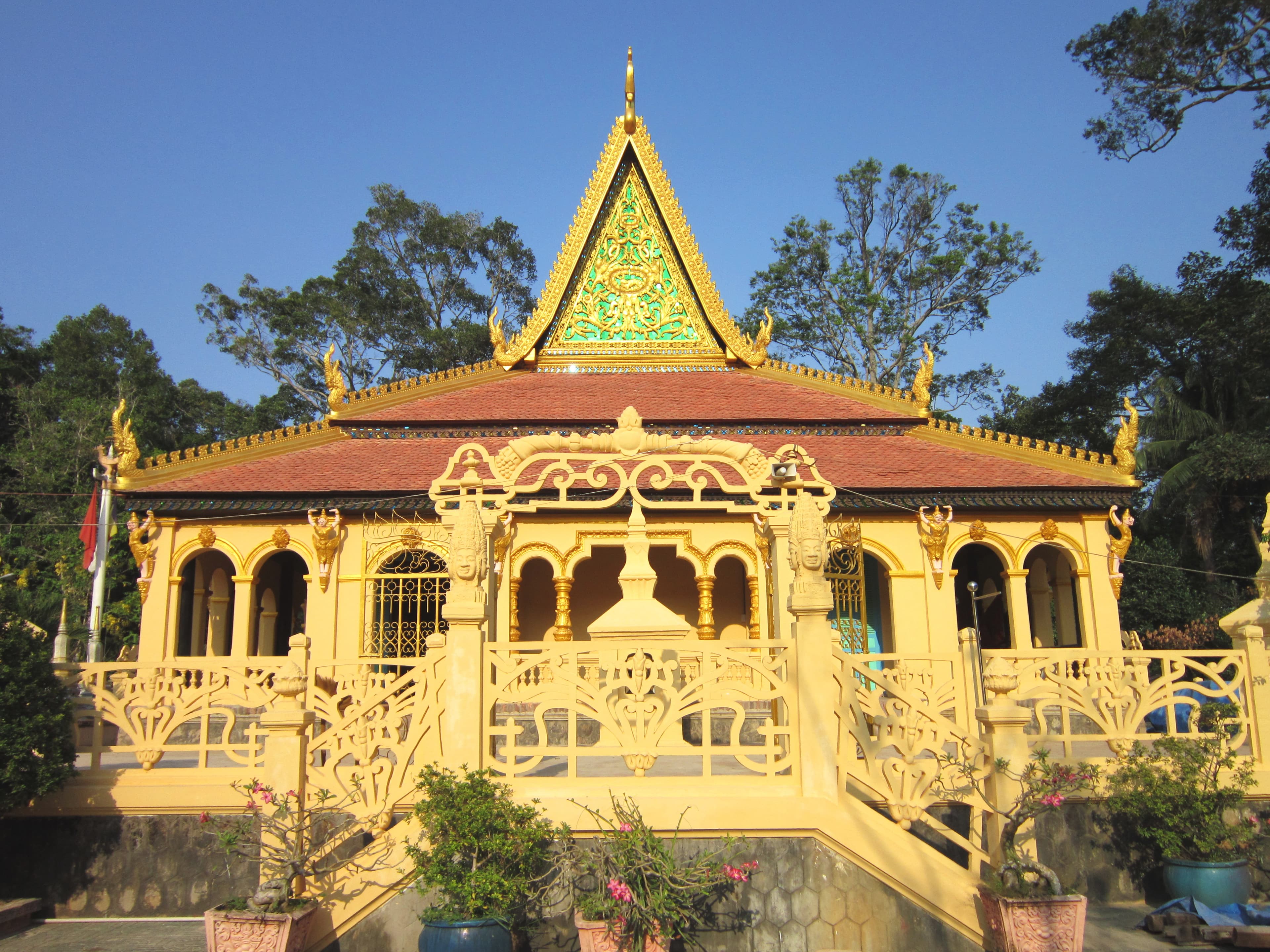
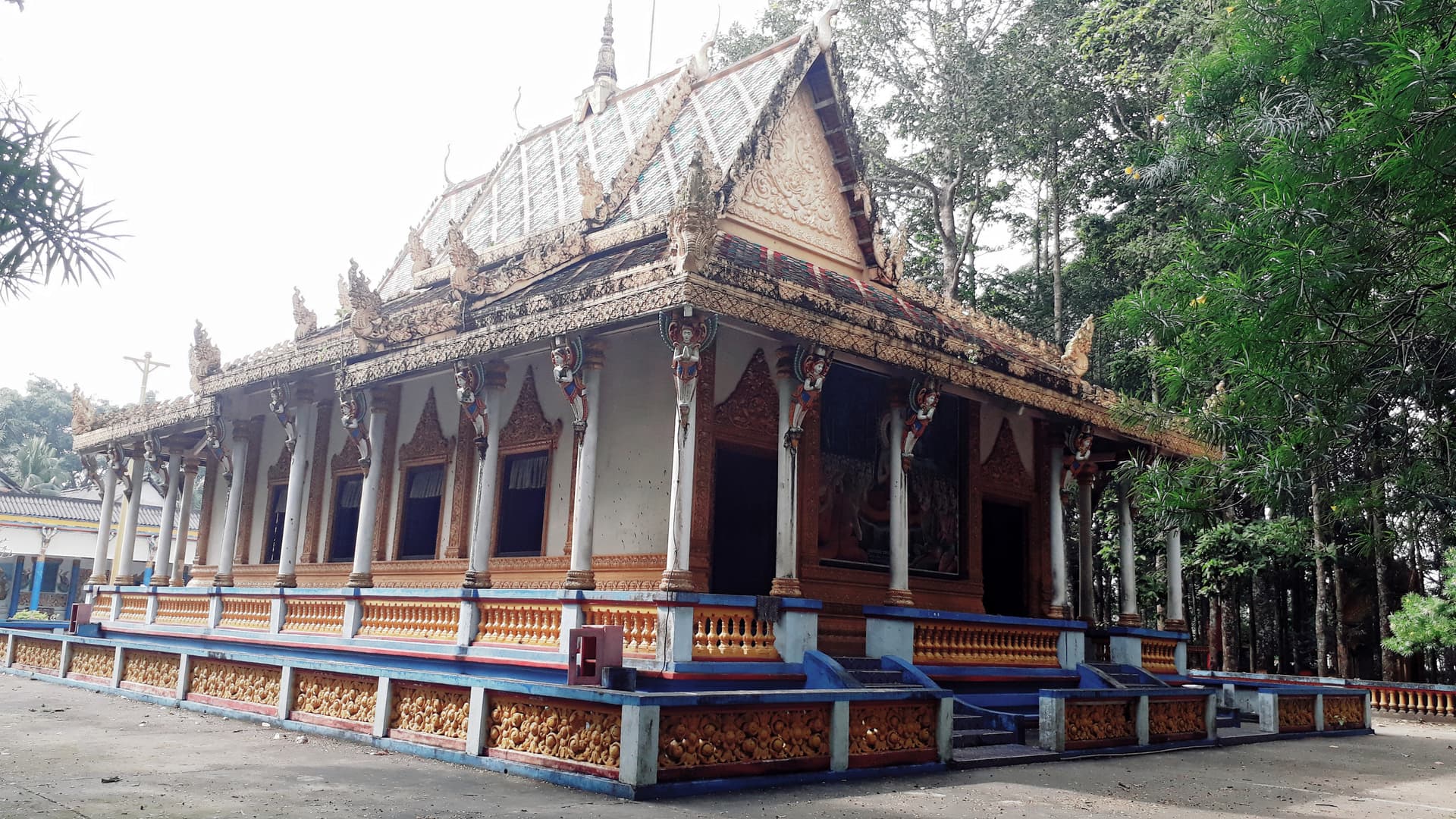
Âng Pagoda in Trà Vinh, Trà Vinh, Vietnam. Image source · CC BY-SA 3.0
Visit essentials
A quick read before you go
- Duration
- Allow enough time to understand both the active monastery and its relationship to Ao Bà Om.
- Access
- The strong Places record identifies Âng Pagoda on QL53 in the Trà Vinh area.
Overview
Chùa Âng is a principal Khmer Buddhist monastery where worship, community education, festival time, and landscape meet. Ao Bà Om extends the precinct beyond the hall and is not merely a decorative tourist pond. The active institution centres devotion on Śākyamuni Buddha: ordinary days follow monastic routine and individual offerings, while community observances can markedly change movement, sound, attendance, and access. Reviewed sources connect the monastery to the regional ritual calendar but establish no named pilgrimage route.
The page therefore describes worship and ceremonial gathering without inventing pilgrimage membership or promising a special spiritual effect from walking around the water.
Why this place is sacred
The transition into Âng Pagoda is not only architectural. The adjoining water, shade, and community use can slow perception before the main devotional spaces are reached. That sensory change gains religious meaning through monks, worshippers, teaching, and recurrent observance. It is not evidence that the pond or grounds emit a force. The more grounded sacred claim is that generations have kept Buddhist time here within a shared landscape.
The monastery serves Khmer Theravada worship, monastic life, teaching, and community observance centered on Śākyamuni Buddha.
A living religious compound now also receives visitors interested in Trà Vinh's Khmer heritage and the neighboring Ao Bà Om.
Experience and orientation
Begin by noticing where ordinary public movement gives way to monastic circulation. The water and trees may draw attention outward, while the worship hall gathers it toward the Buddha image. Let that contrast unfold without rushing between photo positions. If a gathering is forming, remain at its edge until the route becomes clear. Quiet observation is especially important where children, elders, or monks are using the compound for community purposes.
Use posted signs and observed foot traffic to distinguish the main worship space, monastic quarters, community grounds, and the path toward Ao Bà Om.
Context and lineage
The reviewed sources establish Chùa Âng, also called Angkorajaborey Pagoda, as a principal Khmer monastery associated with Ao Bà Om and the region's living ritual calendar. They do not resolve every foundation story or historical date. No UNESCO World Heritage inscription is claimed, and this page does not transfer stories from other Trà Vinh or Sóc Trăng monasteries.
Khmer Theravada Buddhism shapes the monastery's worship, monastic discipline, community calendar, and cultural identity.
Śākyamuni Buddha
central teacher and focus of Theravada reverence
Traditions and practice
Worship may include bows, chanting, incense, offerings, and attentive listening under monastery guidance. Larger observances can involve organized community movement or procession. Guests should watch where laypeople sit, how they approach the Buddha image, and whether participation is openly invited before copying any gesture.
Monastic practice and Khmer community observance continue alongside heritage visitation and everyday use of the wider grounds.
Spend a few minutes noticing how the worship hall and Ao Bà Om create different forms of stillness without treating either as more authentic.
Khmer Theravada Buddhism
ActiveÂng Pagoda joins Buddha veneration and monastic life to Trà Vinh's Khmer community calendar and Ao Bà Om landscape.
Bows, chanting, offerings, teaching, meditation, and community observance follow monastery authority.
Perspectives and open questions
Religion, Khmer community identity, monastic education, festival time, and the Ao Bà Om landscape each contribute a different scale.
Scholarly perspective
A contextual reading resists separating the pagoda from the social and environmental setting around it. The association with a regional ritual calendar shows how sacred institutions organize time as well as space. That observation remains cultural and historical; it does not turn landscape atmosphere into metaphysical evidence.
Living and traditional perspectives
Within Khmer Theravada Buddhism, reverence for Śākyamuni is connected to teaching, merit, discipline, and the continuity of community life.
Open questions
No energetic property, guaranteed blessing, or uniform emotional response is established for the pond or monastery. The site-specific religious account relies principally on the national tourism authority's current Ang Pagoda profile; ceremony details should still be confirmed with the monastery.
Plan your visit
Access and arrival
The strong Places record identifies Âng Pagoda on QL53 in the Trà Vinh area. Its previously fetched hours require a fresh check because ceremonies and closures can alter entry.
Use licensed accommodation in Trà Vinh; no monastery lodging is represented for general visitors.
Respectful visit
Cover shoulders and knees and choose clothing suitable for both temple interiors and the outdoor pond setting.
Ask before photographing monks, ceremonies, or identifiable worshippers; avoid placing people between the camera and the Buddha.
Use only the monastery's accepted incense, food, flowers, or donation points.
Monastic residences, altar platforms, closed rooms, and protected landscape areas remain outside casual access.
Do not label an unverified event a pilgrimage, interrupt teaching, or turn Khmer ceremony into a performance for outsiders.
Current practical details
Address
QL53, khóm 13, Nguyệt Hóa, Vĩnh Long, Vietnam
Hours
Hours, fees, and access can change — verify on the official source before you travel. Practical details last checked Jul 2026.
Location
Map loads as you approach this section.
Pilgrim reflections
A portrait of encounter, not a score
Pilgrims describe what they felt, how present they could become, and whether the place would shape a journey. There are no stars and no ranking of traditions.
No reviewed reflections yet
The first pilgrims can help describe the character of being here.
Share a reflection
Available after an account-backed “Been there.” Every reflection is reviewed before publication.
Watch deeper
Films, episodes, and recorded talks for visitors who want more context before or after a visit. Speculative and alternative-history entries are labelled as perspectives, not as sources for established claims.
Nearby sacred places
Explore other sacred places in the region. Proximity does not establish access or travel time; check each place’s guidance.
References
Sources consulted for this page. Source categories describe the publication, not a guarantee that every claim is verified. Traditional accounts and outside interpretations may differ.
- 01Ang Pagoda - A Magnificent Ancient Khmer Temple — Tourism Information Technology Center, Viet Nam National Authority of TourismofficialExact current national-tourism page for the Khmer Theravada monastery, main sanctuary, Buddha-life murals, worship, community role, and festival use.
- 02National Assembly approves provincial-level administrative reorganization — Government of Viet NamofficialAuthoritative 2025 successor-province and municipality boundaries.
- 03Chùa Khmer chùa Âng — Google PlacesofficialStrong exact-entity practical metadata from the authoritative current preflight.
- 04Vietnamese-language reference search for Chùa Âng — Vietnamese Wikipedia contributorsacademicDiscovery reference only; unsupported details were not promoted into factual prose.
Share a photo
Help visitors recognize Âng Pagoda. Every submission is reviewed before publication.