Triều Châu Assembly Hall
Hội quán Triều Châu: maritime protection remembered through Teochew craft and worship
Understand sacred places, explore living traditions, and learn how to engage respectfully with Pilgrim Map.
Access has not been verified. Check current local guidance before planning a visit.
Hội An, Da Nang, Vietnam
Read the sources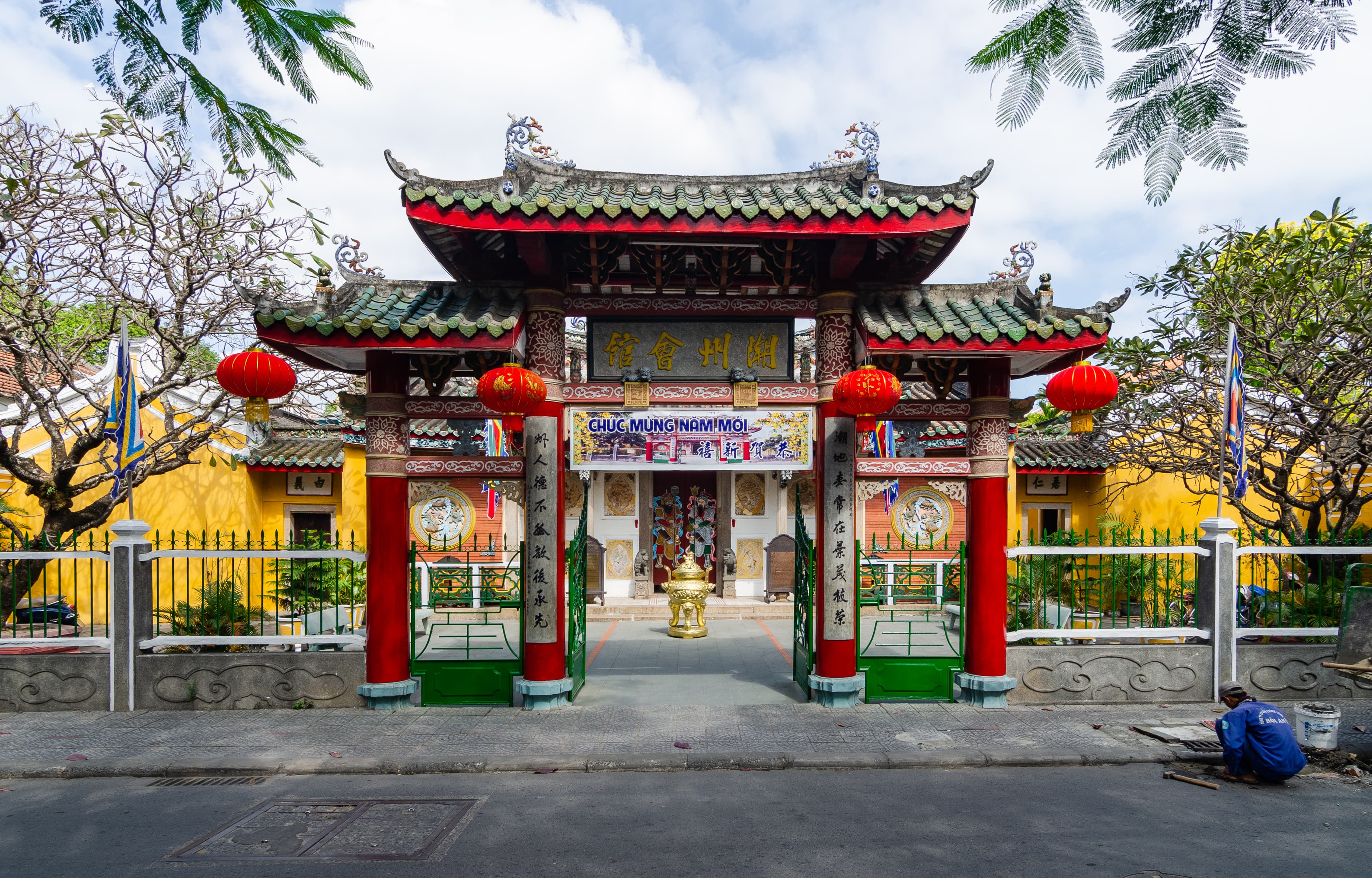
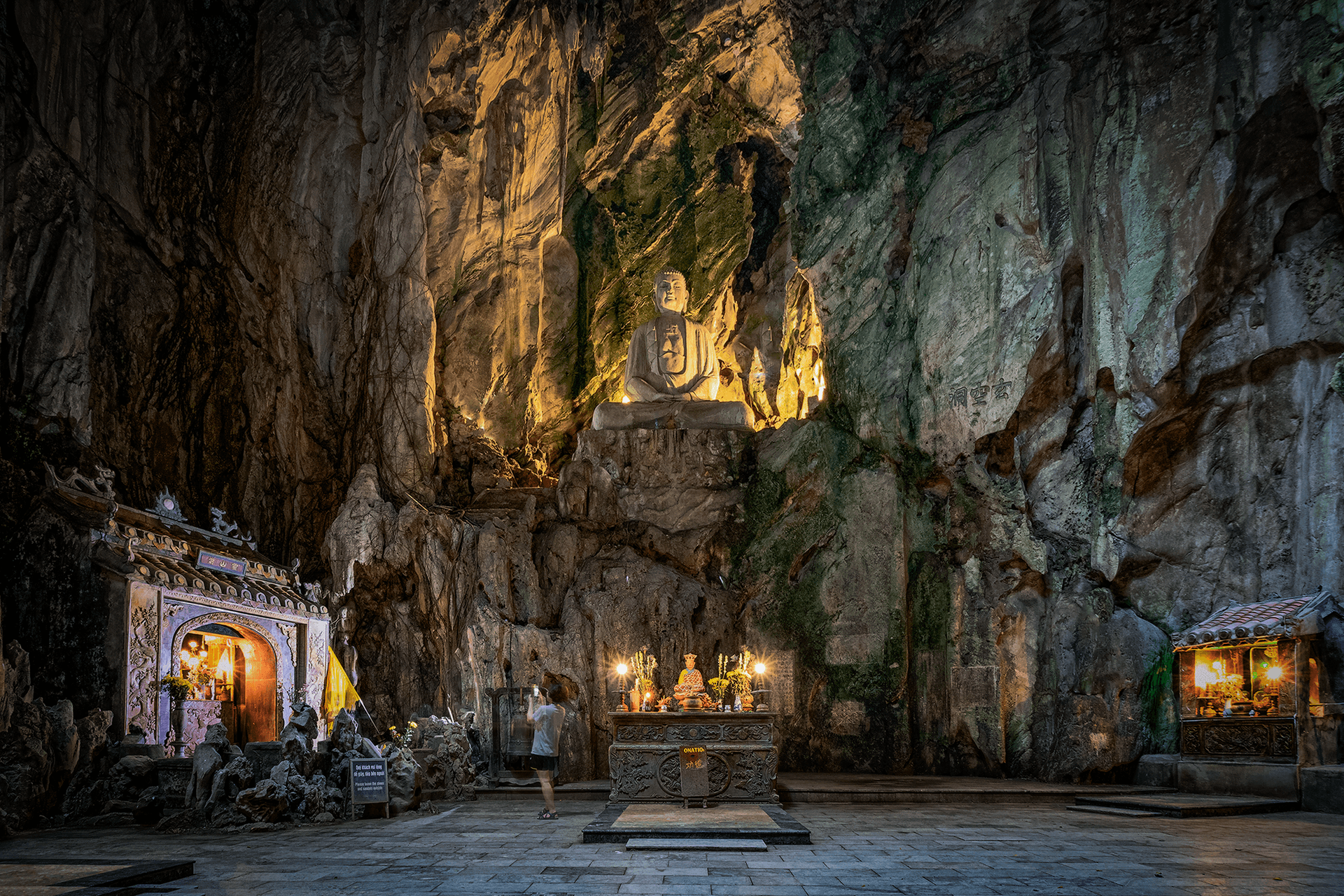
Triều Châu Assembly Hall in Hội An, Quảng Nam, Vietnam. Image source · CC BY-SA 4.0
Visit essentials
A quick read before you go
- Duration
- Allow time for both the altar and the building's narrative craft.
- Access
- Google Places details were skipped without an independently strong match; use the official…
Overview
Maritime commerce made distance and danger ordinary facts of community life. The hall answers that vulnerability through worship, mutual belonging, and carefully worked imagery. Its protective deities should not be reduced to colorful folklore: they were approached within a congregation whose members crossed water for livelihood and settlement. The building's carved frame and ceramic reliefs carry stories into the architecture, while the courtyard and assembly spaces support collective use.
Founded for people from the Triều Châu region, the institution preserves a local identity inside cosmopolitan Hội An. Guests can appreciate craft most fully when they understand what the altar order asks it to serve.
Why this place is sacred
The spiritual significance is not an abstract love of the sea. It arises from exposure to danger and the need for reliable passage. Protective worship makes those risks communal rather than merely individual. Carved legends and ceramic scenes help hold that memory in place. A modern visitor may sense shelter in the enclosed hall, but that sensation should not be upgraded into a guaranteed protective effect.
Teochew migrants built the hall in 1845 for association life and worship related to safe maritime movement.
The congregation's sanctuary now shares its space with heritage visitors in Hội An's protected town.
Experience and orientation
Start with the public forecourt, then examine how the timber frame directs attention toward the altar. Look for wave, cloud, vessel, guardian, or narrative motifs only where labels or the source record support identification. The point is not to decode every ornament. It is to see how skilled work gives permanence to prayers formed around uncertain travel. Keep clear of anyone lighting incense or standing before a deity.
Move from association entrance to carved structural detail and then to the maritime-protection altar focus.
Context and lineage
The municipal heritage page establishes the date, community, devotional purpose, and major craft characteristics. Its specificity prevents confusion with the Fujian or Cantonese halls nearby. The UNESCO context explains why multiple migrant institutions survive in Hội An, but each hall retains its own regional affiliation and deities. Unverified festival schedules are not added.
Teochew Chinese Vietnamese folk religion and communal association practice form the lineage.
Protective deities invoked for safe maritime travel
guardians associated with wind, waves, passage, and trade
Traditions and practice
Devotees may offer incense or petitions to the named guardians according to the hall's calendar. The act carries histories of travel, commerce, and family separation. Visitors should observe before deciding whether any participation is invited.
Worship, community identity, craft preservation, and public interpretation continue together.
Follow one maritime motif from the structural carving toward the altar it helps frame.
Chinese Vietnamese folk religion
ActiveTeochew worship joins protection from maritime danger with migrant memory and mutual responsibility.
Incense, prayer, offerings, and communal observance address the hall's protective deities.
Perspectives and open questions
Maritime religion, migrant solidarity, Teochew regional identity, craft history, and tourism all shape the hall.
Scholarly perspective
Material culture can reveal how a community made dangerous mobility intelligible. The carved and ceramic program is therefore evidence of social and religious life, not merely a style catalogue. Comparison with neighboring halls is useful only when differences in congregation and dedication remain visible.
Living and traditional perspectives
The sea-protecting deities belong to Teochew devotional memory and are approached through the hall's inherited order.
Open questions
Safe passage, business success, or personal protection is not guaranteed to a visitor.
Plan your visit
Access and arrival
Google Places details were skipped without an independently strong match; use the official heritage listing for identity and check current hours.
Licensed Hội An accommodation is available separately from the association hall.
Respectful visit
Wear clothing appropriate to an active communal sanctuary.
Use available light and respect any prohibition near ritual activity or fragile detail.
Only hall-approved incense and offerings belong at the designated altar.
Do not touch carvings, cross altar boundaries, or enter rooms reserved for the association.
Do not treat sea protection as a charm purchased by copying an offering.
Location
Map loads as you approach this section.
Pilgrim reflections
A portrait of encounter, not a score
Pilgrims describe what they felt, how present they could become, and whether the place would shape a journey. There are no stars and no ranking of traditions.
No reviewed reflections yet
The first pilgrims can help describe the character of being here.
Share a reflection
Available after an account-backed “Been there.” Every reflection is reviewed before publication.
Nearby sacred places
Explore other sacred places in the region. Proximity does not establish access or travel time; check each place’s guidance.
References
Sources consulted for this page. Source categories describe the publication, not a guarantee that every claim is verified. Traditional accounts and outside interpretations may differ.
- 01Official heritage or tourism context for Triều Châu Assembly Hall — Vietnam National Authority of Tourism or responsible heritage authorityofficialSupports the site's physical, cultural, religious, or visitor context.
- 02Vietnam National Authority of Tourism — Vietnam National Authority of TourismofficialNational tourism authority context; no weak Google Places fields were persisted.
- 03Hội quán Triều Châu — Hội An Center for World Cultural Heritage ConservationofficialMunicipal heritage record documents the 1845 Teochew hall and worship of deities invoked for protection at sea.
- 04Vietnamese-language reference search for Hội quán Triều Châu — Vietnamese Wikipedia contributorsacademicDiscovery reference only; unsupported details were not promoted into factual prose.
Share a photo
Help visitors recognize Triều Châu Assembly Hall. Every submission is reviewed before publication.