Cantonese Assembly Hall
Hội quán Quảng Đông: changing altars within a Cantonese community history
Understand sacred places, explore living traditions, and learn how to engage respectfully with Pilgrim Map.
Access has not been verified. Check current local guidance before planning a visit.
Hội An, Da Nang, Vietnam
Read the sources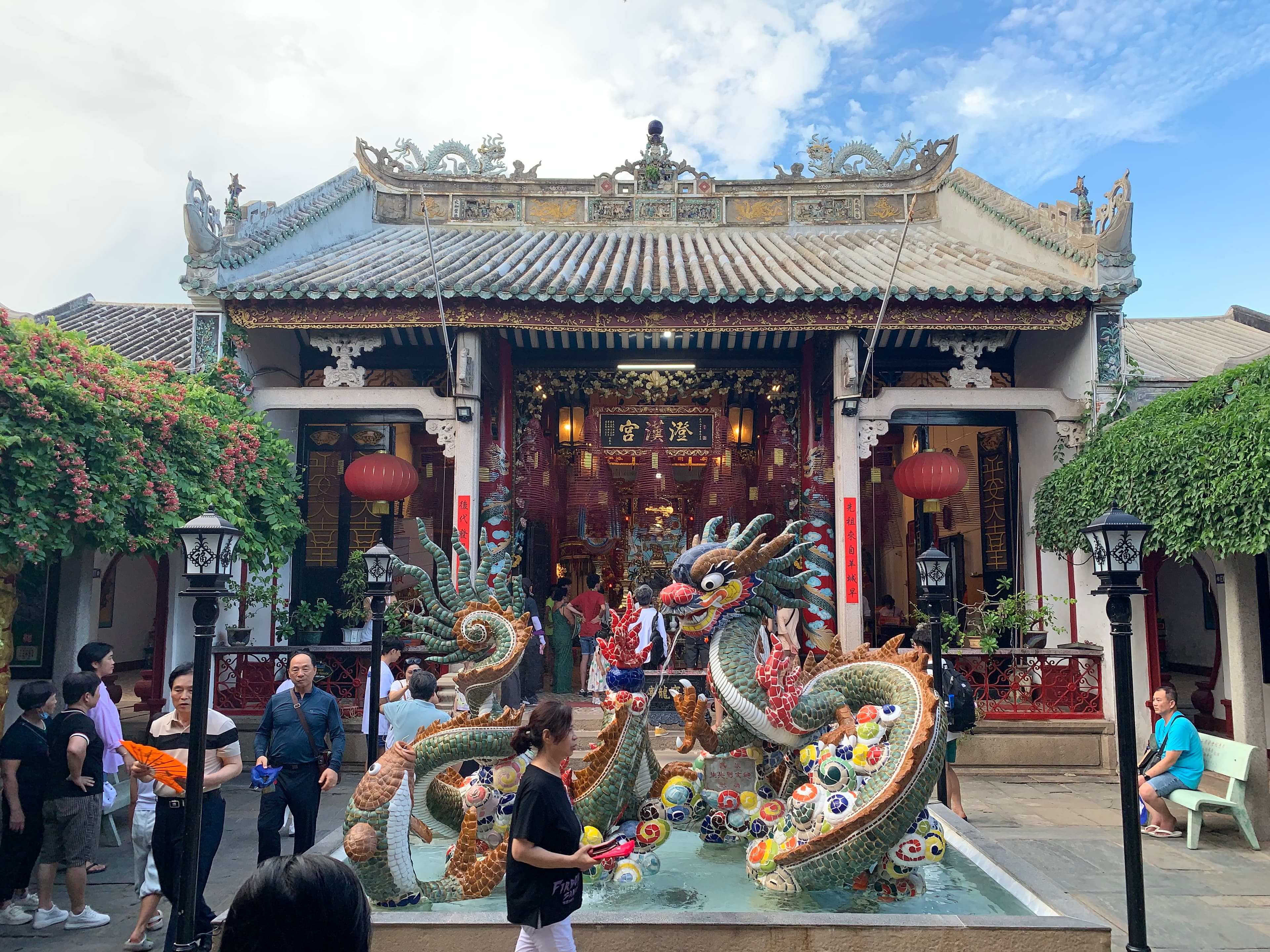
Cantonese Assembly Hall in Hội An, Quảng Nam, Vietnam. Image source · CC BY 4.0
Visit essentials
A quick read before you go
- Duration
- A focused visit should allow time for the changing dedication history, not only the facade.
- Access
- Use the Hội An heritage authority's exact 176 Trần Phú record to locate the Cantonese hall.
Overview
The stone gate, courtyard, carved building fabric, and association rooms frame more than one devotional period. Rather than choosing a single timeless label, the hall should be read as a Cantonese institution capable of carrying new emphases while preserving communal memory. Guan Yu's loyalty and integrity now provide an important ethical focus. Earlier dedications to Thiên Hậu and Confucius show that maritime protection and scholarly virtue also belonged to the congregation's history.
Forebears connect worship with the people who sustained the association in Hội An. A visitor who notices these layers will avoid collapsing the hall into either a Guan Yu temple or a secular guild house.
Why this place is sacred
Changing dedications do not make the hall religiously confused. They show a community reworking its public sacred order across time. Guan Yu can embody loyalty and justice; Thiên Hậu addresses vulnerability at sea; Confucius carries learned virtue; forebears anchor collective continuity. Their coexistence is historically specific. It should not be recast as proof that all traditions are secretly identical.
The 1885 hall supported Cantonese association life and worship in Hội An.
Its altar emphasis shifted while the building continued to represent communal belonging.
Experience and orientation
Begin at the gate and look for the institutional name before moving toward devotional images. Inside, identify the present Guan Yu focus and then ask what earlier dedications reveal about the hall's history. Carving and stonework deserve attention, but do not step into a worshipper's line to study them. Community rooms may still serve organizational purposes even when they appear quiet.
Distinguish entrance architecture, active altars, forebear commemoration, and association areas.
Context and lineage
Hội An's heritage authority records construction in 1885 and identifies the sequence of dedications. That official local evidence is stronger than generic descriptions of a 'Chinese temple.' The UNESCO old-town setting explains the trading-port environment but does not replace the congregation's own identity. Ritual dates not present in the research are omitted.
Cantonese Chinese Vietnamese folk religion and association memory define the institution.
Guan Yu, Thiên Hậu, Confucius, and community forebears
current and historical devotional field
Traditions and practice
Incense, bows, offerings, and petitions may address a named figure according to community custom. Guan Yu devotion often emphasizes ethical qualities as well as protection. Visitors should not perform a gesture simply because they have seen it at another assembly hall.
Active prayer, forebear remembrance, community identity, and heritage visitation overlap.
Identify one current dedication and one earlier dedication, then consider why the community retained both histories.
Chinese Vietnamese folk religion
ActiveThe Cantonese hall holds loyalty, learning, maritime protection, and forebear remembrance in a changing communal order.
Prayer, incense, offerings, ethical remembrance, and association observance follow named dedications.
Perspectives and open questions
Migration history, ethical exemplars, sea protection, forebear reverence, and architectural conservation converge here.
Scholarly perspective
Institutional change is central evidence, not a problem to smooth away. The altar sequence shows how a migrant association negotiated different needs and virtues. Architecture then provides the durable frame within which those priorities were expressed.
Living and traditional perspectives
Guan Yu and the other honored figures retain distinct inherited roles within the congregation.
Open questions
No visitor is promised protection, business success, moral transformation, or supernatural intervention.
Plan your visit
Access and arrival
Use the Hội An heritage authority's exact 176 Trần Phú record to locate the Cantonese hall. No whole-site Google Places result cleared review, so current hours still require local confirmation.
Choose current licensed lodging in Hội An.
Respectful visit
Modest urban dress is appropriate for the active temple setting.
Photograph architecture from the side when worship is occurring and avoid flash near altars.
Use only materials and locations authorized by the hall.
Do not enter offices, storage areas, altar platforms, or cordoned spaces.
Do not label the hall solely by the most visually prominent image.
Location
Map loads as you approach this section.
Pilgrim reflections
A portrait of encounter, not a score
Pilgrims describe what they felt, how present they could become, and whether the place would shape a journey. There are no stars and no ranking of traditions.
No reviewed reflections yet
The first pilgrims can help describe the character of being here.
Share a reflection
Available after an account-backed “Been there.” Every reflection is reviewed before publication.
Nearby sacred places
Explore other sacred places in the region. Proximity does not establish access or travel time; check each place’s guidance.
References
Sources consulted for this page. Source categories describe the publication, not a guarantee that every claim is verified. Traditional accounts and outside interpretations may differ.
- 01Official heritage or tourism context for Cantonese Assembly Hall — Vietnam National Authority of Tourism or responsible heritage authorityofficialSupports the site's physical, cultural, religious, or visitor context.
- 02Vietnam National Authority of Tourism — Vietnam National Authority of TourismofficialNational tourism authority context; no weak Google Places fields were persisted.
- 03Hội quán Quảng Đông — Hội An Center for World Cultural Heritage ConservationofficialMunicipal heritage record documents the 1885 Cantonese community hall and its changing altar dedications.
- 04Vietnamese-language reference search for Hội quán Quảng Đông — Vietnamese Wikipedia contributorsacademicDiscovery reference only; unsupported details were not promoted into factual prose.
- 05Cantonese Assembly Hall of Hoi An (2024), image 13 — ChainwitSource contextThe exact-subject Commons record names Cantonese Assembly Hall in Hội An and supplies embedded coordinates 15.877311, 108.326575; the image is licensed CC BY 4.0.
Share a photo
Help visitors recognize Cantonese Assembly Hall. Every submission is reviewed before publication.