Fujian Assembly Hall
Hội quán Phúc Kiến: Thiên Hậu devotion in a migrant community house
Understand sacred places, explore living traditions, and learn how to engage respectfully with Pilgrim Map.
Access has not been verified. Check current local guidance before planning a visit.
Hội An, Da Nang, Vietnam
Read the sources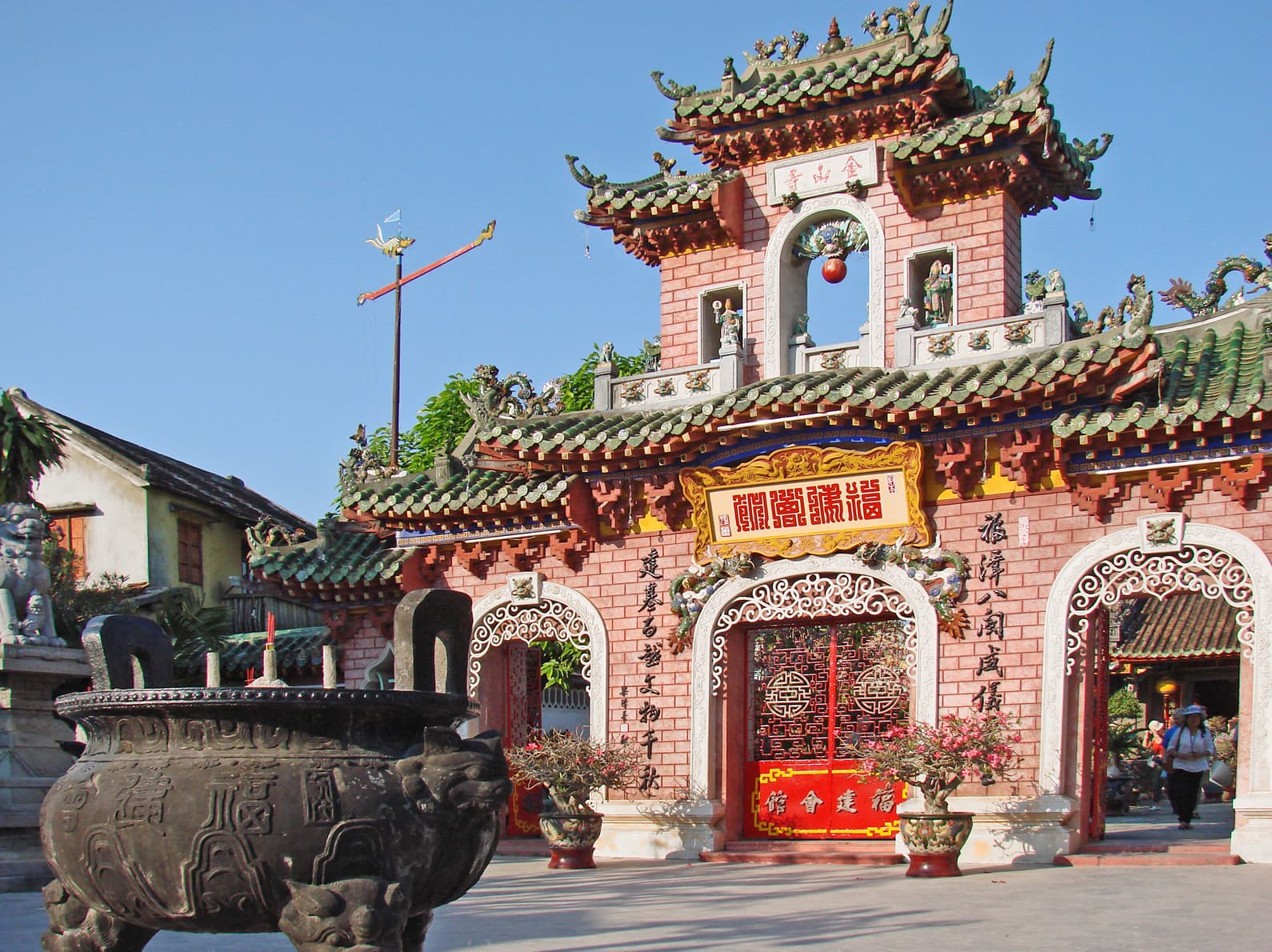
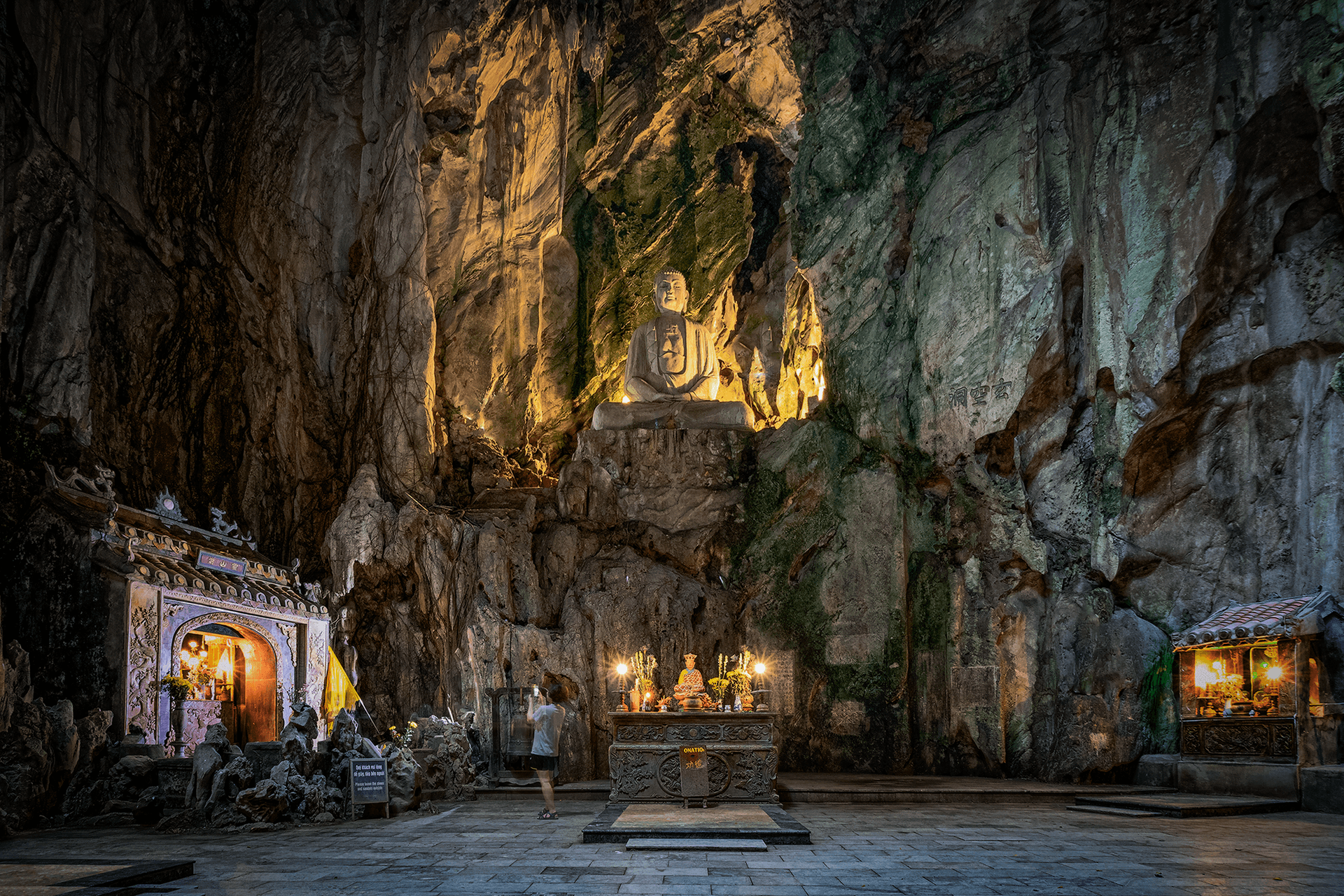
Fujian Assembly Hall in Hội An, Quảng Nam, Vietnam. Image source · CC BY 1.0
Visit essentials
A quick read before you go
- Duration
- Allow time to identify the main altars rather than walking directly through the courtyard.
- Access
- Google Places strongly matches this hall.
Overview
Beyond the triple gate, a courtyard leads toward altars while inscriptions and association rooms recall a community formed through trade and migration. Hội An's heritage authority documents worship of Thiên Hậu and other protective deities, not a merely decorative Chinese hall with a generic goddess. Mazu's maritime protection speaks to people whose journeys and livelihoods depended on water; family petitions and communal remembrance broaden without erasing that focus.
Amid active incense, prayer, and heavy visitor traffic, anyone approaching an altar takes priority over a symmetrical photograph.
Why this place is sacred
The hall's sacred significance is relational. A sea-protecting goddess is honored inside an institution built to help people from Fujian live together far from their place of origin. Carved and ceramic imagery can be admired, but it is not independent ornament: much of it belongs to stories, petitions, and protective bonds. Incense may intensify the atmosphere; it does not demonstrate a measurable energy.
The hall served Fujian communal life and worship, with Thiên Hậu at the center of maritime and family protection.
It remains a religious and association place while operating inside a heavily visited World Heritage town.
Experience and orientation
The gateway and courtyard create a public transition, but an altar threshold changes the kind of attention required. Watch where worshippers place incense, how they wait, and which figures they address. Read labels that distinguish Thiên Hậu from other guardians and family-related deities. When a group enters, step to the side rather than pressing inward. The communal rooms also have a history beyond worship and should not be treated as unused space available for visitors.
Move from gate to courtyard to the named altars, keeping worship routes and association areas clear.
Context and lineage
The municipal heritage record identifies the institution and its devotional figures. The UNESCO context places Hội An's assembly halls within a port shaped by exchange and migrant settlement. These sources support a specific account of Fujian community religion. They do not justify transferring every Mazu festival custom from another city or assigning a fixed date to every structure in the present compound.
Chinese Vietnamese folk religion practiced through a Fujian association gives the hall its distinct lineage.
Mazu (Thiên Hậu)
principal goddess and protector associated with seafaring and community welfare
Traditions and practice
Devotees may burn incense, bow, present offerings, and address Thiên Hậu or another named altar according to the need and calendar. An outsider should observe the order rather than copying it. A donation does not confer permission to handle ritual objects.
Prayer, family petitions, community remembrance, and heritage visitation share the compound.
Read one altar label, then observe from the side how worshippers approach it.
Chinese Vietnamese folk religion
ActiveFujian devotion to Thiên Hậu joins safe passage, family well-being, migrant memory, and communal responsibility.
Prayer, incense, offerings, petitions, and community observance follow the hall's altar order.
Perspectives and open questions
Mazu devotion, maritime commerce, migration, mutual aid, and conservation explain complementary parts of the hall.
Scholarly perspective
Assembly halls show how migrant religion and social organization could occupy the same building. Altars address sacred protection; inscriptions and rooms record collective identity. Separating those functions too sharply would miss their historical interdependence.
Living and traditional perspectives
Thiên Hậu is approached through inherited devotion as a protector, not as a symbol available for arbitrary reinterpretation.
Open questions
No guaranteed prosperity, fertility, protection, or supernatural effect is claimed for a visitor.
Plan your visit
Access and arrival
Google Places strongly matches this hall. Recheck hours and ritual restrictions with its custodian.
Use licensed Hội An lodging; the association hall does not provide visitor accommodation.
Respectful visit
Choose modest clothing suitable for an active urban temple.
Never use worship as foreground decoration or block the central aisle for a wide shot.
Purchase or place offerings only through accepted points and established altar practice.
Closed rooms, altar platforms, and staff areas are not part of the tourist route.
Do not call every figure a form of Mazu or combine distinct petitions into a personal ritual.
Current practical details
Address
46 Trần Phú, Old Town, Hội An, Đà Nẵng, Vietnam
Phone
Hours
Hours, fees, and access can change — verify on the official source before you travel. Practical details last checked Jul 2026.
Location
Map loads as you approach this section.
Pilgrim reflections
A portrait of encounter, not a score
Pilgrims describe what they felt, how present they could become, and whether the place would shape a journey. There are no stars and no ranking of traditions.
No reviewed reflections yet
The first pilgrims can help describe the character of being here.
Share a reflection
Available after an account-backed “Been there.” Every reflection is reviewed before publication.
Nearby sacred places
Explore other sacred places in the region. Proximity does not establish access or travel time; check each place’s guidance.
References
Sources consulted for this page. Source categories describe the publication, not a guarantee that every claim is verified. Traditional accounts and outside interpretations may differ.
- 01Official heritage or tourism context for Fujian Assembly Hall — Vietnam National Authority of Tourism or responsible heritage authorityofficialSupports the site's physical, cultural, religious, or visitor context.
- 02Hội quán Phúc Kiến — Hội An Center for World Cultural Heritage ConservationofficialMunicipal heritage record documents the Fujian congregation and worship of Thiên Hậu and other protective deities.
- 03Vietnamese-language reference search for Hội quán Phúc Kiến — Vietnamese Wikipedia contributorsacademicDiscovery reference only; unsupported details were not promoted into factual prose.
- 04Google Maps listing for Fujian Assembly Hall — Google MapsSource contextUsed only for strong-match coordinates and practical fields.
Share a photo
Help visitors recognize Fujian Assembly Hall. Every submission is reviewed before publication.