Tomb of Emperor Minh Mạng
Lăng Minh Mạng: imperial remembrance ordered through water, woodland, and procession
Understand sacred places, explore living traditions, and learn how to engage respectfully with Pilgrim Map.
Access has not been verified. Check current local guidance before planning a visit.
Huế, Huế, Vietnam
Read the sources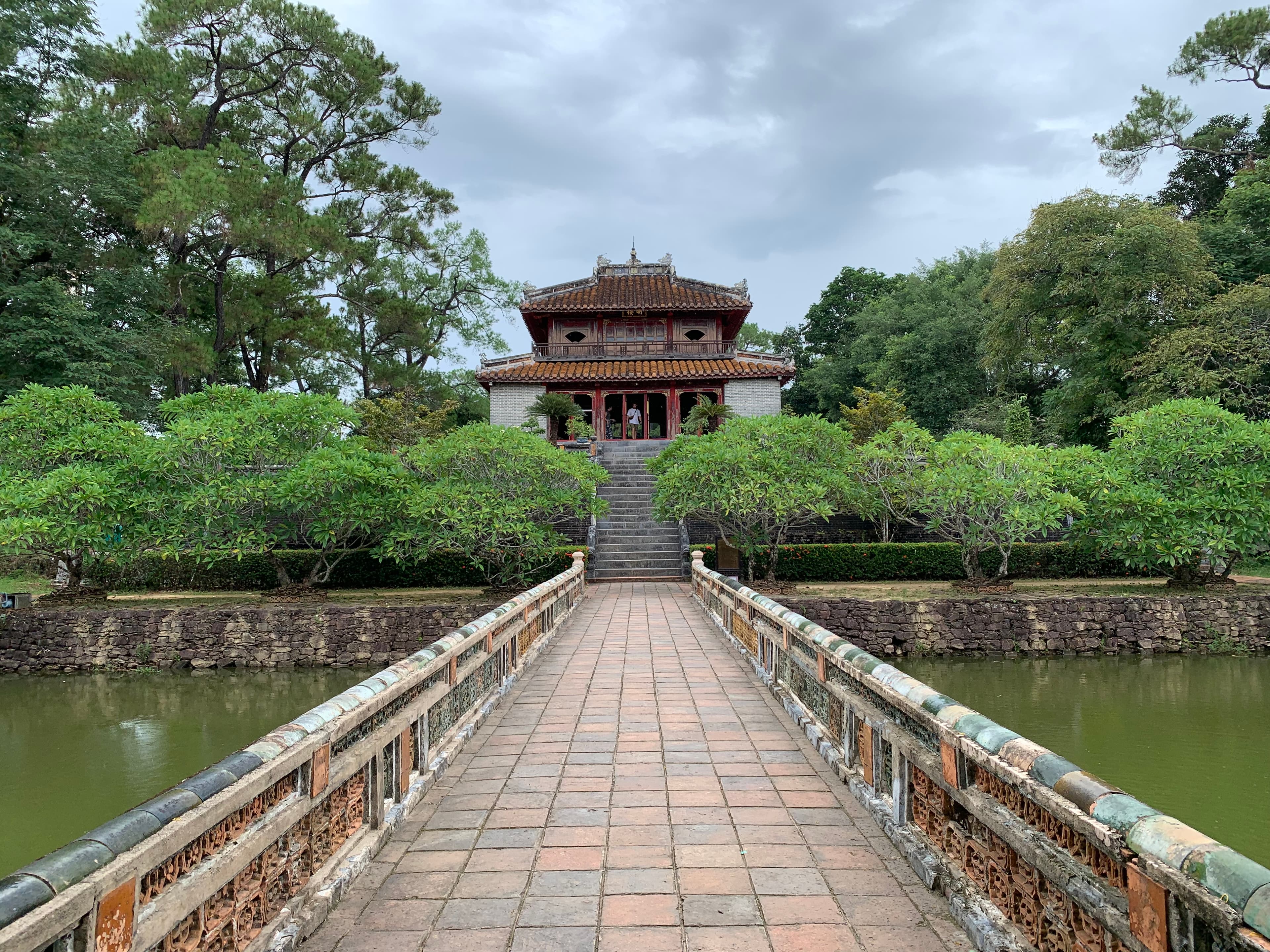
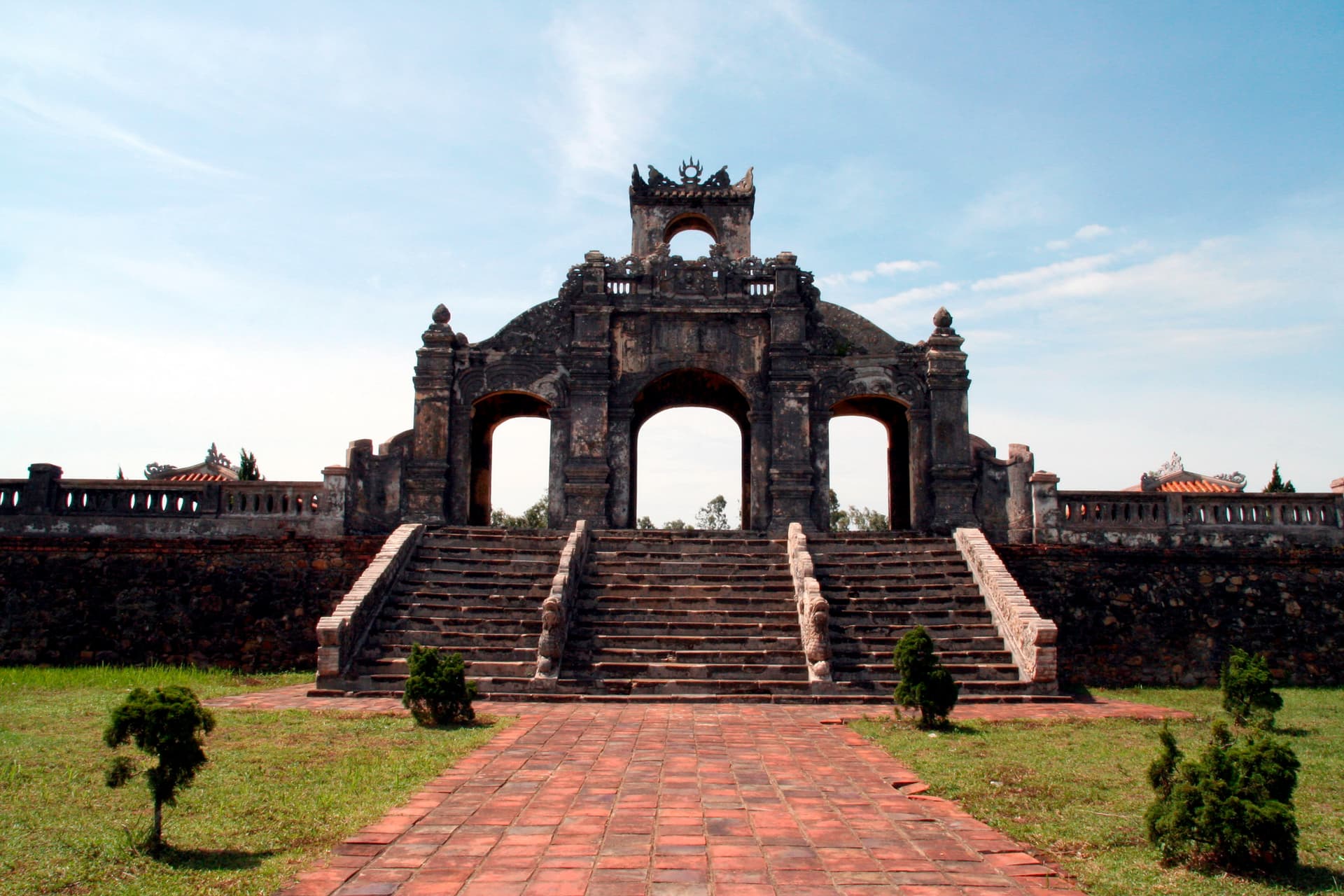
Tomb of Emperor Minh Mạng in Huế, Huế, Vietnam. Image source · CC BY 4.0
Visit essentials
A quick read before you go
- Duration
- Allow time for the full permitted sequence instead of seeing only the principal facade.
- Access
- The strong Places identity and UNESCO component record agree on the mausoleum; current hours…
Overview
The design asks the body to proceed in stages. Water interrupts a direct advance; bridges and gates establish transitions; wooded ground keeps the burial landscape larger than any single building. This sequence expresses a royal idea of order in which an emperor's death did not end dynastic obligations. Minh Mạng remains the named object of commemoration, and the tomb complex provides a setting for that ancestral relationship. UNESCO lists the mausoleum as component 678-012 of the Complex of Hué Monuments.
Visitors therefore meet both a funerary place and a protected work of landscape planning. Neither role permits casual climbing, invented rites, or the assumption that an attractive view is the site's main purpose.
Why this place is sacred
The landscape can create a strong sense of stillness because the route repeatedly delays arrival. That response has a documented cultural frame: Nguyễn funerary planning, ancestral continuity, and the relationship between rule and cosmic order. UNESCO has also noted the importance of geomantic elements in understanding Huế's monuments. Geomancy here belongs to the historical design context; it is not evidence that every visitor encounters a measurable force.
The complex was formed as an imperial mausoleum and memorial landscape for Emperor Minh Mạng.
Royal commemoration now coexists with public heritage access and the conservation of an extensive designed landscape.
Experience and orientation
Begin with the relation between water and axis. Notice when a view is opened, withheld, or redirected, and how tree cover softens the formal sequence. The useful question is not which object makes the best photograph but how successive spaces prepare for memorial proximity. Keep in mind that some areas may be inaccessible for preservation. A distant view can still communicate the design without turning a closed threshold into a challenge.
Follow the authorized sequence through forecourt, water crossings, memorial structures, and permitted viewing points.
Context and lineage
The reviewed UNESCO component inventory securely identifies Minh Mang Tomb and its official coordinates. The wider World Heritage record describes imperial tombs upstream from the capital and emphasizes their architectural and landscaped character. This evidence supports a funerary and dynastic interpretation. Exact construction episodes or court rites not present in the research artifact are deliberately omitted.
Vietnamese imperial ancestor veneration and Nguyễn funerary planning define the memorial lineage.
Emperor Minh Mạng
commemorated Nguyễn emperor
Traditions and practice
Royal ancestor veneration treated the deceased sovereign within continuing dynastic memory. The tomb's sequence and memorial buildings preserve that frame even when visitors do not witness a ceremony. Guests should not improvise incense, touch memorial objects, or copy gestures from unrelated temples.
The principal visible activities are commemoration, interpretation, maintenance, and protected public access.
Pause after one water crossing and compare the view behind you with the axis ahead.
Vietnamese imperial ancestor veneration
HistoricalThe mausoleum binds Emperor Minh Mạng's memory to Nguyễn concepts of lineage, landscape, and ordered rule.
Present engagement is chiefly respectful remembrance and conservation-aware visitation.
Perspectives and open questions
Ancestor veneration, landscape design, geomancy, royal history, and conservation each require separate attention.
Scholarly perspective
A landscape-history approach considers how water, topography, and built sequence represent imperial order. Conservation analysis adds modern pressures, including infrastructure and visual intrusion noted in UNESCO records. These readings explain the tomb without reducing its memorial purpose to aesthetics.
Living and traditional perspectives
Within imperial ancestor veneration, the sovereign remains part of a lineage whose remembrance carries social and ritual obligations.
Open questions
No uniform emotional response or objectively detectable sacred energy is established by the reviewed sources.
Plan your visit
Access and arrival
The strong Places identity and UNESCO component record agree on the mausoleum; current hours still require confirmation.
Stay in licensed Huế accommodation; the mausoleum is not a lodging site.
Respectful visit
Choose clothing appropriate to a memorial complex and extended outdoor walking.
Photograph from public paths without staging comic poses among the honor guard or memorial structures.
Leave offerings only at an explicitly designated and supervised place.
Never cross water edges, chains, doors, or restoration barriers.
Avoid claiming a geomantic effect as personal proof; describe it as part of the design tradition.
Current practical details
Address
ấp An Bằng, Kim Long, Huế, Vietnam
Phone
Hours
Hours, fees, and access can change — verify on the official source before you travel. Practical details last checked Jul 2026.
Location
Map loads as you approach this section.
Pilgrim reflections
A portrait of encounter, not a score
Pilgrims describe what they felt, how present they could become, and whether the place would shape a journey. There are no stars and no ranking of traditions.
No reviewed reflections yet
The first pilgrims can help describe the character of being here.
Share a reflection
Available after an account-backed “Been there.” Every reflection is reviewed before publication.
Nearby sacred places
Explore other sacred places in the region. Proximity does not establish access or travel time; check each place’s guidance.
References
Sources consulted for this page. Source categories describe the publication, not a guarantee that every claim is verified. Traditional accounts and outside interpretations may differ.
- 01Official heritage or tourism context for Tomb of Emperor Minh Mạng — Vietnam National Authority of Tourism or responsible heritage authorityofficialSupports the site's physical, cultural, religious, or visitor context.
- 02Complex of Hué Monuments — component maps — UNESCO World Heritage CentreofficialIdentifies component 678-012 as Minh Mang Tomb and gives its official coordinates.
- 03Vietnamese-language reference search for Lăng Minh Mạng — Vietnamese Wikipedia contributorsacademicDiscovery reference only; unsupported details were not promoted into factual prose.
- 04Google Maps listing for Tomb of Emperor Minh Mạng — Google MapsSource contextUsed only for strong-match coordinates and practical fields.
Share a photo
Help visitors recognize Tomb of Emperor Minh Mạng. Every submission is reviewed before publication.