Tomb of Emperor Khải Định
Lăng Khải Định: a steep ceremonial ascent into a densely worked memorial
Understand sacred places, explore living traditions, and learn how to engage respectfully with Pilgrim Map.
Access has not been verified. Check current local guidance before planning a visit.
Huế, Huế, Vietnam
Read the sources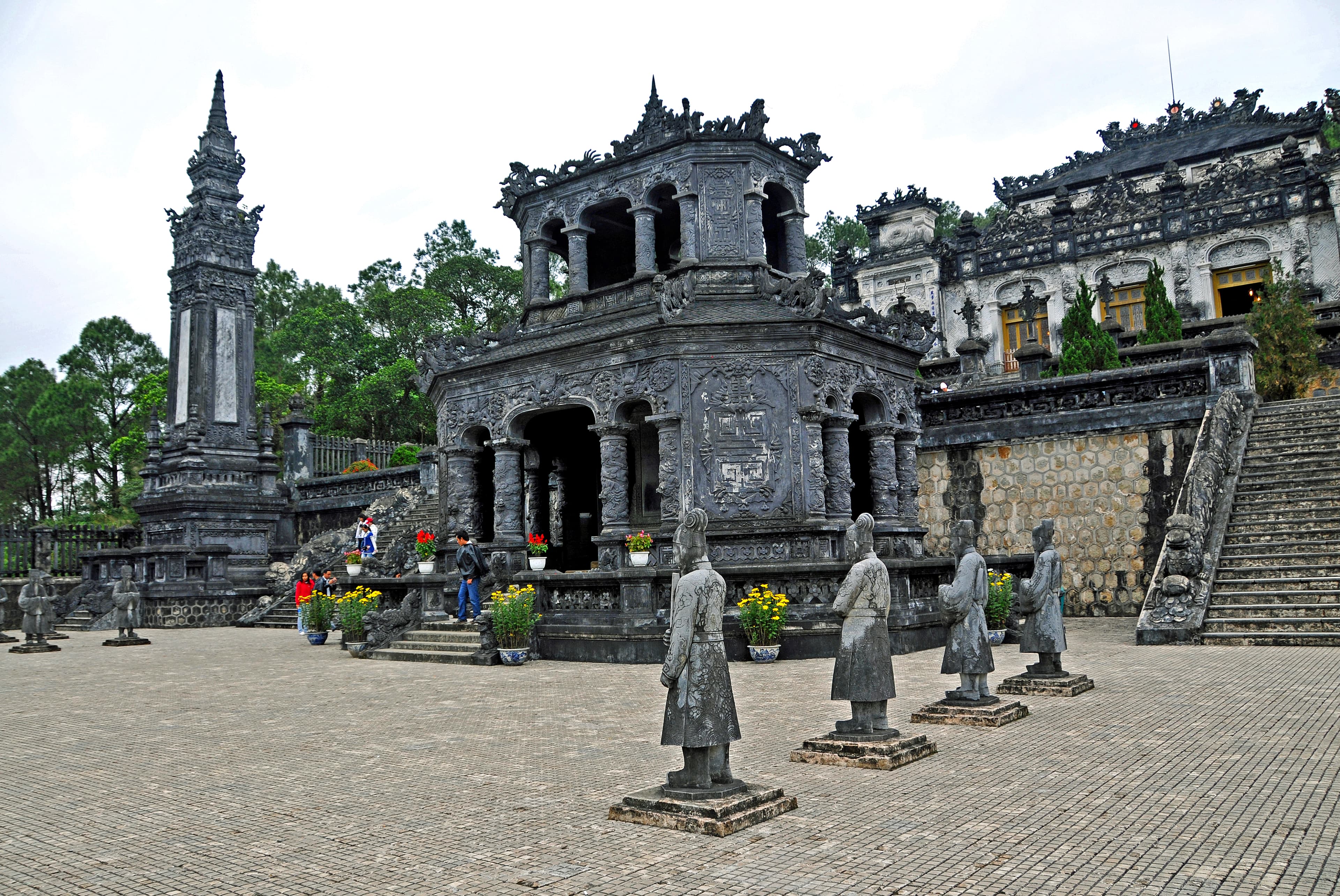
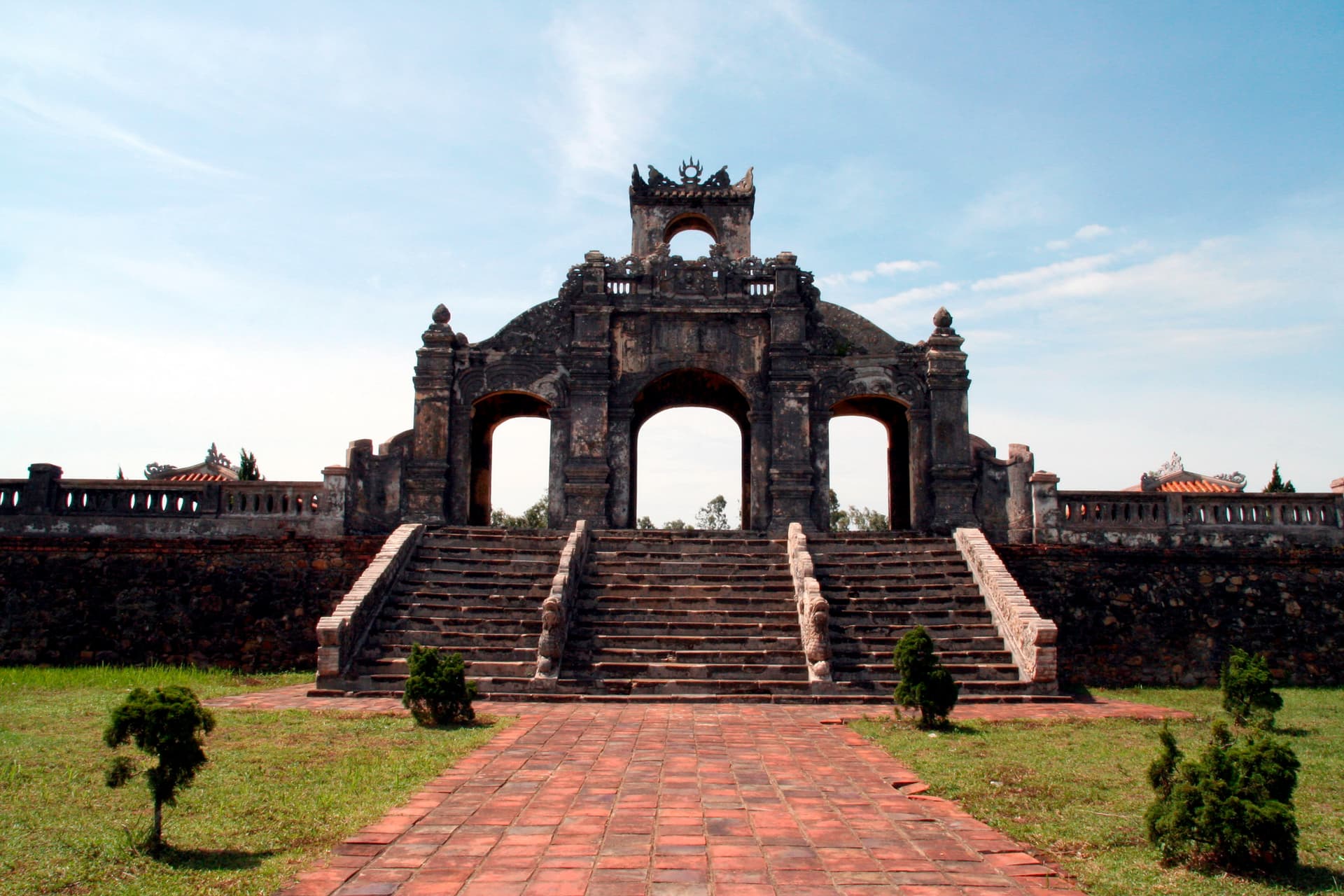
Tomb of Emperor Khải Định in Huế, Huế, Vietnam. Image source · CC BY-SA 2.0
Visit essentials
A quick read before you go
- Duration
- A shorter footprint still deserves time for the ascent, forecourt, and detailed chamber.
- Access
- Because no whole-site Places result cleared review, use the Huế heritage authority's current…
Overview
The climb gives the site a different rhythm from Huế's more expansive water-and-garden tombs. Each level narrows attention toward the memorial chamber. Stone figures establish courtly order outside; dense surface work changes the atmosphere within. This contrast should not be dismissed as decoration. It is part of how the mausoleum represents Emperor Khải Định and the late Nguyễn court. The design's mixed vocabulary also belongs to a specific historical moment, not to an ahistorical fusion of East and West.
Visitors meet a protected burial monument where visual intensity serves commemoration. That purpose requires quiet in the chamber and restraint around the statuary and mosaic surfaces.
Why this place is sacred
At Khải Định, sacred approach is experienced vertically. Stairs, terraces, and formal figures establish rank before the interior gathers color and detail around the commemorative focus. A visitor may find the shift powerful, but the defensible interpretation is architectural and funerary: movement has been choreographed to serve royal remembrance. No claim about an objectively charged chamber is needed.
The complex was designed as the imperial mausoleum and commemorative setting of Emperor Khải Định.
Its early twentieth-century materials now require heritage protection under the serial Huế inscription.
Experience and orientation
Pause on a landing rather than treating the stairs as an obstacle. Look back at how the honor guard occupies the forecourt, then observe how the final interior changes scale and surface. Details reward close sight, but closeness must remain within the visitor boundary. Crowding at the chamber can easily turn contemplation into competition for photographs; step aside and allow a slower view.
The route rises through exterior ceremonial levels before reaching the protected interior memorial focus.
Context and lineage
UNESCO's component inventory establishes Khai Dinh Tomb as 678-011. World Heritage decisions also discuss the geomantic landscape and modern infrastructure pressures around the site. The research supports reading the mausoleum through ancestor veneration, ceremonial order, and mixed early twentieth-century architectural forms. It does not supply a complete construction narrative or permission to speculate about every imported motif.
Nguyễn imperial ancestor veneration remains the primary lineage despite the monument's eclectic materials.
Emperor Khải Định
commemorated Nguyễn emperor
Traditions and practice
The tomb gives architectural form to continuing dynastic memory. Its court figures, processional climb, and interior focus preserve a ceremonial hierarchy even outside an active rite. Visitors should not touch the figures, add objects, or enact invented homage.
Public interpretation, commemoration, crowd management, and conservation are the principal visible uses.
Study one transition—from stair to court or court to chamber—rather than trying to absorb every ornament at once.
Vietnamese imperial ancestor veneration
HistoricalThe mausoleum focuses ceremonial ascent and ornament on the remembrance of Emperor Khải Định.
Modern engagement is respectful memorial visitation under conservation controls.
Perspectives and open questions
Funerary ritual, late Nguyễn politics, hybrid material culture, geomantic landscape, and conservation all shape interpretation.
Scholarly perspective
Calling the tomb eclectic is only a starting point. A fuller reading asks how imported materials and visual languages were placed inside a Vietnamese imperial memorial program. The physical sequence still establishes hierarchy and ancestry even when individual decorative sources differ.
Living and traditional perspectives
Ancestor veneration gives the elaborate setting a purpose beyond display: it maintains the emperor within dynastic memory.
Open questions
No independently measured spiritual effect is supported by the reviewed evidence.
Plan your visit
Access and arrival
Because no whole-site Places result cleared review, use the Huế heritage authority's current access notice before travelling.
Use current Huế accommodation services rather than expecting facilities at the mausoleum.
Respectful visit
Dress for steep outdoor steps while maintaining the modesty appropriate to a tomb.
Follow chamber-specific rules and never press equipment against protected surfaces.
Only a custodian-designated place can receive an offering; decorative ledges cannot.
Respect one-way circulation, barriers, and any capacity limit inside the memorial.
Mixed architectural influence should be described historically, not as proof of mystical synthesis.
Location
Map loads as you approach this section.
Pilgrim reflections
A portrait of encounter, not a score
Pilgrims describe what they felt, how present they could become, and whether the place would shape a journey. There are no stars and no ranking of traditions.
No reviewed reflections yet
The first pilgrims can help describe the character of being here.
Share a reflection
Available after an account-backed “Been there.” Every reflection is reviewed before publication.
Nearby sacred places
Explore other sacred places in the region. Proximity does not establish access or travel time; check each place’s guidance.
References
Sources consulted for this page. Source categories describe the publication, not a guarantee that every claim is verified. Traditional accounts and outside interpretations may differ.
- 01Official heritage or tourism context for Tomb of Emperor Khải Định — Vietnam National Authority of Tourism or responsible heritage authorityofficialSupports the site's physical, cultural, religious, or visitor context.
- 02Vietnam National Authority of Tourism — Vietnam National Authority of TourismofficialNational tourism authority context; no weak Google Places fields were persisted.
- 03Complex of Hué Monuments — component maps — UNESCO World Heritage CentreofficialIdentifies component 678-011 as Khai Dinh Tomb and gives its official coordinates.
- 04Tomb of Khải Định — Wikipedia — Wikipedia contributorsacademicCorroborates identity, location, and basic historical context; key claims are framed conservatively.
Share a photo
Help visitors recognize Tomb of Emperor Khải Định. Every submission is reviewed before publication.