Thiên Đường Cave and Mountain-God Temple
Thiên Đường Cave: mountain-god worship beside a protected karst world
Understand sacred places, explore living traditions, and learn how to engage respectfully with Pilgrim Map.
Access has not been verified. Check current local guidance before planning a visit.
Phong Nha, Quảng Trị, Vietnam
Read the sources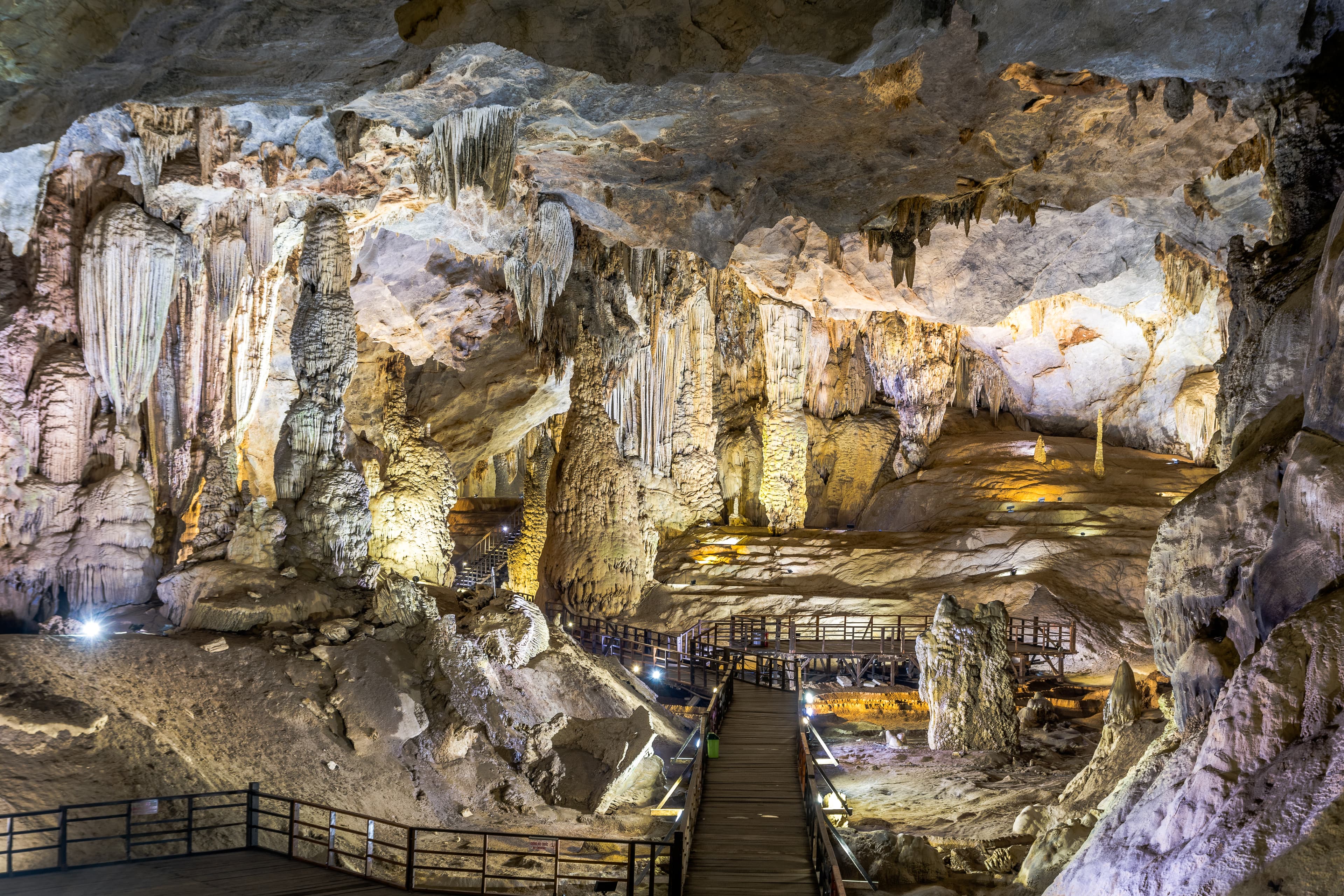
Thiên Đường Cave and Mountain-God Temple in Bố Trạch, Quảng Bình, Vietnam. Image source · CC BY-SA 4.0
Visit essentials
A quick read before you go
- Duration
- Allow the authorized cave itinerary to determine timing and leave space for worship at the…
- Access
- Places lookup produced no strong exact match for the corrected combined identity.
Overview
Thiên Đường's immense formations can dominate the visitor's attention, yet the Mountain-God Temple introduces a specific cultural relationship to the land. Local worship addresses a mountain deity through a shrine and established practice, while the cave remains a protected natural system governed by safety and conservation. These identities belong together without becoming identical. Geological grandeur does not prove divine agency, and worship should not be dismissed because the UNESCO designation concerns nature.
The correct boundary is productive: science describes karst formation and ecological value; folk religion describes obligation, protection, and human relationship to mountain place. No pilgrimage route is documented. Visitors should resist turning every formation into a sacred sign or treating the shrine as a decorative entrance feature.
Why this place is sacred
The cave changes scale, temperature, light, and sound, producing a strong bodily threshold. The temple adds a different threshold made through worship and local guardianship. Natural effects can inspire reflection, but they are not independent verification of the mountain god. Sacred meaning resides in the community's devotional relationship while conservation protects the landform that surrounds it.
The cave is natural; the associated temple serves Vietnamese folk worship of a mountain deity.
Active local worship now coexists with managed cave tourism and natural World Heritage conservation.
Experience and orientation
Pause where the built shrine and natural route diverge. If offerings or prayer are underway, wait beyond the working area. Inside the cave, stay on the managed path and let lighting reveal formations without assigning each one a religious identity. Humidity, stairs, and darkness require attention to safety rather than pursuit of an altered state.
Begin at the deity's threshold, then distinguish worship space from the managed cave route; safety exits and conservation closures set the remaining limits.
Context and lineage
The corrected identity is supported as Thiên Đường Cave and Mountain-God Temple, with active Vietnamese folk or mountain-deity worship. The cave lies within UNESCO property 951bis for natural values. That property-level designation must not be described as a religious inscription or proof of the shrine's beliefs.
Vietnamese folk and mountain-deity worship provides the shrine's living religious framework.
Mountain god honored at Thiên Đường
principal focus of active local shrine worship
Traditions and practice
Local practitioners may offer incense, gifts, or petitions to the mountain god according to shrine custom. Visitors should observe rather than invent a gesture. Inside the cave, low-impact attention is appropriate, but it should not be presented as an inherited ritual.
Shrine worship, cave management, natural conservation, and public visitation occur side by side.
Notice the moment when human-made devotional order gives way to the managed natural interior.
Vietnamese folk and mountain-deity worship
ActiveThe associated temple maintains active reverence for a mountain god beside Thiên Đường Cave.
Incense, offerings, petitions, and shrine care follow local custodial custom.
Perspectives and open questions
Karst science and mountain-deity worship describe different relationships to the same protected place.
Scholarly perspective
Natural heritage documentation explains geological significance, while ethnographic attention is needed for shrine practice. UNESCO property scope concerns nature and must not be used to validate theology. Keeping those domains distinct allows both to be taken seriously.
Living and traditional perspectives
Local worship approaches the mountain god through an active temple and inherited forms of respect.
Open questions
No cave energy, divine intervention, or uniform spiritual change is independently verified.
Plan your visit
Access and arrival
Places lookup produced no strong exact match for the corrected combined identity. Use the official Vietnam tourism source for current logistics.
Arrange accommodation outside the protected site through a licensed provider in the Phong Nha area.
Respectful visit
Wear modest clothing near worship and footwear suitable for damp stairs and cave surfaces.
Follow shrine, flash, tripod, and walkway rules without stepping off the managed route.
Use only the temple's accepted offering place; nothing belongs on formations or cave floors.
Step nowhere beyond the boardwalk, handle no offering or formation, and obey emergency closures immediately.
Do not leave offerings in the cave, call formations divine images, or claim a named pilgrimage absent from the evidence.
Current practical details
Address
Km 16 Đường Hồ Chí Minh, Nhánh Tây, Phong Nha, Quảng Trị, Vietnam
Hours, fees, and access can change — verify on the official source before you travel. Practical details last checked Jul 2026.
Location
Map loads as you approach this section.
Pilgrim reflections
A portrait of encounter, not a score
Pilgrims describe what they felt, how present they could become, and whether the place would shape a journey. There are no stars and no ranking of traditions.
No reviewed reflections yet
The first pilgrims can help describe the character of being here.
Share a reflection
Available after an account-backed “Been there.” Every reflection is reviewed before publication.
Nearby sacred places
Explore other sacred places in the region. Proximity does not establish access or travel time; check each place’s guidance.

References
Sources consulted for this page. Source categories describe the publication, not a guarantee that every claim is verified. Traditional accounts and outside interpretations may differ.
- 01Vietnam National Authority of Tourism — Vietnam National Authority of TourismofficialNational tourism authority context; no weak Google Places fields were persisted.
- 02Paradise Cave - A heavenly palace on earth — Vietnam Travel LiveSource contextExact independent travel feature corroborating the cave identity and the practice of lighting incense at the Mountain God altar before entering.
- 03Exploring the magnificent cave of Quang Binh — Viet Nam National Authority of TourismofficialExact national-tourism article for Paradise Cave, the mountain-god temple beside its entrance, and prevalent visitor prayer before cave entry.
- 04National Assembly approves provincial-level administrative reorganization — Government of Viet NamofficialAuthoritative 2025 successor-province and municipality boundaries.
- 05Paradise Cave — Google PlacesofficialStrong exact-entity practical metadata from the authoritative current preflight.
- 06Phong Nha-Ke Bang National Park and Hin Nam No National Park — UNESCO World Heritage CentreofficialCurrent 951ter transboundary property dossier and component scope after the 2025 extension.
- 07Thiên Đường Cave — Wikipedia — Wikipedia contributorsacademicCorroborates identity, location, and basic historical context; key claims are framed conservatively.
Share a photo
Help visitors recognize Thiên Đường Cave and Mountain-God Temple. Every submission is reviewed before publication.