Phong Nha Cave and Tiên Sư Cốc Tự
Phong Nha and Tiên Sư Cốc Tự: cave history, Cham memory, and living local worship
Understand sacred places, explore living traditions, and learn how to engage respectfully with Pilgrim Map.
Access has not been verified. Check current local guidance before planning a visit.
Phong Nha, Quảng Trị, Vietnam
Read the sources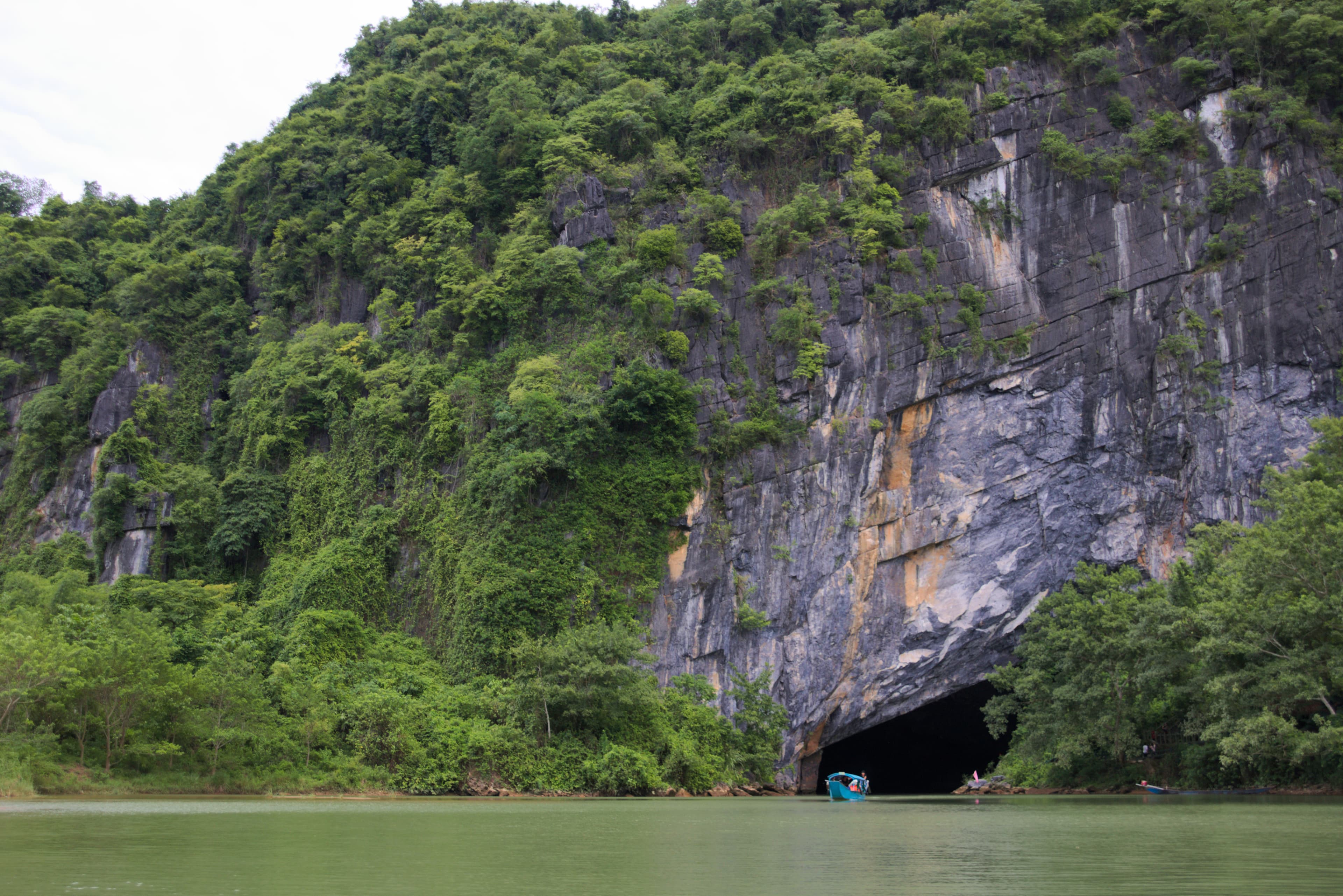
Phong Nha Cave and Tiên Sư Cốc Tự in Bố Trạch, Quảng Bình, Vietnam. Image source · CC BY-SA 4.0
Visit essentials
A quick read before you go
- Duration
- Allow the regulated cave visit to set the pace; shrine access may be brief or unavailable.
- Access
- It remains unclear whether Google Places has an exact whole-site record for the cave-plus-shrine…
Overview
Water passage and immense limestone chambers define the physical encounter with Phong Nha, but Tiên Sư Cốc Tự requires a separate religious reading. Official park sources describe sacred history that includes a historical Cham Hindu sanctuary and a living Vietnamese folk shrine associated with cave deities. Those layers must not be blended into an invented Buddhist identity. The earlier sanctuary is historical; current worship belongs to local religious practice and continuing guardianship of the cave's sacred order.
Natural scale can inspire awe without becoming proof that geological formations possess consciousness. Likewise, UNESCO recognition belongs to the natural World Heritage property, not to a shrine inscription or endorsement of ritual claims. Visitors should keep the boat, cave-safety, conservation, and devotional boundaries distinct throughout the journey.
Why this place is sacred
Entering by water changes sound, light, and bodily orientation before any shrine is encountered. Those natural effects can feel liminal, while centuries of religious interpretation give certain places a human sacred history. The strongest account preserves sequence: Cham Hindu use belongs to the historical record; Vietnamese folk devotion remains active. Neither geology nor atmosphere independently verifies a deity's presence.
The cave is natural; documented sacred use includes a historical Cham Hindu sanctuary and the later Tiên Sư Cốc Tự local shrine.
Active cave-deity worship now shares a protected natural World Heritage landscape with conservation and regulated tourism.
Experience and orientation
Follow the authorized route and allow eyes and hearing to adjust without touching formations. When Tiên Sư Cốc Tự comes into view, look for the signs that distinguish an active offering place from the surrounding cave. Do not leave the managed path to approach a sacred feature. Water conditions, lighting, and operating rules may alter what can be seen on any visit.
Keep boat access, public cave route, shrine space, fragile formations, and restricted passages clearly separated.
Context and lineage
Official park sources describe Sanskrit inscriptions and historical Cham sanctuary use in Phong Nha Cave. Tiên Sư Cốc Tự was established near the cave, restored in 1999, and relocated by park management to its present position beside the entrance in 2013. UNESCO inscribed the Vietnamese natural property in 2003, modified its boundaries and criteria in 2015, and approved the Hin Nam No transboundary extension in 2025.
Historical Cham Hindu practice and active Vietnamese folk cave-deity worship are distinct traditions in the same cavern.
Deities honored at Tiên Sư Cốc Tự
focus of active local cave-shrine worship
Historical Cham Hindu worshippers
community associated with the earlier sanctuary layer
Traditions and practice
Current custodial worship may include incense, offerings, or petitions to cave deities according to local custom. Guests should follow posted or custodian guidance and avoid improvising a rite. Historical Cham Hindu practice is interpreted as past religious use and should not be imitated as though continuous.
Active local worship, park management, cave conservation, and guided tourism now overlap.
Notice where human devotional order begins within the natural chamber, without touching either shrine objects or rock.
Vietnamese folk and cave-deity worship
ActiveTiên Sư Cốc Tự is an active local shrine within Phong Nha Cave.
Custodian-led offerings, incense, petitions, and shrine care occur within park rules.
Historical Cham Hindu practice
HistoricalOfficial history identifies an earlier Cham Hindu sanctuary layer in the cave.
Historical worship is interpreted through evidence rather than reenacted by visitors.
Perspectives and open questions
One cave landscape carries several kinds of evidence. Geology and World Heritage protection must be read separately from the earlier Cham sanctuary and today's guardian-shrine practice.
Scholarly perspective
Archaeological and historical evidence can establish earlier religious use without implying an unbroken tradition. Ethnographic attention is needed for the present shrine. Natural World Heritage status protects geological and ecological values and should never be used as religious authentication.
Living and traditional perspectives
Current local worship treats Tiên Sư Cốc Tự as a sacred place under the care of cave-associated deities.
Alternative interpretations
According to the park authority, residents say rain follows the annual xin nước thần rite. This is a recurring community belief and is not independently verified as a causal effect.
Open questions
No cave energy, supernatural protection, or uniform transformation is independently verified.
Plan your visit
Access and arrival
It remains unclear whether Google Places has an exact whole-site record for the cave-plus-shrine scope; none cleared the strong-match review. The returned Paradise/Thiên Đường Cave record is a different cave about nine kilometres away. Current boat operations, water levels, cave access, and shrine availability are unknown here and require direct confirmation with Phong Nha–Kẻ Bàng park.
Overnight stays belong in licensed Phong Nha lodging; the protected cavern and Tiên Sư Cốc Tự are not lodging facilities.
Respectful visit
Use clothing and footwear suited to managed cave conditions while remaining modest near the shrine.
Follow flash and shrine restrictions; never delay a boat or cross a boundary for an image.
Leave nothing unless shrine custodians explicitly provide an accepted place and form.
Keep hands off limestone and shrine objects, remain inside the managed route, and never enter an unlit branch passage.
Do not call the shrine Buddhist, merge historical Cham and present Vietnamese practice, or leave unsanctioned offerings.
Location
Map loads as you approach this section.
Pilgrim reflections
A portrait of encounter, not a score
Pilgrims describe what they felt, how present they could become, and whether the place would shape a journey. There are no stars and no ranking of traditions.
No reviewed reflections yet
The first pilgrims can help describe the character of being here.
Share a reflection
Available after an account-backed “Been there.” Every reflection is reviewed before publication.
Nearby sacred places
Explore other sacred places in the region. Proximity does not establish access or travel time; check each place’s guidance.

References
Sources consulted for this page. Source categories describe the publication, not a guarantee that every claim is verified. Traditional accounts and outside interpretations may differ.
- 01Culture and history of Phong Nha–Kẻ Bàng — Phong Nha–Kẻ Bàng National ParkofficialOfficial park account of Phong Nha Cave's archaeological record, Sanskrit inscriptions, historical Cham sanctuary use, and 2003/2015/2025 heritage timeline.
- 02Tiên Sư Cốc Tự, sacred guardian of Phong Nha — Phong Nha–Kẻ Bàng National ParkofficialExact custodian article locating the shrine beside Phong Nha Cave, documenting deity titles, relocation, worship, rain rite, and current religious use.
- 03Phong Nha-Ke Bang National Park and Hin Nam No National Park — UNESCO World Heritage CentreofficialAccording to UNESCO's current dossier 951ter, the property was inscribed in 2003 and significantly modified in 2015 and 2025.
- 04Decision 27 COM 8C.8: Phong Nha-Ke Bang National Park — UNESCO World Heritage CommitteeofficialOriginal 2003 inscription decision under the natural criterion then numbered (i), corresponding to current criterion (viii).
- 05National Assembly approves provincial-level administrative reorganization — Government of Viet NamofficialAuthoritative source for the current Quảng Trị successor-province geography after the 2025 reorganization.
- 06Phong Nha Cave (Q3395915) — Wikidata contributorsacademicExact cave identity and coordinates 17.5823815, 106.2824154; corroborated by the park's exact shrine-at-cave-entrance description.
- 07Phong Nha Cave entry — Tonguc Ozluk via Wikimedia CommonsacademicAccording to the Commons file page and category, this CC BY-SA 4.0 photograph shows the exact Phong Nha Cave entry; the prior image depicts Thiên Đường Cave.
Share a photo
Help visitors recognize Phong Nha Cave and Tiên Sư Cốc Tự. Every submission is reviewed before publication.