Hoằng Phúc Pagoda
Hoằng Phúc: Buddhist continuity remembered through destruction and renewal
Understand sacred places, explore living traditions, and learn how to engage respectfully with Pilgrim Map.
Access has not been verified. Check current local guidance before planning a visit.
Tân Mỹ, Quảng Trị, Vietnam
Read the sources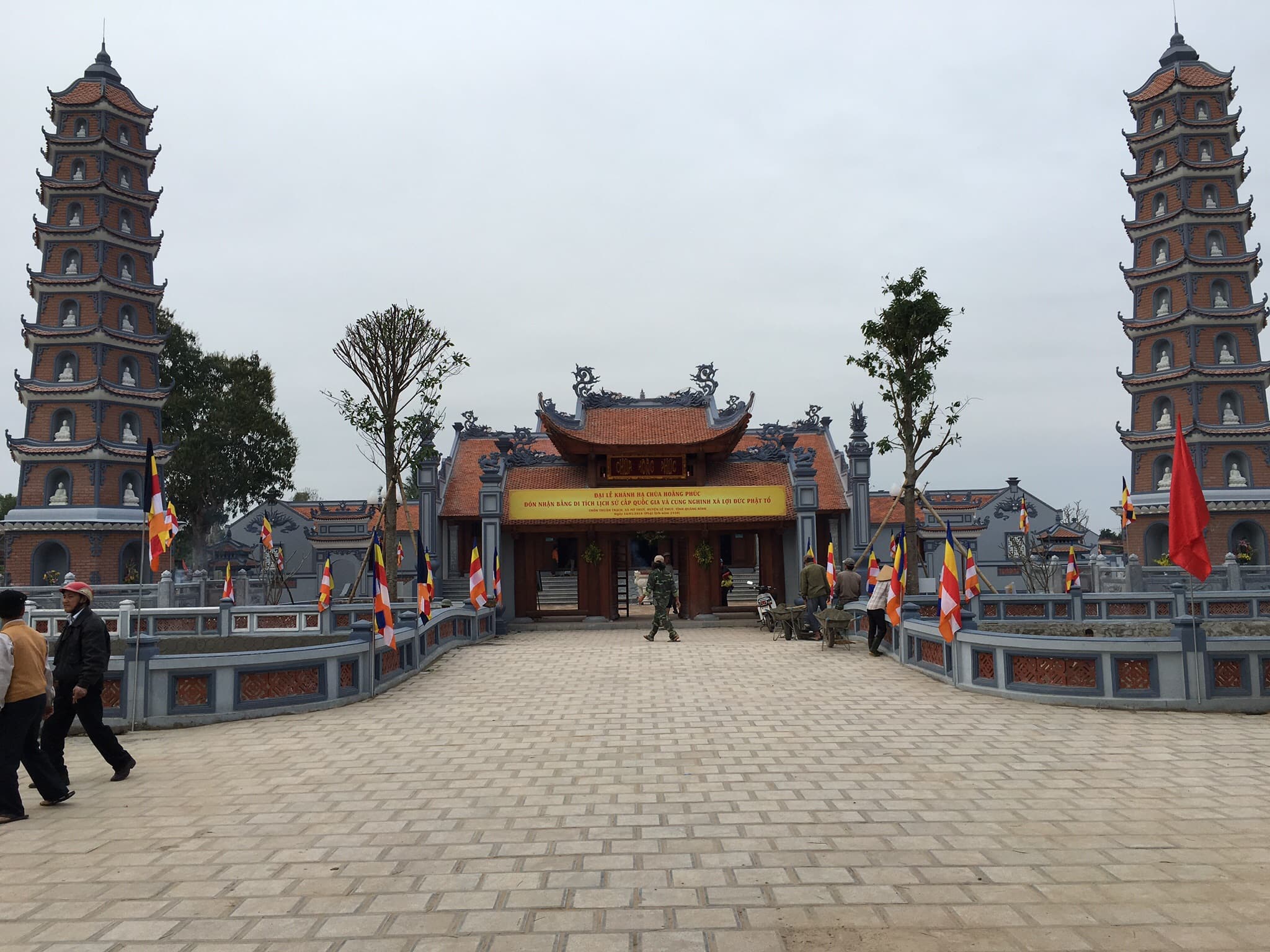
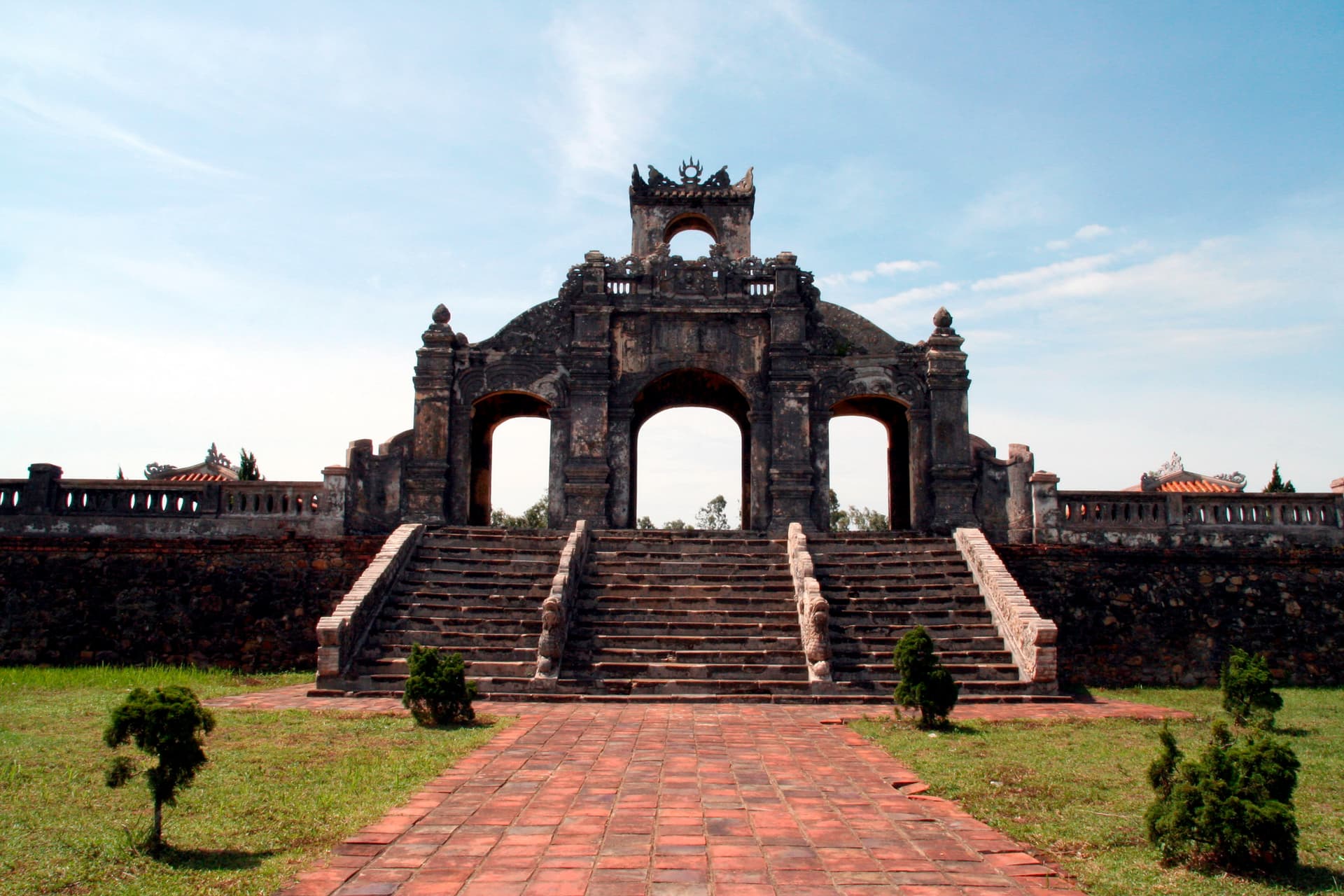
Hoằng Phúc Pagoda in Lệ Thủy, Quảng Bình, Vietnam. Image source · CC BY-SA 4.0
Visit essentials
A quick read before you go
- Duration
- Allow enough time for both current worship and the pagoda's history of renewal.
- Access
- The strong Places record supplies the Lệ Thủy-area identity and a phone number.
Overview
Hoằng Phúc's restoration makes time visible without pretending every surface survived unchanged: sacred continuity lies in a religious community's decision to return, rebuild, teach, worship, and remember after loss. The older name Kính Thiên Tự carries that longer memory, while current halls support prayer, offerings, and renewed Buddhist life. Destruction should neither be romanticized as necessary for spiritual depth nor reconstruction dismissed as inauthentic. Śākyamuni remains the devotional center, giving the revived compound purpose beyond commemoration.
Research supports long institutional memory but not every chronological detail, so unsupported dates remain absent.
Why this place is sacred
Hoằng Phúc's threshold lies between material newness and inherited memory. Worship activates restored spaces, while remembered destruction prevents the architecture from appearing timeless. Incense, bells, and repeated return can create continuity, but they do not erase loss. Sacredness is carried by community commitment rather than the age of every component.
The institution serves Vietnamese Mahayana worship and devotion to Śākyamuni Buddha.
Repeated destruction and renewal have produced a restored active pagoda that still carries its earlier name and memory.
Experience and orientation
Avoid measuring authenticity by how old a wall appears. Begin with the active Buddha hall and notice where historical interpretation is placed in relation to worship. The rebuilt compound may feel orderly and complete, yet memorial awareness asks for attention to absences as well as present form. Give all current rites the priority of a living institution.
Distinguish worship halls, historical or commemorative features, restored public areas, and resident spaces.
Context and lineage
The sources support the precise pagoda, its long memory, repeated destruction, restoration, and contemporary worship. They do not authorize a fully detailed chronology in this pass. No UNESCO World Heritage status is claimed.
Vietnamese Mahayana Buddhism connects the earlier institution to present worship after renewal.
Śākyamuni Buddha
principal devotional focus of the restored pagoda
Traditions and practice
Devotees may bow, chant, light incense, present offerings, and remember the institution's endurance. Visitors should use the restored spaces according to current pagoda guidance rather than trying to locate an imagined untouched original.
Active worship and community care continue alongside historical remembrance and conservation.
Choose one restored feature and consider what communal labor was required to return it to religious use.
Vietnamese Mahayana Buddhism
ActiveHoằng Phúc carries Buddhist worship through a long institutional memory of destruction and renewal.
Bows, chanting, incense, offerings, remembrance, and community stewardship follow pagoda guidance.
Perspectives and open questions
Restoration ethics, institutional memory, living Mahayana practice, loss, and community labor frame the site.
Scholarly perspective
Conservation study can distinguish original, restored, and reconstructed fabric without declaring religious continuity false. Institutions survive through people, names, practices, and memory as well as material.
Living and traditional perspectives
Present worship understands the pagoda as a living Buddhist place whose continuity has endured repeated rupture.
Open questions
No miraculous survival or supernatural protection is asserted by the reviewed research.
Plan your visit
Access and arrival
The strong Places record supplies the Lệ Thủy-area identity and a phone number. Reconfirm current hours and entry before travel.
Use licensed regional lodging; no public stay is represented at Hoằng Phúc.
Respectful visit
Wear modest clothing and follow footwear rules inside halls.
Ask before photographing worship, ceremonies, or protected historical material.
Use accepted altar or donation points only.
Altars, monastic rooms, conserved fragments, and closed restoration areas remain protected.
Do not call reconstruction fake, embellish destruction stories, or treat renewal as proof of supernatural protection.
Current practical details
Address
5RX6+7JM Chợ, Tân Mỹ, Quảng Trị, Vietnam
Phone
Hours
Hours, fees, and access can change — verify on the official source before you travel. Practical details last checked Jul 2026.
Location
Map loads as you approach this section.
Pilgrim reflections
A portrait of encounter, not a score
Pilgrims describe what they felt, how present they could become, and whether the place would shape a journey. There are no stars and no ranking of traditions.
No reviewed reflections yet
The first pilgrims can help describe the character of being here.
Share a reflection
Available after an account-backed “Been there.” Every reflection is reviewed before publication.
Nearby sacred places
Explore other sacred places in the region. Proximity does not establish access or travel time; check each place’s guidance.
References
Sources consulted for this page. Source categories describe the publication, not a guarantee that every claim is verified. Traditional accounts and outside interpretations may differ.
- 01Ngôi chùa được nhiều vua, chúa viếng thăm nhiều nhất miền Trung — Quảng Bình tourism portalofficialExact provincial tourism record for Hoằng Phúc identity, Buddhist history, pilgrimage, and the Śākyamuni relic installed in 2016.
- 02Ngôi chùa 700 tuổi ở Quảng Bình — Giáo hội Phật giáo Việt NamspiritualExact Buddhist-authority feature corroborating the temple's history, Śākyamuni relic, national monument status, prayer visitation, and annual festival.
- 03National Assembly approves provincial-level administrative reorganization — Government of Viet NamofficialAuthoritative 2025 successor-province and municipality boundaries.
- 04Chùa Hoằng Phúc — Google PlacesofficialStrong exact-entity practical metadata from the authoritative current preflight.
- 05Hoằng Phúc Temple — Wikipedia — Wikipedia contributorsacademicCorroborates identity, location, and basic historical context; key claims are framed conservatively.
Share a photo
Help visitors recognize Hoằng Phúc Pagoda. Every submission is reviewed before publication.