Sri Maha Mariamman Temple
Mariamman's gopuram opens a living Tamil Hindu sanctuary in Silom
Understand sacred places, explore living traditions, and learn how to engage respectfully with Pilgrim Map.
Access has not been verified. Check current local guidance before planning a visit.
Bangkok, Bangkok, Thailand
Read the sources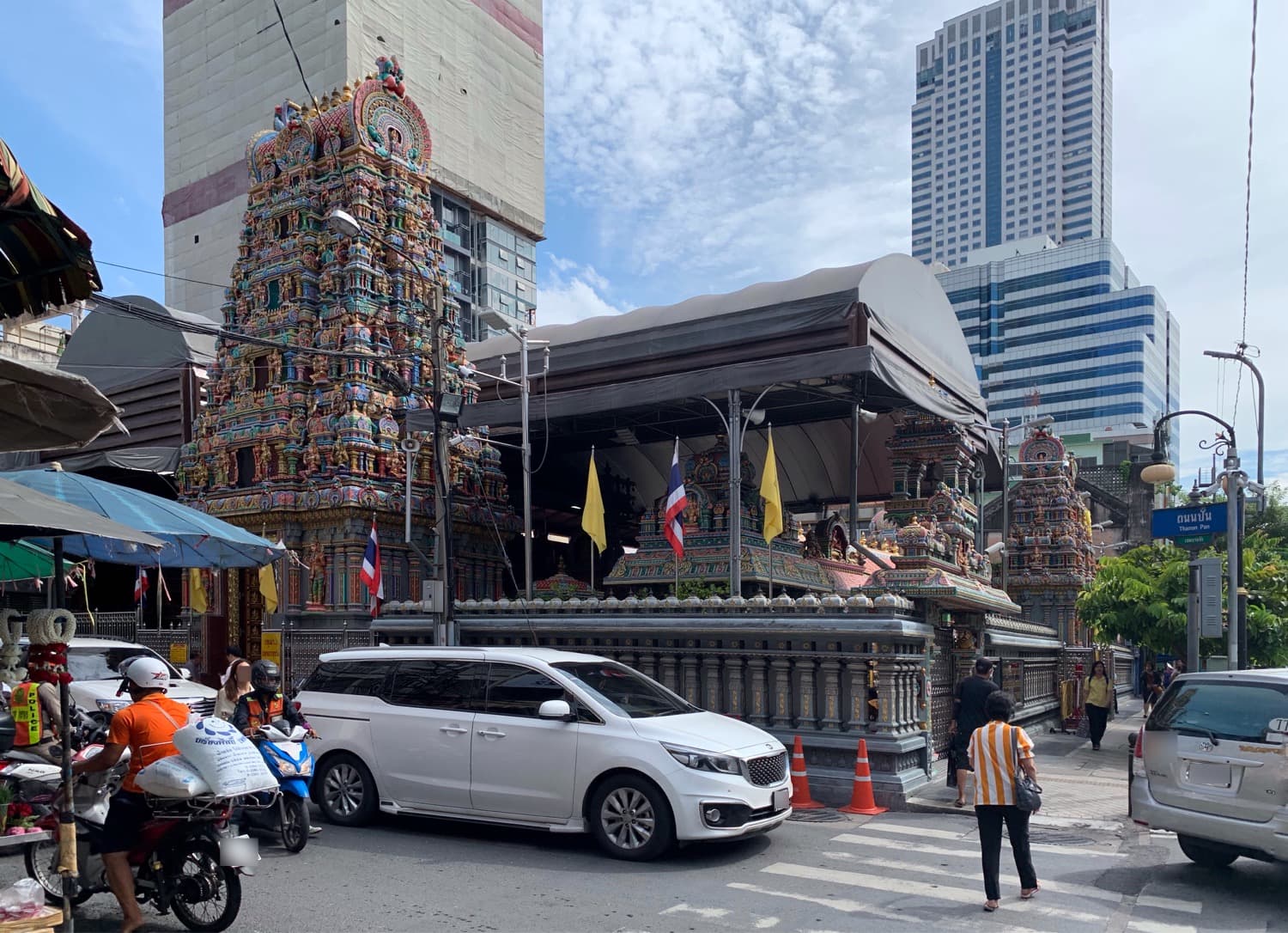
Sri Maha Mariamman Temple in Bangkok, Bangkok, Thailand. Image source · CC BY-SA 4.0
Visit essentials
A quick read before you go
- Etiquette
- Interior photography restrictions, purity expectations, and priestly directions must be learned…
Overview
The gopuram compresses a world of deities above the Silom street, signaling that this temple speaks through South Indian Hindu forms. Inside, attention turns from the crowded tower to living puja. Mariamman, associated within Tamil tradition with protection and well-being, occupies the central devotional place, while other shrines support distinct relationships and sequences. Priests, bells, lamps, Sanskrit or Tamil liturgy, flowers, fruit, and devotees moving for darshan create a rhythm different from a Thai Buddhist wat.
Bangkok's wider religious landscape has made room for this sanctuary for more than a century. The temple is not a colorful exception to the city; it is an institution through which Tamil Hindu community life, public festival, and individual devotion continue.
Why this place is sacred
Darshan—the reciprocal act of seeing and being seen by a deity—helps explain why the interior cannot be approached as decorative sculpture. The images are ritually present within Hindu practice, and puja organizes offerings, flame, sound, and movement around that presence. Mariamman's importance should not be flattened into one promise of health or luck. Devotees address the goddess within inherited narratives, family traditions, and festival cycles. The temple also gathers multiple deities without making them interchangeable.
Each shrine has its own focus and protocol. Sacredness here is relational and enacted: priests maintain worship, communities bring offerings, processions extend the temple into the streets, and visitors accept boundaries on access and photography.
Experience and orientation
Read the entrance instructions before crossing the threshold. Remove footwear where directed and keep socks, bags, and offerings within the temple's current system. Interior photography is commonly restricted; assume nothing and ask. During puja, stand outside the working space and do not interrupt a priest to request explanation. Observe how devotees approach each shrine rather than copying gestures out of sequence. The gopuram rewards exterior study, but the interior asks for less visual possession.
Festival periods, especially Navaratri-related celebrations, can fill Silom with processions and dense crowds. Current dates and route controls must be checked with the temple.
Context and lineage
Tamil migrants established the temple in the late nineteenth century as Bangkok's Indian community grew through trade and settlement. Its South Indian architectural language, priestly traditions, deity ensemble, and festival calendar made a durable communal center beyond the subcontinent. The popular Thai name Wat Khaek reflects an older local term for people of South Asian origin; the formal temple name better respects its own identity.
Over time, worship attracted both Hindu devotees and Thai visitors, but broader popularity did not convert the sanctuary into a generic spirit shrine. Renovation and urban growth altered its surroundings while puja, festivals, and community patronage maintained continuity.
Traditions and practice
Puja may include lamps, incense, flowers, fruit, coconuts, chanting, and receiving blessed substances or food according to temple practice. Mariamman is principal, while Ganesha and other deities receive distinct offerings. Guests should buy or present only items accepted by the priests and should never place an object directly on an altar without instruction. A respectful non-Hindu can stand quietly for darshan and follow the movement of the congregation without claiming ritual knowledge.
During processions, keep the route clear and avoid touching portable images or priestly objects. Promises of guaranteed healing, fertility, or prosperity exceed the evidence even when devotees sincerely seek such blessings.
Hindu devotion
ActiveTamil Hindu practice gives Mariamman, the associated deities, puja, offerings, and procession their coherent sacred context.
Perspectives and open questions
Mariamman's protective and healing associations are devotional claims within Hindu tradition, not clinical or independently verified effects.
Scholarly perspective
Tamil Hindu understanding gives the temple its primary vocabulary: goddess, darshan, puja, festival, priesthood, and community. Migration history shows how those forms rooted themselves in Bangkok and became part of the city's religious life. Art history can interpret the gopuram and deity imagery, but should not detach them from worship. Thai participation adds a cross-cultural layer that deserves description without absorbing Mariamman into Buddhism or spirit worship. Popular accounts often emphasize wishes fulfilled at the temple.
Such reports are devotional testimony, not independently verified effects. The most defensible claim is visible: a minority religious community built an institution capable of sustaining worship, public procession, and intercommunity recognition across generations.
Plan your visit
Navaratri and other festival days produce processions and dense crowds extending well beyond the temple gateway.
Respectful visit
Interior photography restrictions, purity expectations, and priestly directions must be learned at the entrance and followed exactly.
Current practical details
Address
2 Thanon Pan, Khwaeng Bang Rak, Khet Bang Rak, Krung Thep Maha Nakhon 10500, Thailand
Phone
Hours
Hours, fees, and access can change — verify on the official source before you travel. Practical details last checked Jul 2026.
Location
Map loads as you approach this section.
Pilgrim reflections
A portrait of encounter, not a score
Pilgrims describe what they felt, how present they could become, and whether the place would shape a journey. There are no stars and no ranking of traditions.
No reviewed reflections yet
The first pilgrims can help describe the character of being here.
Share a reflection
Available after an account-backed “Been there.” Every reflection is reviewed before publication.
Nearby sacred places
Explore other sacred places in the region. Proximity does not establish access or travel time; check each place’s guidance.

References
Sources consulted for this page. Source categories describe the publication, not a guarantee that every claim is verified. Traditional accounts and outside interpretations may differ.
- 01Bangkok — official destination overview — Tourism Authority of ThailandofficialOfficial overview identifying Bangkok's principal religious and historical sites.
- 02Sri Maha Mariamman Temple — Tourism Authority of ThailandofficialOfficial identity and visitor record for the exact Silom Hindu temple.
- 03Sri Maha Mariamman Temple, Bangkok — Wikipedia — Wikipedia contributorsacademicCorroborates identity, location, and basic historical context; key claims require higher-tier corroboration.
- 04Q6761807 — Wikidata — Wikidata contributorsacademicStructured identity and coordinate corroboration; not used alone for spiritual or historical claims.
- 05Sri Maha Mariamman Temple (Wat Khaek) — Google Maps — Google PlacesSource contextStrong name, country, locality, and coordinate match; used only for practical visitor data and identity corroboration.
Share a photo
Help visitors recognize Sri Maha Mariamman Temple. Every submission is reviewed before publication.