Phra Trimurti Shrine
Urban devotees address a Thai Trimurti image through prayers for love
Understand sacred places, explore living traditions, and learn how to engage respectfully with Pilgrim Map.
Access has not been verified. Check current local guidance before planning a visit.
Bangkok, Bangkok, Thailand
Read the sources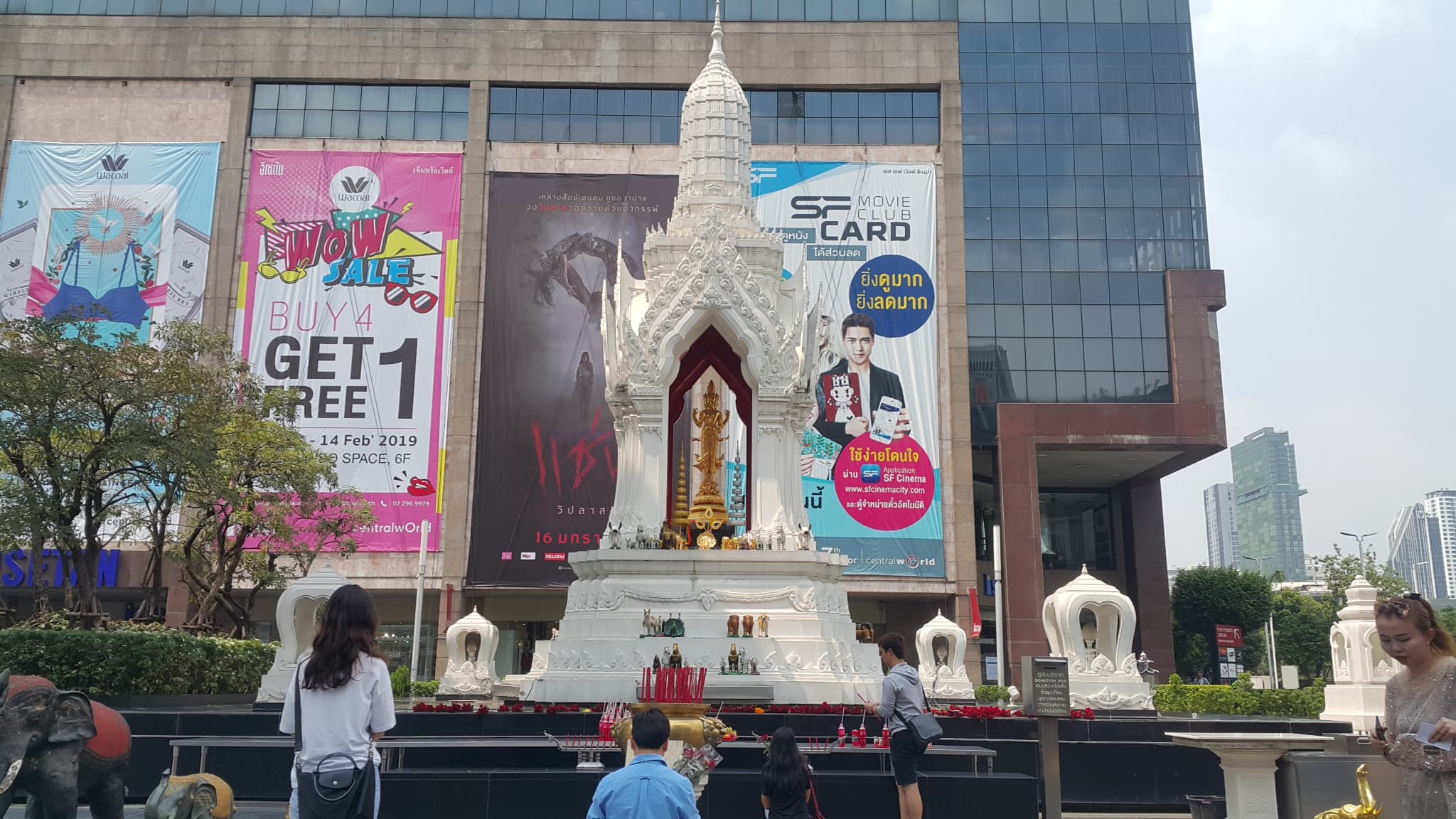
Phra Trimurti Shrine in Bangkok, Bangkok, Thailand. Image source · CC BY-SA 4.0
Visit essentials
A quick read before you go
- Etiquette
- Keep flames controlled, walkways open, and identifiable worshippers outside photographs without…
Overview
The shrine stands in a highly commercial public space, yet worship is not merely decorative. Devotees approach the four-faced, eight-armed form with red flowers, candles, incense, and concentrated petitions. Thai reception of Trimurti does not map neatly onto every Hindu theological account of the three deities; the local image and its love-centered cult should be described in its Bangkok context. Sacred significance comes from repeated address, offering, and the conviction of worshippers that the deity can hear their concerns.
The page neither dismisses that devotion nor presents the requested result as a service the shrine guarantees.
Why this place is sacred
Evening crowds, red offerings, and synchronized prayer create a striking threshold between shopping district and sacred encounter. Popular articles and reviews repeatedly call the shrine a place to ask for love, and official government guidance describes the offerings used. That prevalence justifies reporting the claim. It does not verify that the statue causes a relationship, repairs one, or favors a particular schedule.
The careful formulation is that devotees make these petitions and some users report meaningful outcomes; causation and supernatural efficacy remain unverified personal or community claims.
Experience and orientation
Pause before entering the offering area and watch the direction of movement. Purchase only permitted offerings, keep flames in managed holders, and do not crowd someone who is praying intensely. The shrine may be busiest in the evening and on days promoted through popular custom; current access should come from posted management notices and the strong Places listing. Photograph the image without making worshippers identifiable unless they consent.
A respectful observer can notice the sequence of wai, incense, flowers, and petition without reproducing a formula as if it were a guaranteed romantic technique.
Context and lineage
The current CentralWorld shrine belongs to Bangkok's Ratchaprasong network of modern Hindu and Brahmanical images in commercial space. Exact construction and relocation details are not sufficiently established by the reviewed official bundle, so the guide does not invent a founding story. What is well documented is contemporary public recognition: Thai government and Tourism Authority pages identify the image, its association with Brahma, Vishnu, and Shiva, and the strong pattern of love petitions.
This is not a UNESCO site, a natural sacred place, or an ancient archaeological sanctuary.
Traditions and practice
Official accounts describe nine red incense sticks, paired red candles, and red roses as a common offering pattern. Visitors should treat that as a documented custom, not a transaction producing a partner. Follow fire restrictions and on-site instructions; never leave wax or flowers outside designated areas. People of other traditions may observe without pretending initiation into Hindu practice. Avoid blocking the pavement or treating a worshipper's emotional petition as entertainment.
If asking for love, frame the act as personal prayer while recognizing that consent, relationships, and wellbeing cannot be secured by ritual certainty.
Thai Hindu and Brahmanical popular devotion
ActiveThai Hindu and Brahmanical devotion addresses Phra Trimurti through prayer and offerings.
Perspectives and open questions
Thai popular devotion, broader Hindu theology, urban religion, and user testimony require separate labels.
Scholarly perspective
Local devotees understand Phra Trimurti as a deity responsive to petitions, especially about love. Hindu studies distinguishes the broader Trimurti concept from this specific Thai icon and devotional practice. Urban studies reads the shrine as sacred space sustained inside a retail district. Media and user reviews amplify success stories, producing a modern reputation that may exceed the documentary history of the image. This page labels the reputation plainly as reported belief.
No source establishes a measurable energy, a guaranteed Thursday-night effect, or supernatural causation.
Plan your visit
Strong Places confirms the exact shrine and hours; no official website candidate was returned.
Respectful visit
Keep flames controlled, walkways open, and identifiable worshippers outside photographs without consent.
Current practical details
Address
89 ถ. ราชประสงค์ Khwaeng Lumphini, Pathum Wan, Krung Thep Maha Nakhon 10330, Thailand
Hours
Hours, fees, and access can change — verify on the official source before you travel. Practical details last checked Jul 2026.
Location
Map loads as you approach this section.
Pilgrim reflections
A portrait of encounter, not a score
Pilgrims describe what they felt, how present they could become, and whether the place would shape a journey. There are no stars and no ranking of traditions.
No reviewed reflections yet
The first pilgrims can help describe the character of being here.
Share a reflection
Available after an account-backed “Been there.” Every reflection is reviewed before publication.
Nearby sacred places
Explore other sacred places in the region. Proximity does not establish access or travel time; check each place’s guidance.

References
Sources consulted for this page. Source categories describe the publication, not a guarantee that every claim is verified. Traditional accounts and outside interpretations may differ.
- 01Trimurti Shrine and Ganesha Shrine — Tourism Authority of Thailand, JapanofficialExact paired shrines, identity, location, and contemporary devotional reputation.
- 02Ten places where singles pay homage: Phra Trimurti — Royal Thai GovernmentofficialGovernment account of love petitions and common offerings; efficacy remains a belief claim.
- 03Phra Trimurti Shrine — Google Maps — Google PlacesSource contextStrong name, country, locality, and type match; used only for identity and practical visitor fields.
Share a photo
Help visitors recognize Phra Trimurti Shrine. Every submission is reviewed before publication.