Sosu Seowon
Korea’s first seowon, where study remains joined to memorial rite
Understand sacred places, explore living traditions, and learn how to engage respectfully with Pilgrim Map.
Access has not been verified. Check current local guidance before planning a visit.
Yeongju, Gyeongsangbuk-do, South Korea
Read the sources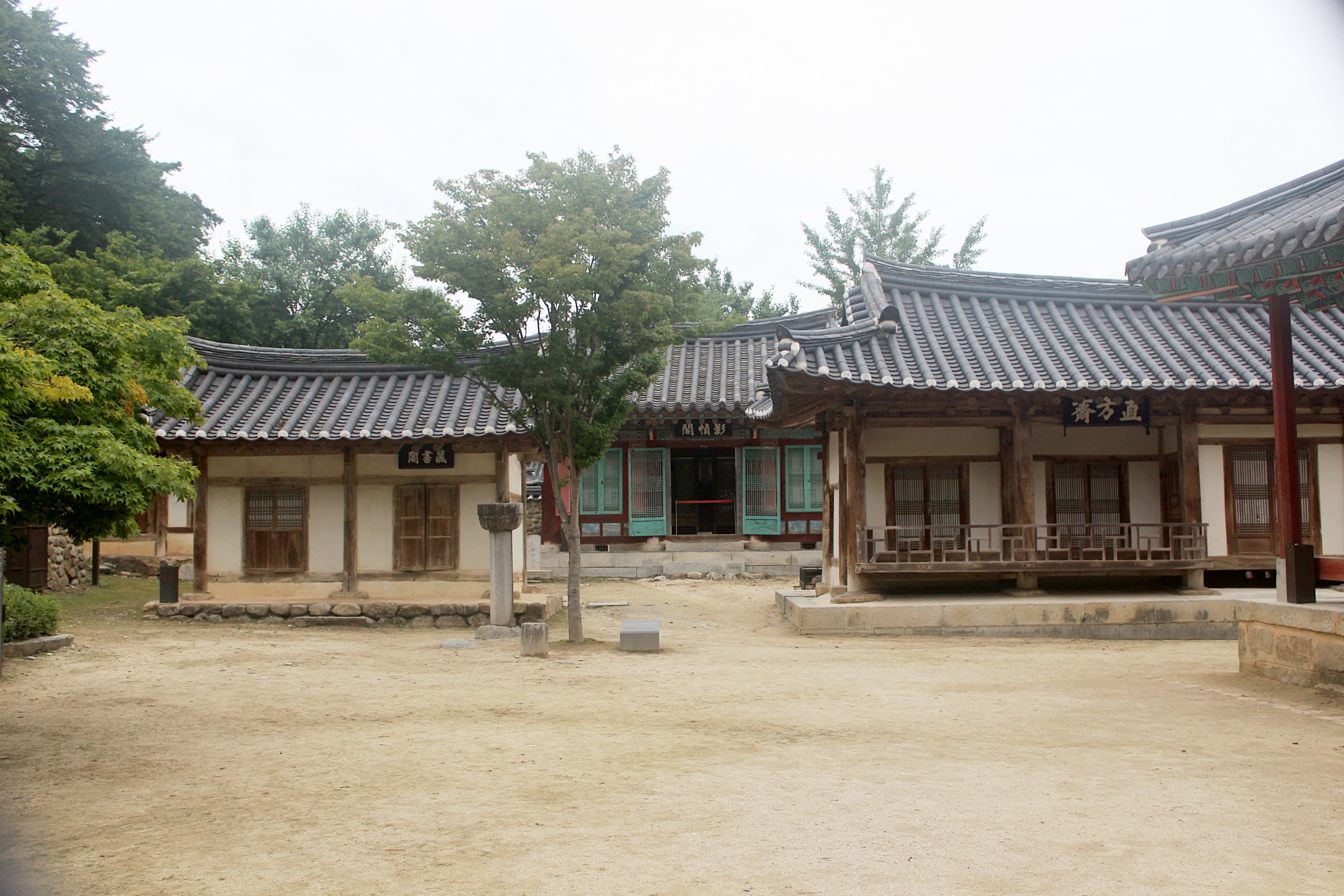
Sosu Seowon in Yeongju, North Gyeongsang, South Korea. Image source · CC BY-SA 4.0
Visit essentials
A quick read before you go
- Duration
- Allow a calm, condition-aware visit.
- Access
- Prepare for the exact route described above.
Overview
The exact Yeongju chronology begins with magistrate Ju Se-bung building a shrine for An Hyang in 1542 on the former Suksusa Buddhist temple site, followed by the academy in 1543. Yi Hwang later petitioned for royal recognition, and King Myeongjong granted the name Sosu and material support. Stone flagpole supports from Suksusa remain nearby. They document an earlier religious landscape without turning the Confucian academy into a Buddhist institution or implying an unbroken ritual continuity between the two.
Why this place is sacred
Munseonggongmyo enshrines An Hyang, An Chuk, An Bo, and Ju Se-bung. The integrated seowon authority describes an unusually old surviving ritual manual and the singing of Dodonggok during cup offerings, honoring An Hyang’s role in transmitting Neo-Confucian learning. Current heritage interpretation places memorial rites in March and September. These are continuing rites for meritorious scholars, not tourism performances and not worship of a generic deity.
Visitors should preserve the distinction between Confucian veneration, ancestry, ethical exemplarity, and the devotional categories of other religions.
Original function follows the cited authorities.
Material continuity is not presumed.
Experience and orientation
Sosu predates the standardized front-learning, rear-shrine arrangement seen at many later academies. Its teaching zone lies east of the veneration zone, with Jukgye Stream and pines shaping movement around the precinct. UNESCO treats interaction with landscape as one of the seowon’s essential functions: scenery supported attention, poetry, rest, and cultivation of mind and body.
The stream and trees are therefore historically meaningful settings, but the academy is not classified as a natural World Heritage property and no evidence shows that the landscape produces a measurable spiritual force.
Use the verified public approach.
Context and lineage
A reflective visit can begin by comparing Ganghakdang, where discussion occurred, with Munseonggongmyo, where learning was answered by remembrance. Notice how the route changes from public instruction to a more restricted ritual focus. Ask what it means for scholarship to carry obligations toward teachers, community, and future students. This practice does not require copying a bow or entering a closed shrine; attentive reading and restraint are more faithful than inventing a personal ceremony.
Korean Neo-Confucianism
Traditions and practice
Treat the precinct as an active heritage and ritual place. Keep voices low near the shrine, do not obstruct an officiant or organized group, and never cross a barrier to improve a photograph. Do not touch tablets, plaques, books, ritual vessels, painted surfaces, or old timber. Ask before photographing rites or identifiable participants. The former temple remains deserve the same conservation care.
Food, incense, ribbons, coins, and written petitions should not be left unless the custodian explicitly provides an authorized place.
Current use remains custodian-led.
Attend quietly before drawing conclusions.
Korean Neo-Confucianism
ActiveSacred meaning follows the documented local tradition.
Practice remains governed by present custodians.
Perspectives and open questions
Several disciplines illuminate this sacred place.
Scholarly perspective
Sosu can be interpreted through educational history, ritual studies, architecture, documentary heritage, and the transformation of a former temple landscape. Those approaches should converge around sourced practice rather than a vague claim that the grounds are spiritually powerful. No prevalent metaphysical effect met the evidence threshold. The strongest spiritual claim is institutional and observable: the academy continues to connect disciplined study with the veneration of named scholars whose lives were treated as ethical instruction.
Sosu’s status as the first royally chartered seowon should not be confused with being the oldest surviving Confucian structure in Korea. The claim concerns an institutional development in which local literati, royal recognition, education, and shrine practice came together. Future updates should preserve that narrow meaning and should use the Yeongju custodian for changing visitor information.
Living and traditional perspectives
Community meanings retain their own authority.
Open questions
Unsupported effects remain explicitly unverified.
Plan your visit
Access and arrival
Prepare for the exact route described above.
No lodging claim was researched.
Respectful visit
Dress for dignity and terrain.
Ask before recording people or ritual.
Use authorized channels only.
Obey every closure and barrier.
Do not invent or imitate rites.
Current practical details
Address
2740 Sobaek-ro, Sunheung-myeon, Yeongju, Gyeongsangbuk-do, South Korea
Phone
Hours
Hours, fees, and access can change — verify on the official source before you travel. Practical details last checked Jul 2026.
Location
Map loads as you approach this section.
Pilgrim reflections
A portrait of encounter, not a score
Pilgrims describe what they felt, how present they could become, and whether the place would shape a journey. There are no stars and no ranking of traditions.
No reviewed reflections yet
The first pilgrims can help describe the character of being here.
Share a reflection
Available after an account-backed “Been there.” Every reflection is reviewed before publication.
Nearby sacred places
Explore other sacred places in the region. Proximity does not establish access or travel time; check each place’s guidance.


References
Sources consulted for this page. Source categories describe the publication, not a guarantee that every claim is verified. Traditional accounts and outside interpretations may differ.
- 01Seowon, Korean Neo-Confucian Academies — UNESCO World Heritage CentreofficialSerial-property scope, essential functions of learning and veneration, landscape interaction, inscription year, and component list.
- 02Seowon, Korean Neo-Confucian Academies — nomination dossier — Republic of Korea / UNESCO World Heritage CentreofficialExact component history, spatial organization, shrine, documentary heritage, and memorial-rite context.
- 03Sosuseowon — World Heritage Integrated Management Center for Korean SeowonofficialExact venerated individuals, ritual procedure, teaching spaces, Jukgye setting, and continuing veneration.
- 04Sosu Seowon official site — Yeongju CityofficialExact custodian page for address, buildings, founding chronology, heritage status, contact, and official-domain provenance.
- 05The Road of Seowon — Sosu Seowon — Korea Heritage AgencyofficialExact current visiting seasons, memorial months, target An Hyang, and route details.
- 06Sosuseowon Confucian Academy — Google Maps place record — GoogleSource contextExact strong identity and current address, coordinates, telephone, hours, website candidate, and operational status.
Share a photo
Help visitors recognize Sosu Seowon. Every submission is reviewed before publication.