Bongjeongsa Temple
Old timber, living prayer, and an unfinished historical record
Understand sacred places, explore living traditions, and learn how to engage respectfully with Pilgrim Map.
Access has not been verified. Check current local guidance before planning a visit.
Andong, Gyeongsangbuk-do, South Korea
Read the sources
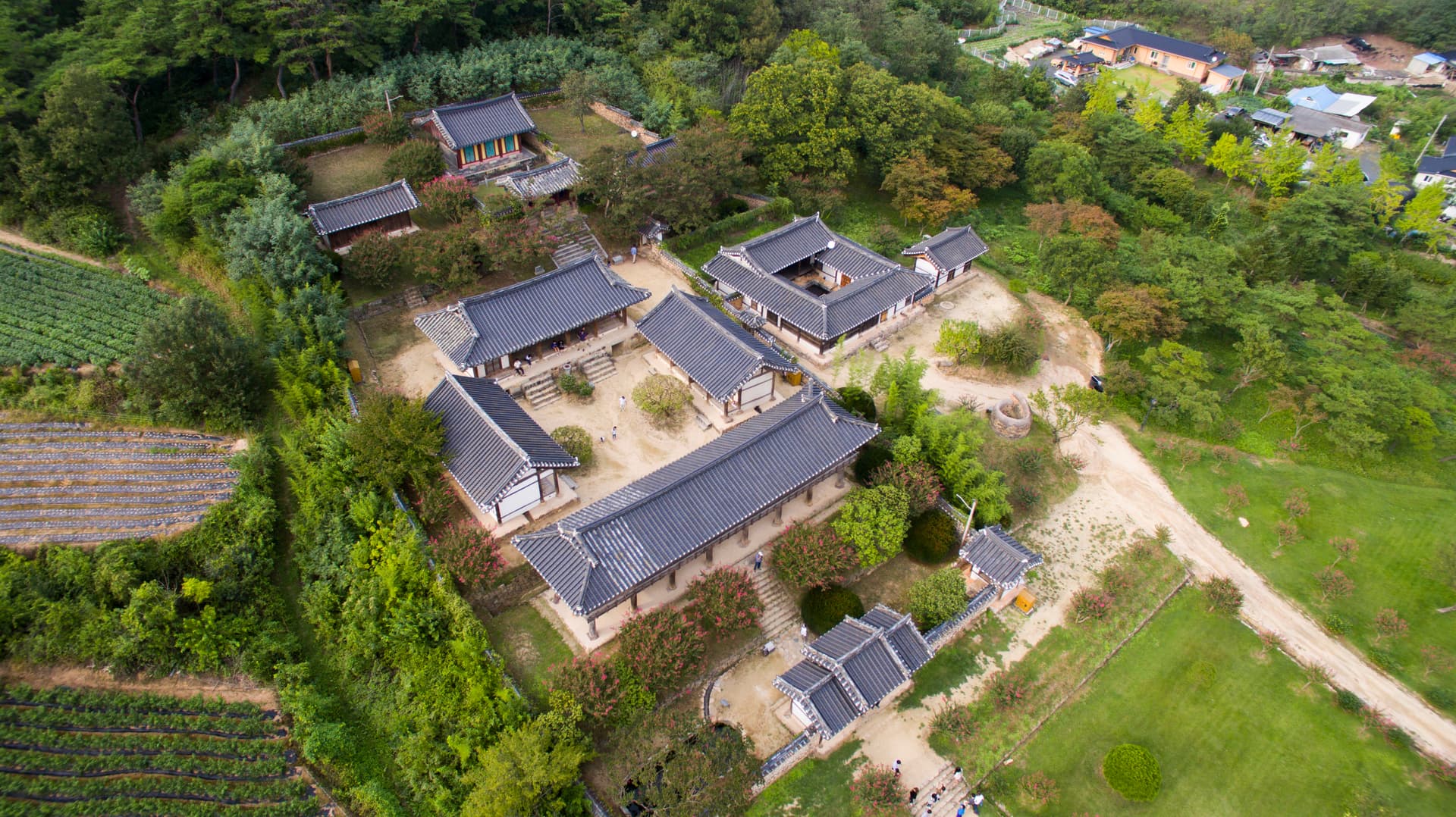
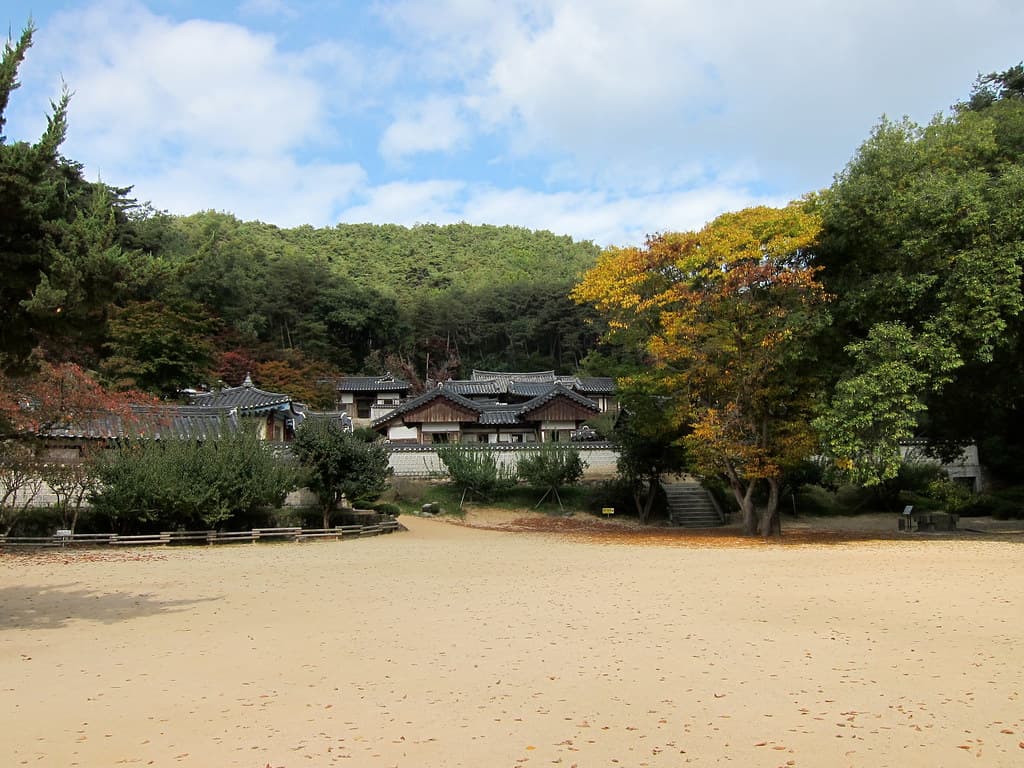
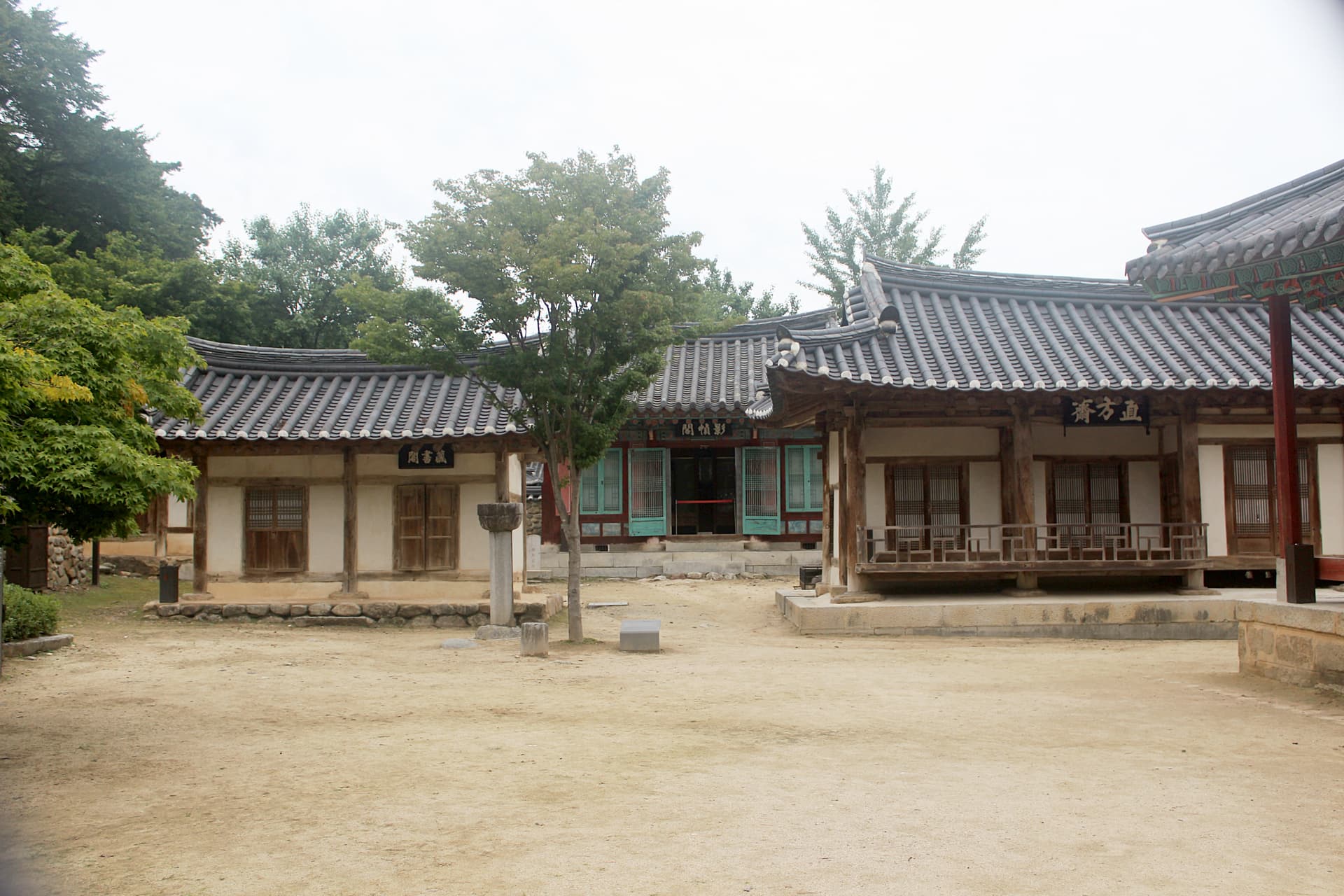
Bongjeongsa Temple in Andong, North Gyeongsang, South Korea. Image source · CC BY-SA 3.0
Visit essentials
A quick read before you go
- Duration
- Allow about ninety minutes for an unhurried circuit, longer if combining the visit with Andong’s…
- Access
- The strong matched record gives 222 Bongjeongsa-gil, Seohu-myeon, Andong.
Overview
Bongjeongsa asks the visitor to look closely at survival. Geungnakjeon has endured through repair rather than through untouched permanence, and the documentary record recovered during modern work makes that distinction visible. Nearby halls, painted surfaces, sculpture, stone, and the enclosing slope create a small but layered monastery. Worship does not occur beside the heritage as a separate activity; it is part of the continuity for which the Sansa monasteries were recognized.
The most honest way to meet this place is therefore to hold two forms of attention together: respect for a community at prayer and patience with a building whose full early history cannot be reconstructed.
Why this place is sacred
The precinct’s sacred meaning gathers around inhabited age. Timber members show that preservation is an active process, while the altar and devotional images show that the halls have never been merely technical achievements. Korean Buddhist practice gives direction to the architecture: thresholds regulate approach, floors establish bodily posture, and the sequence of courts shifts a guest from movement toward stillness. UNESCO identifies Bongjeongsa as one of seven mountain monasteries that continue as centers of faith and daily practice.
That recognition should not be translated into a vague promise of transformation. It supports a narrower insight: centuries of repair, prayer, and custodianship can make disciplined care perceptible in material form.
The monastery was established for Buddhist practice; the two traditional foundation attributions should remain distinct rather than forced into one certainty.
Loss of documents during the Korean War and evidence uncovered in later repairs mean that Bongjeongsa’s history is read through surviving fabric as well as written tradition.
Experience and orientation
Approach without treating the oldest hall as a trophy to collect. From the permitted viewing area, notice how its timber frame meets the stone platform, how the roof weight settles across brackets, and how little spectacle is required to command attention. Then compare that restraint with the larger Daeungjeon and the rest of the precinct. The surrounding mountain is never far away, yet the encounter is architectural rather than panoramic.
If worship is underway, wait outside and listen rather than pressing forward. The quietest observation may be the most revealing: repaired wood remains useful because generations continued to assign the building a sacred purpose.
Read the on-site notices first, distinguish worship space from circulation space, and give monastics and devotees priority at every doorway.
Context and lineage
Korea Tourism Organization presents two inherited accounts: one says the monk Uisang founded the temple in 672; another credits his disciple Neungin. Much of the early documentation was lost during the Korean War, so neither account should be presented as conclusively settled. A firmer point came in 1972, when work on Geungnakjeon revealed records stating that the hall had been repaired in 1363.
The inscription established that the structure was already standing by then and underpins its status as the nation’s oldest surviving wooden building.
Bongjeongsa remains within Korean Buddhism and is recognized as a component of UNESCO property 1562, Sansa, Buddhist Mountain Monasteries in Korea.
Traditions and practice
Bowing, chanting, offerings, and silent seated attention belong to the resident tradition, but a guest should not presume that every hall permits participation. Follow the posture and timing indicated by the community.
Heritage care now accompanies religious use. Conservation work, interpretation, and ordinary monastic routines all contribute to the continuity visitors come to see.
Spend several minutes comparing one repaired timber joint with the hall’s devotional axis. Consider how maintenance can itself express fidelity without claiming that every material is original.
Korean Buddhism
ActiveKorean Buddhist practice has kept the mountain monastery religiously active while successive communities repaired its buildings.
Prayer, chanting, offerings, monastic discipline, and the care of halls and sacred images.
Perspectives and open questions
Bongjeongsa can be read simultaneously as monastery, repaired artifact, and record of Korean architectural knowledge.
Scholarly perspective
The 1363 repair inscription is stronger evidence than a simple repetition of a foundation date. Architectural history can establish relative age and construction practice while acknowledging documentary loss.
Living and traditional perspectives
Within Korean Buddhism, the precinct’s importance is not exhausted by the age of Geungnakjeon; the hall remains ordered toward awakening, devotion, and communal continuity.
Open questions
No source in this pass establishes a prevalent paranormal or healing claim, so none is added.
Plan your visit
Access and arrival
The strong matched record gives 222 Bongjeongsa-gil, Seohu-myeon, Andong. KTO lists the temple website and telephone +82-54-853-4181; transport from Andong should be checked in advance.
No lodging claim is made here; consult the temple directly for any current program or stay arrangements.
Respectful visit
Wear clothing suitable for sitting or bowing and for a mountain temple; shoulders and knees should be covered.
Obey hall-specific signs, avoid flash, and never photograph a person at prayer without permission.
Use only the donation or offering arrangements provided by the temple rather than placing objects on an altar.
Closed doors, ropes, and raised thresholds mark real devotional or conservation boundaries.
Do not touch painted or wooden surfaces, step onto closed platforms, or interrupt prayer to obtain an unobstructed photograph.
Current practical details
Address
222 Bongjeongsa-gil, Seohu-myeon, Andong, Gyeongsangbuk-do, South Korea
Phone
Hours
Hours, fees, and access can change — verify on the official source before you travel. Practical details last checked Jul 2026.
Location
Map loads as you approach this section.
Pilgrim reflections
A portrait of encounter, not a score
Pilgrims describe what they felt, how present they could become, and whether the place would shape a journey. There are no stars and no ranking of traditions.
No reviewed reflections yet
The first pilgrims can help describe the character of being here.
Share a reflection
Available after an account-backed “Been there.” Every reflection is reviewed before publication.
Nearby sacred places
Explore other sacred places in the region. Proximity does not establish access or travel time; check each place’s guidance.

References
Sources consulted for this page. Source categories describe the publication, not a guarantee that every claim is verified. Traditional accounts and outside interpretations may differ.
- 01Sansa, Buddhist Mountain Monasteries in Korea — UNESCO World Heritage CentreofficialAuthoritative World Heritage property record, dossier 1562; component scope preserved.
- 02Bongjeongsa Temple — World Heritage nomination dossier — State Party of the Republic of Korea / UNESCOofficialPrimary nomination documentation for UNESCO property 1562, including serial-component identity, mapping, and heritage context.
- 03Bongjeongsa Temple [UNESCO World Heritage] — Korea Tourism OrganizationofficialOfficial tourism record for the competing foundation accounts, Geungnakjeon repair inscription, address, website, and visitor contact.
- 04Bongjeongsa — Wikipedia — Wikipedia contributorsacademicCorroborates identity, location, and general historical context; key claims require higher-tier support.
- 05Bongjeongsa — Wikidata — Wikidata contributorsSource contextCommunity-maintained structured identity and coordinate cross-check; not treated as scholarship or an official custodian record.
- 06Bongjeongsa Temple — Google Maps place record — GoogleSource contextStrong identity match used only for current practical fields and coordinates.
Share a photo
Help visitors recognize Bongjeongsa Temple. Every submission is reviewed before publication.