Dosan Seowon
A scholar’s small room before an academy’s public memory
Understand sacred places, explore living traditions, and learn how to engage respectfully with Pilgrim Map.
Access has not been verified. Check current local guidance before planning a visit.
Andong, Gyeongsangbuk-do, South Korea
Read the sources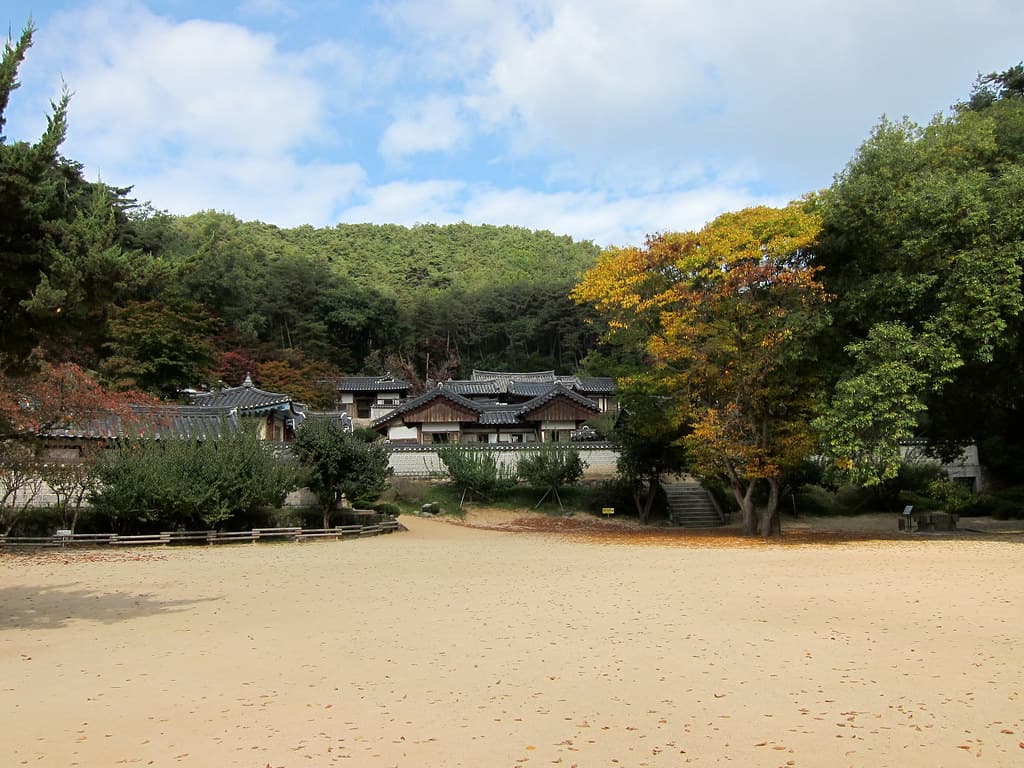
Dosan Seowon in Andong, North Gyeongsang, South Korea. Image source · CC BY 2.0
Visit essentials
A quick read before you go
- Duration
- Allow ninety minutes for both compounds and longer for separate trails or the Sisadan landscape.
- Access
- KTO lists 09:00–18:00 in summer and 09:00–17:00 in winter, year-round opening, admission,…
Overview
The academy is component 1498-004 of UNESCO’s serial Seowon property. KTO records the tablet’s enshrinement in Sangdeoksa in 1572, construction of Jeongyodang in 1574, a royal charter in 1575, and completion in 1576. These dates reveal deliberate memorial formation rather than a single founding moment. Yi Hwang is revered as a teacher and exemplar, not worshipped as a creator deity. The river and hills support the Neo-Confucian practice of learning through attentive relation with the environment.
Landscape appreciation here is disciplined perception, not an assurance that scenery grants wisdom.
Why this place is sacred
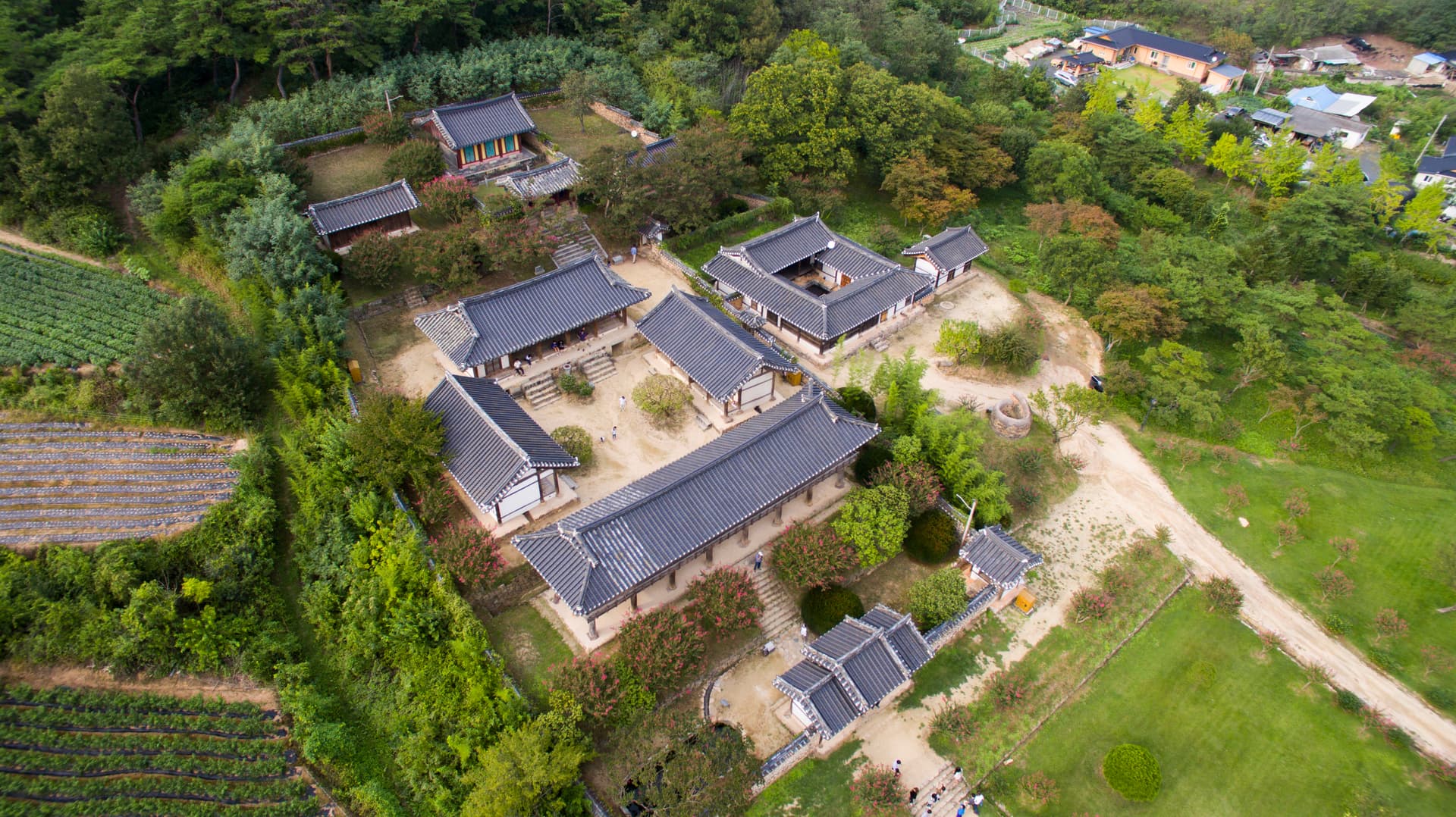
Dosanseodang’s restrained proportions make scholarship bodily: desk, floor, window, garden, and weather limit what the learner can ignore. The later compound adds lecture, dormitory, library, and shrine, transforming one person’s practice into an institution. That expansion creates a productive tension. Monument and royal plaque honor achievement, but Yi Hwang’s original setting warns that reputation cannot substitute for study. UNESCO’s emphasis on learning, veneration, and interaction is visible in this pairing.
No invisible force is required; the ethical question is whether attention remains humble when authority grows.
Yi Hwang made Dosanseodang for rural study and teaching; followers created Dosan Seowon to transmit his work and honor his memory.
Royal charter, regional headquarters status, ritual continuity, visitor interpretation, and World Heritage inscription enlarged its public role.
Experience and orientation
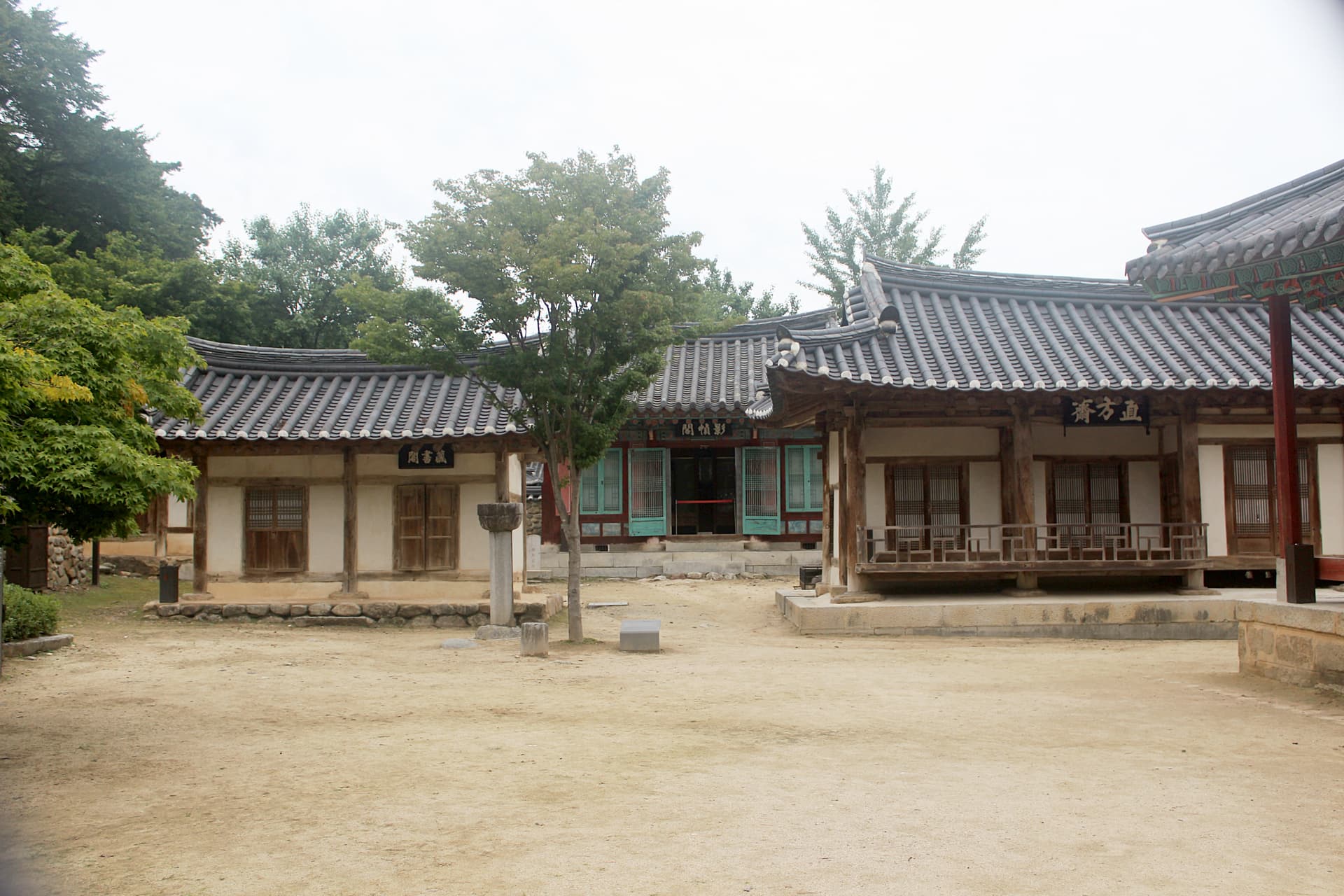
Notice how Dosanseodang uses few elements and close dimensions. Resist judging it by monumentality. Move next toward Jeongyodang and the dormitories, observing how a collective institution requires more formal axes and rank. Sangdeoksa occupies the ritual end and may not be open. Across the water, Sisadan adds a later memory of state examinations and landscape view, but access and water conditions vary. Popular television associations are incidental; do not reenact entertainment scenes in spaces built for study and rites.
Separate Dosanseodang, academy lecture and residence areas, Sangdeoksa, library structures, Sisadan view, and modern visitor facilities.
Context and lineage
KTO states that Yi Hwang personally designed Dosanseodang in 1561. Followers enshrined his tablet in 1572 and built the academy complex, which received its royal charter and calligraphic plaque in 1575 and was completed in 1576. UNESCO lists Dosan as one of nine components, not as an independently inscribed property. The distinction between the scholar’s lifetime compound and the followers’ memorial institution is essential to accurate interpretation.
Dosan belongs to Yi Hwang’s influential Yeongnam Neo-Confucian lineage and the wider sarim academy tradition.
Traditions and practice
Rites in Sangdeoksa honor Yi Hwang through tablet, offerings, and formal roles under custodial authority.
Visitors and students encounter scholarship through heritage interpretation while community custodians protect ritual continuity.
Sit where permitted and formulate one question slowly enough that it becomes more precise before seeking an answer.
Korean Neo-Confucianism
ActiveDosan preserves a central Korean Neo-Confucian lineage where personal study became communal education and rite.
Reading, discussion, teaching, memorial ritual, reflection, archival care, and landscape appreciation.
Perspectives and open questions
Dosan links intellectual biography, institutional history, ritual memory, architecture, and environmental attention.
Scholarly perspective
Dated building phases make it possible to distinguish Yi Hwang’s own decisions from later memorial construction.
Living and traditional perspectives
Veneration asks students to continue a teacher’s moral seriousness rather than merely praise his reputation.
Open questions
No automatic educational or spiritual effect from occupying the scholar’s landscape is asserted.
Plan your visit
Access and arrival
KTO lists 09:00–18:00 in summer and 09:00–17:00 in winter, year-round opening, admission, parking, and Andong’s official site. Google currently shows 09:00–18:00 daily; use the seasonal municipal notice.
No academy lodging is assumed; book regional accommodation separately.
Respectful visit
Wear modest clothing and shoes suitable for steps, timber thresholds, and river weather.
Confirm restrictions for Sangdeoksa, interiors, documents, ceremonies, and people in study programs.
Do not leave personal gifts; memorial rites use formally prepared offerings.
Shrine, tablets, archives, upper floors, closed rooms, and protected riverbank areas require permission.
Do not enter the shrine uninvited, touch tablets or plaques, describe Yi Hwang as a deity, or promise that the landscape improves intelligence.
Current practical details
Address
154 Dosanseowon-gil, Dosan-myeon, Andong, Gyeongsangbuk-do, South Korea
Phone
Hours
Hours, fees, and access can change — verify on the official source before you travel. Practical details last checked Jul 2026.
Location
Map loads as you approach this section.
Pilgrim reflections
A portrait of encounter, not a score
Pilgrims describe what they felt, how present they could become, and whether the place would shape a journey. There are no stars and no ranking of traditions.
No reviewed reflections yet
The first pilgrims can help describe the character of being here.
Share a reflection
Available after an account-backed “Been there.” Every reflection is reviewed before publication.
Nearby sacred places
Explore other sacred places in the region. Proximity does not establish access or travel time; check each place’s guidance.


References
Sources consulted for this page. Source categories describe the publication, not a guarantee that every claim is verified. Traditional accounts and outside interpretations may differ.
- 01Seowon, Korean Neo-Confucian Academies — UNESCO World Heritage CentreofficialAuthoritative World Heritage property record, dossier 1498; component scope preserved.
- 02Dosan Seowon — World Heritage nomination dossier — State Party of the Republic of Korea / UNESCOofficialPrimary nomination documentation for UNESCO property 1498, including serial-component identity, mapping, and heritage context.
- 03Dosanseowon Confucian Academy [UNESCO World Heritage] — Korea Tourism OrganizationofficialOfficial tourism record for Yi Hwang's 1561 Dosanseodang, posthumous academy, 1572 tablet enshrinement, 1575 royal charter, 1576 completion, address, hours, and municipal website.
- 04Dosan Seowon — Wikipedia — Wikipedia contributorsacademicCorroborates identity, location, and general historical context; key claims require higher-tier support.
- 05Dosan Seowon — Wikidata — Wikidata contributorsSource contextCommunity-maintained structured identity and coordinate cross-check; not treated as scholarship or an official custodian record.
- 06Dosan Seowon — Google Maps place record — GoogleSource contextStrong identity match used only for current practical fields and coordinates.
Share a photo
Help visitors recognize Dosan Seowon. Every submission is reviewed before publication.