Pô Sah Inư Towers
Pô Sah Inư: Shaiva towers held in the memory of a princess
Understand sacred places, explore living traditions, and learn how to engage respectfully with Pilgrim Map.
Access has not been verified. Check current local guidance before planning a visit.
Phú Thủy, Lâm Đồng, Vietnam
Read the sources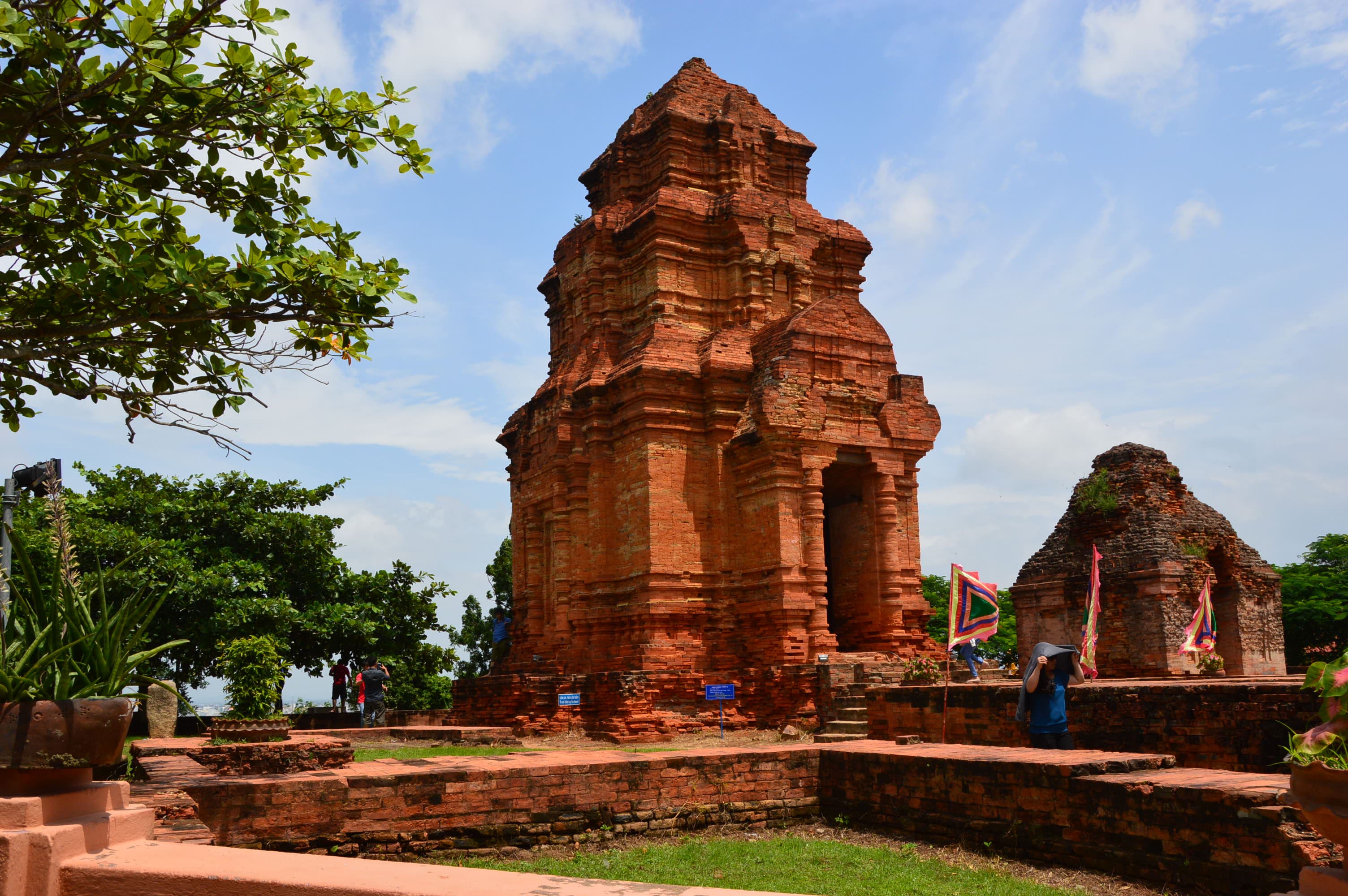
Pô Sah Inư Towers in Phan Thiết, Bình Thuận, Vietnam. Image source · CC BY 3.0
Visit essentials
A quick read before you go
- Duration
- Leave enough time to read the small group as a whole rather than collecting isolated façade…
- Access
- The strong exact Google Places match gives the current address as Tháp Po Sah Inu, Phú Thủy, Lâm…
Overview
The tower group invites two related readings. Its temple form belongs to Cham Hindu religious history and devotion to Śiva, while its present name carries community memory of Pô Sah Inư. These strands should not be forced into a single unsupported foundation account: built form can preserve one history while later generations gather identity around a remembered figure.
Sacred continuity is more than surviving brick; it includes the community's choice to maintain a name, return to a place, and recognize it within religious heritage. Visitors can study tower proportions and enclosure but should first ask where current reverence is directed. A quiet or elevated setting may affect mood, yet no source establishes a universal mystical experience.
Why this place is sacred
Pô Sah Inư's threshold is made by overlap rather than singularity. Archaeology points toward an older Shaiva sanctuary, while living naming practice brings a princess into the contemporary identity of the place. Wind, sun, and brick contribute sensory force, yet communal memory provides the interpretive bond. It is more accurate to speak of layered sacred history than to claim an invisible energy.
The towers originated as a Cham Hindu sanctuary rooted in Shaiva worship.
Later association with Pô Sah Inư, heritage care, and contemporary visitation have added meanings without erasing the Shaiva foundation.
Experience and orientation
Circle only on authorized paths, noticing how entrances and enclosed volumes differ from the open exterior. Look for present signs of reverence, but never move an offering to improve a photograph. If community worship is occurring, its route and tempo supersede normal sightseeing. The exposed setting can be hot and bright; avoiding haste also reduces careless contact with conserved masonry.
Identify public circulation, tower entrances, any altar or offering point, and protected brick before settling on a viewpoint.
Context and lineage
The reviewed record supports the precise site, its Shaiva roots, and later community memory of Princess Pô Sah Inư. It does not settle all chronological or biographical details, so this page does not present association as proof that the princess founded every structure. Stories from other Cham tower groups remain separate. The complex is not independently inscribed as UNESCO World Heritage.
Older cultural and heritage sources use Phan Thiết, Bình Thuận; after the 2025 provincial merger, current administrative and map data place the site in Phú Thủy, Lâm Đồng.
Cham Hinduism connects the temple architecture with inherited religious identity in historical Bình Thuận. The current administrative province is Lâm Đồng, but that change does not erase the older cultural geography.
Śiva
principal deity of the sanctuary's Shaiva foundation
Pô Sah Inư
princess associated with the site's later community memory
Traditions and practice
Where prayer or offerings occur, their order belongs to Cham practitioners and custodians. A visitor can witness without imitating. The princess association should not be turned into a generic petition for romance, fortune, or protection; no such promise is established in the research.
Heritage interpretation and public access now accompany the complex's continued sacred and community significance.
Compare one surviving doorway with the open landscape and consider how enclosure changes the meaning of approach.
Cham Hinduism
ActiveThe towers preserve a Shaiva sacred inheritance alongside community memory associated with Pô Sah Inư.
Prayer, remembrance, offerings, and community ceremony occur only according to local authority.
Perspectives and open questions
No single lens is sufficient here: old brick speaks differently from Shaiva practice, the princess's remembered name, and present care.
Scholarly perspective
Careful interpretation separates what the structure indicates from what later naming preserves. That distinction is not a dismissal of tradition; it prevents a valued community association from being misrepresented as an archaeological fact. Both material evidence and living memory deserve accurate labels.
Living and traditional perspectives
Within Cham Hindu memory, the sanctuary remains part of a religious inheritance rather than an anonymous ruin.
Open questions
No romantic blessing, healing effect, or energetic property is verified for visitors.
Plan your visit
Access and arrival
The strong exact Google Places match gives the current address as Tháp Po Sah Inu, Phú Thủy, Lâm Đồng. It supplies a map pin but no verified official website, phone, or opening hours; confirm temporary access and ceremony restrictions locally.
Use current licensed lodging serving the Phan Thiết area; map and booking systems may now show Lâm Đồng, while older sources use Bình Thuận. No on-site lodging is claimed.
Respectful visit
Choose modest clothing and protection appropriate to an exposed coastal climate.
Photograph only from permitted ground and respect any restriction on interiors or ceremony.
Use no altar material unless the custodian confirms both the form and location.
Conserved masonry, closed chambers, platforms, and temporary ceremonial boundaries are firm limits.
Do not touch brick, improvise incense, or merge the identities of Pô Sah Inư and neighboring Cham sanctuaries.
Current practical details
Address
Tháp Po Sah Inu, Phú Thủy, Lâm Đồng, Vietnam
Hours, fees, and access can change — verify on the official source before you travel. Practical details last checked Jul 2026.
Location
Map loads as you approach this section.
Pilgrim reflections
A portrait of encounter, not a score
Pilgrims describe what they felt, how present they could become, and whether the place would shape a journey. There are no stars and no ranking of traditions.
No reviewed reflections yet
The first pilgrims can help describe the character of being here.
Share a reflection
Available after an account-backed “Been there.” Every reflection is reviewed before publication.
Nearby sacred places
Explore other sacred places in the region. Proximity does not establish access or travel time; check each place’s guidance.
References
Sources consulted for this page. Source categories describe the publication, not a guarantee that every claim is verified. Traditional accounts and outside interpretations may differ.
- 01Official heritage or tourism context for Pô Sah Inư Towers — Vietnam National Authority of Tourism or responsible heritage authorityofficialSupports the site's physical, cultural, religious, or visitor context.
- 02Vietnam National Authority of Tourism — Vietnam National Authority of TourismofficialNational tourism authority context; no weak Google Places fields were persisted.
- 03Sẵn sàng cho ngày hội Katê trên tháp cổ — Bình Thuận Cultural CenterofficialExact Pô Sah Inư identity and recurrent Katê rites at the tower complex.
- 04Vui hội Katê trên tháp cổ — Bình Thuận Cultural CenterofficialDirect reporting on Katê rites at Pô Sah Inư.
- 05Pô Sah Inư Towers — Vietnam National Authority of TourismofficialExact national-tourism identity and heritage context.
- 06National Assembly approves provincial-level administrative reorganization — Government of Viet NamofficialAuthoritative 2025 successor-province and municipality boundaries.
- 07Tháp Po Sah Inu — Google PlacesofficialStrong exact-entity practical metadata from the authoritative current preflight.
- 08Vietnamese-language reference search for Tháp Pô Sah Inư — Vietnamese Wikipedia contributorsacademicDiscovery reference only; unsupported details were not promoted into factual prose.
Share a photo
Help visitors recognize Pô Sah Inư Towers. Every submission is reviewed before publication.