Po Rome Towers
Po Rome Towers: ancestral and agricultural memory in Panduranga
Understand sacred places, explore living traditions, and learn how to engage respectfully with Pilgrim Map.
Access has not been verified. Check current local guidance before planning a visit.
Phước Hữu, Khánh Hòa, Vietnam
Read the sources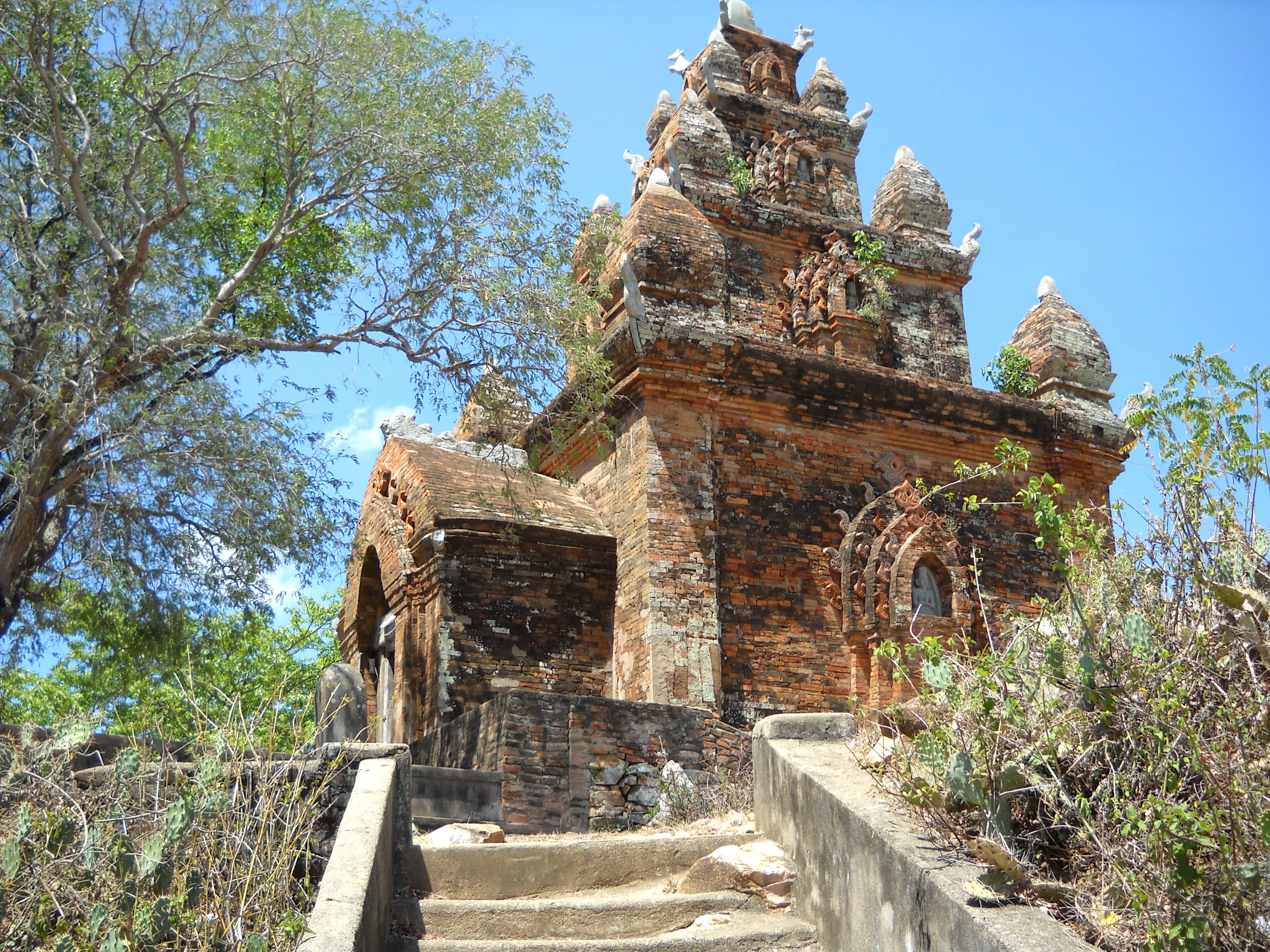
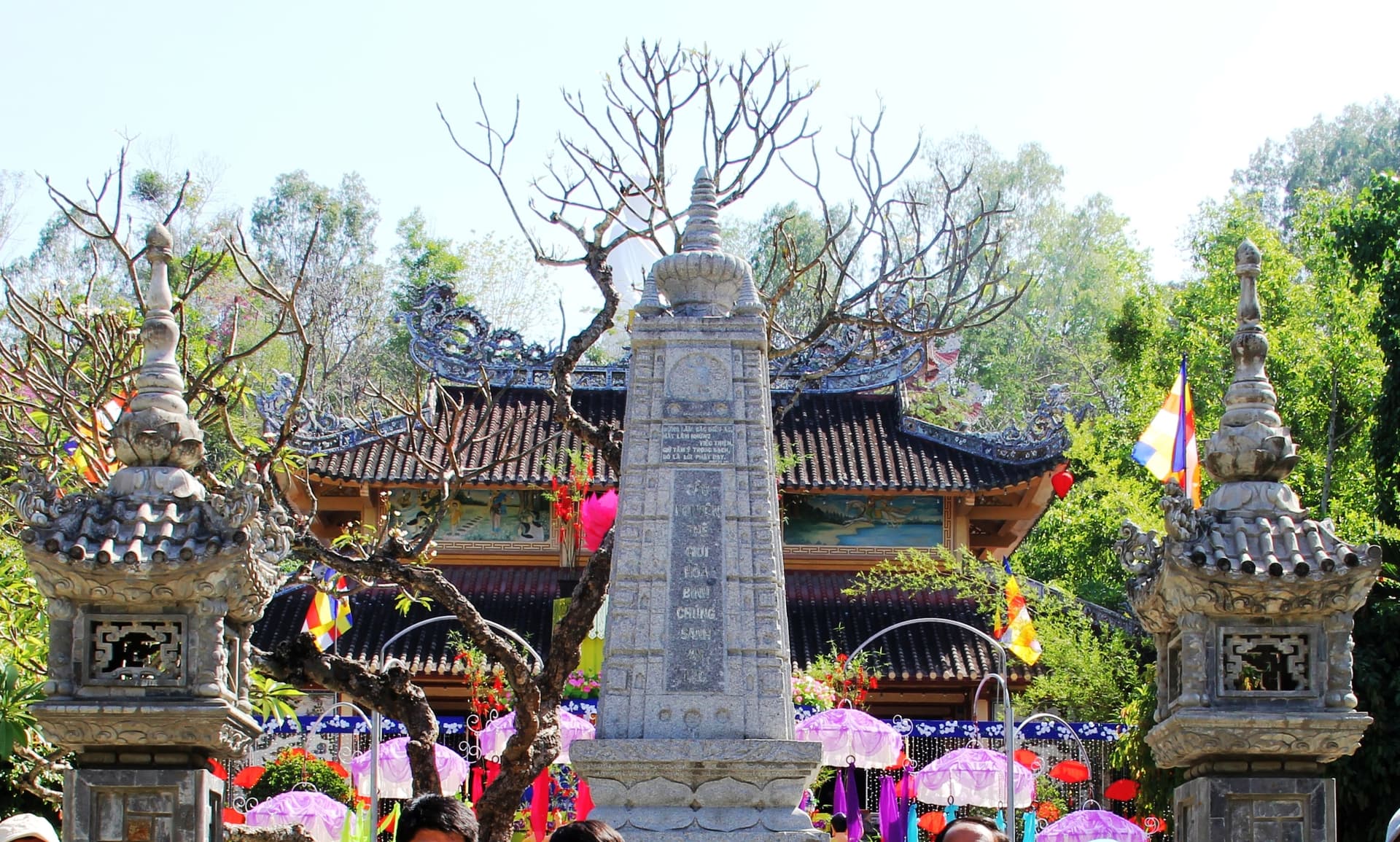
Po Rome Towers in Ninh Phước, Ninh Thuận, Vietnam. Image source · CC BY-SA 3.0
Visit essentials
A quick read before you go
- Duration
- A compact site still deserves time to understand its ceremonial focus without pressing into…
- Access
- The strong Places record identifies Po Rome Towers near Phước Hữu.
Overview
Po Rome's sacred identity is unusually concentrated around a named ruler remembered through devotion. More than a subject of political history, the king's deified presence connects the tower to ancestry, community continuity, and Panduranga's agricultural life. That bond should shape a visit before architectural comparison. This small surviving complex carries obligations larger than its footprint: offerings and ceremony renew them, while conservation protects the material place where they can be enacted.
Visitors may feel remoteness or stillness, but those reactions remain personal. The documented significance is the continuing Cham relationship to Po Rome, not a claim that the tower radiates a force. Approach with humility in someone else's ancestral and religious landscape.
Why this place is sacred
At this site, sacredness gathers through continuity of address: a community still names and honors Po Rome. Weathered masonry carries history, but prayer and return keep that history relational. Agricultural memory places devotion within cycles of livelihood rather than outside ordinary life. The result may feel quiet compared with a large festival center, yet quiet should not be mistaken for abandonment or supernatural proof.
The tower sanctuary supports Cham Hindu devotion to the deified king Po Rome.
An ancestral ceremonial place now also requires archaeological conservation and careful public access.
Experience and orientation
Move slowly enough to distinguish the tower itself from the open land around it. Look for current signs of care without touching or rearranging anything. If a community visit or offering is underway, remain well outside its working space. The chamber and entrance may compress movement; never crowd another person into a sacred interior. Heat and exposure can intensify the visit, so practical self-care helps preserve a respectful pace.
Locate the public approach, sacred chamber, offering area, and any fragile or temporarily reserved zone before taking photographs.
Context and lineage
Current sources support the exact tower identity, veneration of the deified king, and connections to ancestral and agricultural memory. They do not establish every narrative detail attached to Po Rome or a complete chronology of the surviving structure. The page therefore avoids borrowing stories from Po Klong Garai or other Cham towers. No UNESCO World Heritage status is asserted.
Cham Hinduism in Panduranga frames the sanctuary's royal, ancestral, and agricultural meanings.
Po Rome
deified Cham king and principal focus of veneration
Traditions and practice
Ritual may gather prayer, offerings, music, or ceremonial movement around Po Rome according to Cham authority. Agricultural meaning should be understood as community memory, not turned into an outsider's fertility rite. Visitors participate only when a host clearly opens a form to them.
Ceremonial continuity and ancestral respect continue while heritage protection manages the vulnerable tower.
Consider how the tower's survival depends on both material conservation and the community's right to continue using it.
Cham Hinduism
ActivePo Rome Towers maintain devotion to a deified king within the ancestral and agricultural memory of Panduranga.
Prayer, offerings, remembrance, music, and ceremonial gathering follow community authority.
Perspectives and open questions
Royal memory, agriculture, living Cham devotion, archaeology, and conservation offer complementary but nonidentical readings.
Scholarly perspective
Historical and architectural study can situate the tower, while ritual continuity shows that the site is not exhausted by chronology. Agricultural memory also warns against separating religion from livelihood. Responsible interpretation keeps community authority visible rather than treating local devotion as an illustration for outsiders.
Living and traditional perspectives
Po Rome is approached as a deified ancestor-king whose relationship to the community continues in worship.
Open questions
No harvest outcome, protection, or paranormal effect is guaranteed by entering the sanctuary. This page's site-specific account rests mainly on the Ninh Thuận district article documenting Po Rome and the Katê procession; ritual details should be reconfirmed with Cham custodians.
Plan your visit
Access and arrival
The strong Places record identifies Po Rome Towers near Phước Hữu. Previously fetched hours are not a guarantee of chamber or ceremony access, so confirm current conditions locally.
Use licensed lodging in the surrounding Ninh Thuận region; no sanctuary accommodation is represented.
Respectful visit
Wear modest, weather-suitable clothing for an exposed active sanctuary.
Use only public positions and accept interior or ceremony restrictions without argument.
Leave offerings solely under explicit local direction; a quiet respectful presence is otherwise sufficient.
Do not climb, lean on masonry, cross temporary boundaries, or enter a chamber reserved for ritual.
Do not invent an offering, enter during a closed rite, or describe the sanctuary as deserted because no ceremony is visible.
Current practical details
Address
GV28+F8P, Phuoc Huu, Khanh Hoa, Vietnam
Hours
Hours, fees, and access can change — verify on the official source before you travel. Practical details last checked Jul 2026.
Location
Map loads as you approach this section.
Pilgrim reflections
A portrait of encounter, not a score
Pilgrims describe what they felt, how present they could become, and whether the place would shape a journey. There are no stars and no ranking of traditions.
No reviewed reflections yet
The first pilgrims can help describe the character of being here.
Share a reflection
Available after an account-backed “Been there.” Every reflection is reviewed before publication.
Nearby sacred places
Explore other sacred places in the region. Proximity does not establish access or travel time; check each place’s guidance.
References
Sources consulted for this page. Source categories describe the publication, not a guarantee that every claim is verified. Traditional accounts and outside interpretations may differ.
- 01Ngôi tháp Chăm bí ẩn – điểm đến không thể bỏ qua khi tới Ninh Thuận — Ninh Phước district, Ninh ThuậnofficialExact identity, deified King Po Rome, religious art, and annual Katê procession to the tower.
- 02National Assembly approves provincial-level administrative reorganization — Government of Viet NamofficialAuthoritative 2025 successor-province and municipality boundaries.
- 03Bimong Po Rome — Google PlacesofficialStrong exact-entity practical metadata from the authoritative current preflight.
- 04Vietnamese-language reference search for Tháp Po Rome — Vietnamese Wikipedia contributorsacademicDiscovery reference only; unsupported details were not promoted into factual prose.
Share a photo
Help visitors recognize Po Rome Towers. Every submission is reviewed before publication.