Po Klong Garai Towers
Po Klong Garai: Cham kingship and Śiva worship kept alive in brick
Understand sacred places, explore living traditions, and learn how to engage respectfully with Pilgrim Map.
Access has not been verified. Check current local guidance before planning a visit.
Phan Rang–Tháp Chàm, Khánh Hòa, Vietnam
Read the sources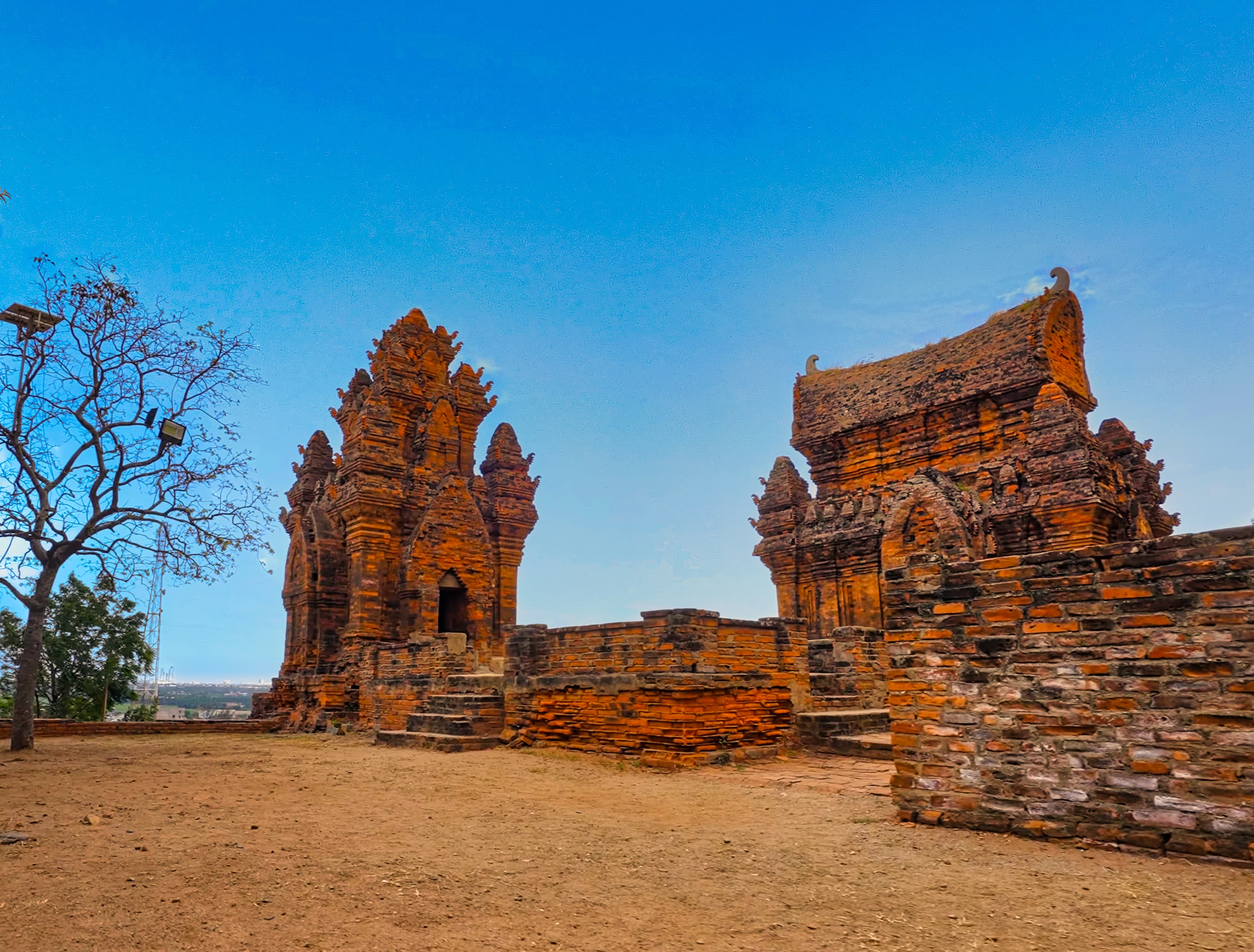
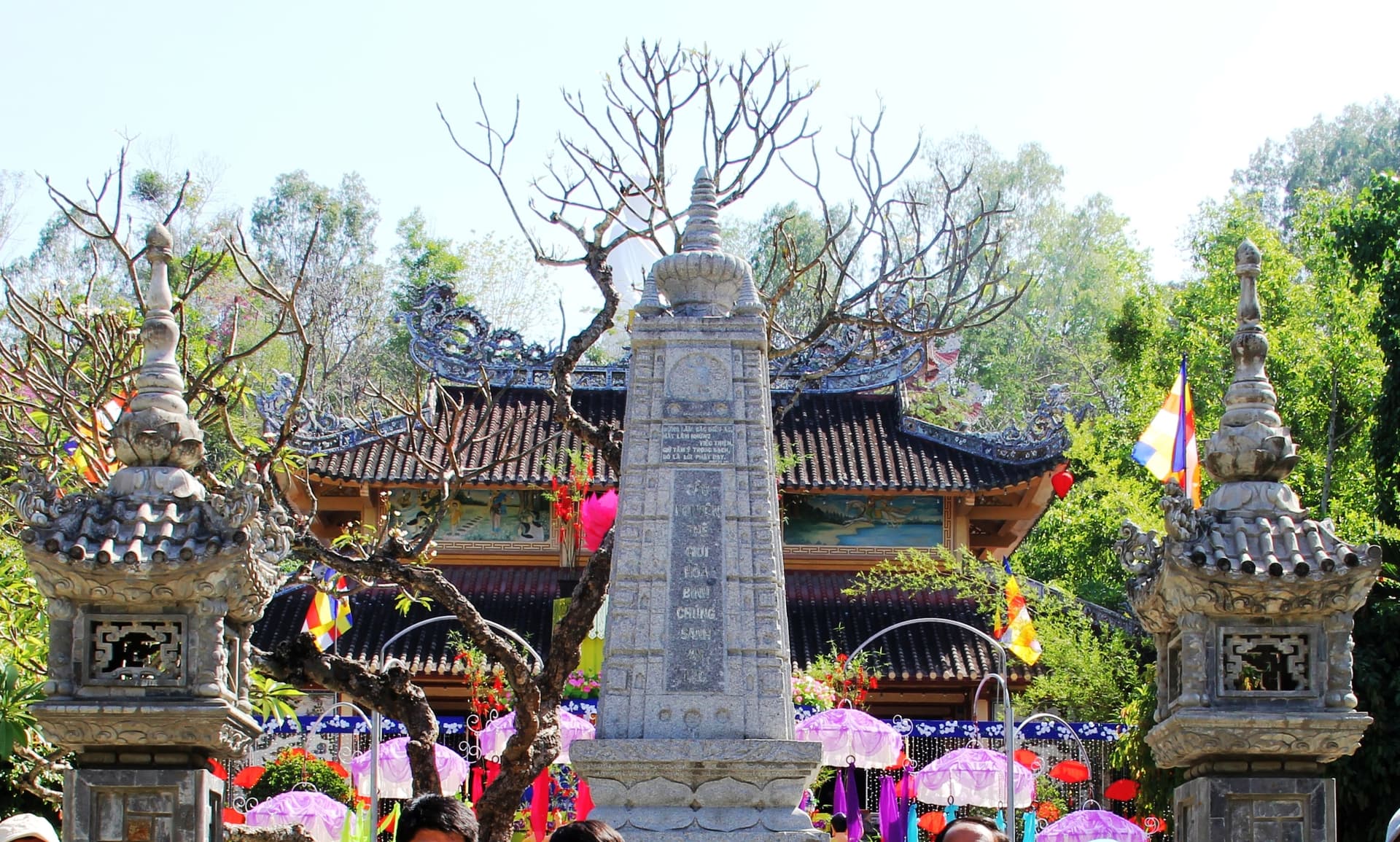
Po Klong Garai Towers in Phan Rang–Tháp Chàm, Ninh Thuận, Vietnam. Image source · CC0
Visit essentials
A quick read before you go
- Duration
- Allow time to understand the whole group and to yield space if worship is in progress.
- Access
- The researched coordinates and a Google candidate place the complex at Đồi Trầu, Đô Vinh, Khánh…
Overview
The brick towers rise from a landscape where Cham religious identity remains present, not merely recoverable from ruins. Po Klong Garai is remembered as a king and approached in deified form, while Śiva provides the wider Shaiva frame; the site cannot be reduced to royal commemoration or a generic Hindu monument. On ceremonial days, the complex belongs first to the community sustaining inherited relationships through prayer and offerings.
On quieter days, entrances, vertical form, enclosed chambers, and care around sacred objects remain parts of an active order. Archaeological age does not cancel present devotion, and present devotion does not authorize invented claims about hidden forces in the brick. The source record supports a living ritual center whose significance is carried through Cham memory and festival continuity.
Why this place is sacred
The strongest threshold at Po Klong Garai is temporal. Old brick remains in use while a named royal figure continues to receive honor. Architecture concentrates that relationship by narrowing movement toward sacred interiors and lifting the eye upward. Wind, heat, drums, incense, and crowds may transform the experience at different times, but none should be recast as evidence of an energy field. Sacredness rests in community continuity and responsibility.
The complex serves Cham Shaiva worship and the veneration of the deified king Po Klong Garai.
Today the towers serve overlapping communities: Cham worshippers return for collective rites, while heritage visitors encounter an archaeologically protected monument.
Experience and orientation
Begin by locating the route used for current worship and any area temporarily reserved for community members. Observe the changing scale of the tower group from the open exterior to the tighter entrance. Inside or near a shrine, allow eyes to adjust and avoid pressing toward an object of veneration. Festival conditions may add music, textiles, offerings, and organized movement; ordinary access does not guarantee the same ceremonial visibility.
Identify public paths, sacred chambers, offering points, conservation limits, and any festival route before lingering.
Context and lineage
The reviewed material securely identifies the named complex, its deified royal focus, its Shaiva setting, and continuing community festivals. It does not license a detailed biography or construction chronology beyond those sources. The coordinates identify this tower group near Phan Rang–Tháp Chàm. Older sources call the province Ninh Thuận; the current province is Khánh Hòa after the 2025 merger, The verified production reconciliation confirms that the nearby record named “Phan Rang” is this same entity.
No UNESCO World Heritage inscription is claimed.
Cham Hinduism, particularly its Shaiva inheritance, provides the site's ritual vocabulary and community authority. Historical Ninh Thuận remains the relevant cultural-geographic label in older sources, while the current administrative province is Khánh Hòa.
Po Klong Garai
deified Cham king honored at the complex
Śiva
Shaiva divine focus within the temple tradition
Traditions and practice
Community ceremonies may include offerings, prayer, music, processional order, and forms of ancestral remembrance. Their sequence and leadership belong to Cham practitioners. Visitors should not enter a sacred chamber, handle an object, or imitate a gesture simply because a public festival is underway.
Religious gathering continues alongside conservation, education, and ordinary heritage access.
Study how people direct attention toward the main tower and consider what continuing use asks of archaeological preservation.
Cham Hinduism
ActiveThe complex sustains Shaiva devotion and the living veneration of the deified king Po Klong Garai.
Community-led prayer, offerings, music, ceremonial movement, and festival remembrance follow Cham custom.
Perspectives and open questions
Archaeology, Cham religious authority, royal memory, and contemporary heritage management must be read together.
Scholarly perspective
Brick form can be documented through architectural history, but material analysis alone does not explain why people still gather. Living ritual supplies evidence of continuity that the monument itself cannot voice. Conversely, respectful study of the fabric helps protect the setting in which that continuity occurs.
Living and traditional perspectives
Po Klong Garai is honored as a deified king within Cham religious memory, not simply represented as a historical personality.
Open questions
No hidden-energy, fertility, or guaranteed blessing claim is established for a casual visitor.
Plan your visit
Access and arrival
The researched coordinates and a Google candidate place the complex at Đồi Trầu, Đô Vinh, Khánh Hòa, near Phan Rang–Tháp Chàm. The candidate did not pass the strong-name threshold, so no Places hours, phone, or website are promoted. Confirm the entrance and current rules with the responsible local authority.
Use current licensed lodging near Phan Rang–Tháp Chàm in Khánh Hòa; older sources may still label the area Ninh Thuận, and no on-site visitor lodging is claimed.
Respectful visit
Choose modest clothing suited to an active sanctuary and protection from strong sun.
Keep out of ritual sightlines and obey any ban on interiors, flash, tripods, or ceremony images.
Present nothing unless a custodian or community host indicates the accepted place and form.
Closed chambers, altar platforms, ceremonial zones, and conserved masonry remain off limits.
Do not call the complex abandoned, turn Cham dress or ritual into a photo prop, or promise spiritual effects from the masonry.
Location
Map loads as you approach this section.
Pilgrim reflections
A portrait of encounter, not a score
Pilgrims describe what they felt, how present they could become, and whether the place would shape a journey. There are no stars and no ranking of traditions.
No reviewed reflections yet
The first pilgrims can help describe the character of being here.
Share a reflection
Available after an account-backed “Been there.” Every reflection is reviewed before publication.
Nearby sacred places
Explore other sacred places in the region. Proximity does not establish access or travel time; check each place’s guidance.
References
Sources consulted for this page. Source categories describe the publication, not a guarantee that every claim is verified. Traditional accounts and outside interpretations may differ.
- 01Official heritage or tourism context for Po Klong Garai Towers — Vietnam National Authority of Tourism or responsible heritage authorityofficialSupports the site's physical, cultural, religious, or visitor context.
- 02Vietnam National Authority of Tourism — Vietnam National Authority of TourismofficialNational tourism authority context; no weak Google Places fields were persisted.
- 03Di tích Tháp Po Klong Garai – phường Đô Vinh — Ninh Thuận provincial portalofficialExact site, worship focus, and annual Katê pilgrimage evidence.
- 04Po Klong Garai Tower — Vietnam tourism resource databaseofficialExact address and evidence of continuing worship at the tower complex.
- 05National Assembly approves provincial-level administrative reorganization — Government of Viet NamofficialAuthoritative 2025 successor-province and municipality boundaries.
- 06Po Klong Garai Temple — Wikipedia — Wikipedia contributorsacademicCorroborates identity, location, and basic historical context; key claims are framed conservatively.
Share a photo
Help visitors recognize Po Klong Garai Towers. Every submission is reviewed before publication.