Long Sơn Pagoda
Long Sơn: monastic practice beneath Nha Trang's hilltop Buddha
Understand sacred places, explore living traditions, and learn how to engage respectfully with Pilgrim Map.
Access has not been verified. Check current local guidance before planning a visit.
Nha Trang, Khánh Hòa, Vietnam
Read the sources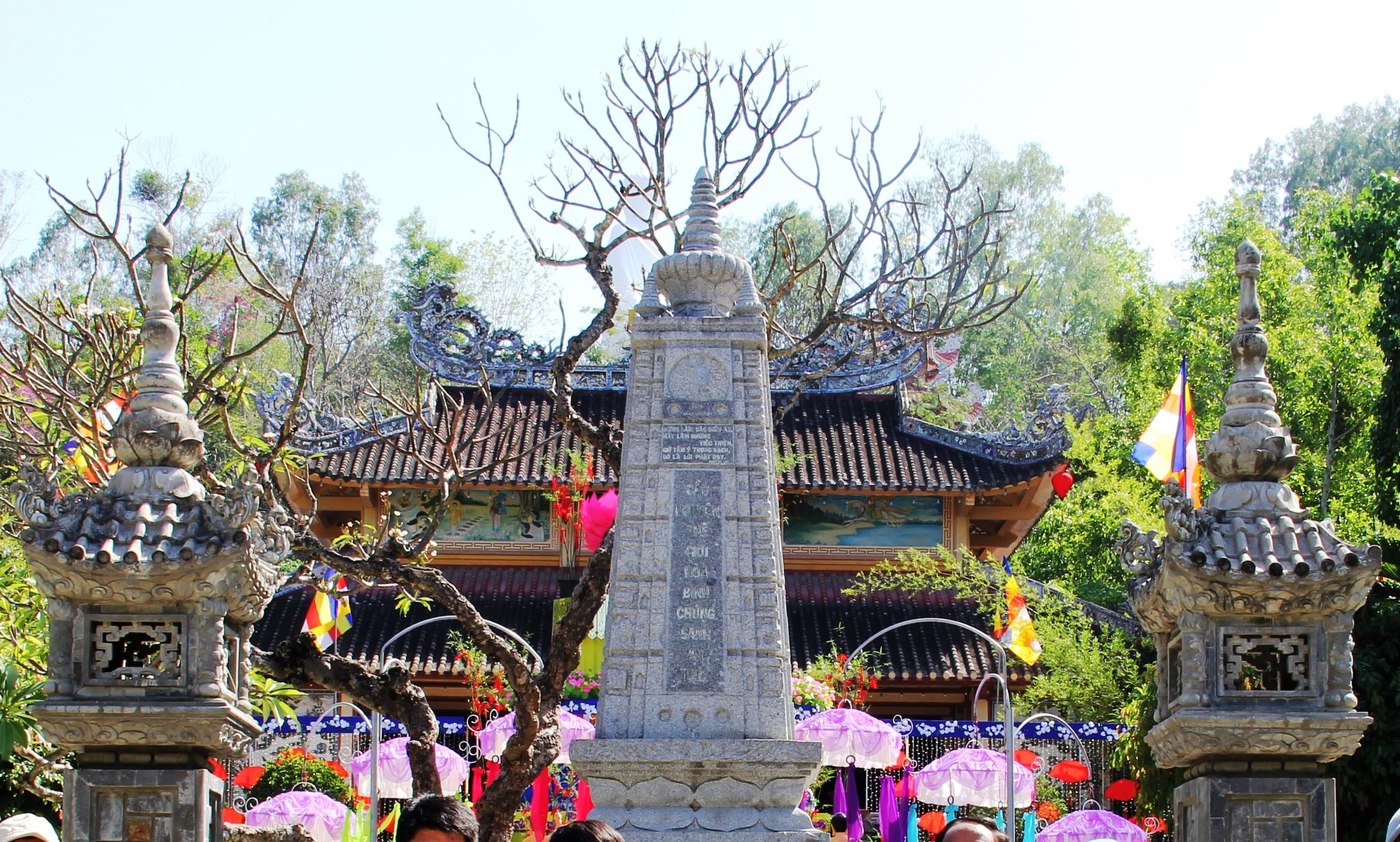
Long Sơn Pagoda in Nha Trang, Khánh Hòa, Vietnam. Image source · CC BY-SA 4.0
Visit essentials
A quick read before you go
- Duration
- Leave time for the lower pagoda as well as the ascent and return.
- Access
- The strong Google Places match lists Long Sơn at 22 Đ.
Overview
Long Sơn is often reduced to the large Buddha above the city, but the image belongs to a pagoda sustained by monastic presence and broad lay devotion, with memorial practice adding historical and communal care. Begin below the hill rather than treating the upper image as the whole site. Moving from street to temple court and upward toward the Buddha allows different forms of attention.
Incense and bows may gather around altars; residents and monastics may move for reasons unrelated to a visitor's route. The climb can encourage reflection but is not automatic spiritual progress. Sacred meaning comes from how the community has joined the Buddha's teaching, remembrance, and repeated practice to this compound.
Why this place is sacred
A hilltop image changes the horizon of Nha Trang, yet Long Sơn's religious weight is carried by more than visibility. The lower sanctuary, monastic circulation, memorial attention, and acts of devotion make the ascent cumulative. Bells, incense, and the changing distance from traffic may sharpen awareness without proving an invisible force. The supported sacred claim is relational: people return here to honor the Buddha, remember, learn, and maintain a shared institution.
Long Sơn serves Mahayana Buddhist worship, teaching, monastic life, and public devotion.
A living religious center now also receives visitors drawn by its prominent hilltop Buddha and city views.
Experience and orientation
At the entrance, resist the urge to aim immediately for the summit. Observe which halls are active and where shoes, incense, or donations are handled. During the ascent, give space to older worshippers and anyone moving in a devotional rhythm. At the upper image, let scale and posture register before turning outward to the city. Heat and crowds may make the stairs demanding; an attentive visit includes knowing when to pause without occupying a threshold.
Separate worship halls, memorial areas, the stair route, upper Buddha precinct, and monastic spaces as distinct zones.
Context and lineage
The research identifies the exact site, its location, and its role as a major Buddhist center. It does not support repeating every chronology or local anecdote found in general travel summaries. This page therefore keeps to the documented relationship among the pagoda, Śākyamuni devotion, monastic practice, memorial worship, and public visitation. No independent UNESCO inscription is claimed.
Vietnamese Mahayana Buddhism connects the visible Buddha image with the compound's active prayer and monastic discipline.
Śākyamuni Buddha
principal figure of veneration and teaching
Traditions and practice
Worshippers may bow, offer incense, make donations, or sit before a Buddha image. Memorial acts should be observed with particular restraint because they concern people and histories not available for casual use. Visitors should follow the pagoda's placement of offerings and avoid assuming that every altar permits the same gesture.
Monastic routine, lay prayer, memorial observance, and large-scale public visitation occupy the compound together.
Pause once in the lower sanctuary and once near the upper Buddha, noting how each setting supports a different quality of recollection.
Vietnamese Mahayana Buddhism
ActiveLong Sơn gives public and monastic form to reverence for Śākyamuni in Nha Trang.
Prayer, incense, bows, offerings, teaching, remembrance, and monastery support occur according to local custom.
Perspectives and open questions
Long Sơn can be understood through monastic continuity, public devotion, memorial culture, urban visibility, and the bodily experience of ascent.
Scholarly perspective
The hilltop Buddha makes religious identity legible across the city, while the lower compound shows the institutional work behind that symbol. A complete reading therefore includes everyday care and remembrance, not only monumental scale. Sensory calm may be described as an experience, but it is not evidence of a universal sacred energy.
Living and traditional perspectives
Śākyamuni is honored as teacher and awakened Buddha; the appropriate response joins reverence with attention to conduct.
Open questions
No particular blessing, healing, or inner change is promised to someone who completes the climb.
Plan your visit
Access and arrival
The strong Google Places match lists Long Sơn at 22 Đ. 23 Tháng 10 in Nha Trang. Its map hours were fetched previously, but current access and ceremonies should be confirmed before travel.
Choose licensed Nha Trang lodging; no visitor accommodation is claimed within the pagoda.
Respectful visit
Wear clothing covering shoulders and knees and shoes practical for steps, removing footwear where instructed.
Do not pose against sacred images in a way that trivializes them, and ask before including worshippers.
Use only designated incense, flowers, or donation points; a respectful bow requires no purchased object.
Monastic quarters, memorial enclosures, altar platforms, and conservation barriers are not visitor shortcuts.
Do not treat the Buddha as a scenic prop or the stairs as a challenge whose completion guarantees merit.
Current practical details
Address
22 Đ. 23 Tháng 10, Tây Nha Trang, Khánh Hòa 650000, Vietnam
Hours
Hours, fees, and access can change — verify on the official source before you travel. Practical details last checked Jul 2026.
Location
Map loads as you approach this section.
Pilgrim reflections
A portrait of encounter, not a score
Pilgrims describe what they felt, how present they could become, and whether the place would shape a journey. There are no stars and no ranking of traditions.
No reviewed reflections yet
The first pilgrims can help describe the character of being here.
Share a reflection
Available after an account-backed “Been there.” Every reflection is reviewed before publication.
Nearby sacred places
Explore other sacred places in the region. Proximity does not establish access or travel time; check each place’s guidance.

References
Sources consulted for this page. Source categories describe the publication, not a guarantee that every claim is verified. Traditional accounts and outside interpretations may differ.
- 01Official heritage or tourism context for Long Sơn Pagoda — Vietnam National Authority of Tourism or responsible heritage authorityofficialSupports the site's physical, cultural, religious, or visitor context.
- 02Chùa Long Sơn — Khánh Hòa digital tourism portalofficialExact identity, address, White Buddha, active provincial Buddhist role, worship, and current hours.
- 03Khánh Hòa Buddhist Sangha Vesak at Long Sơn — Khánh Hòa Department of Home AffairsofficialDirect government evidence of active provincial Buddhist ceremony at the pagoda.
- 04Long Sơn Pagoda — Vietnam National Authority of TourismofficialExact national-tourism article for the Nha Trang pagoda.
- 05Long Sơn Pagoda visitor record — Vietnam National Authority of TourismofficialExact national-tourism record supporting identity and visitor context.
- 06Long Sơn Temple — Wikipedia — Wikipedia contributorsacademicCorroborates identity, location, and basic historical context; key claims are framed conservatively.
- 07Google Maps listing for Long Sơn Pagoda — Google MapsSource contextUsed only for strong-match coordinates and practical fields.
Share a photo
Help visitors recognize Long Sơn Pagoda. Every submission is reviewed before publication.