Phimai Sanctuary
A Khmer Mahayana sanctuary aligns sacred architecture toward Angkor
Understand sacred places, explore living traditions, and learn how to engage respectfully with Pilgrim Map.
Access has not been verified. Check current local guidance before planning a visit.
Phimai, Nakhon Ratchasima, Thailand
Read the sources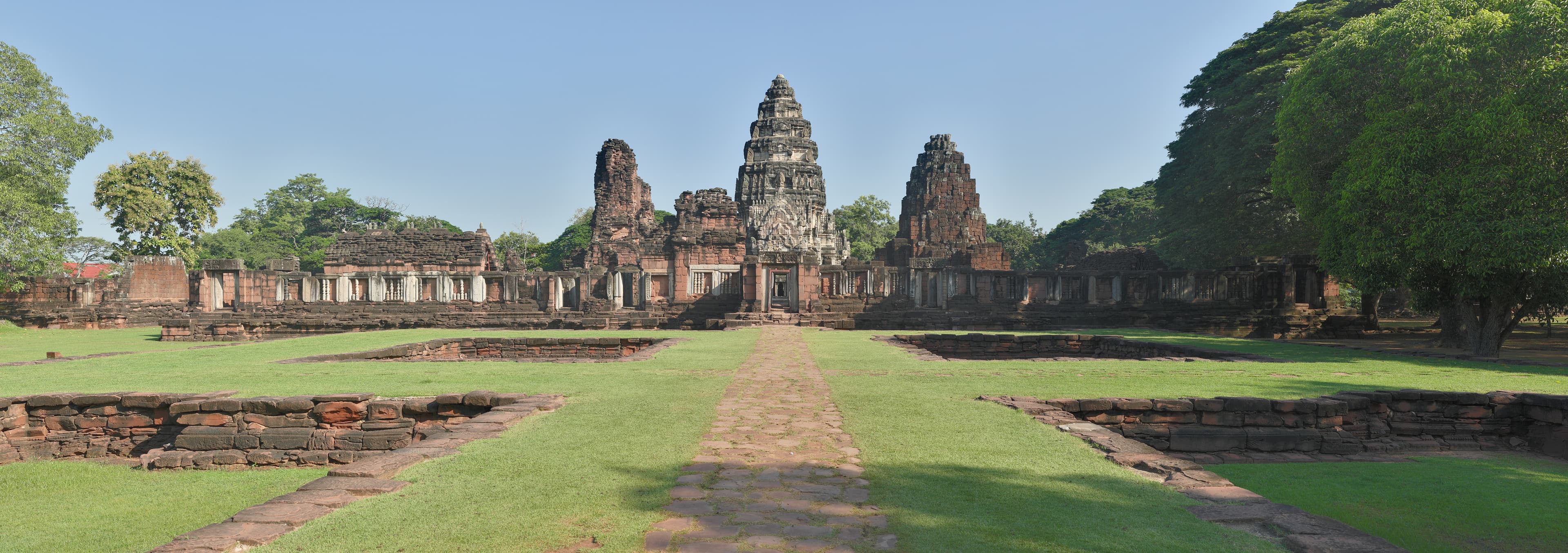
Phimai Sanctuary in Phimai, Nakhon Ratchasima, Thailand. Image source · CC BY-SA 3.0
Visit essentials
A quick read before you go
- Etiquette
- Keep off reliefs, closed masonry, sacred images, and active devotional space.
Overview
The approach begins at a Naga bridge that marks passage from ordinary city space into a religious enclosure. Successive gateways and galleries compress movement toward the central tower, while carvings and recovered images show a Mahayana Buddhist program shaped within Khmer architectural language. The sanctuary faces south toward the route to Angkor, but its identity is not simply provincial imitation.
An inscription names Vimaya and a revered image; local building, regional roads, and later Buddhist use made Phimai a sacred center in its own right.
Why this place is sacred
Long axes and repeated thresholds can produce an intense feeling of progression. That effect is designed architecture, not proof of an energy line to Angkor. Naga imagery mediates water, protection, and sacred passage within South and Southeast Asian traditions, while the Naga-protected Buddha gives the serpent a specifically Buddhist narrative role. Visitors sometimes call the complex Hindu because of Khmer form; Fine Arts instead emphasizes its Mahayana identity.
Precision about tradition is more respectful than vague claims about an ancient mystical civilization.
Experience and orientation
Begin at the Naga bridge and maintain the south-to-center sequence before exploring side structures. Look for how doorways frame the principal tower and how carvings shift across construction phases. Do not touch reliefs, climb closed masonry, or use reconstructed thresholds as seats. The park's reported Places hours differ slightly from Fine Arts service pages, so verify the current schedule with the custodian.
If devotional activity occurs around the Naga Buddha or Jayavarman VII image, leave space; archaeological status does not erase contemporary reverence.
Context and lineage
Fine Arts describes Phimai as a thousand-year-old Khmer city and its sanctuary as a leading Mahayana Buddhist monument. An inscription from the early twelfth century records Vimaya and a sacred image, while later work reflects the reign of Jayavarman VII. The Fine Arts Department registered the town, restored the sanctuary through anastylosis with French cooperation, and opened the historical park in 1989.
Phimai is not currently inscribed on the UNESCO World Heritage List, so tentative or comparative importance is not presented as inscription.
Traditions and practice
Historical practice addressed Buddha and bodhisattva imagery within a sequence of bridges, gates, galleries, and towers. Present visitors may bow at active image points where permitted, but should not light incense on ancient stone or invent an Angkor-facing rite. Fine Arts events have included paying respect to the Naga Buddha and Jayavarman VII image, demonstrating contemporary sacred reception. This does not establish uninterrupted ritual continuity or supernatural protection. Conservation rules remain the governing practice throughout the ruin.
Khmer Mahayana Buddhism
HistoricalHistoric Khmer Mahayana practice centered Buddhas, bodhisattvas, sacred passage, and royal merit.
Heritage stewardship
ActiveFine Arts stewardship maintains a reconstructed archaeological sanctuary and its recovered sculpture.
Perspectives and open questions
Mahayana studies, Khmer architecture, epigraphy, restoration, and local reverence share evidence.
Scholarly perspective
Mahayana studies interprets the Naga Buddha, bodhisattva imagery, and sacred names. Khmer architectural history examines roads, axial planning, lintels, and royal patronage. Epigraphy supplies names and dates while leaving gaps about daily ritual. Restoration history explains the present recomposed fabric. Local reverence may treat particular images as living sacred presences. These perspectives can coexist when the page distinguishes historical evidence, modern worship, and personal feeling from claims of measurable power. Orientation also deserves restraint.
The south-facing axis links Phimai conceptually and geographically with the Khmer heartland, but a line on a map does not by itself reconstruct processions or political obedience. Roads, inscriptions, artistic choices, and local archaeology must be read together. Phimai's Mahayana identity is strongest when its own city, images, and community are kept visible instead of treating the monument merely as an outpost pointing elsewhere.
Plan your visit
Strong Places and Fine Arts report slightly different hours, so the custodian must confirm access.
Respectful visit
Keep off reliefs, closed masonry, sacred images, and active devotional space.
Current practical details
Address
6FCW+F29, Nai Mueang, Phimai District, Nakhon Ratchasima 30110, Thailand
Phone
Hours
Hours, fees, and access can change — verify on the official source before you travel. Practical details last checked Jul 2026.
Location
Map loads as you approach this section.
Pilgrim reflections
A portrait of encounter, not a score
Pilgrims describe what they felt, how present they could become, and whether the place would shape a journey. There are no stars and no ranking of traditions.
No reviewed reflections yet
The first pilgrims can help describe the character of being here.
Share a reflection
Available after an account-backed “Been there.” Every reflection is reviewed before publication.
Watch deeper
Films, episodes, and recorded talks for visitors who want more context before or after a visit. Speculative and alternative-history entries are labelled as perspectives, not as sources for established claims.
Nearby sacred places
Explore other sacred places in the region. Proximity does not establish access or travel time; check each place’s guidance.


References
Sources consulted for this page. Source categories describe the publication, not a guarantee that every claim is verified. Traditional accounts and outside interpretations may differ.
- 01History of Phimai Historical Park — Fine Arts Department, Phimai Historical ParkofficialExact-site Mahayana identity, ancient-city plan, inscription, registration, and restoration.
- 02Phimai Night and sacred images — Fine Arts DepartmentofficialOfficial evidence of current respect for the Naga Buddha and Jayavarman VII image.
- 03Phimai Historical Park — Fine Arts DepartmentofficialOfficial custodian home and current visitor contact.
- 04Phimai Historical Park — Google Maps — Google PlacesSource contextStrong name, country, locality, and coordinate match; used only for practical visitor data and identity corroboration.
Pilgrim glossary
- Bodhisattva
- An enlightened being who postpones full nirvana to help others toward awakening.
Share a photo
Help visitors recognize Phimai Sanctuary. Every submission is reviewed before publication.