Phra Mahathat Kaen Nakhon
Nine storeys gather relic devotion, scripture, and Isan art
Understand sacred places, explore living traditions, and learn how to engage respectfully with Pilgrim Map.
Access has not been verified. Check current local guidance before planning a visit.
Khon Kaen, Khon Kaen, Thailand
Read the sources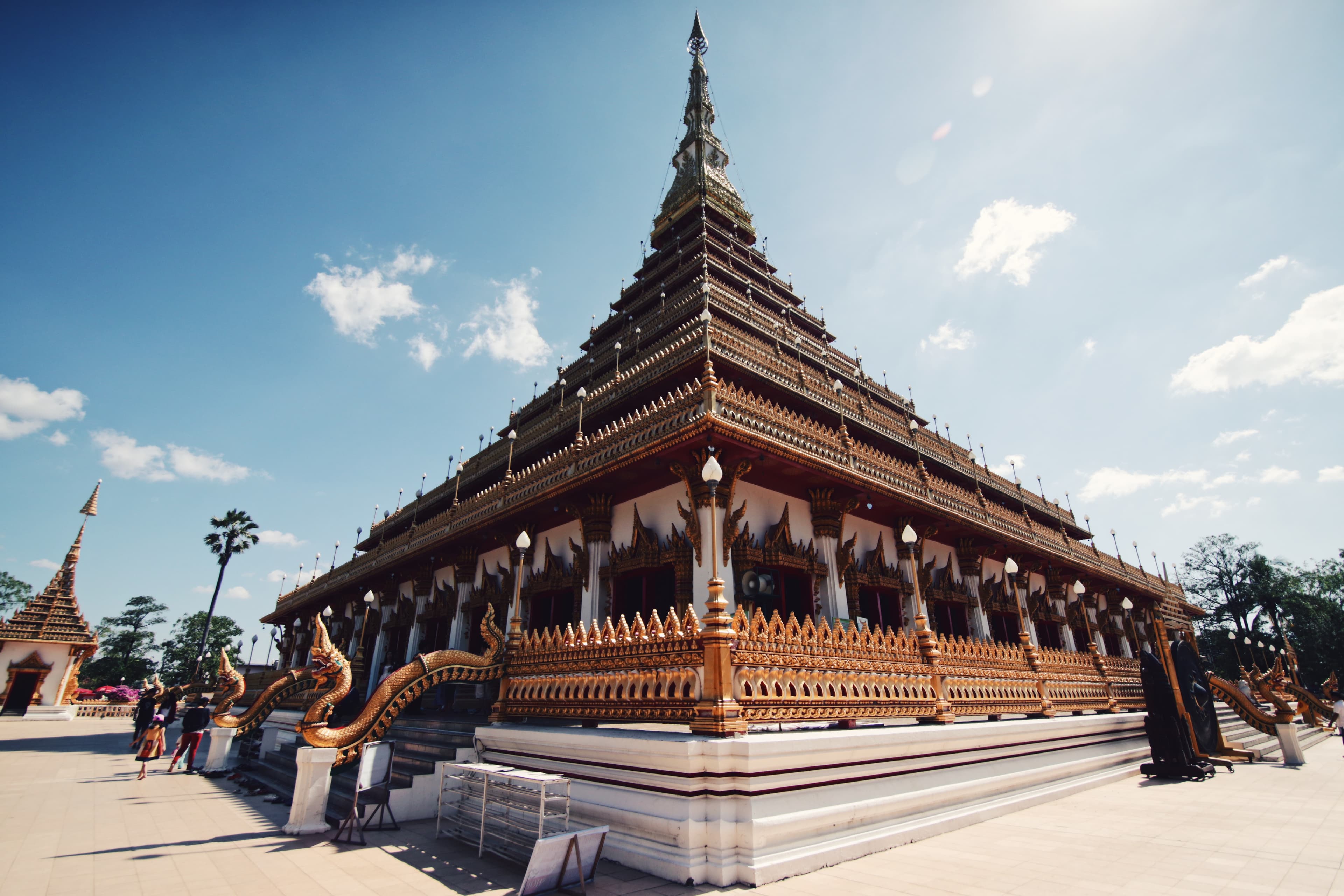
Phra Mahathat Kaen Nakhon in Khon Kaen, Khon Kaen, Thailand. Image source · CC BY-SA 4.0
Visit essentials
A quick read before you go
- Etiquette
- Follow floor-specific shoes, photography, circulation, and relic-chamber rules.
Overview
The building turns vertical movement into a curriculum. Lower and middle levels present carved doors, Jataka stories, episodes from the Buddha's life, regional art, and cosmological imagery; the upper storey holds the relic focus. Climbing therefore moves from narrative and ethical teaching toward a concentrated reliquary. The panoramic city view is secondary to that sequence.
Modern construction does not diminish sacred meaning: community patronage, scripture, image programs, and relic enshrinement make the stupa a contemporary field of merit rooted in older Buddhist forms.
Why this place is sacred
The nine-storey sequence can support contemplation without proving that the upper relic chamber possesses stronger energy. Devotees understand relics through trust, consecration, and the Buddhist memory of the Teacher. The exact provenance of every relic is not independently established by the reviewed bundle, so the guide reports the temple and official tourism claim without scientific certainty. No number of floors climbed guarantees merit, healing, or success.
Experience and orientation
Begin at ground level and treat each floor as a separate interpretive layer rather than rushing to the roof. Read posted explanations for Jataka scenes and weekday Buddhas before assigning meanings. Stairways can be demanding; use available access guidance and do not turn physical endurance into spiritual superiority. At the relic storey, keep voices low, avoid blocking worship, and follow photography rules. Unverified day-of details include ceremonies, closures, and crowd controls; consult Places and the temple's official page.
Context and lineage
Phra Mahathat Kaen Nakhon belongs to the modern development of Wat Nong Waeng and Khon Kaen's urban Buddhist identity. Its nine-level design brings together scriptural storage, narrative art, regional craftsmanship, cosmology, relic veneration, and a city panorama. The source bundle does not support an ancient foundation claim for the present structure, so the page avoids projecting Dvaravati or Khmer antiquity onto it. The stupa is nationally known but is not inscribed by UNESCO.
Traditions and practice
Visitors may bow, chant, make merit, study narrative panels, and ascend toward the relic chamber where access permits. Shoes, offerings, and photography must follow floor-specific signs. Do not touch relic containers, lean on murals, or treat weekday Buddha imagery as a fortune-telling guarantee. A respectful ascent can pair each level with recollection of a teaching. Festival schedules and group worship should be confirmed through the temple rather than inferred from travel posts.
Theravada Buddhism
ActiveTheravada practice centers relic recollection, scripture, merit, and narrative teaching.
Perspectives and open questions
Theravada devotion, religious education, Isan art, urban identity, and tourism emphasize different values.
Scholarly perspective
Theravada devotion centers the Buddha relics and stories of prior lives. Religious education reads the building as a vertical teaching archive. Isan art history attends to regional forms and craft. Urban studies considers how a modern stupa becomes a civic emblem. Tourism emphasizes the view, while practitioners may emphasize merit and refuge. The page keeps those values distinct and labels relic efficacy as religious belief rather than a measurable effect.
The building's modern date also changes how authenticity should be discussed. Authenticity here does not mean untouched antiquity; it means a community intentionally using inherited Buddhist forms to teach, preserve scripture, house relics, and express Isan identity. Contemporary craftsmanship is part of the sacred record. Visitors should therefore read newness and tradition together instead of assuming that only an old monument can hold serious devotional meaning.
The weekday images and Brahma realms also belong to structured Buddhist teaching, not a generic collection of lucky symbols. Exact labels should guide interpretation.
Plan your visit
Strong Places gives ordinary hours and custodian contact; ceremonies may alter access.
Respectful visit
Follow floor-specific shoes, photography, circulation, and relic-chamber rules.
Current practical details
Address
593 Thanon Klang Mueang, Tambon Nai Mueang, Amphoe Mueang Khon Kaen, Chang Wat Khon Kaen 40000, Thailand
Phone
Hours
Hours, fees, and access can change — verify on the official source before you travel. Practical details last checked Jul 2026.
Location
Map loads as you approach this section.
Pilgrim reflections
A portrait of encounter, not a score
Pilgrims describe what they felt, how present they could become, and whether the place would shape a journey. There are no stars and no ranking of traditions.
No reviewed reflections yet
The first pilgrims can help describe the character of being here.
Share a reflection
Available after an account-backed “Been there.” Every reflection is reviewed before publication.
Nearby sacred places
Explore other sacred places in the region. Proximity does not establish access or travel time; check each place’s guidance.

References
Sources consulted for this page. Source categories describe the publication, not a guarantee that every claim is verified. Traditional accounts and outside interpretations may differ.
- 0110 Things to Do in Khon Kaen — Tourism Authority of ThailandofficialExact-site relics, scriptures, nine-storey program, Jataka and Buddha-life imagery.
- 02Wat Nong Waeng official social page — Wat Nong WaengofficialCustodian page supplied by strong Places; use for current ceremonies and access.
- 03Phra Mahathat Kaen Nakhon (Wat Nong Wang) — Google Maps — Google PlacesSource contextStrong name, country, locality, and coordinate match; used only for practical visitor data and identity corroboration.
Pilgrim glossary
- Stupa
- A dome-shaped Buddhist monument that holds relics or marks a sacred place.
Share a photo
Help visitors recognize Phra Mahathat Kaen Nakhon. Every submission is reviewed before publication.