Nghĩa An Assembly Hall
Nghĩa An: Guan Yu's integrity at the center of Teochew belonging
Understand sacred places, explore living traditions, and learn how to engage respectfully with Pilgrim Map.
Access has not been verified. Check current local guidance before planning a visit.
Chợ Lớn, Ho Chi Minh City, Vietnam
Read the sources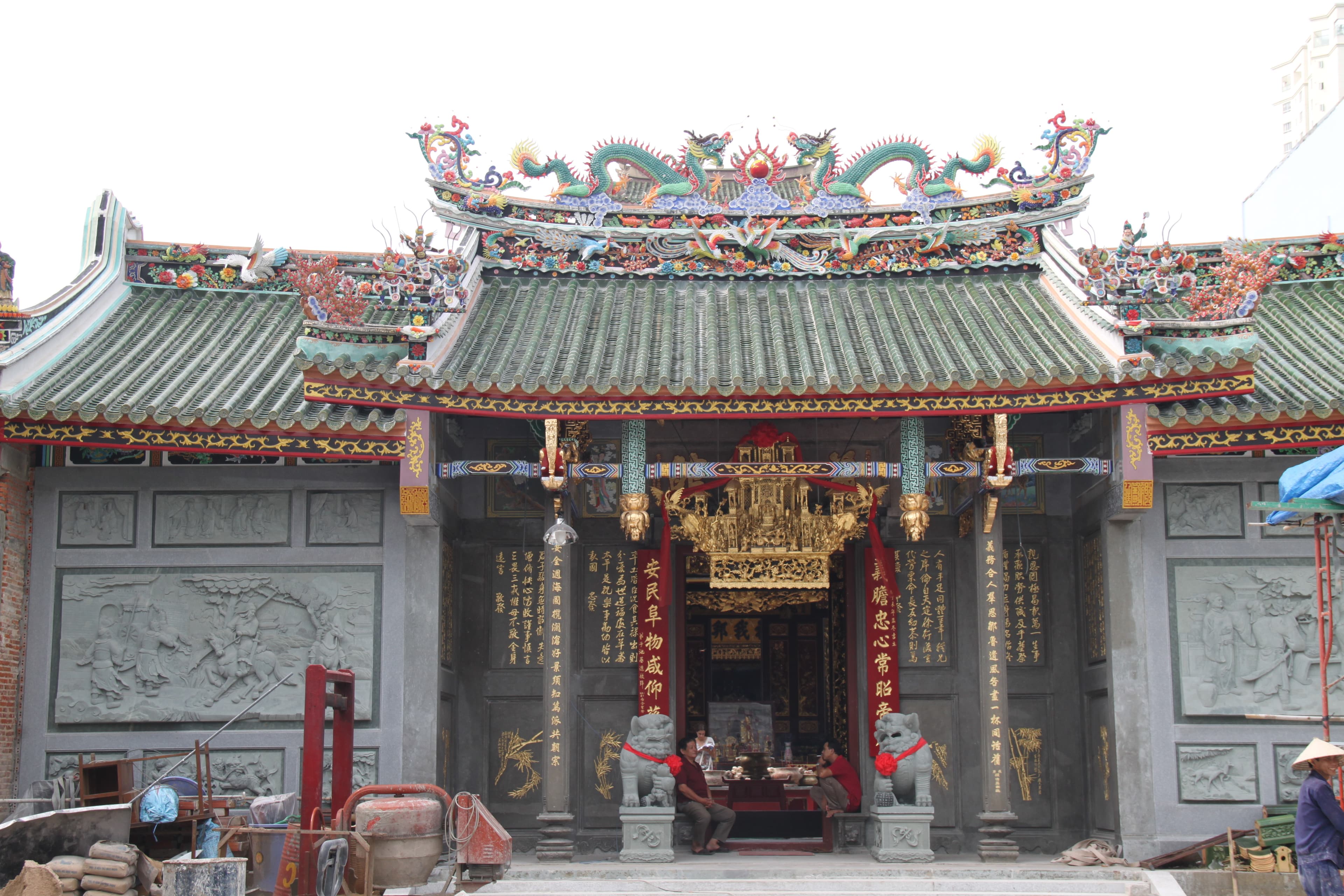
Nghĩa An Assembly Hall in District 5, Ho Chi Minh City, Vietnam. Image source · CC0
Visit essentials
A quick read before you go
- Duration
- Allow time to distinguish the temple and assembly functions without obstructing either.
- Access
- The strong Places record lists Nghĩa An at 678 Nguyễn Trãi and supplies a phone number.
Overview
Guan Yu's presence at Nghĩa An is ethical before it is picturesque. The deified general is honored for loyalty, justice, and dependable conduct—qualities with particular force in a migrant community organized through relationships of trust. The assembly hall gives those values a social body. Worship can address protection or resolve, while mutual aid and festival bind individuals into a Teochew congregation. Ancestral belonging adds depth beyond a single central deity.
Visitors may be drawn by red, gold, incense, or martial imagery, but these elements should be read through the community that uses them. Guan Yu is not simply a war god, and the hall is not a decorative remnant of old Chợ Lớn. It remains an institution where moral reputation, religious devotion, and collective responsibility meet.
Why this place is sacred
The atmosphere of Nghĩa An is built from trust made visible. Guan Yu's remembered loyalty and justice orient altars, petitions, and festival life, while the assembly function extends those values into mutual aid. Incense and dense ornament remain secondary to the congregation's repeated commitments. No claim of an objective protective field is needed.
The institution serves Teochew communal association, Guan Yu worship, ancestral belonging, and mutual support.
Active temple and assembly-hall functions now operate within a heritage district visited by people beyond the congregation.
Experience and orientation
Begin by identifying the principal image and the direction of petitions. Martial features may seem forceful, yet the congregation's emphasis on integrity changes their meaning. Observe how people move between worship and communal functions without assuming every room is a shrine or every hall is public. During a festival, organized movement will matter more than obtaining a full visual survey.
Separate the Guan Yu altar, supporting devotional spaces, ancestor-related areas, assembly rooms, and service circulation at the outset.
Context and lineage
The reviewed sources establish the exact District 5 assembly hall and temple, its Guan Yu dedication, and its roles in mutual aid, festival, and ancestral belonging. They do not provide a complete foundation chronology in this research pass. Details from other Chùa Ông institutions therefore remain outside this page, and no UNESCO World Heritage status is asserted.
Chinese Vietnamese folk religion is practiced here through a specifically Teochew communal institution.
Guan Yu (Quan Công)
deified exemplar of loyalty, justice, and protective integrity
Traditions and practice
At the Guan Yu altar, the congregation follows its own sequence of incense, gifts, bows, and spoken or silent petitions. Festival rites can give those acts a collective scale. Mutual aid is not a ritual for tourists to imitate, but it is central to understanding how moral devotion enters everyday community responsibility.
Worship, congregation administration, mutual support, festival preparation, and ancestral belonging continue in the hall.
Consider one representation of Guan Yu through the question of trustworthy conduct rather than through military power alone.
Chinese Vietnamese folk religion
ActiveNghĩa An centers Guan Yu's loyalty and justice within Teochew worship, mutual aid, and ancestral belonging.
Incense, bows, petitions, offerings, festivals, communal care, and remembrance follow the hall's inherited order.
Perspectives and open questions
Guan Yu's moral authority gains social form through the Teochew hall's worship calendar and reciprocal community work.
Scholarly perspective
Assembly halls show that religion and community organization need not occupy separate buildings. Guan Yu's ethical reputation offers a vocabulary for trust, while association structures turn that vocabulary into reciprocal action. Study should neither reduce worship to economics nor detach it from social history.
Living and traditional perspectives
Guan Yu embodies loyalty and justice; devotion asks worshippers to honor those virtues within real relationships.
Open questions
No offering or petition is established as guaranteeing wealth, protection, favorable judgment, or business success. The page's specific account of Guan Yu devotion and procession draws mainly on one exact municipal report; present-day schedules require confirmation with Hội quán Nghĩa An.
Plan your visit
Access and arrival
The strong Places record lists Nghĩa An at 678 Nguyễn Trãi and supplies a phone number. Previously fetched hours are not a ceremony timetable; reconfirm before travel.
Use licensed Ho Chi Minh City accommodation; the assembly hall is not represented as public lodging.
Respectful visit
Wear modest clothing appropriate to both a temple and a community assembly institution.
Ask before photographing worshippers, ancestor areas, meetings, or festival preparation; avoid flash at altars.
Use only accepted materials at clearly designated altars or donation points.
Closed offices, meeting rooms, ritual workspaces, ancestor areas, and altar platforms remain restricted.
Do not treat worship as a formula for commercial success, legal victory, or guaranteed protection.
Current practical details
Address
678 Nguyễn Trãi, Chợ Lớn, Hồ Chí Minh 70000, Vietnam
Phone
Hours
Hours, fees, and access can change — verify on the official source before you travel. Practical details last checked Jul 2026.
Location
Map loads as you approach this section.
Pilgrim reflections
A portrait of encounter, not a score
Pilgrims describe what they felt, how present they could become, and whether the place would shape a journey. There are no stars and no ranking of traditions.
No reviewed reflections yet
The first pilgrims can help describe the character of being here.
Share a reflection
Available after an account-backed “Been there.” Every reflection is reviewed before publication.
Nearby sacred places
Explore other sacred places in the region. Proximity does not establish access or travel time; check each place’s guidance.


References
Sources consulted for this page. Source categories describe the publication, not a guarantee that every claim is verified. Traditional accounts and outside interpretations may differ.
- 01Lễ Nghinh Ông Quan Thánh Đế Quân tuần du Xuân Giáp Thìn — Vietnam Fatherland Front, Ho Chi Minh CityofficialExact municipal authority report for Nghĩa An identity, Guan Yu as the central deity, the procession, community meaning, architecture, and national monument status.
- 02National Assembly approves provincial-level administrative reorganization — Government of Viet NamofficialAuthoritative 2025 successor-province and municipality boundaries.
- 03Hội Quán Nghĩa An — Google PlacesofficialStrong exact-entity practical metadata from the authoritative current preflight.
- 04Vietnamese-language reference search for Nghĩa An Hội Quán — Vietnamese Wikipedia contributorsacademicDiscovery reference only; unsupported details were not promoted into factual prose.
Share a photo
Help visitors recognize Nghĩa An Assembly Hall. Every submission is reviewed before publication.