Naksansa Temple
Avalokitesvara above the East Sea, rebuilt after fire
Understand sacred places, explore living traditions, and learn how to engage respectfully with Pilgrim Map.
Access has not been verified. Check current local guidance before planning a visit.
Yangyang, Gangwon-do, South Korea
Read the sources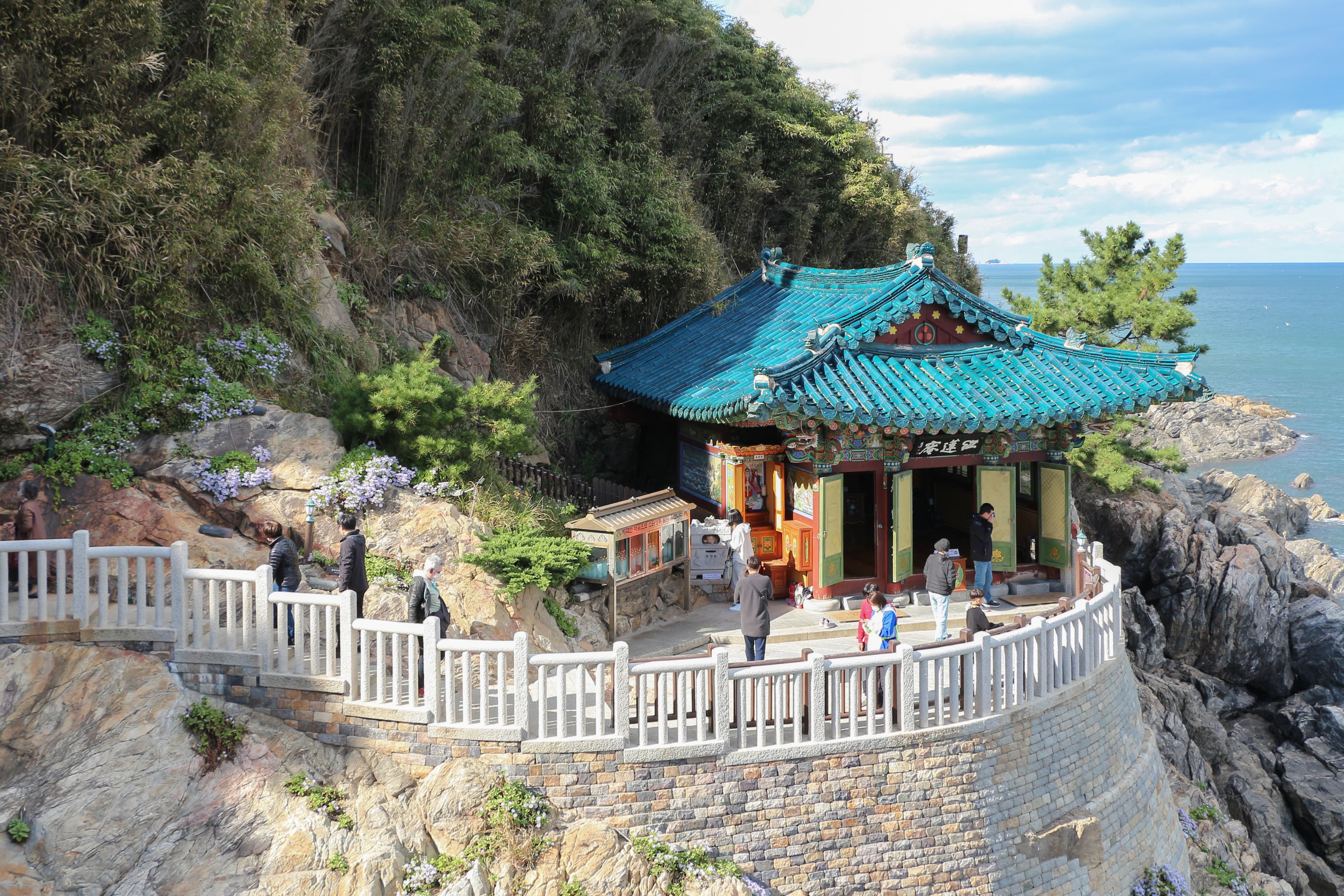
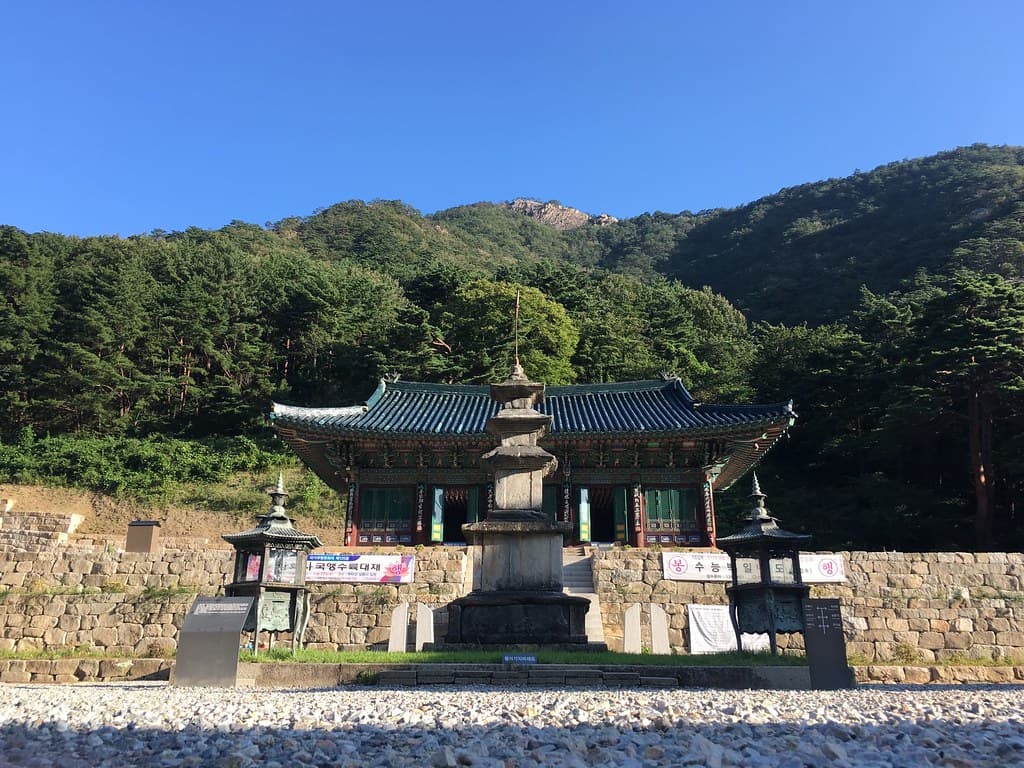
Naksansa Temple in Yangyang, Gangwon State, South Korea. Image source · CC0
Visit essentials
A quick read before you go
- Duration
- Allow two hours for the principal precinct, Gwaneum image, and coastal route without rushing.
- Access
- KTO currently lists 06:00–17:30 with exit by 18:30, parking, and Hongnyeonam telephone…
Overview
Sea light is inseparable from Naksansa, but the view is not the whole subject. The coastal landscape has been interpreted through Gwaneum, the Korean name for Avalokitesvara, whose compassionate listening turns sound into a devotional metaphor. Tradition connects Uisang’s 671 foundation to an encounter sought near the shore. Hongnyeonam and its cave keep that story spatially close to waves, while the great outdoor image makes the bodhisattva visible from afar.
Fire destroyed twenty buildings in 2005, including the structure housing the bronze bell. Restoration did not erase the loss; it allowed worship to continue through reconstructed space.
Why this place is sacred
Avalokitesvara is revered as the bodhisattva who attends to the cries of beings. Along a coast, that teaching acquires an immediate sensory field: wind and surf are constantly heard but never held. It would be careless to claim that the sound heals or that sunrise guarantees revelation. The stronger interpretation is devotional. Pilgrims and worshippers bring suffering, hope, and vows into relation with a figure defined by compassionate response.
After the wildfire, rebuilding added another layer to this practice of response. Carpenters, donors, monastics, officials, and devotees answered destruction not by pretending it had not occurred, but by restoring conditions for communal prayer.
The inherited account says Uisang founded Naksansa in 671 after seeking Avalokitesvara near the East Sea.
Repeated restoration culminated in major rebuilding after the 2005 wildfire; contemporary devotion and Templestay continue in the renewed complex.
Experience and orientation
Begin by identifying the distance between the main precinct and the coastal hermitage. At Hongnyeonam, remain on safe, permitted surfaces and listen before raising a camera; the cave and surf belong to a devotional story, not merely a dramatic lookout. Near Haesugwaneumsang, observe how worshippers approach the sixteen-metre figure and where offerings are directed. Uisangdae is known for sunrise, especially around New Year, when crowds can transform private contemplation into a public seasonal observance.
Accept that collective atmosphere rather than demanding solitude from a popular sacred place.
Use the official route, obey cliff and fire-safety controls, and allow extra time between coastal and upper precincts.
Context and lineage
KTO states that Uisang established Naksansa in 671 and identifies the monastery, Bomunsa on Ganghwa, and Boriam in Namhae as three major Korean centers of Avalokitesvara devotion. Coastal viewpoints entered the celebrated Eight Sights of Gwandong and were remembered in literature and poetry. In 2005 a forest fire destroyed twenty buildings and the hall containing the bronze bell. The present visitor encounters a complex formed by many restorations, with the recent rebuilding openly part of its history.
Naksansa belongs to Korean Buddhism and gives explicit devotional focus to Avalokitesvara Bodhisattva.
Traditions and practice
Devotees approach Avalokitesvara with petitions, vows, bows, and offerings. A visitor may witness these forms without assuming a right to reproduce private prayers.
New Year sunrise visits and Templestay connect a broad public to the temple; current arrangements belong to the custodian’s calendar.
Listen to the sea for several minutes while reflecting on compassionate attention, without treating the exercise as a promised cure.
Korean Buddhism
ActiveKorean Buddhist devotion to Avalokitesvara gives coast, cave, image, and restored halls a coherent sacred focus.
Prayer, vows, offerings, chanting, sunrise observance, compassionate reflection, and retreat.
Perspectives and open questions
Naksansa can be read through devotional listening, literary landscape, disaster recovery, and coastal stewardship.
Scholarly perspective
Historical study separates Uisang tradition from surviving fabric and examines how the 2005 reconstruction reshaped heritage authenticity.
Living and traditional perspectives
Avalokitesvara’s compassionate hearing gives the sea’s ceaseless sound a religious frame for prayer and vows.
Open questions
Reports of wishes fulfilled remain devotional testimony and are not independently verified here.
Plan your visit
Access and arrival
KTO currently lists 06:00–17:30 with exit by 18:30, parking, and Hongnyeonam telephone +82-33-672-2475/2478. Confirm at naksansa.or.kr.
Templestay is available through the official site and requires advance booking.
Respectful visit
Wear modest layers and secure hats or loose items against coastal wind.
Respect interior bans and never step outside barriers for an unobstructed sea or statue image.
Use only temple-provided places for candles, incense, prayers, or donations.
Do not touch sacred sculpture, repaired surfaces, cliff structures, or offerings at Hongnyeonam.
Stay away from cliff edges and closed restoration zones, and do not describe answered prayers as verified supernatural events.
Current practical details
Address
100 Naksansa-ro, Ganghyeon-myeon, Yangyang, Gangwon-do, South Korea
Phone
Hours, fees, and access can change — verify on the official source before you travel. Practical details last checked Jul 2026.
Location
Map loads as you approach this section.
Pilgrim reflections
A portrait of encounter, not a score
Pilgrims describe what they felt, how present they could become, and whether the place would shape a journey. There are no stars and no ranking of traditions.
No reviewed reflections yet
The first pilgrims can help describe the character of being here.
Share a reflection
Available after an account-backed “Been there.” Every reflection is reviewed before publication.
Nearby sacred places
Explore other sacred places in the region. Proximity does not establish access or travel time; check each place’s guidance.
References
Sources consulted for this page. Source categories describe the publication, not a guarantee that every claim is verified. Traditional accounts and outside interpretations may differ.
- 01Naksansa Temple — Korea Tourism OrganizationofficialLive official tourism record used for site identity, heritage context, and visitor logistics; time-sensitive details require rechecking.
- 02Korea Heritage Service public heritage search — Korea Heritage ServiceofficialAuthoritative national search portal retained as a verification route; not used alone for site-specific claims.
- 03Naksansa Temple — Korea Tourism OrganizationofficialOfficial tourism record for Uisang's foundation tradition, Avalokitesvara devotion, 2005 fire and restoration, Hongnyeonam, hours, website, and address.
- 04Naksansa Temple — Google Maps place record — GoogleSource contextStrong identity match used only for current practical fields and coordinates.
Pilgrim glossary
- Bodhisattva
- An enlightened being who postpones full nirvana to help others toward awakening.
Share a photo
Help visitors recognize Naksansa Temple. Every submission is reviewed before publication.