Sinheungsa Temple
A unification Buddha at the threshold of Seoraksan
Understand sacred places, explore living traditions, and learn how to engage respectfully with Pilgrim Map.
Access has not been verified. Check current local guidance before planning a visit.
Sokcho-si, Gangwon-do, South Korea
Read the sources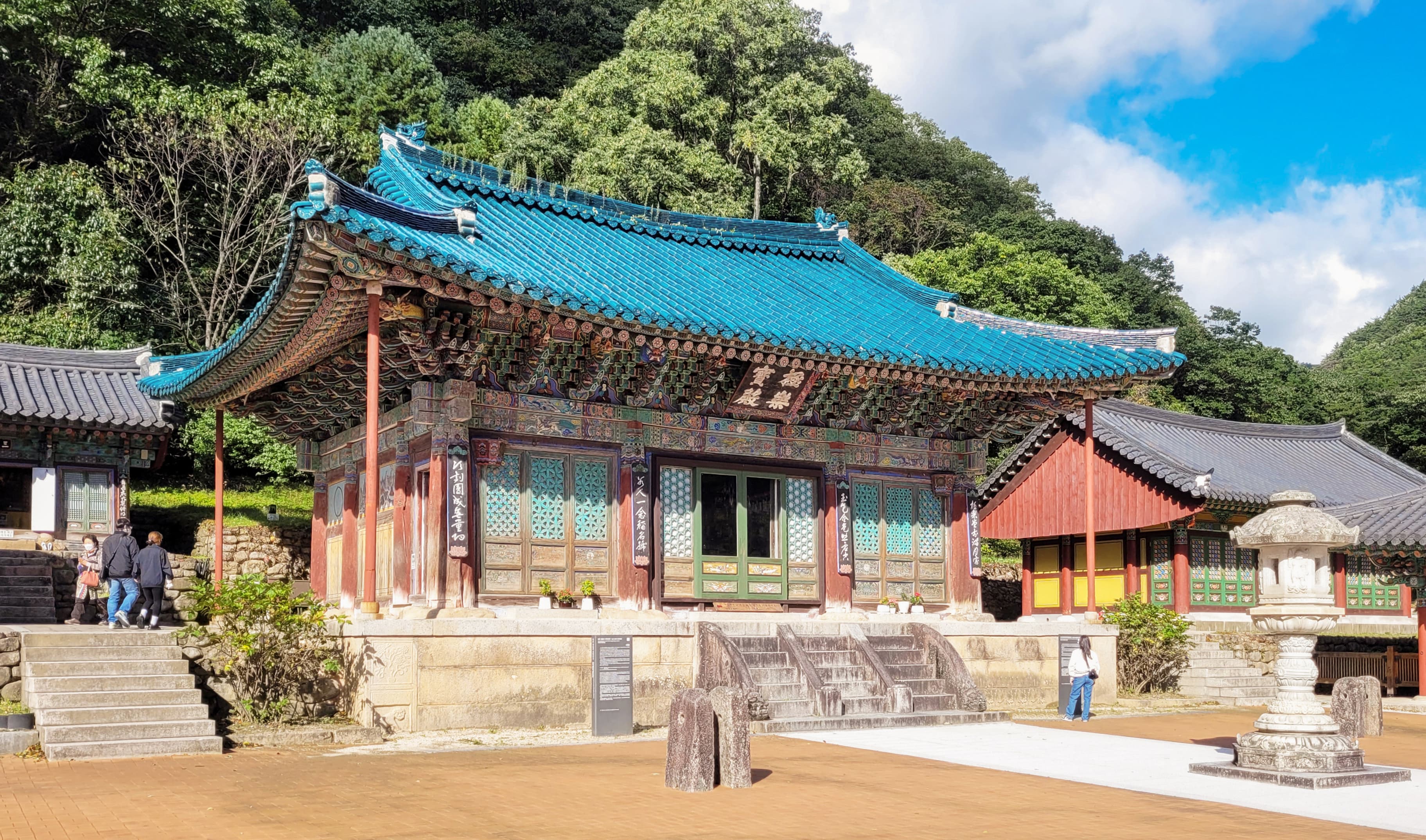
Sinheungsa Temple in Sokcho, Gangwon State, South Korea. Image source · CC0
Visit essentials
A quick read before you go
- Duration
- Allow ninety minutes for the temple itself, separate from cable-car queues or mountain hiking.
- Access
- KTO lists year-round, twenty-four-hour grounds access, free admission, parking, and the official…
Overview
The first spiritual challenge at Sinheungsa is scale. Seoraksan’s rock ridges dominate the horizon, while the bronze Buddha creates a second monumental presence closer to the body. Yet the monastery’s religious life occurs through smaller measures: a bow, a recited name, the removal of shoes, the ringing of a bell, the daily care of a hall. The Great Unification Buddha was made to embody an aspiration extending across the divided Korean peninsula.
It should be read as a prayerful public project, not as evidence that reconciliation has been achieved. Sinheungsa holds that unfinished hope beside much older Buddhist continuity.
Why this place is sacred
A statue dedicated to unification occupies moral as well as physical space. Its meaning depends upon division, grief, and the possibility of relation across a border that remains real. Seated in meditation, the image does not dramatize victory; it models steadiness before an unresolved condition. Seoraksan contributes exposure, weather, and immense geological scale, but the mountain is not assigned a supernatural force.
What can be said responsibly is that the setting makes human conflict appear both urgent and small, while the Buddha gives visitors a disciplined form in which to hold that tension.
The received account says Jajang founded Hyangseongsa in 652; the present Sinheungsa continues Buddhist monastic and devotional functions.
Destruction and rebuilding shifted the historic temple, while the modern unification monument added a national aspiration to the active Jogye precinct.
Experience and orientation
Approach the bronze Buddha slowly enough to notice offerings and people praying at its base. Its polished mass can draw every camera, so turn afterward toward the older pagoda and Geungnakbojeon to recover a different scale of time. Seoraksan crowds may be dressed for strenuous hiking rather than temple attendance; the change in conduct must therefore be intentional. Before entering any hall, stop speaking, read the sign, and watch how devotees cross the threshold.
If the precinct feels busy, do not demand silence from others. Find a permitted edge where attention does not compete with circulation.
The temple lies within a major national-park entrance zone; identify public hiking routes, worship courts, and Templestay areas before wandering.
Context and lineage
KTO records that Jajang established Hyangseongsa in 652. The present name and complex belong to later destruction, relocation, and rebuilding, so the ancient date should not be used to label every visible building. Geungnakbojeon preserves mid-Joseon timber architecture, and the three-story pagoda marks the earlier temple site. In the late twentieth century, the bronze Great Unification Buddha made peace on the peninsula a prominent devotional theme. These layers are related by institutional memory rather than uninterrupted original fabric.
Sinheungsa belongs to the Jogye Order of Korean Buddhism and remains an active monastery serving Sokcho and Seoraksan.
Traditions and practice
Devotees bow and offer prayers before Buddhist images, including the unification monument. Participation inside halls follows resident instruction.
Official Templestay programs may include ceremonies, 108 prostrations, prayer, and making devotional objects; content varies by booking.
Hold one specific relationship affected by division or estrangement in mind before the seated Buddha, without claiming the statue will resolve it.
Korean Buddhism
ActiveJogye Buddhism sustains mountain monastic life while giving Korean reconciliation a visible devotional form.
Bowing, chanting, meditation, offerings, prostrations, teaching, and structured retreat.
Perspectives and open questions
Sinheungsa asks how ancient institutional memory and a modern national vow can inhabit one monastery.
Scholarly perspective
Material history distinguishes the early Hyangseongsa tradition, later halls, and recently commissioned monument instead of assigning one age to the entire precinct.
Living and traditional perspectives
The seated Buddha directs sorrow over division toward compassion, steadiness, and the aspiration that hostility can end.
Open questions
Prayer for unification is a religious and civic hope, not a prediction of political outcome.
Plan your visit
Access and arrival
KTO lists year-round, twenty-four-hour grounds access, free admission, parking, and the official sinheungsa.kr site. Building access and rites follow their own schedule.
Stay overnight only through a confirmed Templestay reservation.
Respectful visit
Outdoor clothing is acceptable, but keep it modest and remove wet or muddy gear before entering a hall.
Wide exterior photography is common; obtain consent for people, rites, interiors, and organized retreat groups.
Use the temple’s dedicated places for candles, incense, prayer slips, and donations.
Monastic quarters, ritual platforms, protected halls, and the monument base are not climbing or picnic areas.
Do not climb monument structures, interrupt personal petitions, or turn national division into a decorative travel theme.
Current practical details
Address
1137 Seoraksan-ro, 특별자치도, Sokcho-si, Gangwon-do, South Korea
Phone
Hours, fees, and access can change — verify on the official source before you travel. Practical details last checked Jul 2026.
Location
Map loads as you approach this section.
Pilgrim reflections
A portrait of encounter, not a score
Pilgrims describe what they felt, how present they could become, and whether the place would shape a journey. There are no stars and no ranking of traditions.
No reviewed reflections yet
The first pilgrims can help describe the character of being here.
Share a reflection
Available after an account-backed “Been there.” Every reflection is reviewed before publication.
Nearby sacred places
Explore other sacred places in the region. Proximity does not establish access or travel time; check each place’s guidance.
References
Sources consulted for this page. Source categories describe the publication, not a guarantee that every claim is verified. Traditional accounts and outside interpretations may differ.
- 01Korea Heritage Service public heritage search — Korea Heritage ServiceofficialAuthoritative national search portal retained as a verification route; not used alone for site-specific claims.
- 02Sinheungsa Temple (Seoraksan Mountain) — Korea Tourism OrganizationofficialOfficial tourism record for Jajang's 652 foundation tradition, Hyangseongsa identity, Jogye affiliation, cultural assets, Templestay, address, and access.
- 03Sinheungsa Temple — Google Maps place record — GoogleSource contextStrong identity match used only for current practical fields and coordinates.
Share a photo
Help visitors recognize Sinheungsa Temple. Every submission is reviewed before publication.